“San Francisco ain't like anyplace else, it's a lady with a past and a future, all at once.”
— Blanche reflecting on the city's unique character.

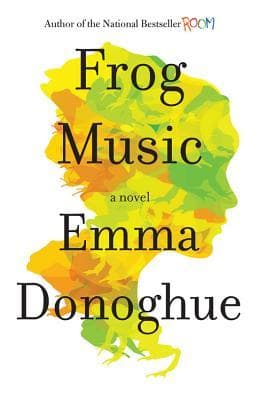
Emma Donoghue (2014)
Genre
Literary Fiction / Historical Fiction / Mystery
Reading Time
8-10 hours
Key Themes
See below
Sign in to track this book
In sweltering 1876 San Francisco, a French burlesque dancer risks her life to uncover the killer of her cross-dressing, free-spirited friend, navigating a world of bohemians, millionaires, and dangerous secrets.
On a sweltering July night in 1876 San Francisco, French burlesque dancer Blanche Beunon and her friend, the eccentric frog-catcher Jenny Bonnet, leave a railroad saloon. A shot rings out, hitting Jenny in the back and killing her instantly. Blanche is grazed by the bullet but survives. The saloon owner and patrons offer little help or concern for Jenny, known for her cross-dressing and independent life. Blanche, despite her injuries and shock, decides to find the killer, a difficult task due to the city's indifference to Jenny's death, the heatwave, and a smallpox epidemic.
Blanche returns to her lodging, shaken. She meets her lover, Arthur, a wealthy, married man who dismisses her concerns about Jenny's murder, more focused on his reputation. Realizing she cannot rely on Arthur for justice, Blanche begins her own investigation. She remembers a detail about the shooter: a man with a missing finger. Fearing for her safety as a witness and potential target, Blanche decides to leave her current life. She gathers her belongings, including Jenny's pet frog, and leaves a note for Arthur, signaling her intent to disappear.
Blanche seeks refuge with Mrs. Morse, an older woman who runs a boarding house and knew Jenny. Mrs. Morse offers Blanche a room and some stability, though she is cautious about Blanche's involvement in the murder. During her stay, Blanche learns more about Jenny's life. She finds that Jenny had a tumultuous history, including a past relationship with Jack, another frog-catcher. Blanche begins to suspect that Jenny's death might relate to her past relationships or unusual lifestyle, rather than being a random act.
Blanche remembers Jenny mentioning a circus where she once worked. She visits the run-down circus grounds, hoping to find someone who knew Jenny. There, she meets Sandy, a boxer who had a brief, complicated relationship with Jenny. Sandy is initially defensive but eventually shares insights into Jenny's free spirit and her tendency to attract both adoration and animosity. Blanche also learns about a rivalry between Jenny and another performer, further complicating her understanding of Jenny's social circle and potential enemies. Sandy's information, while not directly leading to the killer, paints a fuller picture of Jenny's life.
Blanche's investigation takes her through San Francisco's less reputable parts, including gambling dens, opium dens, and brothels, places Jenny frequented. She meets various characters who knew Jenny, from prostitutes to petty criminals, each offering a piece of the puzzle. These encounters show Jenny's charisma and her ability to navigate different social levels, but also her vulnerability. Blanche realizes that Jenny's unconventional life made her both beloved and despised, making the motive for her murder harder to pinpoint among many who might have held a grudge.
Blanche, following a lead, tracks down Jack, Jenny's former lover and fellow frog-catcher. Upon meeting him, she notices the distinctive missing finger on his hand, matching her memory of the shooter. This discovery sends a jolt of fear and certainty through Blanche. Jack is a rough, volatile man, and their interaction is tense. He admits to a complicated relationship with Jenny, marked by both affection and resentment. Blanche carefully tries to get information from him, trying to confirm if he was the killer, while also fearing for her safety in his presence.
Under Blanche's persistent questioning and observations, Jack eventually confesses to shooting Jenny. His confession reveals a motive rooted in a twisted mix of love, jealousy, and betrayal. He felt Jenny had abandoned him, and his rage, fueled by alcohol and possessiveness, led to the act. He describes waiting for her, intending to confront her, but the encounter became violent. Blanche is horrified but also feels a grim satisfaction at finally uncovering the truth, even if it brings little comfort.
After Jack's confession, Blanche is in a difficult position. She has the truth, but bringing Jack to justice in a city that cared little for Jenny's death seems a monumental and dangerous task. She considers the risks to herself, knowing Jack is a desperate man. The revelation also forces her to confront the darker aspects of Jenny's life and choices, and her own part in the chaotic world she inhabited. Blanche feels a profound sense of loss, not just for Jenny, but for the innocence she shed during her quest for truth.
Blanche weighs her options: expose Jack and risk her safety, or let the matter rest. She decides against formally pursuing justice, recognizing the futility and danger in a corrupt and indifferent system. She realizes her own survival and future are most important. With a heavy heart, Blanche decides to leave San Francisco, cutting ties with the life she shared with Jenny and Arthur. She takes with her the memories of Jenny and the hard-won knowledge of the city's harsh realities, determined to forge a new path, carrying Jenny's pet frog as a silent companion and reminder.
Blanche travels to a new town, seeking anonymity and a chance to rebuild her life away from San Francisco's shadows. She finds work, still carrying the emotional scars of Jenny's murder and her harrowing investigation. The experience has changed her, making her more resilient but also more cynical about human nature and justice. She continues to reflect on Jenny, understanding that her friend's free spirit, while alluring, ultimately led her into dangerous situations. Blanche's journey ends with her embracing a quieter existence, forever marked by the summer of 1876 and the unforgettable 'frog music' of Jenny's life.
The Protagonist
Blanche transforms from a dependent showgirl into a resilient, independent woman, shedding her naivete and learning to trust her own instincts.
The Central Figure (Deceased)
Jenny's character is explored posthumously, revealing her life's complexities and the impact she had on those around her.
The Antagonist
Jack's arc is revealed through his confession, showing the culmination of his resentment and possessiveness in a tragic act.
The Supporting
Arthur remains largely static, highlighting his self-centered nature and the limitations of Blanche's reliance on him.
The Supporting
Mrs. Morse remains a steady, supportive figure, offering practical assistance and wisdom to Blanche.
The Supporting
Sandy offers a glimpse into Jenny's circus life, providing background information rather than undergoing significant personal change.
The Mentioned
This figure serves as a symbolic representation of the killer's identity before his true name is revealed, evolving from a vague threat to a concrete suspect.
The Supporting
Mrs. Finch remains a static character, representing the competitive environment Blanche operates within.
The novel explores the elusive nature of justice, especially for those on society's margins. Jenny Bonnet's murder is met with indifference by authorities and much of San Francisco, showing how social status and gender affect whether a crime is pursued. Blanche's personal quest for justice defies this systemic injustice. The eventual truth, while satisfying for Blanche, does not lead to formal retribution, forcing her to confront the legal system's limits and make her own peace.
““Nobody cared about Jenny. Not truly. And if nobody cared, then nobody would find her killer.””
Both Jenny and Blanche are performers, but their identities go beyond the stage. Jenny's cross-dressing challenges gender norms, making her identity a constant performance and a source of both freedom and danger. Blanche, as a burlesque dancer, also performs a version of herself for an audience and for Arthur. The theme looks at how people construct and present themselves, and how these performances intersect with societal expectations and personal desires. Jenny's true self, hidden beneath layers of performance, is what Blanche ultimately seeks to understand.
““Jenny was always playing a part, even when she wasn’t on a stage. It was just, sometimes, the part was herself.””
San Francisco in 1876 is a powerful force in the novel, almost like a character. It is shown as a booming, chaotic, and often brutal place, vibrant with opportunity yet riddled with poverty, disease, and moral decay. The record-breaking heat wave and smallpox epidemic increase the tension and desperation. The city's indifference to Jenny's death, its class divisions, and its hidden underside are integral to the plot, shaping Blanche's challenges and the story's overall mood.
““San Francisco was a city of heat and filth, of gold and desperation, where a life could be snuffed out and barely a ripple made.””
The darker aspects of human relationships, especially love twisted into jealousy and obsession, are central to Jenny's murder. Jack's motive comes from a possessive love for Jenny that turns into resentment and rage when she leaves him. This theme explores the destructive power of uncontrolled emotions and how they can lead to tragic consequences. Blanche's complex feelings for Arthur, and her deep affection for Jenny, offer a counterpoint, showing different facets of love and attachment.
““He didn’t love her. He owned her, or he thought he did. And when she slipped his grasp, he broke her.””
At its heart, the novel is about friendship and loyalty. Blanche's dedication to Jenny, even after her death, drives the entire story. Despite the dangers and others' indifference, Blanche risks everything to understand Jenny's life and find her killer. This theme highlights the bond between the two women, suggesting that true loyalty can transcend even death and societal judgment, offering a glimmer of hope and human connection amidst the city's harsh realities.
““Jenny was gone, but her ghost whispered in my ear, urging me on. I owed her that much.””
A distinctive physical detail serving as a crucial identifier for the killer.
The detail of the killer having a missing finger is a classic mystery plot device, functioning as a vital clue that Blanche latches onto. It allows the narrative to maintain suspense as Blanche encounters various characters, each with the potential to be the 'missing-fingered man.' This specific, observable trait helps Blanche narrow her search and eventually leads her to Jack, providing a tangible link to the perpetrator amidst the chaos and anonymity of San Francisco.
Blanche's fragmented memories and pieced-together recollections of Jenny's life.
The story is primarily told from Blanche's perspective, relying heavily on her memories and interpretations of past events involving Jenny. Her recollections are often fragmented, colored by her emotional state, and sometimes corrected as she gathers more information. This device creates a sense of mystery around Jenny's true nature and past, requiring Blanche (and the reader) to piece together the truth from disparate and sometimes contradictory accounts. It also highlights Blanche's subjective experience of grief and investigation.
Environmental factors that amplify the sense of urgency and desperation.
The oppressive summer heat wave and the ongoing smallpox epidemic are not merely background details; they function as powerful environmental plot devices. They heighten the sense of discomfort, danger, and desperation in San Francisco, making Blanche's journey even more arduous. The epidemic adds a layer of anxiety and vulnerability, while the heat exacerbates tempers and weariness. These elements create a palpable atmosphere that reflects the moral and social decay Blanche encounters, intensifying the stakes of her investigation.
A symbolic object representing Jenny's spirit and Blanche's connection to her.
Jenny's pet frog, which Blanche takes with her after Jenny's death, serves as a significant symbolic plot device. It is a tangible link to Jenny and her unique identity as a 'frog-catcher.' The frog represents Jenny's free spirit, her connection to nature, and her unconventional life. For Blanche, the frog becomes a silent companion, a tangible reminder of her lost friend, and a symbol of the life she is trying to understand and avenge. It offers a sense of continuity and remembrance amidst the violence and loss.
“San Francisco ain't like anyplace else, it's a lady with a past and a future, all at once.”
— Blanche reflecting on the city's unique character.
“Every secret comes out in the wash, sooner or later.”
— Jenny Bonner's cynical observation about hidden truths.
“You can't outrun your own shadow, no matter how fast you go.”
— Blanche's internal thought about the inescapable nature of one's past.
“The city was a masquerade, everyone playing a part.”
— A description of San Francisco's deceptive appearances.
“Grief's a funny thing. It makes you see things that ain't there, and miss things that are.”
— Blanche grappling with her sorrow after Jenny's death.
“Sometimes the safest place is right in the middle of the danger.”
— Blanche's daring approach to investigating the murder.
“Money talks, but it don't always tell the truth.”
— A character's comment on the corrupting influence of wealth.
“Love ain't always pretty, but it's always real.”
— Blanche reflecting on the complexities of her relationships.
“History ain't just what's written down. It's what's whispered and what's forgotten too.”
— A character's musing on the nature of historical records.
“Every person's got a story, and most of 'em ain't the one they tell.”
— Blanche's insight into the hidden lives of others.
“The past is like a ghost, it follows you wherever you go.”
— Blanche feeling haunted by her previous life.
“Justice is a long road, and sometimes it doubles back on itself.”
— A character's somber view on the pursuit of justice.
“You can never truly know someone, not even the ones you love most.”
— Blanche's realization about the unknowable aspects of people.
Ready to see how well you understood this book? Take our interactive quiz with 10 questions.

Biography coming soon.







