“I will do it tomorrow.”
— Toad writes a list of things to do, including 'Wake up', and procrastinates on it.

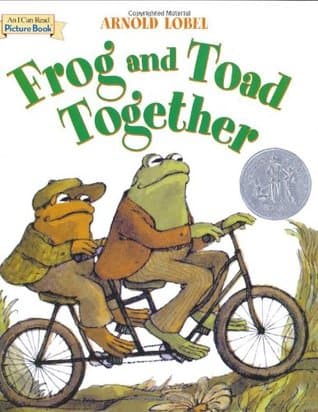
Arnold Lobel (1971)
Genre
Fantasy / Children's
Reading Time
20 min
Key Themes
See below
Sign in to track this book
Join Frog and Toad as they navigate the simple joys and challenges of friendship, from planting gardens to conquering fears, showing that every adventure is better when shared.
Toad wakes up one morning with many things to do. To remember them all, he makes a list: 'Wake up. Eat breakfast. Get Dressed. Go to Frog's house. Take a walk with Frog. Eat lunch. Take a nap. Eat dinner. Go to sleep.' He shows it to Frog, and they begin their day, checking off items as they go. However, as they walk, a strong wind blows the list out of Toad's hand. They try to catch it, but the list flies away. Toad is upset, thinking he can no longer remember what to do. Frog tells him he can still remember, and together they recall the list's items, finishing their day by 'Go to sleep' without the paper list.
Toad likes Frog's garden and wants one of his own. Frog gives Toad some flower seeds. Toad plants them, then shouts at the seeds to grow, but nothing happens. He tries again, louder, and then sings to them, but the ground stays bare. Frustrated, Toad lies down and falls asleep. Frog comes by and explains that seeds need time, sun, and rain to grow. Toad continues to worry, even covering the seeds with a blanket, thinking they are afraid to grow. Eventually, tiny green shoots appear, and Toad is happy, realizing the value of patience as his garden begins to bloom.
Toad bakes many delicious cookies. Frog comes over, and they begin to eat them. The cookies are so good that they cannot stop. Frog suggests that they should stop eating, as they will get sick. They try different ways to stop eating more: putting the cookies in a box, tying the box with string, and placing it on a high shelf. Each time, they find a way to get the cookies down and eat more. Finally, Frog takes action, pouring water over the remaining cookies, making them too soggy to eat, saving them from eating too much.
Frog and Toad are sitting by the fire, talking about things that scare them. Frog mentions being afraid of 'a big, dark shadow with two red eyes' that he saw once. Toad admits he is afraid of 'a large, green snake with a long, forked tongue' that chased him. They become more frightened, imagining dragons, giants, and other scary creatures outside. They decide they must be brave together. They jump into bed, pull the covers over their heads, and bravely face their fears by staying hidden until the morning light, realizing that being together makes them feel less scared.
Toad has a dream where he is performing on a stage. Frog appears, small at first, but then begins to grow larger and larger, becoming a gigantic figure. As Frog grows, Toad shrinks, feeling smaller. Frog, now enormous, laughs at Toad's tiny size. Toad is scared and feels overwhelmed. Just as Frog is about to step on him, Toad wakes up with a gasp. He is relieved to find himself in his own bed, and even more relieved when he sees Frog, his normal size, standing over him, asking if he had a bad dream.
The Protagonist
Frog remains consistently kind and wise throughout the stories, serving as a steadfast anchor for Toad.
The Protagonist
Toad frequently learns small lessons about patience, self-control, and facing fears, often with Frog's help.
The main theme of the book is the deep friendship between Frog and Toad. They share everyday experiences, support each other through challenges, and find comfort in each other's presence. Whether it's helping Toad remember his list, teaching him about gardening, or facing fears together, their bond is consistently loving and strong. Their friendship shows the importance of empathy, patience, and mutual support in overcoming life's small problems.
“'Toad,' said Frog, 'I am glad to have a friend like you.' 'And I am glad to have a friend like you, Frog,' said Toad.”
This theme is clear in 'The Garden' and 'A List.' Toad's impatience to grow his garden immediately, and his sadness over losing his list, show his need to learn patience. Frog gently guides him, explaining that some things take time and that solutions can be found even when plans go wrong. The slow growth of the seeds and the eventual recall of the list's items teach Toad, and young readers, the value of waiting and continuing through difficulties rather than giving up too soon.
“'Seeds need time to grow,' said Frog. 'They need sun, rain, and quiet time.'”
In 'Dragons and Giants' and 'The Dream,' Frog and Toad deal with their fears, both real and imagined. They discuss their worries about scary creatures and Toad's nightmare about Frog's large size. The stories show that fear is a natural emotion, but it can be managed, especially with a friend. Their shared experience of hiding under the covers, or Toad's relief upon waking, shows that companionship can lessen fear and make difficult situations easier.
“'We are brave, Toad,' said Frog. 'Yes, but we are also afraid,' said Toad. 'Then we will be brave together,' said Frog.”
The story 'Cookies' directly addresses self-control. Frog and Toad's inability to stop eating delicious cookies shows how hard it is to be moderate when tempted. Their humorous attempts to hide the cookies, only to get them again, show a common human struggle. Ultimately, Frog's action to make the cookies inedible teaches a lesson about setting limits when willpower alone is not enough to control oneself.
“'We must stop eating these cookies,' said Frog. 'We will soon be sick.'”
Animals with human-like qualities and experiences.
The primary plot device in 'Frog and Toad Together' is the use of anthropomorphism, where the characters, Frog and Toad, are animals who exhibit human characteristics, emotions, and daily routines. They wear clothes, live in houses, bake cookies, make lists, and engage in conversations about friendship, fear, and life's simple challenges. This allows young readers to connect with the characters and their experiences on a relatable level, making abstract concepts like patience or self-control more accessible through the familiar lens of animal friends.
Short, self-contained stories within a larger collection.
The book is structured as a collection of five independent short stories, each presenting a distinct plot and a small lesson or observation about life. While the characters (Frog and Toad) are consistent throughout, each 'chapter' or episode stands alone with its own beginning, middle, and end. This episodic format makes the book digestible for young readers, allowing them to engage with individual narratives without needing to remember complex overarching plots, while still enjoying the continuity of the beloved characters.
Character interactions propel the plot and reveal personalities.
The narrative heavily relies on dialogue between Frog and Toad to advance the plot, convey their personalities, and explore the themes. Their conversations are simple, direct, and often humorous, revealing Toad's anxieties and Frog's calm wisdom. For example, in 'A List,' their dialogue drives the action of checking items off and then recalling them. This device makes the stories engaging and easy to follow for children, as the characters' voices directly shape the unfolding events and emotional landscape of each tale.
Simple items represent larger concepts or challenges.
Everyday objects often take on symbolic significance within the stories. The 'list' in 'A List' symbolizes order, routine, and Toad's need for structure, and its loss represents his anxiety over chaos. The 'cookies' in 'Cookies' symbolize temptation and the struggle for self-control. The 'seeds' in 'The Garden' represent hope, growth, and the necessity of patience. These seemingly mundane items become catalysts for the characters' personal growth and the exploration of universal human experiences.
“I will do it tomorrow.”
— Toad writes a list of things to do, including 'Wake up', and procrastinates on it.
“A list is to help us remember what we are supposed to do.”
— Toad explains to Frog why he makes lists, emphasizing organization.
“Now we can stop eating and be four brave cookies again.”
— Frog and Toad try to stop eating cookies by putting them in a box, tying it up, and putting it high on a shelf.
“We must stop eating! We will soon be sick!”
— Frog warns Toad as they cannot resist eating all the cookies they baked.
“I am not afraid of the dark.”
— Toad tries to convince himself while telling a scary story to Frog in the dark.
“The whole world is covered with buttons, and not one of them is mine!”
— Toad loses a button from his jacket and becomes upset while searching for it.
“You are right. That is exactly what it is.”
— Frog agrees with Toad's realization about finding his lost button, showing support.
“I am glad that you found your button.”
— Frog expresses happiness for Toad after the button is recovered.
“We must have will power.”
— Frog suggests a strategy to stop eating too many cookies.
“Now we have no more cookies to eat. We have eaten them all.”
— Frog states the obvious after they finish all the cookies, highlighting their lack of control.
“I am going to bed. It has been a long day.”
— Toad decides to rest after a series of adventures, showing the importance of rest.
“What a good feeling to have a friend.”
— Implied throughout the stories, reflecting the bond between Frog and Toad.
“I will do it now.”
— Toad decides to act immediately on his list instead of procrastinating.
“We are very brave.”
— Frog and Toad encourage each other while facing fears, like the dark.
Ready to see how well you understood this book? Take our interactive quiz with 10 questions.
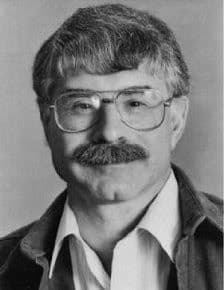
Arnold Lobel was a beloved American author and illustrator, best known for his critically acclaimed "Frog and Toad" series. His gentle, humorous stories, often exploring themes of friendship and everyday life, earned him a Caldecott Honor for "Frog and Toad Are Friends" and a Newbery Honor for "Frog and Toad Together." Lobel's distinctive, warm illustrations complemented his accessible prose, making his books enduring classics for young readers.







