“A person can watch the evening news and see bad things happening all over the world. But that doesn't mean a person has to go out and do bad things.”
— Nick's father explaining why he doesn't let negative news affect his actions.

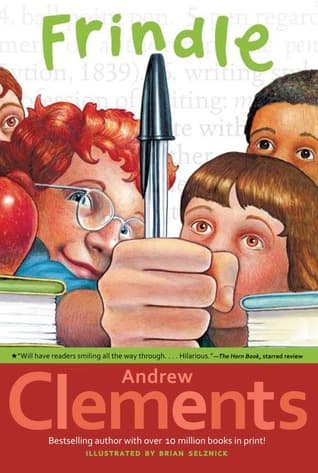
Andrew Clements (1996)
Genre
Children's / Young Adult
Reading Time
60 min
Key Themes
See below
Sign in to track this book
A mischievous fifth-grader invents a new word for 'pen,' sparking a nationwide linguistic phenomenon that challenges the nature of language and authority.
Nick Allen is a bright, imaginative fifth-grader at Lincoln Elementary School, known for his ability to sidetrack teachers and disrupt classes with his creative antics. He enjoys observing and experimenting with the world around him. As the new school year begins, Nick is in Mrs. Granger's language arts class. Mrs. Granger is legendary for her strictness, her love of words, and her dedication to the dictionary. She is a formidable figure who seems immune to Nick's usual diversionary tactics, making her a unique challenge for him.
During one of Mrs. Granger's first classes, she assigns a lengthy research project on the history of the dictionary, to the students' dismay. Nick, trying to avoid the assignment and buy himself some time, asks a seemingly innocent, but probing, question: 'Who invented all these words anyway?' Mrs. Granger, ever the educator, takes the bait and explains how words evolve and are created through common usage. This detailed explanation, intended to educate, instead plants a powerful idea in Nick's mind, giving him a new focus for his inventive energy.
Inspired by Mrs. Granger's lecture on word origins, Nick decides to test the theory. He chooses the common object 'pen' and invents a new word for it: 'frindle.' His plan is to see if he can make 'frindle' become a real word through widespread usage. He starts small, convincing his friend John to ask for a 'frindle' in class. The next day, he gets all his friends to start using 'frindle' instead of 'pen.' The initial reaction from other students is confusion, then amusement, and soon, a growing number of fifth-graders are in on the secret.
Mrs. Granger quickly learns of the 'frindle' phenomenon. Recognizing Nick's hand in it, she confronts him directly after class. She explains that words have rules and a pen is a pen, and she forbids the use of 'frindle' in her classroom. She makes all students caught using 'frindle' stay after school to write sentences. However, her attempts to suppress the word only fuel its popularity. Students see it as a game, a playful rebellion against authority, and the word 'frindle' spreads throughout the school, even beyond the fifth grade.
The 'frindle' controversy escalates. The local newspaper, the Westfield Gazette, learns of the story through a reporter named Judy Morgan. She interviews Nick, Mrs. Granger, and other students, publishing an article that frames the situation as a charming battle of wills between a creative student and a traditional teacher. The article garners public sympathy for Nick and his new word, turning 'frindle' into a local sensation. People in town begin to use the word, finding humor and charm in the children's linguistic experiment.
The story of 'frindle' is picked up by national news outlets. Suddenly, Nick Allen is a minor celebrity. Entrepreneurs, seeing a marketing opportunity, begin producing 'frindle' merchandise — T-shirts, pens, and other items. A company contacts Nick's family to secure the rights to the word. This commercialization brings both excitement and complications, including legal discussions about intellectual property and the ownership of a word. Nick's father sets up a trust fund for Nick, ensuring his future earnings from 'frindle' are managed responsibly.
Ten years pass. Nick Allen is a successful adult, having accumulated significant wealth from the 'frindle' phenomenon. He receives a package from Mrs. Granger. Inside, he finds a brand-new dictionary, an envelope, and a letter. The letter reveals Mrs. Granger's true intentions from the very beginning. She confesses that she had always admired Nick's creativity and, far from trying to stop him, she had secretly encouraged the 'frindle' movement. She knew that opposition would only make the word stronger, and she had been waiting for the right moment to reveal her support.
The envelope Mrs. Granger sent contains a copy of the dictionary opened to the page where 'frindle' is officially listed as a word, defined as 'a pen.' This is the ultimate validation of Nick's creation and Mrs. Granger's foresight. Her letter also contains the original note she wrote to Nick back in fifth grade, which she had kept sealed, promising to give it to him if 'frindle' became a real word. The note congratulates him and expresses her pride. Nick, touched, sends Mrs. Granger a beautiful gold pen, inscribed with the word 'Frindle,' and establishes a scholarship fund in her name, cementing their shared legacy.
The Protagonist
Nick evolves from a clever, mischievous boy who loves to disrupt with ideas to a mature, successful adult who understands and appreciates the profound impact of his creativity.
The Antagonist/Supporting
Initially appearing as an antagonist, Mrs. Granger is revealed to be a wise mentor and a secret facilitator of Nick's linguistic experiment, demonstrating her belief in the dynamic nature of language.
The Supporting
Judy serves as a narrative device, elevating the 'frindle' story from a local school issue to a widely recognized cultural phenomenon.
The Supporting
Mr. Allen adapts from a concerned parent about school trouble to a pragmatic manager of his son's unexpected success and financial future.
The Supporting
Mrs. Allen remains a consistent source of emotional support and encouragement for Nick as his invention gains national attention.
The Supporting
Dr. Chatham attempts to enforce school rules regarding 'frindle' but ultimately cedes to the word's unstoppable momentum.
The Supporting
John plays a key role in the initial spread of 'frindle' within the school, demonstrating the power of a single act of defiance.
The Mentioned
Bud Lawrence profits from Nick's invention, showcasing the commercial impact of a popular new word.
The central theme of 'Frindle' explores the arbitrary yet powerful nature of words. It shows how words are not static entities but living creations shaped by common usage. Nick's invention of 'frindle' highlights that the meaning and acceptance of a word come from collective agreement, not inherent truth. Mrs. Granger's character, despite her initial opposition, ultimately champions this idea, proving that language is a dynamic, evolving system. The book shows how a single word can spark a movement, challenge authority, and even lead to fame and fortune, emphasizing the impact language has on our lives and culture.
“'Who says a pen has to be called a pen? Why not call it a frindle?'”
This theme is in the dynamic between Nick Allen's inventive spirit and Mrs. Granger's authoritative teaching style. Nick represents the creativity and questioning nature of youth, constantly challenging established norms. Mrs. Granger, initially, represents adherence to rules and tradition. However, the story reveals a nuanced interplay, where Mrs. Granger, in her wisdom, uses her authority to secretly support Nick's creativity. The 'frindle' movement becomes a playful rebellion that ultimately shows how creative ideas, even when initially resisted, can triumph over strict adherence to rules, leading to lasting change.
“'A word is a word. It's just a sound we make with our mouths, or a mark we make on paper. But it's a real word when people use it. That's how every word in the dictionary started.'”
'Frindle' looks at how a local story can quickly become national news through the power of media. Judy Morgan's newspaper article acts as the catalyst, transforming a schoolyard issue into a public spectacle. The book illustrates how media attention can shape public perception, create heroes, and even lead to commercial exploitation. Nick's sudden celebrity and the subsequent merchandise highlight the double-edged sword of fame — bringing both recognition and the complexities of managing public image and financial gain. The story shows how quickly an an idea can spread and be adopted by the wider world.
“'And after that, the word frindle was no longer just a fifth-grade fad. It was a national sensation.'”
Beyond the immediate conflict, the story reveals a deeper theme of mentorship and legacy, particularly through Mrs. Granger's actions. Her secret support for Nick's 'frindle' project, her calculated opposition, and her final reveal show her belief in her student's potential and a desire to see him succeed. She acts not as an adversary, but as a wise guide, understanding that true learning sometimes comes from challenging the status quo. The ending, with Nick establishing a scholarship in her name, solidifies their mutual respect and the lasting impact they have on each other, creating a legacy that extends beyond a single word.
“'Every good teacher knows that the best way to help a student is to let them find their own way.'”
A symbol of authority, tradition, and the dynamic nature of language.
The dictionary serves as a central symbol in 'Frindle.' Initially, it represents Mrs. Granger's rigid authority and the established rules of language. However, as the story progresses, it evolves to symbolize the dynamic nature of language itself. The eventual inclusion of 'frindle' in the dictionary signifies the ultimate validation of Nick's experiment and the idea that words are created and evolve through common usage, not just by scholars. It transforms from a static rulebook into a living record of linguistic change, reflecting the core theme of the book.
A linguistic experiment and a symbol of creative rebellion.
The word 'frindle' is more than just a new name for a pen; it's the primary plot device driving the entire story. It acts as Nick's catalyst for challenging authority, a symbol of creative thinking, and the engine for the conflict and resolution. Its spread demonstrates the viral nature of ideas, the power of collective action, and the organic way language evolves. The word embodies the core question of the book: what makes a word 'real'?
A narrative device used for delayed revelation and character depth.
Mrs. Granger's sealed letter to Nick, written early in the story and delivered ten years later, is a crucial narrative device. It creates suspense and allows for a powerful, retrospective revelation of Mrs. Granger's true intentions. This delayed disclosure reshapes the reader's understanding of her character, transforming her from an antagonist into a wise mentor. It effectively delivers the book's message about mentorship and the organic growth of language, providing a satisfying and emotional resolution to the central conflict.
A plot mechanism for escalating local events to national phenomena.
The involvement of local reporter Judy Morgan and subsequent national media coverage acts as a critical plot device. It broadens the scope of the story from a simple school conflict to a national event. The media's portrayal of 'frindle' not only spreads the word but also shapes public opinion, generating sympathy for Nick and creating the conditions for commercialization. This device highlights how external forces, particularly the media, can amplify and transform seemingly small events into significant cultural moments.
“A person can watch the evening news and see bad things happening all over the world. But that doesn't mean a person has to go out and do bad things.”
— Nick's father explaining why he doesn't let negative news affect his actions.
“If enough people do it, then it becomes... real.”
— Nick explaining to Janet how his new word 'frindle' could catch on.
“Who says dog means dog? You do, and I do, and everybody does.”
— Mrs. Granger's lesson about how words get their meanings.
“Every good story needs a bad guy, don't you think?”
— Nick reflecting on Mrs. Granger's role in the 'frindle' phenomenon.
“This is not a democracy. It's a fifth-grade classroom.”
— Mrs. Granger asserting her authority when students challenge her.
“Words mean what people decide they mean.”
— Mrs. Granger's core philosophy about language.
“A person can think of something new and make it happen.”
— Nick realizing the power of his idea to create a new word.
“You may think you're just a kid, but you're not.”
— Mrs. Granger telling Nick he has more influence than he realizes.
“The whole thing was like a snowball rolling downhill.”
— Narrator describing how the 'frindle' craze spread.
“It's not just a pen. It's a frindle.”
— Nick's friend Janet using the new word for the first time.
“Sometimes even the teachers learn something.”
— Mrs. Granger admitting she gained new perspective from Nick.
“Words are like tools. They have jobs to do.”
— Mrs. Granger explaining the functional aspect of language.
“You can't stop an idea whose time has come.”
— Narrator commenting on the unstoppable spread of 'frindle'.
“It started as a simple idea, but it grew into something much bigger.”
— Nick reflecting on the unexpected consequences of creating 'frindle'.
Ready to see how well you understood this book? Take our interactive quiz with 10 questions.

Andrew Clements was a prolific author of children's literature, celebrated for his engaging and relatable stories. His notable works include the beloved "Frindle," "A Week in the Woods," and the "Jake Drake" series, which often explored themes of school, friendship, and growing up. Clements' accessible writing style and keen understanding of young readers earned him widespread critical acclaim and a dedicated fanbase.

Dan Gemeinhart
4.5
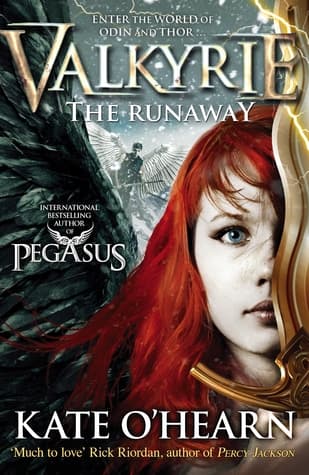
Kate O'Hearn
4.4

Jeanne Birdsall
4.4

Jen Wang
4.4
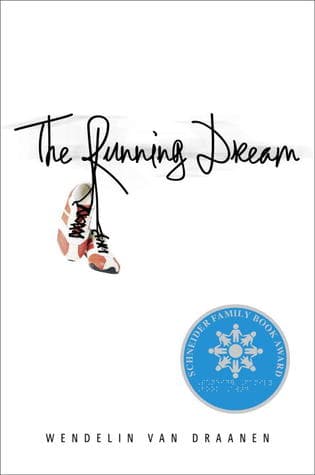
Wendelin Van Draanen
4.3

John Marsden
4.3

Chris Van Allsburg
4.3
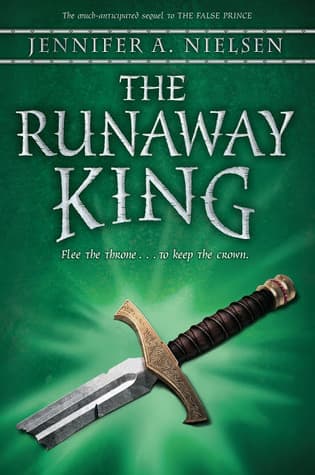
Jennifer A. Nielsen
4.2