“The past isn't a place you can visit. It's a place you carry with you.”
— Louise reflecting on past events and their lasting impact.

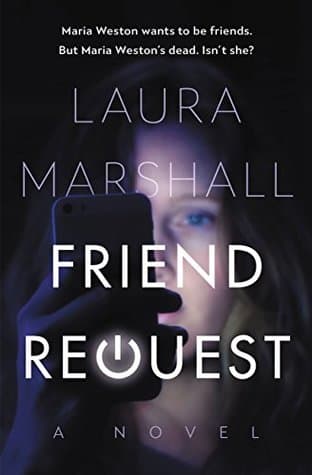
Laura Marshall (2017)
Genre
Thriller / Mystery
Reading Time
8-10 hours
Key Themes
See below
Sign in to track this book
A Facebook friend request from a long-dead classmate forces a woman to face dark secrets and a forgotten night that could shatter her life.
In 2016, Louise Aldridge, a content mother working at a London advertising agency, is surprised by a Facebook friend request from Maria Weston. This immediately causes panic because Maria supposedly died by suicide almost thirty years prior, during their senior year of high school in 1989. The unexpected request forces Louise to face the buried trauma and guilt surrounding Maria's death. She initially thinks it is a prank or a hack, but the persistence of the 'Maria Weston' profile and its increasingly personal messages begin to unravel Louise's life, pulling her back into the dark secrets of her past. Her husband, Sam, notices her growing anxiety, but Louise cannot tell him the true source of her distress.
The story flashes back to 1989 at Northwood High, where a younger Louise is part of a popular, somewhat cruel, clique that includes Sophie, Aaron, and the leader, Kirstie. They are caught up in typical high school dramas. When Maria Weston transfers to their school late in the senior year, she stands out. Maria is artistic, outspoken, and does not conform to the group's expectations, initially intriguing Louise. Louise, feeling lonely and wanting something different, is drawn to Maria's authenticity, and they begin to form an unlikely friendship, to the subtle disapproval of Kirstie and Sophie.
As Louise and Maria's friendship deepens, Maria tries to fit into Louise's existing clique, but she struggles. Kirstie and Sophie, feeling threatened by Maria's unique personality and her growing bond with Louise, begin to subtly exclude and mock her. Louise finds herself caught between her new friend and her long-standing social group. Despite her affection for Maria, Louise feels pressure from Kirstie and Sophie to distance herself. Maria, sensitive and vulnerable, senses the tension and the group's animosity, leading to her growing isolation and an internal conflict for Louise about her loyalties.
The tension peaks at a party at Aaron's house. Kirstie and Sophie, fueled by jealousy and a desire to assert control, plan a humiliating prank on Maria. They lead Maria to believe that Aaron, on whom she has a crush, is interested in her. They then set her up for public ridicule, making her look foolish in front of everyone, including Aaron. Louise, though uncomfortable, feels pressured to participate or at least not intervene, a decision that will haunt her for years. Maria is devastated and embarrassed, fleeing the party in tears. This event marks a turning point, solidifying the group's cruelty and Louise's involvement.
After the party, Maria does not return to school. Days later, her body is found, and a suicide note is discovered. The note explicitly blames Kirstie, Sophie, and, to a lesser extent, Louise for her decision, detailing the humiliation she suffered. The news of Maria's death and the discovery of the note sends shockwaves through the school and community. The clique is terrified, realizing the consequences of their actions. Louise is consumed by guilt and fear, knowing her silence and participation contributed to Maria's despair. The group makes a pact to destroy the note and deny any involvement, creating a shared secret that binds them.
Immediately after Maria's death, Kirstie, Sophie, and Louise, along with Aaron, solidify their pact of silence. They agree to destroy Maria's suicide note and create a false story, claiming Maria was troubled and they had no part in her distress. They fear legal repercussions and social fallout if the truth about their bullying and the prank comes out. Louise, despite her guilt, goes along with the plan, desperate to protect herself and maintain her place within the group. This shared secret becomes a heavy burden, shaping their lives and relationships for decades, with each member dealing with their involvement in their own way.
Back in 2016, the 'Maria Weston' Facebook profile intensifies its campaign. It posts old photos, shares cryptic messages referencing their past, and sends private messages to Louise that reveal intimate details only Maria or the inner circle would know. Louise's anxiety spirals, affecting her work and her relationship with Sam and her son, Henry. The profile also begins to target Kirstie and Sophie, bringing up their pasts and exposing their current vulnerabilities. Louise realizes this is more than a prank; someone is trying to destroy their lives, seeking revenge for Maria. She becomes convinced that one of the former clique members is behind it, or perhaps someone else entirely.
Driven by fear and the need for answers, Louise reluctantly contacts Kirstie and Sophie, who are also being tormented by the 'Maria Weston' profile. Their reunion is tense, filled with old resentments. Sophie, now a successful but brittle woman, is defensive and quick to blame others, while Kirstie, seemingly more grounded, is also deeply shaken. As they try to figure out who is behind the attacks, old accusations surface, and the fragile peace they had built over the years shatters. The 'Maria' profile seems to know their every move, increasing their paranoia and making them suspect each other.
Louise eventually finds Aaron, the boy Maria had a crush on. She hopes he might have answers or a different perspective. Aaron, now an ordinary man, is initially reluctant to discuss the past. However, as Louise presses him, he reveals that he had genuine feelings for Maria and was appalled by the prank. He confesses that he felt guilty for not defending her and for not reaching out to her before her death. He also reveals a secret he kept from the group: he had found Maria's original, unsullied suicide note, which was less accusatory and more a cry for help, before Kirstie and Sophie manipulated it.
Through a series of clues, including message timing and specific details only certain people would know, Louise uncovers the identity of the person behind the 'Maria Weston' profile: Maria's younger sister, Anna. Anna, now an adult, had never believed her sister committed suicide and was consumed by grief and a desire for justice. She had researched their past, using old yearbooks and social media to piece together the events, and was now seeking to expose the truth and punish those she held responsible for Maria's torment and death. She had been watching them for years, waiting for the right moment to strike.
Anna confronts Louise, revealing the full truth. Maria did not die by suicide. After fleeing the party, distraught and humiliated, Maria had run into a road and was struck by a car. The terrified driver had fled the scene, leaving Maria's body. The 'suicide note' found by the clique was a genuine cry for help written earlier, which Kirstie and Sophie had manipulated and planted to cover up their bullying and deflect blame. Maria's family, desperate for closure, had accepted the suicide explanation, but Anna always suspected foul play. The driver of the car was a local man who had also been at the party, driving home drunk.
Armed with the full truth, Louise confronts Kirstie and Sophie. Initially, they deny everything, but Louise presents the evidence, including details from Anna and the inconsistencies in their long-held story. Under pressure, Kirstie breaks down and confesses their manipulation of Maria's note and their role in creating the circumstances that led to Maria running into the road. Sophie, though still defiant, is implicated by Kirstie's confession. The weight of their lies and the horror of their actions finally crashes down on them, exposing their decades-long deception and their cruelty.
The truth about Maria's death, including the altered note and the hit-and-run, finally comes to light. Anna ensures that the authorities are informed, and the consequences for Kirstie and Sophie, as well as the hit-and-run driver, begin to unfold. Louise, though not directly responsible for Maria's death, faces her own involvement in the bullying and the subsequent cover-up. She makes the difficult decision to confess her part to Sam and to the police, accepting the potential fallout. While the past cannot be undone, the revelation brings a painful but necessary sense of justice and allows Louise to begin healing and seeking redemption, finally free from the burden of her secret.
The Protagonist
Louise transforms from a woman living in denial and fear to one who bravely confronts her past, seeks justice, and accepts responsibility for her actions.
The Catalyst/Victim
Maria's character arc is tragic and cut short, but her posthumous 'return' forces a reckoning for those who wronged her.
The Antagonist
Kirstie's arc involves her eventual, reluctant confession, forced to face the consequences of her decades-long deception.
The Supporting/Antagonist
Sophie's arc shows her initial denial and resistance, eventually breaking under the pressure of the truth, though less repentant than Kirstie.
The Supporting
Aaron's arc involves him finally revealing his long-held secret, offering a crucial piece of the puzzle to Louise.
The Antagonist/Avenger
Anna's arc is one of vengeful pursuit of truth, culminating in the exposure of the real story behind her sister's death.
The Supporting
Sam's arc involves him gradually realizing the depth of Louise's past trauma and offering steadfast support when the truth finally emerges.
The Mentioned
Henry's character serves as a static symbol of Louise's hopes and fears for her future.
The novel explores how bullying in high school can have devastating, lasting effects on both victims and perpetrators. Maria's humiliation and death result from the clique's cruelty, scarring her family and friends. For Louise, Kirstie, and Sophie, guilt and fear of exposure cause anxiety, fractured relationships, and a constant burden of secrecy, impacting their adult lives. The 'Maria Weston' profile shows the past returning to demand accountability for unaddressed trauma. The novel highlights how seemingly trivial high school hierarchies can lead to tragic and far-reaching outcomes.
“Maria Weston wants to be friends. But Maria Weston is dead. Isn't she?”
A central theme is the exploration of guilt, particularly the varied levels of involvement. Louise is not the main instigator of the bullying, but her silence, her participation under peer pressure, and her agreement to the cover-up weigh heavily on her conscience for decades. The novel looks at how people can be caught between their morals and the desire for social acceptance, leading to actions they later regret. The 'Maria Weston' attacks force Louise to confront her own role in the tragedy, making her question her identity and morality. The shared secret binds the group in collective guilt, poisoning their relationships and preventing healing.
“She had always known that if the truth ever came out, she could stand to lose everything. Her job. Her son. Her freedom.”
The narrative constantly plays with how people build and protect their identities, both in the past and present. Louise has built a new identity as a successful, happy adult, burying her past self. The reappearance of 'Maria Weston' shatters this illusion, forcing her to confront the person she was. The unreliability of memory is also a key element; characters recall events differently, shaped by their guilt, self-preservation, and the passage of time. The revelation of the altered suicide note and the true circumstances of Maria's death show how stories can be manipulated, and how people cling to convenient versions of the past to protect their present selves.
“The past was a place she tried never to visit, a locked room in her mind, boarded up and forgotten.”
The novel explores the complex motivations behind seeking revenge versus achieving justice. Anna Weston, driven by grief and a desire to avenge her sister, creates an elaborate plan to expose the truth and punish those she holds responsible. Her actions, though fueled by pain, blur the lines between justice and personal retribution. The 'Maria Weston' profile acts as a force of reckoning, dismantling the lives of the bullies. Ultimately, the story suggests that true justice requires not just exposure but also accountability, confession, and a willingness to face the full truth, allowing for a painful but necessary path towards healing.
“Someone out there knew what they’d done. And now they wanted revenge.”
Alternating chapters between 1989 and 2016.
The novel employs a dual timeline structure, shifting between Louise's senior year in high school (1989) and her adult life (2016). This allows the author to gradually reveal the events leading up to Maria's death while simultaneously building suspense in the present. The past narrative explains the origins of the characters' secrets and motivations, while the present narrative shows the devastating impact of those secrets as they unravel. This structure effectively heightens tension and allows for a slow, controlled release of information, keeping the reader engaged in piecing together the mystery.
Louise's perspective is colored by guilt and fear, withholding information from the reader.
Louise serves as the primary narrator, but her perspective is initially unreliable due to her deep-seated guilt and fear of exposure. She selectively remembers or suppresses details of the past, presenting a sanitized version of events to herself and, by extension, to the reader. This device creates suspense as the reader senses there's more to the story than Louise is admitting. As the 'Maria Weston' attacks intensify, Louise is forced to confront her repressed memories, and her narrative gradually becomes more honest, aligning with the eventual full revelation of the truth.
The 'Maria Weston' Facebook profile is the primary tool for torment and revelation.
The use of a Facebook friend request from a deceased person is the central inciting incident and a powerful plot device. Social media, typically a platform for connection, is twisted into a weapon for revenge and exposure. The 'Maria Weston' profile's ability to share old photos, send cryptic messages, and target individuals publicly and privately highlights the pervasive and often inescapable nature of online communication. It also underscores how past actions, even those long buried, can be resurrected and broadcast in the digital age, making it impossible to truly escape one's history.
A manipulated piece of evidence central to the cover-up and subsequent unraveling.
Maria's suicide note is a crucial plot device. Initially presented as evidence of her despair and the clique's culpability, it later becomes clear that the note was manipulated by Kirstie and Sophie. This alteration of evidence not only facilitated the cover-up but also deepened the injustice done to Maria. The existence of an original, unedited note (kept by Aaron) provides a key turning point in the investigation, revealing the extent of the deception and proving that Maria's death was not what it seemed. It symbolizes the malleability of truth and the lengths to which people will go to protect themselves.
“The past isn't a place you can visit. It's a place you carry with you.”
— Louise reflecting on past events and their lasting impact.
“Sometimes the people you think you know best are the ones hiding the most.”
— Louise grappling with betrayals and hidden truths among her old friends.
“Social media makes everyone feel like they have a voice, but it doesn't mean they have something worthwhile to say.”
— A commentary on online interactions and the nature of digital communication.
“Fear has a way of making you see things that aren't there, and ignore the things that are.”
— Louise's escalating paranoia and misinterpretations as the threats intensify.
“You can delete the photos, but you can't delete the memories.”
— Relating to the permanence of past events despite attempts to erase evidence.
“The truth always comes out, eventually. It just sometimes takes a while to find its way to the surface.”
— As mysteries begin to unravel and secrets are exposed.
“We all have a version of ourselves we present to the world, and another we keep hidden.”
— Exploring themes of public versus private self, especially in the context of online personas.
“Hate is a powerful motivator, especially when it's been left to fester for years.”
— Understanding the vengeful motives behind the antagonist's actions.
“It's amazing how quickly a perfect life can shatter, piece by agonizing piece.”
— Louise's seemingly stable life falling apart due to the anonymous threats.
“Some friendships are built on sand, and a single wave can wash them away.”
— Referring to the fragile nature of some relationships, particularly those from adolescence.
“The internet never forgets, even when you desperately want it to.”
— A prominent theme throughout the book about the lasting digital footprint.
“Guilt is a heavy burden, and it can twist your perception of everything.”
— Louise's internal struggle with her past actions and their repercussions.
“Sometimes the most dangerous people are the ones you least suspect.”
— A classic thriller trope, as the true villain is revealed.
“You can't outrun your past, not really. It always catches up.”
— Reinforcing the idea that past actions inevitably have future consequences.
Ready to see how well you understood this book? Take our interactive quiz with 10 questions.







