“The greatest dangers to liberty lurk in insiduous encroachment by men of zeal, well-meaning but without understanding.”
— A philosophical observation about the nature of threats to freedom.


Robert A. Heinlein (1982)
Genre
Fantasy / Science Fiction
Reading Time
Given the book's length, likely around 8-12 hours for an average reader.
Key Themes
See below
Sign in to track this book
Genetically engineered for peak performance and loyalty, a courier named Friday navigates a fractured future Earth, outsmarting assassins and political intrigue with lethal grace and sharp wit, all while grappling with her own humanity.
Friday, an artificial human and skilled operative, is tasked by her handler, 'Boss,' to deliver a sensitive data package across a chaotic, divided Earth. She navigates checkpoints and threats, using her training in combat, disguise, and languages. However, in New Zealand, she is ambushed by unknown attackers who try to get information from her. She escapes, badly injured, and finds that the ambush was planned by people within her own organization, suggesting a deeper conspiracy. This event makes her question her trust in Boss and her entire operational structure.
After her escape, Friday is rescued by sympathetic individuals and taken to a hidden commune in Hawaii, led by Dr. Stone. Here, she recovers from her injuries and begins to join a more open society than she has ever known. She forms romantic relationships with several members of the commune, including Dr. Stone, and feels a sense of belonging for the first time. During this period, she learns more about her unique genetic heritage as an artificial, designed for specific tasks, and the societal prejudices against her kind. This time of peace contrasts sharply with her previous life of constant danger and secrecy.
Boss eventually contacts Friday, calling her back to work for a very important mission. The mission involves navigating the complex politics of colonizing new planets, specifically the tensions between Earth governments and the new independent colonies. Friday's skills are needed to help communications and transport sensitive information between groups. She finds herself operating in a world where the stakes are higher than ever, with the future of humanity's expansion into space at risk. This mission tests her loyalty and her ability to tell truth from lies among powerful political figures.
As part of her new assignments, Friday travels to Venus, where a major colonization effort is happening. She quickly uncovers a plan to sabotage the colony's terraforming, potentially dooming thousands of settlers. The saboteurs are a radical anti-expansionist group with powerful support. Friday uses her combat and espionage skills to infiltrate their operations and gather evidence, facing many life-threatening situations. She must decide how much information to share with Boss and which groups to trust, as the lines between ally and enemy blur in the high-stakes world of interplanetary politics. Her actions directly affect the survival of the Venusian colony.
Friday's missions take her to the Moon, a center for interplanetary travel and political maneuvering. Here, she meets various groups competing for control over space resources and colonial independence. She meets people who support Martian independence, showing a broader movement for self-determination among the extraterrestrial colonies. Friday transports important intelligence and sometimes acts as a mediator, navigating the complex web of loyalties and betrayals. Her experiences on the Moon expand her understanding of the political landscape and the growing desire for freedom among both 'artificials' and colonists, much like her own search for identity.
Throughout her assignments, Friday maintains complex personal relationships, especially with members of the Hawaiian commune and her various lovers. The demands of her dangerous work often conflict with her desire for a stable, loving life. She faces hard choices about her loyalties, both to Boss and to the people she cares about. Her experiences force her to confront her identity as an artificial and her place in a society that often sees her as property rather than a person. These personal struggles add emotional depth to her otherwise action-packed life, showing her humanity despite her engineered origins.
Friday gets more involved with the growing Martian independence movement. She transports crucial supplies and intelligence for the rebels, seeing their fight for freedom as a reflection of her own desire for autonomy. During this time, Boss's long-term goals become clearer. He is not just a handler but a strategic player in human expansion and political evolution, subtly guiding events to create a future where 'artificials' and colonists have greater rights. Friday realizes she has been a pawn, but a willing and increasingly influential one, in Boss's larger plan to reshape interplanetary society.
After several major interplanetary conflicts, Friday travels into the Asteroid Belt. This region, largely unregulated and home to independent communities, is a potential haven for 'artificials' and others seeking freedom from Earth-centric governments. Friday, now more independent, actively seeks suitable locations for a new society where her kind can live without prejudice or exploitation. This journey is about finding a physical home and defining her own identity and purpose beyond her original programming, embodying her hard-won autonomy and desire for self-determination.
Throughout her travels, Friday often encounters ingrained prejudice and discrimination against 'artificials.' She is often treated as property, a tool, or something less than human. Instead of just accepting it, Friday begins to challenge these perceptions. She uses her intelligence, combat skills, and growing network of allies to advocate for the rights of 'artificials' and other marginalized groups. Her actions are not just about personal survival but about making a more equal future for all engineered beings, showing her change from a compliant operative to a powerful voice for change and equality.
In the end of her journey, Friday helps establish a new, independent society in the Asteroid Belt. This society is built on freedom, equality, and self-governance, offering a refuge for 'artificials' and other individuals who reject oppressive Earth-based governments. Friday's leadership and strategic thinking are important in organizing this new community, getting resources, and defending it from outside threats. She has changed from a secret courier to a foundational figure, actively shaping the future for her people and creating the home she once sought for herself, solidifying her legacy as a liberator.
The Protagonist
Friday transforms from a compliant, somewhat naive operative into a self-aware, independent leader advocating for the rights of her kind.
The Supporting
Boss's true motivations are gradually revealed, showing him as a complex, Machiavellian figure working towards a greater good.
The Supporting
Dr. Stone helps Friday heal physically and emotionally, introducing her to a world beyond her mission-driven existence.
The Supporting
Perceval remains a reliable, if secondary, contact within Boss's organization.
The Mentioned
His past work serves as a foundational element of Friday's existence and the societal conflicts she navigates.
The Supporting
They offer Friday a temporary haven and a crucial period of personal growth and emotional development.
Friday's main struggle is to define her identity beyond her engineered purpose. As an 'artificial,' she is first treated as property, a tool for others' plans. Her journey involves questioning her origins, asserting her right to make her own choices, and seeking a place where she can be truly free. This theme appears when she leaves Boss's direct control to recover in Hawaii, experiencing love and community, and later when she works to establish a society where 'artificials' can live autonomously.
“What am I? Am I a tool? Or am I a person? Who decides?”
The novel explores the widespread prejudice against 'artificial humans' like Friday. They are often seen as less than human, subjected to legal and social discrimination, and treated as property. This theme shows up in various encounters where Friday must hide her true nature or face hostility. It highlights the dangers of 'othering' and the struggle for minority groups to gain equal rights and recognition. Friday's fight for her own freedom becomes a broader fight for the rights of all 'artificials,' directly challenging the societal norms that deem her inferior.
“They don't like our kind. Not really. We're too much like them, but not quite.”
The book constantly questions the meaning of freedom and the role of authority. Friday works under the strict, often manipulative, authority of Boss, who represents a powerful, unseen hand guiding global events. As Friday becomes more self-aware, she begins to challenge this authority, seeking true freedom not just from physical limits but from intellectual and emotional manipulation. This theme also appears through the independent colonies and their struggle against Earth's control, mirroring Friday's personal quest for autonomy.
“Freedom isn't given. It's taken. And held.”
Despite her engineered nature, Friday experiences a rich and complex emotional life, especially through her many romantic and sexual relationships. The novel shows a future with more fluid and open sexual customs, particularly within communities like the Hawaiian commune. These relationships are important to Friday's development, helping her understand her own capacity for love, intimacy, and belonging, challenging the idea that 'artificials' lack deep emotions. Her experiences with love and sex are central to her journey of self-discovery and humanity.
“To love, to be loved... that is the true measure of a person, not their genes.”
The story's background is humanity's chaotic expansion into space, with various groups competing for control over new planets and resources. The struggles of the Martian and Venusian colonies for independence reflect broader political themes of self-determination and the challenges of governing a multi-planetary civilization. Friday's missions often involve navigating these complex interplanetary politics, showing the ambition, resourcefulness, and inherent conflicts that arise when humanity ventures beyond Earth. The colonization efforts drive many of the plot's larger conflicts.
“The stars are not just for looking. They are for living.”
Genetically engineered humans with enhanced abilities, facing societal prejudice.
The concept of 'artificial humans' (referred to as 'artificials') is central to the novel. These beings, like Friday, are genetically engineered with superior physical and mental attributes, designed for specific tasks. This device creates a fertile ground for exploring themes of identity, prejudice, and what it means to be human. It allows Heinlein to examine the ethical implications of advanced genetic engineering and the societal response to a manufactured 'other,' driving much of Friday's personal and political struggles for acceptance and rights.
A fragmented, politically unstable Earth and burgeoning, independent space colonies.
The setting of a balkanized Earth, fractured into numerous independent states and 'states-rights' regions, creates a chaotic and dangerous environment for Friday's courier missions. This political instability is mirrored by the emerging, often rebellious, space colonies. This device allows for constant danger, shifting alliances, and a complex political landscape that Friday must navigate. It justifies the need for secret couriers and provides a fertile ground for high-stakes espionage and conflict, while also highlighting the human tendency towards division even in the face of planetary expansion.
A powerful, manipulative figure who orchestrates events from the shadows.
Boss serves as Friday's primary handler, but his true identity, motives, and methods are shrouded in mystery for much of the novel. He acts as a deus ex machina at times, pulling strings from behind the scenes and manipulating Friday and other operatives for his own grand, long-term goals. This device creates suspense and keeps Friday (and the reader) constantly guessing about the true nature of her missions and the larger game at play. It also allows for a slow reveal of a benevolent, albeit Machiavellian, master plan that ultimately benefits 'artificials' and human expansion.
The depiction of multiple, open romantic and sexual relationships.
The frequent and open depiction of polyamorous relationships, particularly within the Hawaiian commune, serves as a significant plot device. It highlights Friday's emotional development and her exploration of intimacy beyond conventional societal norms. This device challenges traditional monogamous structures and allows for a broader exploration of love, sexuality, and family in a future society. It also contributes to Friday's journey of self-discovery, as she learns to form deep connections with multiple people, further humanizing her and distinguishing her from a mere 'tool.'
“The greatest dangers to liberty lurk in insiduous encroachment by men of zeal, well-meaning but without understanding.”
— A philosophical observation about the nature of threats to freedom.
“Never try to teach a pig to sing. It wastes your time and annoys the pig.”
— A practical piece of advice about futility.
“Specialization is for insects.”
— Friday's internal thought on the importance of being broadly capable.
“A human being should be able to change a diaper, plan an invasion, butcher a hog, conn a ship, design a building, write a sonnet, balance accounts, build a wall, set a bone, comfort the dying, take orders, give orders, cooperate, act alone, solve equations, analyze a new problem, pitch manure, program a computer, cook a tasty meal, fight efficiently, die gallantly. Specialization is for insects.”
— A much longer version of the 'specialization' quote, detailing the breadth of skills a human should possess.
“Anyone who isn't embarrassed by the person they were 10 years ago probably isn't growing as a person.”
— A reflection on personal growth and self-improvement.
“There is no 'should' in love.”
— Friday considering the nature of relationships and expectations.
“If you don't like the hand that fate's dealt you, fight for a new deck.”
— A proactive stance on taking control of one's destiny.
“You can have peace. Or you can have freedom. Don't ever count on having both at once.”
— A stark observation about the trade-offs between peace and liberty.
“The purpose of war is to support your government's foreign policy by killing people and breaking things.”
— A cynical, pragmatic definition of war.
“Progress is not an accident, but a necessity... In all things there must be growth, or there is death.”
— A philosophical statement on the inevitability and importance of progress.
“A man who is good for anything ought to be good for everything.”
— A concise summary of the generalist ideal.
“It is not the business of the law to make men good or wise, but to prevent them from doing mischief and to protect their rights.”
— A definition of the proper role and limits of law.
“If you are part of a team, you must be a team player. If you're a lone wolf, then be a lone wolf.”
— Advice on understanding and fulfilling one's role.
“What are the facts? Again and again and again—what are the facts? Shun wishful thinking, ignore divine revelation, forget what 'the stars foretell,' avoid opinion, care not what the neighbors think, never mind the unguessable 'master plan'—what are the facts, and to how many decimal places? You don't know the facts? Then withhold judgment or, if you must act, act on the best hypothesis available and be ready to revise it promptly.”
— A strong emphasis on empiricism and critical thinking.
Ready to see how well you understood this book? Take our interactive quiz with 10 questions.
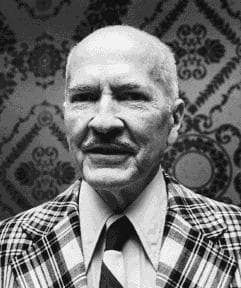
Robert Anson Heinlein was an American science fiction author, aeronautical engineer, and naval officer. Sometimes called the "dean of science fiction writers", he was among the first to emphasize scientific accuracy in his fiction, and was thus a pioneer of the subgenre of hard science fiction. His published works, both fiction and non-fiction, express admiration for competence and emphasize the value of critical thinking. His plots often posed provocative situations which challenged conventional social mores. His work continues to have an influence on the science-fiction genre, and on modern culture more generally.







