“I'm sick of not having the courage to be an absolute nobody.”
— Franny expresses her disillusionment with college and the superficiality she perceives.

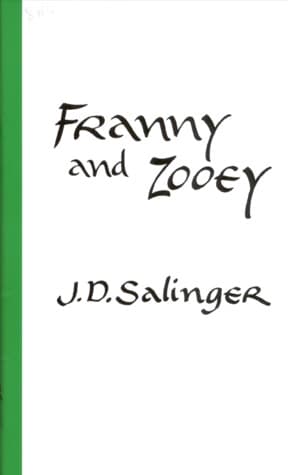
J.D. Salinger (1955)
Genre
Literary Fiction
Reading Time
180 min
Key Themes
See below
Sign in to track this book
A young woman's spiritual crisis forces her brilliant, cynical brother to question his own wisdom and offer genuine comfort.
Franny Glass, a college student, arrives at an unnamed college town to meet her boyfriend, Lane Coutell, for a football weekend. Lane, self-absorbed and wanting to impress Franny with his recent publication, takes her to a restaurant. Franny, however, is increasingly quiet and finds his intellectual showing off and the conversations around her shallow. She struggles to make polite conversation, feeling a growing sense of nausea and disappointment. She mentions her interest in a small green book, 'The Way of a Pilgrim,' which suggests repeating the Jesus Prayer constantly. She expresses a desire to live a more spiritual life, which confuses and bothers Lane.
During their lunch, Franny's emotional and physical state worsens. She struggles to eat, feeling increasingly faint and distant because of the superficiality she sees in Lane and their surroundings. She tries to explain her new spiritual practice, focused on the Jesus Prayer, to a mostly uninterested Lane, who cares more about his academic achievements. The conversation shows their growing separation. Franny eventually excuses herself to the ladies' room, where she faints. When she returns, she is visibly shaken and fragile, further showing Lane's inability to understand her inner turmoil. The scene ends with Franny close to tears, deeply upset.
The story moves to the Glass apartment in Manhattan, several days after Franny's bad weekend with Lane. Franny is home, lying on the sofa in the living room, in a state of deep emotional and spiritual exhaustion, with crying spells. Her mother, Bessie Glass, is very worried and tries to talk to Franny, offering her chicken broth and comfort. Bessie, practical and down-to-earth, struggles to understand Franny's spiritual crisis, thinking it comes from overwork or poor nutrition. She expresses her worry to Franny and later to Zooey, showing the family's shared concern for Franny's well-being.
Zooey Glass, Franny's older brother, is in the bathroom, where he spends a lot of time reading old letters from his deceased older brothers, Buddy and Seymour. He is a handsome, cynical, but very sensitive young man, an actor. While shaving, he has a long internal monologue, thinking about the extraordinary upbringing he and his siblings had under Buddy and Seymour. He remembers their strict education in Eastern philosophy, spiritual texts, and the performing arts, which both enriched and burdened them, setting them apart from the 'fake' world they live in. This introspection reveals why Franny is having her crisis.
Bessie enters the bathroom to speak with Zooey, expressing her deep worry about Franny's mental and spiritual state. She describes Franny's constant repetition of the Jesus Prayer and her withdrawal from normal life. Bessie, in her loving but somewhat confused way, suggests that Franny might need to see a psychiatrist. Zooey, still in the bathtub, listens with a mix of frustration and understanding. He dismisses the idea of a psychiatrist, believing it would not help Franny's specific spiritual pain. Their conversation shows the difference in understanding Franny's crisis, with Bessie representing practical concern and Zooey offering a more complex, if cynical, analysis rooted in their shared Glass upbringing.
After his conversation with Bessie, Zooey goes to the living room to talk to Franny. He finds her still on the sofa, looking pale and unwell. His first attempt to talk to her is blunt and somewhat aggressive. He criticizes her for her self-pity and for isolating herself, calling her a 'fat, self-satisfied little Buddha.' This harsh approach only upsets Franny more, who reacts defensively and tearfully. Zooey's frustration comes from his deep understanding of the Glass family's unique spiritual struggles and his fear that Franny is giving in to the very 'phoniness' they were all taught to despise, though in a different way. Their conversation quickly becomes an argument.
Despite the initial tension, Franny eventually tells Zooey about her practice of the Jesus Prayer, explaining its purpose and effect. She details how the prayer, when repeated constantly, can lead to 'pure, unbroken prayer' and a direct connection to God. Zooey, while initially dismissive, listens closely. He then shares his own deep understanding of spiritual practices and the challenges of living a real life in a superficial world. He acknowledges Franny's pursuit but suggests that her current approach is missing a key element, something he believes their brother Seymour would have understood. This marks a turning point in their interaction.
Feeling his direct approach with Franny was not working, Zooey goes to Seymour's old room and uses Seymour's phone. He calls Franny in the living room, pretending to be Buddy, their eldest brother. Using this disguise, Zooey delivers a powerful and moving message, drawing on their shared childhood experiences on the 'It's a Wise Child' radio show. He reminds Franny of Seymour's advice to 'shine your shoes for the Fat Lady,' a metaphor for performing with love and dedication for the anonymous, often overlooked, audience. He explains that the 'Fat Lady' represents Christ himself, or the purest part of humanity in everyone, urging Franny to move past her ego and serve others with love, regardless of their perceived phoniness.
As Zooey, still pretending to be Buddy, continues his discussion on the 'Fat Lady,' Franny listens closely. The message, coming from a voice she connects with the wisdom of her beloved older brother, finally breaks through her spiritual paralysis. Zooey emphasizes that true spirituality is not about escaping the world or judging its imperfections, but about finding the divine in the ordinary and serving it with love. He tells her that every act, no matter how small, can be a spiritual offering. Franny, deeply moved by his words and the memory of Seymour, begins to weep, but these are tears of release and understanding, not despair. She hangs up the phone, feeling a deep sense of peace.
After the phone call, Franny remains on the sofa, but her attitude has changed greatly. The tension and despair that had held her throughout the story begin to fade. She feels a sense of warmth and comfort, a feeling of being connected to something larger than herself. The story ends with Franny lying on the sofa, a slight smile on her lips, looking up at the ceiling. She has found a temporary answer to her spiritual crisis, understanding that the path to authenticity and connection comes not from withdrawing, but from embracing the world with love and compassion, as taught by Seymour and explained by Zooey. The ending suggests a hopeful, though not fully resolved, future for Franny.
The Protagonist
Franny moves from a state of intense spiritual and existential despair to a moment of profound peace and understanding, finding a path to integrate her spiritual yearnings with the demands of the world.
The Protagonist/Supporting (in Franny's story)
Zooey moves from an initial state of frustrated cynicism towards Franny's crisis to actively engaging with her spiritual struggle, ultimately providing the guidance she needs.
The Supporting
Bessie's arc is largely static, serving as a loving anchor and a concerned observer of her children's struggles.
The Supporting
Lane remains largely unchanged, serving primarily as a foil to Franny's sensitivity and spiritual awakening.
The Mentioned/Influential
As a deceased character, Seymour's 'arc' is represented by his enduring influence and the posthumous revelation of his profound wisdom.
The Mentioned/Influential
Buddy's 'arc' is primarily off-stage, serving as the intellectual and emotional anchor for the Glass family's history and wisdom.
The main theme involves Franny's deep disappointment with the 'phoniness' and egoism she sees in the secular world, especially in academia. She desperately searches for real spiritual meaning. Her use of the Jesus Prayer is an attempt to cleanse herself and connect with the divine, but she struggles with the isolation and judgment that come with her first approach. Zooey, using Seymour's teachings, eventually helps her understand that true faith is not about escaping the world or judging others, but about finding the divine in everyday life and serving it with love. This theme appears clearly in Franny's nausea at the restaurant and her eventual peace after Zooey's 'Fat Lady' revelation.
““I’m sick of not having the courage to be an absolute nobody.””
The Glass siblings, especially Franny and Zooey, are child prodigies who had an extraordinary, intellectually demanding, and spiritually intense upbringing. This unique education, largely organized by Seymour and Buddy, gave them great knowledge and sensitivity but also made them feel distant from the 'normal' world. Their intelligence is both a gift and a burden, as they try to reconcile their deep insights with the superficiality they encounter. Zooey's long monologue about their upbringing and Franny's inability to connect with Lane highlight this theme, showing how their exceptionalism can lead to isolation.
““All those old Glass children, they were freaks, that’s all. Bright, sensitive, freaks.””
Both Franny and Zooey, in their own ways, search for authenticity in a world they see as full of pretense and 'phoniness.' Franny's crisis begins when she can no longer tolerate the fake conversations and self-serving ambitions around her, leading her to seek comfort in spiritual practice. Zooey, an actor, deals with the inherent artificiality of his job and the performative aspects of life. The solution comes when Zooey, acting as Seymour, teaches Franny that true authenticity is not found in withdrawal or judgment, but in embracing and loving the world as it is, recognizing the divine in everyone, even the 'Fat Lady' in the audience.
““I don’t want to be a bore, but I’m just not interested in the kind of people who are interested in the kind of people who are interested in me.””
Despite their individual struggles, the Glass family, especially the bond between the siblings, is a strong source of support and guidance. Franny's crisis is eventually resolved not by professional help or outside figures, but by her brother, Zooey, who channels the wisdom of their deceased elder brother, Seymour. The deep understanding they share, from their unique upbringing and shared intellectual and spiritual heritage, allows Zooey to reach Franny in a way no one else can. The family's history, their shared language, and their deep love for each other are essential to Franny's healing.
““You know who the Fat Lady really is?... She’s Christ Himself. Christ Himself, buddy.””
A repetitive prayer used for spiritual purification and connection.
The Jesus Prayer ('Lord Jesus Christ, Son of God, have mercy on me, a sinner') is a central motif in 'Franny.' It serves as both the catalyst and the initial focus of Franny's spiritual crisis. Its incessant repetition is meant to lead to 'pure, unbroken prayer' and a direct experience of God, but Franny's initial application of it leads to isolation and judgment. The prayer symbolizes her yearning for spiritual purity and her struggle to reconcile this desire with the perceived 'phoniness' of the world, before Zooey recontextualizes its true purpose.
A symbol for the divine in every individual, especially the overlooked and ordinary.
The 'Fat Lady' is a powerful metaphor introduced by Seymour Glass and relayed by Zooey (impersonating Buddy) to Franny. It refers to the anonymous, often unappreciated, audience member whom Seymour urged his siblings to 'shine their shoes for' when performing on their childhood radio show. Zooey reveals that Seymour intended the 'Fat Lady' to represent Christ himself, or the purest essence of humanity in everyone. This device serves as the ultimate resolution to Franny's crisis, shifting her focus from ego and judgment to unconditional love and service to others, regardless of their perceived flaws.
References to letters from Buddy and Seymour provide backstory and context.
While not a purely epistolary novel, the frequent references to and direct quotation of letters from Buddy and Seymour Glass serve as a crucial plot device. These letters provide context for the Glass family's unique upbringing, their intellectual and spiritual foundations, and the deep influence of their older brothers. Zooey's reading of Buddy's letter in the bathroom, in particular, anchors the narrative in the Glass family's history and helps explain the origins of Franny's current struggles. They allow the wisdom of the absent characters to permeate the present narrative.
Zooey's strategic impersonation of Buddy to deliver a crucial message.
The phone call between Zooey (impersonating Buddy) and Franny is a pivotal plot device. It allows Zooey to bypass Franny's emotional defenses and deliver the profound message about the 'Fat Lady' from a revered figure. The impersonation creates a distance that enables Franny to receive the wisdom without the friction of their direct, brother-sister dynamic. This device highlights the power of familial connection and shared history, as Franny is more receptive to the message when she believes it comes from Buddy, channeling Seymour.
“I'm sick of not having the courage to be an absolute nobody.”
— Franny expresses her disillusionment with college and the superficiality she perceives.
“An artist's only responsibility is to say something, in whatever medium he works, that will make a lasting impression.”
— Zooey, in a letter, discusses the purpose and responsibility of an artist.
“All of a sudden I thought of something that I hadn't thought of in years. I thought of the Fat Lady.”
— Zooey tells Franny about an old piece of advice Buddy gave him about performing for the 'Fat Lady'.
“The only thing you can do is to be a saint. The only thing you can do is to be a saint.”
— Franny, in an existential crisis, repeats this phrase from 'The Way of a Pilgrim'.
“If you're a poet, you do something beautiful. If you're a scientist, you discover something important.”
— Zooey critiques the superficiality of ambition in the arts and sciences.
“There isn't anyone out there who isn't Seymour's Fat Lady.”
— Zooey reveals the deeper meaning behind the 'Fat Lady' metaphor to Franny.
“I can't stand the sight of all these people. I mean, I can't stand the sight of all these people's faces.”
— Franny expresses her intense discomfort and alienation at a college party.
“Just because he's a little neurotic, just because he's a little bit of a snob, doesn't mean he doesn't love his sister.”
— Bessy tries to reassure Franny about Zooey's intentions.
“You can't just be a good person, you have to be a good person for God.”
— Franny, discussing her spiritual quest, differentiates between secular and sacred goodness.
“The only thing you have to do is be a saint, and then it's all right.”
— Franny's simplified, yet intense, understanding of her spiritual path.
“I'm sick of not having the courage to be an absolute nobody. I'm sick of all these people who are so busy being something.”
— Franny's yearning for anonymity and escape from societal pressures.
“She was tired of the whole thing, the whole business of being in college and being a girl.”
— Narrator describes Franny's general weariness and dissatisfaction with her life.
“If you're going to say something, say something that will make a lasting impression.”
— Zooey's advice on the importance of meaningful communication and art.
“What I'm saying is, if you're going to go around pretending to be a Christian, you'd better be one.”
— Zooey challenges Franny's superficial approach to her spiritual practices.
“The world is full of people who are just waiting to be told what to do.”
— Zooey's cynical observation about human nature and the desire for direction.
Ready to see how well you understood this book? Take our interactive quiz with 10 questions.

Biography coming soon.







