“The greatest art is in the frame. The frame is the thing that makes you look at the picture.”
— Dylan's father, a museum curator, explains the importance of the frame.

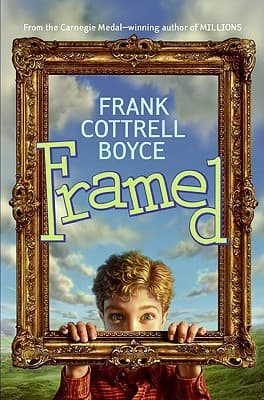
Frank Cottrell Boyce (2005)
Genre
Children's / Mystery
Reading Time
240 min
Key Themes
See below
Sign in to track this book
In a town with no other boys, a pie-making, chicken-loving nine-year-old named Dylan, whose family is barely ahead of the taxman, finds a national art heist that could save his struggling gas station or land them all in deeper trouble.
Dylan Hughes lives in Manod, a remote, rainy Welsh village, the only place in the UK without a boy his age. His family runs the last petrol station for miles, also a cafe known for his mum's pies, but they face financial trouble. One day, a convoy of lorries arrives, bringing a secret: the National Gallery's art collection, including works by Van Gogh, Monet, and Turner, is going to Manod's disused slate mine for safety during an emergency. The news is meant to be secret, but the art's arrival and the museum staff quickly change the village's quiet routine, fascinating Dylan.
Because of a misunderstanding and the art's extreme secrecy, Dylan, with his two pet chickens, is first mistaken for part of the security team. Mr. Daniel, the overwhelmed director of the National Gallery, likes Dylan and informally makes him a 'Special Security Consultant.' Dylan, who often feels ignored, takes this role seriously. He learns about the paintings from Mr. Daniel and other museum experts, who slowly adjust to their isolated lives in the Welsh mountains, often with funny results. The art, in the huge mine, becomes a strange and beautiful background to Dylan's daily life.
The Hughes family's finances are bad. Their petrol station is failing, and Dylan's father, Papa, worries about a tax investigation. Papa, a kind but somewhat naive man, made questionable business decisions, like selling 'shares' in his petrol station to villagers, which tax authorities find suspicious. The family struggles to pay bills, and the pressure is clear. Dylan's older sister, Minnie, a budding entrepreneur with a talent for schemes, tries to help, often with bad or funny results. The family's worries contrast with the priceless treasures hidden nearby.
Initially, villagers are uninterested in or suspicious of the art and the 'Londoners' who brought it. They see museum staff as strange and paintings as unrelated to their tough, practical lives. However, as experts slowly join village life, and as Dylan shares his growing appreciation for the art, a change happens. Mrs. Davies, the village matriarch, becomes interested, and local children are drawn to the paintings' colors and stories. The village pub, the 'Manod Arms,' becomes a reluctant meeting place for the two groups, creating an unexpected cultural exchange.
Desperate to save their father from prison and their family from ruin, Minnie plans a complex and illegal scheme. She decides they need to 'frame' the visiting tax inspector, Mr. Jenkins, by making it look like he stole a painting. Her idea is to stage a fake theft, hoping the chaos and publicity will somehow clear Papa and distract from their financial problems. Dylan, despite his moral doubts and his growing love for the art, is reluctantly pulled into Minnie's bold plan, which she meticulously designs, showing her cleverness.
Minnie, with Dylan's help, tries to 'steal' a painting (a fake one they made) and plant it to blame Mr. Jenkins. However, during their secret operation in the mine, they find a real theft happened. A genuine painting—Van Gogh's 'Sunflowers'—is missing. This discovery panics the National Gallery staff and alerts authorities. Minnie's carefully planned 'frame-up' accidentally uncovers a real crime, raising the stakes for everyone in Manod and bringing unwanted national attention to the secret art storage.
The theft of 'Sunflowers' energizes the entire village. Police arrive, along with media, making Manod a busy place. The villagers, who had not cared about the art, now feel a personal connection and responsibility. With Dylan's guidance, and the combined efforts of museum staff and locals, a frantic search starts. They search the mine, village, and surrounding areas, using local knowledge and community skills. The crisis brings the two groups—art experts and Welsh villagers—closer in an unexpected alliance.
As the official investigation stops, Dylan, with his perspective and knowledge of the mine and art, starts to connect clues. He remembers details and differences, using his 'special security consultant' training. He realizes the thief is not an outsider but someone in the small, trusted group of National Gallery staff. Through careful thought, he identifies the true culprit: Mr. Jenkins, the seemingly harmless tax inspector, who used his access to plan the theft, driven by greed and a desire to profit from the 'national emergency'.
Faced with Dylan's clear evidence, Mr. Jenkins confesses to stealing 'Sunflowers' and is arrested. The painting is recovered, to the relief of Mr. Daniel and the National Gallery. The art theft's resolution has an unexpected good outcome for the Hughes family. Media attention about the art and Dylan's role in its recovery brings many visitors to Manod, revitalizing their struggling petrol station and cafe. Papa's tax issues are also resolved, as authorities realize the 'shares' were more a village custom than a crime, partly due to the goodwill from the art crisis.
Eventually, the national emergency ends, and the art collection returns to London. The villagers are sad to see it go, having grown fond of the paintings and the art experts. However, Manod is changed forever. The village, once unknown, is now called the 'Home of the Art,' a place where art found shelter. It becomes a small tourist attraction, with visitors coming to see the mine and the petrol station that once held masterpieces. Dylan, no longer just the boy who lives in the rain, is now a hero and an unlikely guardian of culture, his life much richer from his experience with the art.
The Protagonist
Dylan transforms from an overlooked, ordinary child into a sharp-witted hero who saves priceless art and, in doing so, helps his family and community.
The Supporting
Minnie learns that her clever schemes, while often effective, can have unintended consequences, and that true solutions often require honesty and cooperation.
The Supporting
Papa's anxieties are resolved as his family's financial situation improves and his name is cleared, restoring his peace of mind.
The Supporting
Her steady presence helps her family navigate their difficulties, and her pies become a symbol of the village's unexpected cultural fusion.
The Supporting
Mr. Daniel learns to adapt to unexpected circumstances and discovers that a child's innocent perspective can be invaluable in solving complex problems.
The Antagonist
Initially a perceived antagonist due to his role as tax inspector, he is exposed as the true criminal mastermind behind the art theft.
The Supporting
She evolves from a skeptical traditionalist to an open-minded community leader who embraces the unexpected cultural infusion.
The Mentioned
They remain constant, comforting companions to Dylan throughout his adventures.
This theme explores how art, even when new, can change people and communities. The paintings from the National Gallery, brought to the Welsh village of Manod, slowly bring out wonder, beauty, and shared humanity among the villagers. Dylan's journey of appreciating art, from seeing it as objects to understanding its value, reflects the village's change. The art helps unite people, bringing together different groups and inspiring a sense of shared responsibility.
“It was as if the pictures, all of them, had been holding their breath for a very long time, and now they could breathe again.”
The novel shows the Manod community's strengths and quirks. Initially isolated and wary of outsiders ('Londoners'), the villagers slowly come together, first through curiosity about the art, then through a group effort to protect it. Dylan, feeling alone as the only boy his age, finds belonging through his 'special security consultant' role and his connection to the art. The stolen painting crisis unites everyone, blurring social lines and creating a strong sense of shared purpose and identity.
“Suddenly, the whole village was involved. It was a proper Manod thing.”
The Hughes family's struggles, especially Papa's tax problems, drive much of the plot. Minnie's plan, though illegal, comes from loyalty and a desperate wish to protect her father. Dylan, despite his morals, joins Minnie's plan because he loves his family. The story shows the strong bonds within the family and how they face challenges together. Ultimately, the family's problems are solved not by Minnie's illegal schemes, but by the unexpected good results of Dylan's heroism.
“Minnie was a genius when it came to plans. Especially plans to save Papa.”
This theme appears in several parts of the story. The 'national emergency' that requires the art's evacuation is unclear, creating mystery. The quiet village of Manod hides priceless treasures. Most importantly, Mr. Jenkins, the seemingly harmless tax inspector, is the art thief, showing that appearances can mislead. Dylan, an ordinary nine-year-old, becomes an extraordinary hero, defying expectations. The story constantly asks the reader to look past the obvious.
“He looked like a tax inspector, which, as it turned out, was the perfect disguise for an art thief.”
A priceless collection of paintings serving as the central MacGuffin and catalyst for change.
The National Gallery's art collection (including works by Van Gogh, Monet, and Turner) functions as both a MacGuffin and a transformative force. Initially, it's the secret cargo that brings disruption to Manod. Its presence drives the plot, particularly the theft. Beyond its plot-driving role, the art acts as a powerful symbol of beauty, culture, and shared human heritage, ultimately inspiring and uniting the villagers, and awakening Dylan's sense of purpose. It represents the potential for unexpected beauty to emerge in the most unlikely of places.
The disused mine serves as a unique and symbolic setting for the art's safekeeping.
The disused slate mine is more than just a location; it's a symbolic setting. Its dark, cavernous depths contrast sharply with the vibrant, light-filled masterpieces it houses. It represents a hidden world, a sanctuary, and a place where two vastly different cultures (the rural Welsh community and the sophisticated art world) are forced to coexist. The mine's history and its role as a secret vault add to the mystery and tension of the story, making it an integral part of the narrative's atmosphere and themes.
The recurring device of Minnie's elaborate, often ill-advised, plans to solve problems.
Minnie's schemes are a recurring plot device that injects humor, tension, and unexpected turns into the story. Her meticulously planned (and often comically flawed) attempts to 'frame' the tax inspector or otherwise save her family drive significant portions of the plot. While her intentions are good, her methods are questionable, leading to unforeseen consequences, such as accidentally uncovering the real art theft. This device highlights themes of family loyalty, the fine line between ingenuity and mischief, and the unpredictable nature of well-intentioned plans.
Dylan's self-appointed and officially sanctioned title, giving him agency.
Dylan's role as 'Special Security Consultant' is a clever plot device that grants him agency and legitimacy within the adult world of the art experts. It elevates him from an ordinary child to a crucial participant in the unfolding events. This title, given somewhat whimsically by Mr. Daniel, empowers Dylan, allowing him to observe, deduce, and ultimately solve the mystery. It also allows the narrative to explore complex themes from a child's unique and often insightful perspective, making his contributions feel earned and significant.
“The greatest art is in the frame. The frame is the thing that makes you look at the picture.”
— Dylan's father, a museum curator, explains the importance of the frame.
“You don't need a lot of money to be happy. You need a lot of interesting things to look at.”
— Dylan reflects on his family's simple life and the richness of their surroundings.
“Sometimes the most valuable things are the ones nobody else wants.”
— Referring to the seemingly worthless items Dylan collects, which later prove significant.
“Art isn't just about beautiful things. It's about things that make you feel something.”
— Dylan's evolving understanding of art, beyond conventional beauty.
“The world is full of clues, if you know how to look for them.”
— Dylan's father encourages him to be observant and curious.
“Even the smallest thing can be important if it's in the right place at the right time.”
— A recurring theme as seemingly minor details become crucial to solving the mystery.
“People always want to believe what they want to believe, even when the truth is staring them in the face.”
— Dylan observes how adults often overlook obvious facts.
“A good story isn't just about what happened, but why it happened.”
— Dylan learns the importance of understanding motivations and context.
“Silence can be a very powerful thing. It can hide a lot, or it can reveal a lot.”
— Reflecting on the quiet atmosphere of the museum and the secrets it holds.
“You never know what you're capable of until you have to be.”
— Dylan discovers his own courage and resourcefulness under pressure.
“Sometimes the best way to find something is to stop looking so hard.”
— A moment of serendipity when a solution presents itself unexpectedly.
“Every picture tells a story, but sometimes you have to look beyond the frame to hear it.”
— Encouraging a deeper engagement with art and its hidden narratives.
“The greatest adventures often start in the most ordinary places.”
— The extraordinary events that unfold from the seemingly mundane setting of a Welsh village.
Ready to see how well you understood this book? Take our interactive quiz with 10 questions.

Biography coming soon.
Dan Gemeinhart
4.5
Kate O'Hearn
4.4
Jeanne Birdsall
4.4

Jen Wang
4.4
Wendelin Van Draanen
4.3

John Marsden
4.3

Chris Van Allsburg
4.3
Jennifer A. Nielsen
4.2