“Fox in socks, our game is done, sir. Thank you for a lot of fun, sir.”
— The fox concludes the tongue-twisting game with Knox.

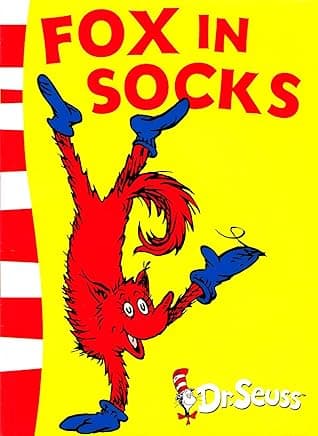
Dr. Seuss (1965)
Genre
Fantasy / Children's
Reading Time
10 min
Key Themes
See below
Sign in to track this book
A mischievous fox in socks playfully pushes a bewildered Mr. Knox to untangle a riotous knot of increasingly complex and comical tongue-twisters.
The story begins with the energetic Fox in Socks introducing himself to a bewildered Mr. Knox. Fox, wearing his distinct socks, immediately shows his skill with words, starting with simple rhyming phrases. He promises to teach Mr. Knox 'new tricks' with words, which makes Mr. Knox a little worried. Fox's fast talking and playful manner set the stage for the language challenge to come, hinting at the difficult tongue-twisters. Mr. Knox, a rather portly and less excited character, is quickly put on the defensive by Fox's eager verbal attack, trying to keep up with the quick pace.
Fox quickly starts his first tongue-twisters, beginning with 'socks on Knox' and 'Knox in box'. He then adds 'fox in socks' and 'box on socks', making it more complex. Mr. Knox struggles to keep up, getting confused by the similar-sounding words. Fox, a patient but persistent teacher, tells him to repeat the phrases faster and faster. Mr. Knox's frustration grows as he fumbles the words, showing the difficulty of speaking that Fox handles so well. The image of socks, boxes, Fox, and Knox makes a funny scene, showing the physical and verbal confusion.
The language challenge gets harder as Fox introduces new things: 'chicks with bricks' and 'chicks with blocks'. He then combines these with the earlier 'socks and boxes' theme, making phrases like 'chicks with bricks and blocks and socks'. Mr. Knox feels more and more overwhelmed by the fast series of similar-sounding words. His attempts to say the phrases become more strained, and his anger is clear. Fox, however, keeps his energetic and demanding pace, pushing Mr. Knox further into the maze of words, seeming to enjoy Mr. Knox's verbal struggles.
As the tongue-twisters get more detailed, Fox introduces an imaginary creature called a 'Glunk' who is sitting on a 'trunk'. He then adds 'skunk' and 'punk' to the mix, creating new difficult rhymes. Mr. Knox is now clearly upset, struggling to remember the characters and objects, let alone say the phrases quickly. The Glunk adds a silly element to the already complex verbal exercises, pushing Mr. Knox to his speaking limit. Fox's constant progression gives Mr. Knox little time to rest.
Fox continues his verbal attack with phrases about 'snoopy snack' and 'snap'. He builds sentences like 'When a fox takes snacks in socks, he doesn't take snacks in boxes', confusing Mr. Knox more with similar sounds and different ideas. Mr. Knox's attempts to keep up are less and less successful, and his frustration turns into tiredness. The speed of the rhymes and the increasing difficulty of the word combinations make it almost impossible for Mr. Knox to say them correctly, showing his growing inability to match Fox's speed and accuracy.
The tongue-twisters change again with a 'Goo-Goose' and a 'loose moose'. Fox creates phrases like 'Goo-Goose gander, goose goes loose' and 'loose moose in a goose caboose'. Mr. Knox is now completely overwhelmed, his face showing signs of total defeat. The new characters and their actions add another level of abstract difficulty to the already hard verbal exercises, pushing Mr. Knox past his limits. Fox's constant creativity in making new and difficult rhymes leaves Mr. Knox confused.
Fox introduces perhaps the most famous and complex tongue-twister in the book: the 'tweetle beetles'. He describes 'tweetle beetles battling with paddles in a puddle', then adds 'paddles in a puddle, where they chew their food in a noodle' and 'poodle eating noodles'. This part is a peak of verbal skill, made to be almost impossible to say quickly and clearly. Mr. Knox is completely defeated, unable to even start saying these complex phrases, his expression one of total surrender. This sequence shows the book's main challenge.
After the constant stream of harder and harder tongue-twisters, Mr. Knox finally reaches his limit. He clearly tells Fox to stop, saying he 'can't say such silly things'. His patience has run out, and his frustration has turned into a definite refusal to continue. He says he wants Fox to leave him alone, making it clear he has had enough of the verbal torture. This is a turning point where Mr. Knox asserts himself against Fox's playful but demanding teaching.
In a surprise, Mr. Knox, having finally had enough, decides to turn the tables on Fox. He challenges Fox with his own tongue-twister, a simpler but still tricky phrase about 'snoopy snack' and 'snap' that he had struggled with before. He tells Fox to repeat it quickly, showing new confidence. This moment is a big change in who holds power, as Mr. Knox, who was the student, now becomes the teacher, giving Fox a taste of his own medicine and showing that even the master can be challenged.
Fox, surprised by Mr. Knox's unexpected challenge, tries to repeat the phrase. However, he struggles with the fast talking he had been demanding from Mr. Knox throughout the book. He fumbles and gets his words tangled, which pleases Mr. Knox. This role reversal makes a funny ending, showing that even the expert can be tripped up by their own game. Fox's momentary defeat brings balance to the story, as the constant teacher finally experiences the challenge he gave his student.
The Protagonist/Teacher
Fox begins as the confident, unchallenged master of words and ends with a brief, humorous moment of struggle when faced with his own game.
The Antagonist/Student
Mr. Knox evolves from a bewildered and frustrated student to an assertive individual who challenges his teacher.
The Mentioned/Supporting
No specific arc, as they are static elements within the rhymes.
The Mentioned/Supporting
No specific arc, as they are static elements within the rhymes.
The Mentioned/Supporting
No specific arc, as they are static elements within the rhymes.
The Mentioned/Supporting
No specific arc, as they are static elements within the rhymes.
The main theme is how language works—its sounds, rhythms, and how it can be clear or confusing. *Fox in Socks* shows how words, when put together well, can create funny and difficult puzzles. The book highlights the fun of playing with words and how flexible the English language is. This is clear on every page, as Fox carefully makes complex phrases, pushing the limits of alliteration and assonance, making both Mr. Knox and the reader pay close attention to how words are said.
“Fox in socks, on box on socks. / Knox in box. Fox in socks.”
The book explores patience and effort through Mr. Knox's growing struggle and eventual breaking point. Fox's constant teaching style pushes Mr. Knox to his limits, testing his ability to keep trying despite repeated failures. Mr. Knox's journey from confusion to frustration, and then to asserting himself, shows how important it is to keep going through a challenge and to know when to speak up. His eventual turning of the tables shows a kind of effort in not giving up completely but finding a way to respond.
“Say these words, Mr. Knox, sir. / Try to say them, Mr. Knox, sir.”
The relationship between Fox in Socks and Mr. Knox forms the story's center, showing a unique teacher-student dynamic. Fox is the demanding, energetic instructor, while Mr. Knox is the unwilling, struggling student. The book explores the difficulties in teaching and learning, especially when the subject is hard and the teacher is relentless. The eventual role reversal, where Mr. Knox challenges Fox, adds a funny twist to this dynamic, showing that even the teacher can be tested.
“And NOW, Mr. Knox, sir... / Here's a new trick, Mr. Knox, sir...”
Mr. Knox's emotional journey clearly shows the cycle of frustration and eventual relief. From his first confusion, through growing anger with the harder tongue-twisters, to his final shout of 'I can't say such silly things!', his journey is one of increasing difficulty. The relief comes when he finally stands up for himself and, surprisingly, manages to challenge Fox back, finding a moment of success after his earlier struggles. This theme is easy to relate to for anyone who has faced a hard task.
“I can't say such silly things, sir! / I can't say them, Mr. Fox, sir!”
The primary mechanism for driving the plot and engaging the reader.
The entire book is built around a series of progressively complex tongue-twisters. These verbal puzzles are not merely decorative but are the engine of the plot, creating the central conflict between Fox's verbal dexterity and Mr. Knox's struggle. They serve to challenge the reader's own articulation and create a shared experience of linguistic difficulty. The specific construction of each tongue-twister, using alliteration, assonance, and similar-sounding words, is the core literary device that defines the book's purpose and entertainment value.
Extensive use of similar sounds to create rhythmic and challenging phrases.
Dr. Seuss masterfully employs alliteration (repetition of initial consonant sounds) and assonance (repetition of vowel sounds) throughout the book. This device is fundamental to the creation of the tongue-twisters, making them both catchy and incredibly difficult to pronounce quickly. Examples include 'socks on Knox', 'chicks with bricks and blocks', and 'tweetle beetles battling'. These phonetic patterns are not just stylistic choices; they are integral to the plot, directly causing Mr. Knox's struggles and the book's comedic effect, as well as helping early readers develop phonological awareness.
Repeating and building upon previous phrases to increase complexity.
The book uses repetition of key words and phrases, but always with an added element that escalates the difficulty. For instance, 'socks on Knox' becomes 'fox in socks, on box on socks' and then 'chicks with bricks and blocks and socks'. This device creates a sense of continuous challenge and progress in the narrative. It allows the reader to see Mr. Knox's mounting frustration and highlights Fox's relentless pursuit of more intricate wordplay, building towards the climax of the 'tweetle beetles' and Mr. Knox's eventual breaking point.
The unexpected switch in power dynamics between teacher and student.
The plot device of role reversal occurs at the climax of the story when Mr. Knox, having endured Fox's relentless challenges, suddenly turns the tables and presents a tongue-twister to Fox. This unexpected shift in dynamics provides a satisfying comedic conclusion. It allows Mr. Knox to assert himself and gives Fox a taste of his own medicine, highlighting the universal experience of being challenged. This device provides narrative closure and a humorous resolution to the escalating conflict between the two characters.
“Fox in socks, our game is done, sir. Thank you for a lot of fun, sir.”
— The fox concludes the tongue-twisting game with Knox.
“When a fox is in the bottle where the tweetle beetles battle with their paddles in a puddle on a noodle-eating poodle, THIS is what they call... a tweetle beetle noodle poodle bottled paddled muddled duddled fuddled wuddled fox in socks, sir!”
— A complex tongue-twister describing a chaotic scene.
“Through three cheese trees three free fleas flew. While these fleas flew, freezy breeze blew.”
— A tongue-twister involving fleas and trees.
“New socks. Two socks. Whose socks? Sue's socks.”
— A simple, repetitive phrase early in the book.
“Knox in box. Fox in socks.”
— A foundational pairing that sets up the characters.
“Who sews crow's clothes? Sue sews crow's clothes.”
— A tongue-twister about sewing.
“Slow Joe Crow sews. Who sews whose clothes? Sue sews Sue's clothes.”
— Continuing the sewing-themed tongue-twister.
“Bim comes. Ben comes. Bim brings Ben broom. Ben brings Bim broom.”
— A tongue-twister involving characters Bim and Ben.
“Luke Luck likes lakes. Luke's duck likes lakes. Luke Luck licks lakes. Luck's duck licks lakes.”
— A tongue-twister about Luke Luck and his duck.
“Cock in socks, sir. See you tickle, sir.”
— The fox challenges Knox with a playful taunt.
“When beetles fight these battles in a bottle with their paddles and the bottle's on a poodle and the poodle's eating noodles... they call this a muddle puddle tweetle poodle beetle noodle bottle paddle battle.”
— A precursor to the more famous chaotic tongue-twister.
“Socks on Knox and Knox in box.”
— A reversal of the initial pairing, emphasizing confusion.
“Fox on clocks on bricks and blocks. Bricks and blocks on Knox on box.”
— A tongue-twister building complexity with stacking elements.
“Take it slowly. This book is dangerous!”
— A warning from the narrator about the tongue-twisters.
Ready to see how well you understood this book? Take our interactive quiz with 10 questions.
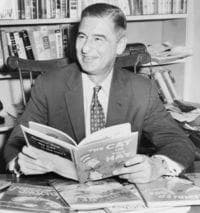
Dr. Seuss, born Theodor Seuss Geisel, was a beloved American children's author and illustrator. He is renowned for his imaginative tales and whimsical rhymes, including iconic works like 'The Cat in the Hat,' 'Green Eggs and Ham,' and 'Oh, the Places You'll Go!'. His unique style and memorable characters have made him a staple in children's literature for generations.







