“All things change, my dear. Not always for the better, not always for the worse, but always, always change.”
— Sancia's internal reflection on the nature of reality and the world's impermanence.

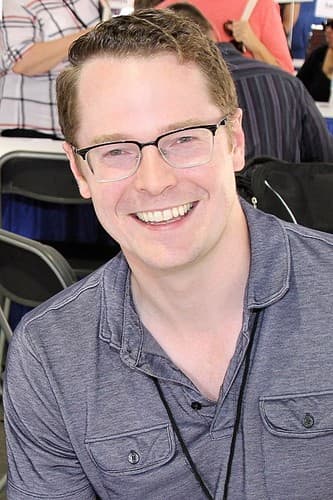
Robert Jackson Bennett (2018)
Genre
Fantasy / Science Fiction
Reading Time
10-12 hours
Key Themes
See below
Sign in to track this book
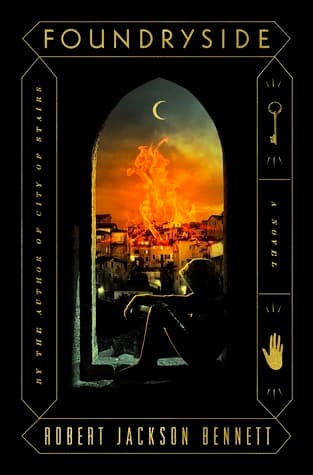
A master thief with the power to rewrite objects' very natures finds an artifact that could unravel a city built on magical capitalism, forcing her to embrace a terrifying transformation or watch the world be rewritten by those who would enslave it.
Sancia Grado, a thief with the ability to 'scrive' objects by touch, undertakes a heist in Tevanne's docks. Her target is a guarded warehouse belonging to the Merchant House of Crasedes. Using her talent, which lets her alter the 'truths' of objects—making a lock think it's open or a wall think it's air—she bypasses defenses. She retrieves the item: a strange, intricate metal key that resists her scriving. Her employer, Captain Grash, promised a large sum. As Sancia escapes, she realizes the artifact is more powerful and dangerous than she expected, attracting attention from the Merchant Houses and their scriving capabilities. The key, later revealed as a 'keyed' or 'scrived' object itself, begins to communicate with her, showing a basic sentience.
After the heist, Sancia is pursued by powerful scrivers from House Crasedes, led by Gregor Dandolo. Dandolo, a master scriver-artisan, uses his knowledge of the city's scrived infrastructure to track Sancia. She navigates Tevanne's streets and canals, using her quick thinking and limited scriving to evade capture. The key, which she now knows is important, continues to influence her, whispering and subtly aiding her escape. She realizes Captain Grash betrayed her, setting her up as a pawn in a larger game involving control of this artifact and the city's scriving secrets. She is alone against the Merchant Houses.
Desperate and injured, Sancia seeks refuge in the workshop of Orso, a disgraced former scriver. Orso, initially suspicious, is intrigued by Sancia's unique, instinctual scriving and the mysterious key. He tells Sancia the history and mechanics of scriving: it is not just magic, but a manipulation of fundamental 'truths' about reality, originally discovered by the scriver-god, Hierophant. Orso explains that scriving alters an object's 'prime truth' by convincing it it's something else, changing its properties. He warns Sancia about the key's power, identifying it as a 'keyed' object—a relic from the Hierophant era, capable of manipulating scriving itself. He also reveals the Hierophant's 'foundry,' a mythical place where prime truths can be rewritten fundamentally.
The key, which Sancia names Kyra, begins to communicate more clearly, revealing itself as a sentient, ancient scrived construct. Kyra explains it was created by the Hierophant to access and manipulate the 'foundry,' a place of ultimate scriving power. Kyra also reveals that Sancia's unique scriving ability—her ability to 'talk' to objects and instinctively understand their truths—is a sign that she is a 'keyed' individual, a person designed or altered by the Hierophant to interact with such powerful artifacts. This revelation deepens Sancia's understanding of her identity and her connection to the ancient, god-like figure. Kyra urges Sancia to find the Hierophant's foundry, believing it holds the key to restoring the world to a more balanced state, free from the Merchant Houses' control.
Sancia and Orso meet Clef, an advanced scrived construct, a 'keyed' being like Kyra, but designed for combat and information gathering. Clef, initially hostile, reveals he was also created by the Hierophant and protects the foundry's secrets. Through Clef, Sancia learns that Captain Grash, her former employer, is a powerful figure within one of the lesser Merchant Houses. He has been manipulating events to gain control of Kyra and the foundry. Grash intends to use the foundry's power to reshape Tevanne to his own design, becoming a new Hierophant. This betrayal strengthens Sancia's resolve to stop Grash and prevent the foundry's power from falling into the wrong hands, aligning her goals with Orso and Clef.
As Sancia, Orso, and Clef work to find clues to the foundry, they are pursued by Gregor Dandolo and House Crasedes, who want Kyra back. At the same time, Captain Grash, now revealed as Silas Dandolo (Gregor's brother), uses his network and scrived agents to track Sancia. Tevanne's Merchant Houses' political plans become clearer: each House wants to control the Hierophant's legacy for their own gain. Crasedes wants to keep its dominance, while Silas wants to reshape reality. Sancia realizes she is caught between powerful groups, all fighting for control over existence, and her abilities make her a valuable, yet dangerous, asset to both sides.
Following clues within Kyra and ancient texts deciphered by Orso, Sancia and her allies find the Hierophant's Foundry. It is not a physical place but a vast, ancient, complex scrived chamber hidden deep beneath Tevanne. The Foundry is a machine of immense power, capable of altering the 'prime truths' of objects and concepts on a fundamental, universal level. Its power is far beyond anything current scrivers can achieve. The scale of the Hierophant's work shows a deep understanding of reality. Accessing and controlling the Foundry requires Kyra and a unique individual like Sancia, who can intuitively interface with its complex scrived mechanisms.
The climax happens within the Hierophant's Foundry. Gregor Dandolo, leading House Crasedes's forces, and Silas Dandolo (Grash), with his scrived army, converge on the Foundry, each determined to seize its power. A chaotic battle breaks out, with powerful scriving attacks. Orso uses his knowledge to counter Gregor's scriving, while Clef fights Silas's constructs. Sancia, guided by Kyra, navigates the Foundry's controls, trying to understand how to operate it and prevent either brother from gaining full control. During the struggle, Silas's ambition is revealed: he wants to rewrite Tevanne's prime truths, to eliminate poverty and inequality by simply scriving them out of existence, a dangerous plan that would remove free will.
Cornered and facing overwhelming odds, Sancia realizes the only way to stop Silas and prevent the catastrophic misuse of the Foundry is to use its power herself. Guided by Kyra, she begins to understand how to interface with the Foundry's core, a process that requires a deep connection to the fundamental truths of reality. In a desperate act, Sancia uses the Foundry's power, not to rewrite the world, but to rewrite her own prime truth, transforming herself into something more than human. She becomes a 'keyed' being, imbued with the Hierophant's power, capable of scriving on an unimaginable scale. This transformation allows her to neutralize Silas's scriving and defend the Foundry, but at a personal cost, changing her perception and interaction with the world forever.
After the battle, Silas Dandolo is defeated, his plans for a 'perfect' Tevanne stopped. Gregor Dandolo grapples with the Foundry's existence and his brother's actions. Sancia, changed by the Foundry's power, is no longer just a thief. She has an understanding of scriving and the underlying truths of reality, but also feels alienated from her former self. With Orso and Clef, she secures the Foundry, recognizing the responsibility that comes with its existence. The Merchant Houses are shaken. Sancia, Kyra, Orso, and Clef now face the task of deciding how to manage this ultimate power, understanding that the world has been altered by the Hierophant's legacy, and their journey continues.
The Protagonist
Sancia transforms from a self-serving thief into a powerful, 'keyed' being who embraces her unique connection to scriving and takes responsibility for the Hierophant's legacy.
The Supporting
Kyra helps Sancia unlock the Foundry's secrets and its own potential, fulfilling its ancient purpose as a guide to the Hierophant's legacy.
The Supporting
Orso moves from reclusive scholar to active participant, using his knowledge to help Sancia uncover the Hierophant's secrets and challenge the Merchant Houses.
The Supporting
Clef transitions from an isolated guardian to an active ally, working alongside Sancia and Orso to protect the Foundry from misuse.
The Antagonist
Gregor remains a staunch defender of the Merchant Houses' power, ultimately failing to prevent the Hierophant's legacy from being unleashed.
The Antagonist
Silas's ambition to rewrite reality through the Foundry leads to his ultimate defeat and the exposure of his dangerous ideology.
The Mentioned
Though absent, the Hierophant's legacy is rediscovered, challenging the established order and revealing the true potential of scriving.
The Supporting
Paolo remains a loyal, if somewhat limited, enforcer for House Crasedes.
Sancia's journey is about understanding who she is and where her scriving ability comes from. Her initial self-perception as a 'broken' thief changes to the revelation that she is a 'keyed' individual, linked to the Hierophant's legacy. This forces her to confront her past and her potential to reshape reality. Her transformation in the Foundry is the ultimate expression of this theme, as she literally rewrites her own prime truth, becoming something new and powerful.
““There are things in the world that are true, Sancia. And things that are made true. And then there are things that are made true, but they used to be true, and then they stopped, and then they were made true again.””
The novel explores the nature of power, especially through scriving. The Merchant Houses control Tevanne through their mastery of scrived technology, shaping the city and maintaining a social hierarchy. The discovery of the Hierophant's Foundry is the ultimate power—the ability to rewrite reality. Silas Dandolo's desire to use this power for his 'utopian' vision, and the Houses' desperation to control it, show how absolute power corrupts and the ethical problems it presents. Sancia's struggle is to prevent this power from being taken over or misused.
““Everything in Tevanne is scrived. The bridges, the canals, the very air you breathe. It’s all been twisted to serve the Houses.””
At its core, Foundryside explores philosophical questions about 'truth.' Scriving is the manipulation of an object's 'prime truth' by convincing it it's something else. This raises questions: If an object can be made to believe it's not what it is, what does that say about objective reality? The Hierophant's Foundry takes this to an extreme, offering the ability to rewrite fundamental truths on a universal scale, blurring the lines between what is, what is perceived, and what can be willed into being. The book constantly asks the reader to consider how fluid reality is.
““Every object has a prime truth, Sancia. A fundamental, unchangeable reality. Scriving is merely persuading that truth to bend.””
Tevanne is a capitalist machine, where the Merchant Houses, through their control of scriving, maintain a divide between the wealthy and the poor. Scrived objects and infrastructure consolidate power and wealth, creating a city where even basic necessities can be manipulated for profit. Sancia's background as a thief from the lower class shows the oppressive nature of this system. Silas Dandolo's motivations, though extreme, come from a desire to dismantle this inequality, even if through a dangerous method. The novel critiques unchecked corporate power and its impact on society.
““The Houses don’t build. They buy. They buy up the truths of things, and then they sell them back to us.””
The magic system that manipulates the 'prime truths' of objects.
Scriving is the foundational magic system of Foundryside. It involves altering an object's 'prime truth' by applying coded commands, essentially convincing the object it is something it's not, thereby changing its physical properties or behavior. For example, a lock can be scrived to 'believe' it's open, or a wall to 'believe' it's air. This system is highly detailed and has specific rules and limitations, making it feel scientific. It is the source of all technology and power in Tevanne, controlled by the Merchant Houses. Sancia's unique ability to instinctively 'talk' to objects is a rare and powerful form of scriving.
An ancient, ultimate scriving machine capable of rewriting fundamental truths.
The Hierophant's Foundry is the central MacGuffin and ultimate plot device. It is an ancient, complex scrived chamber hidden beneath Tevanne, created by the legendary Hierophant. Unlike conventional scriving, which manipulates local truths, the Foundry is capable of altering 'prime truths' on a universal or conceptual level. It represents the ultimate power to reshape reality, making it the coveted prize for all factions. Its existence drives the entire narrative, forcing Sancia to confront its power and the ethical implications of using it. It also serves as the site of the climax and Sancia's transformative experience.
A sentient 'keyed' artifact that guides Sancia to the Foundry.
Kyra, initially just 'the key,' functions as a crucial plot device, acting as a sentient MacGuffin and a guide. It is a 'keyed' construct, meaning it was specifically designed by the Hierophant to interact with the Foundry and 'keyed' individuals like Sancia. Its sentience allows it to communicate with Sancia, providing exposition about the Hierophant, scriving, and the Foundry's location and function. Kyra's unique nature and its resistance to conventional scriving immediately signal its importance and propel Sancia into the larger conflict, serving as both a physical object and a narrative voice.
The fundamental, underlying reality of an object or concept.
The concept of 'prime truth' is a core philosophical and magical plot device. It refers to the fundamental, inherent reality or nature of an object, independent of any scriving. Scriving works by overriding or 'persuading' an object's prime truth to believe it is something else. This concept underpins the entire magic system and the philosophical questions the book raises about reality. The Hierophant's ultimate power, and the Foundry's purpose, is to manipulate these prime truths on a foundational level, not just locally, which has immense implications for the fabric of existence.
“All things change, my dear. Not always for the better, not always for the worse, but always, always change.”
— Sancia's internal reflection on the nature of reality and the world's impermanence.
“A lie is a tool, not a truth. It can be shaped, sharpened, used to cut through the toughest problems.”
— Sancia considering the utility of deception in her work.
“The world is not as it seems, nor as it should be. It is as it is made.”
— A foundational idea in the book, spoken or thought by a scriver, emphasizing the constructed nature of reality.
“Every object has a soul. Or, if not a soul, then a purpose, a nature, a way it wants to be.”
— A scriver's understanding of how scriving interacts with the inherent properties of objects.
“To truly know something, you must break it apart. See the pieces. Understand how they fit, and how they can be made to fit differently.”
— Sancia's approach to understanding complex mechanisms and scrived objects.
“The greatest prison is the one you build for yourself, brick by brick, lie by lie.”
— A character reflecting on the self-imposed limitations and deceptions.
“Power isn't about having the biggest army or the most money. It's about knowing how the world works, and how to make it work for you.”
— A discussion on the true nature of power in a world where reality can be re-scrived.
“Fear is a useful emotion. It tells you what to avoid, what to prepare for. But it is a terrible master.”
— Sancia's internal monologue about managing her own fear in dangerous situations.
“Every secret comes with a cost. The longer you keep it, the higher the price.”
— A character warning about the burden of hidden truths.
“The past is a story we tell ourselves. The future is a story we try to write.”
— A philosophical reflection on time and agency.
“A true scriver doesn't just change an object; they understand its fundamental nature and then persuade it to be something more.”
— A description of the art of scriving, going beyond simple alteration.
“It's not about what you're born with, but what you make of what you're given.”
— A character's belief in the power of agency over inherent traits.
“The biggest lies are often the ones we tell ourselves to make the world make sense.”
— A reflection on cognitive biases and self-deception in understanding complex realities.
“There are always other ways. Always. The trick is finding them.”
— Sancia's determined mindset when facing seemingly impossible obstacles.
“Sometimes, the only way to save something is to be willing to let it burn.”
— A difficult decision made in a moment of crisis, highlighting sacrifice for a greater good.
Ready to see how well you understood this book? Take our interactive quiz with 10 questions.
Biography coming soon.







