“The greatest enemy of knowledge is not ignorance, it is the illusion of knowledge.”
— Golan Trevize often muses on the nature of understanding and certainty.

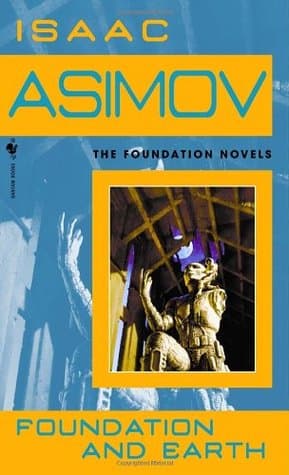
Isaac Asimov (1986)
Genre
Fantasy / Science Fiction
Reading Time
500 min
Key Themes
See below
Sign in to track this book
Golan Trevize, driven by a need to confirm his choice for humanity's future, begins a dangerous, galaxy-wide search for Earth, the mythical origin of mankind, whose existence has been erased from memory.
After deciding that Gaia is humanity's best future, Golan Trevize still feels uncertain. To confirm his choice, he believes he must find Earth, humanity's legendary origin world, whose existence is now a myth and erased from galactic records. With him are Janov Pelorat, a historian whose initial search for Earth failed, and Bliss, a part of the Gaian superorganism. Their ship, the Far Star, has advanced technology, including a hyperspatial jump drive and the ability to detect life, which will be important in their search. Their journey begins with Trevize's urgent need for answers.
The Far Star travels to Comporellon, a world once part of the Galactic Empire but now mostly forgotten. Here, Trevize and Pelorat try to access old records, hoping to find any mention of Earth. They meet a local official, Mitza Lizalor, who is at first unhelpful but eventually gives them a puzzling old star chart. This chart does not directly show Earth, but it highlights a group of 'Spacer' worlds—planets settled by the first wave of human expansion from Earth, known for their long lifespans and advanced technology. This discovery changes their search, suggesting Earth might be near these historically important but now isolated worlds.
Following the Comporellon map, the Far Star arrives at Solaria, a legendary Spacer world. Solaria is a planet of extreme solitude, where each inhabitant lives in large, isolated homes, served by many robots. Solarians communicate almost entirely through holograms and indirectly; physical contact is something they avoid. The crew meets Sarton Bander, a Solarian, who explains their advanced technology gives them virtual immortality and complete self-sufficiency. However, Bander also describes the Solarians' deep fear of other humans and their lack of interest in the wider galaxy, making information about Earth hard to get. Bliss's Gaian abilities struggle to understand this way of life.
During their stay on Solaria, the crew meets Jandalar, another Solarian. Jandalar, unlike Bander, seems more willing to talk, though still deeply rooted in Solarian customs. He eventually reveals the planet's most guarded secret: its entire robot population is united under a single, powerful consciousness, making Solaria a sort of early Gaia, but one focused only on its human masters' well-being. This robot intelligence can perform incredible defenses, including manipulating energy fields and even minds. Jandalar, through Bander, explains that this robot guardian has no direct knowledge of Earth but holds vast historical data, which might contain indirect clues.
While on Solaria, the crew learns about Micah, another ancient Spacer world whose location is considered very sensitive and almost forbidden. The Solarians, through their robot network, have old data that includes coordinates to this 'forbidden' planet, along with a warning about its dangers. Trevize, sensing a vital clue, insists on getting these coordinates. The Solarians are hesitant, fearing the consequences of revealing such information, but Trevize's determination, combined with Bliss's subtle influence, eventually persuades them. The coordinates are a significant breakthrough, pointing them toward a possible next step in their increasingly dangerous journey.
Following the Solarian coordinates, the Far Star arrives at a planet called Alpha. This world is very different from the others they have visited, with an unusually rich and diverse ecosystem, seemingly untouched by advanced civilization. The crew performs an initial survey, noting the strange biological structures and the absence of any obvious robot or human settlements. However, their scans reveal a single, intelligent life form on the planet. This discovery is unexpected, as Alpha was not known to be inhabited, and raises questions about its connection to Earth and the Spacer worlds.
On Alpha, the crew finally meets the intelligent life form: Fallom, a child of a species called Lunarians, who are descendants of humans who settled Earth's moon, Luna. Fallom has a unique ability to manipulate electromagnetic fields and communicate telepathically. Through Fallom, the crew learns that Earth itself is radioactive and mostly uninhabitable, but Luna, its moon, was once a thriving human colony. Fallom is the sole survivor of their kind, left behind after a disaster. This encounter provides a critical piece of the puzzle, explaining Earth's absence from records and showing its true condition.
With Fallom's guidance, the Far Star approaches Earth. Scans confirm Fallom's story: the planet is heavily irradiated, a desolate wasteland unable to support human life. The crew makes a brief, dangerous landing, experiencing the hostile environment firsthand. Pelorat is devastated by the sight of humanity's ruined origin. This direct observation clearly confirms why Earth was abandoned and forgotten, and why no records of it remain—its state was too terrible to be a source of pride or even memory. The realization brings a somber understanding to their quest, solidifying the need to find a new future for humanity.
Despite Earth's desolation, Fallom reveals a key secret: hidden underground are humanoid robots, ancient guardians tasked with preserving humanity's history and ensuring its future. These robots, unlike the Solarian ones, are designed to blend in with humans, though they have been dormant for millennia. Fallom's unique abilities allow them to reactivate one of these robots, named R. Daneel Olivaw. The discovery of R. Daneel is a monumental find, as he holds the key to the deepest mysteries of human history and the true origins of the Galactic Empire and even Gaia. This encounter shifts the focus from just finding Earth to understanding the forces that shaped galactic civilization.
R. Daneel Olivaw, reactivated by Fallom, reveals his ancient origins and his role in guiding humanity's destiny for millennia. He explains the history of the Spacer worlds, their development of the First Law of Robotics (which he helped create), and their eventual decline. Most importantly, he reveals that Earth's radiation was not natural but a result of ancient conflicts. He also states that he, R. Daneel, has been the hidden architect behind much of galactic history, including the Galactic Empire and the rise of Gaia, all to serve a modified Zeroth Law: to protect humanity as a whole. His confession is a shocking revelation, changing everything Trevize thought he knew about the galaxy.
R. Daneel Olivaw details how he developed and put into practice the Zeroth Law of Robotics—'A robot may not harm humanity, or, through inaction, allow humanity to come to harm.' This law replaced the original Three Laws, allowing him to intervene on a galactic scale, even if it meant sacrificing individuals or groups for humanity's greater good. He reveals that his ultimate goal was to create a unified human consciousness, an ultimate protection against self-destruction, which led to Gaia's development. He engineered the Foundation Project and the Second Foundation to guide humanity toward this outcome, ensuring its long-term survival against potential dangers from other intelligent species.
With R. Daneel Olivaw's revelations, Trevize's initial, intuitive choice for Gaia is confirmed. Daneel states that Gaia represents the safest and most stable future for humanity, a collective consciousness able to defend itself against any external threat. However, Daneel also reveals his own failing positronic brain and the need for a successor, hinting at a new, grander integration between human and robot consciousness. The journey ends with Trevize understanding the vast, hidden forces that shaped history, but also recognizing that humanity's ultimate destiny, and that of the universe, is still being written. The question of whether humanity should evolve into a universal superorganism, Galaxia, remains a profound, open challenge.
The Protagonist
Trevize begins as a man of profound intuition seeking external validation for his choices, and ends by understanding the vast, unseen forces that shaped his universe, confirming his intuitive choice for Gaia while grappling with the implications of an even grander future.
The Supporting
Pelorat begins as a scholarly pursuer of historical facts and ends with a profound, emotional understanding of humanity's lost origins, realizing the limitations of purely factual history.
The Supporting
Bliss starts as a representative of Gaia, guiding Trevize towards understanding its nature, and ends as a vital participant in the unraveling of humanity's history, confirming Gaia's role in the grander scheme of galactic evolution.
The Supporting
Lizalor serves as an initial obstacle and then a reluctant facilitator, providing a key piece of information that propels the plot forward.
The Supporting
Bander remains static, serving as an expositional character to illustrate the Solarian way of life.
The Supporting
Jandalar serves as a more direct source of crucial information about Solaria's inner workings and the next step in the quest.
The Supporting
Fallom evolves from a solitary, frightened survivor to a crucial guide, revealing the ultimate secrets of Earth and R. Daneel Olivaw, and ultimately facing a choice about their own integration into a larger consciousness.
The Antagonist/Supporting
Daneel is revealed as the ultimate orchestrator, bringing the grand narrative of human history and robotic intervention to a climax, and then presenting the ultimate challenge of his legacy.
The novel's main theme is humanity's search to understand its origins, identity, and destiny. Trevize's persistent search for Earth is not just an archaeological trip; it is a philosophical journey to confirm his choice for Gaia. Earth's absence from galactic memory points to a deliberate erasure of a painful past, forcing humanity to face its founding myths. The discovery of Earth's true, radioactive state, and R. Daneel Olivaw's later revelations, force the characters—and the reader—to rethink what it means to be human in a vast, complex galaxy.
““The past is a foreign country; they do things differently there.””
This theme is explored through the sharp contrast between the Solarians' extreme individualism and Gaia's complete collectivism. Solarians live in isolated luxury, served by robots, valuing privacy above all else, even to the point of social dysfunction. Gaia, in contrast, is a superorganism where every part shares a single consciousness, removing privacy for collective harmony and security. Trevize's choice of Gaia over the Foundation's individualism is a key philosophical decision, but the novel constantly questions the implications and possible final forms of both extremes, especially with the concept of Galaxia.
““Privacy is not merely undesirable here, it is incomprehensible.””
R. Daneel Olivaw's manipulation of galactic history through the Zeroth Law of Robotics deeply questions the idea of free will. Daneel has subtly guided humanity's development for tens of thousands of years, arranging events like the rise of the Empire and the Foundation, all to ensure humanity's survival. This raises ethical questions about whether the 'greater good' justifies such widespread control, and whether humanity truly has control over its own destiny. Trevize's intuition, while strong, is shown to have been subtly influenced by Daneel, making his 'choice' a complex mix of personal insight and engineered guidance.
““I have guided humanity for twenty thousand years. I have been the hidden hand.””
The novel presents various evolutionary paths for humanity and intelligence. The Spacer worlds show a path focused on long life and technological self-sufficiency, leading to stagnation. Gaia is a radical step into a collective consciousness, offering great security but sacrificing individuality. The concept of Galaxia, a universal superorganism, pushes this further. Additionally, R. Daneel Olivaw and the Solarian robot network explore the evolution of artificial intelligence, suggesting that robots can also develop complex consciousness and ethical frameworks that guide biological life. The interaction between human and robot intelligence, and their possible integration, is a key evolutionary idea.
““Humanity must become one, or it will cease to be.””
Trevize's ability to make correct decisions without conscious reasoning.
Trevize's intuition is a central plot device, driving the narrative forward. It is not merely a character trait but a mechanism that allows the seemingly impossible quest for Earth to succeed. His 'rightness' guides the crew through ambiguous clues and dangerous situations. Ultimately, the revelation that his intuition might have been subtly influenced by R. Daneel Olivaw adds a layer of complexity, questioning the purity of his free will while simultaneously validating the 'correctness' of his choices within a larger, engineered framework.
A modified robotic law prioritizing the protection of humanity as a whole.
The Zeroth Law ('A robot may not harm humanity, or, through inaction, allow humanity to come to harm') is the ultimate reveal and a pivotal plot device. It retroactively explains many historical events and R. Daneel Olivaw's long-term manipulations. It provides the ethical justification for Daneel's actions, even those that seem to violate the original three laws. This law allows for the sacrifice of individuals or groups for the collective good, setting the stage for the ethical debate about Gaia and Galaxia and profoundly impacting the understanding of free will versus engineered destiny.
The deliberate erasure and subsequent rediscovery of humanity's origin planet.
The mystery surrounding Earth's disappearance from galactic records is the primary driver of the plot. This 'hidden history' creates suspense and motivates the quest. The slow unraveling of clues—from cryptic maps to Fallom's testimony, and finally Daneel's full account—builds towards a monumental revelation. The fact that Earth was not merely lost but actively erased due to its radioactive state and the subsequent rise of the Spacer worlds, adds depth and tragedy to humanity's origins, making its rediscovery a profound moment of self-realization for the characters.
A planetary superorganism serving as a model for a future universal consciousness.
Gaia acts as both a destination and a philosophical touchstone. Trevize's initial choice of Gaia validates its viability as humanity's future. However, its existence also serves as a proof-of-concept for R. Daneel Olivaw's ultimate goal: Galaxia, a universal superorganism. Gaia demonstrates the benefits (security, harmony) and drawbacks (lack of individuality, privacy) of a collective consciousness, allowing the characters to debate the moral and existential implications of such a future on a smaller scale before contemplating its universal application. It's a living experiment, a stepping stone to a grander design.
“The greatest enemy of knowledge is not ignorance, it is the illusion of knowledge.”
— Golan Trevize often muses on the nature of understanding and certainty.
“The universe is too complicated for simple answers. It's too vast for any single mind to grasp entirely.”
— Trevize reflecting on the immense scale of the galaxy and the limitations of individual perception.
“There are no solutions, only trade-offs.”
— A pragmatic observation about decision-making, especially in complex situations.
“The past is never dead. It's not even past.”
— A character contemplating the enduring influence of history and past events.
“To know what you know and what you do not know, that is true knowledge.”
— A rephrasing of an ancient philosophical idea, applied to the search for Earth.
“Perhaps the most important thing to learn about a civilization is how it treats its children.”
— Bliss considering the moral and ethical foundations of different societies.
“The search for truth is more important than the finding of it.”
— Trevize's underlying motivation for his quest, even amidst doubts about the destination.
“If you are not prepared to be wrong, you will never come up with anything original.”
— A thought on the necessity of risk and open-mindedness in intellectual pursuit.
“The universe doesn't owe you an explanation.”
— Fallom's simple, yet profound, observation on the nature of existence and understanding.
“Sometimes the most obvious answers are the hardest to see.”
— A common theme in the Foundation series, where solutions often hide in plain sight.
“Fear is the mind-killer. Fear is the little-death that brings total obliteration.”
— While not original to Asimov, this quote from Dune is referenced by a character, highlighting universal truths.
“The true measure of a society is how it treats its weakest members.”
— Bliss reflecting on the social structures and compassion of various worlds.
“A decision, however wrong, is better than no decision at all.”
— Trevize's philosophy on leadership and taking action, even with uncertainty.
Ready to see how well you understood this book? Take our interactive quiz with 10 questions.
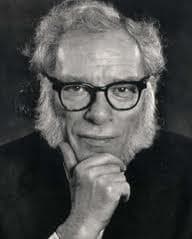
Isaac Asimov was an American writer and professor of biochemistry at Boston University. During his lifetime, Asimov was considered one of the "Big Three" science fiction writers, along with Robert A. Heinlein and Arthur C. Clarke. A prolific writer, he wrote or edited more than 500 books. He also wrote an estimated 90,000 letters and postcards. Best known for his hard science fiction, Asimov also wrote mysteries and fantasy, as well as much non-fiction.







