“The greatest enemy of truth is very often not the lie—deliberate, contrived and dishonest—but the myth—persistent, persuasive and unrealistic.”
— Reflecting on the nature of historical narratives and hidden truths.

Umberto Eco (2014)
Genre
Thriller / Historical Fiction / Mystery / Philosophy
Reading Time
15-20 hours
Key Themes
See below
Sign in to track this book
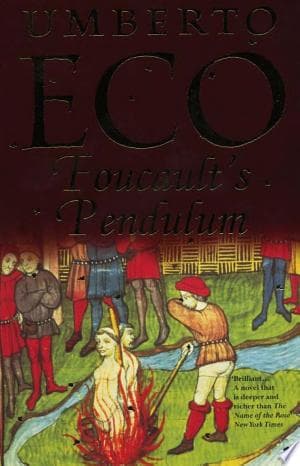
Three jaded editors, playing a dangerous game with occult manuscripts and a supercomputer, accidentally conjure a real-world conspiracy that drags them into a deadly hunt for an ancient secret.
The story begins with Casaubon, one of the three main characters, hiding in the Conservatoire des Arts et Métiers in Paris, under Foucault's Pendulum, on the eve of St. John's Day. He is waiting for a dangerous encounter, thinking about the complex history that led him there. He remembers a cryptic phone call warning him of danger and telling him to be at this location. This opening creates suspense and intellectual curiosity, hinting at a vast, hidden conspiracy and the personal danger the narrator faces. Casaubon's thoughts frame the intricate story that is about to unfold, setting the stage for a look into esotericism, history, and the power of narrative.
The story flashes back to Casaubon's past as a PhD student in medieval history, specializing in the Knights Templar. He takes a job at Garamond, a vanity press in Milan, where he works with two other cynical editors, Belbo and Diotallevi. They sort through many unusual manuscripts, many of which discuss occult theories, secret societies, and elaborate conspiracy theories. This constant exposure to strange ideas, from Rosicrucianism to ancient astronaut theories, gradually desensitizes them and sharpens their ability to find patterns, even false ones. This period establishes the intellectual environment that will later allow them to create their own elaborate game.
Colonel Ardenti, a retired military officer and amateur occultist, brings Garamond a manuscript detailing a fantastical conspiracy involving the Knights Templar. He claims the Templars did not vanish but went underground, controlling world events for centuries. Ardenti's theory involves a hidden treasure, a secret society called the 'Tres' (meaning 'Three'), and a plan for world control. He presents what he believes is a genuine Templar document, a coded message, which he thinks contains clues to their secret. The editors, especially Belbo, are initially amused and dismissive. But Ardenti's conviction and the boldness of his claims spark a fascination, even as they mock his ideas. Ardenti's sudden disappearance and later death, first thought to be an accident, become the first hint that their amusement might have serious consequences.
After Ardenti's disappearance, the three editors—Casaubon, Belbo, and Diotallevi—decide to create their own ultimate conspiracy theory, a game they call 'The Plan.' Driven by their cynical amusement with the endless occult manuscripts and a desire to outdo the wildest theories, they begin to combine historical events, secret societies, and mystical concepts. They feed random data, historical facts, and their own invented connections into a powerful computer called Abulafia, designed to find patterns. Their goal is to build a narrative so compelling and complex it explains everything, linking the Templars, Rosicrucians, Illuminati, and other groups into one grand, unified, and entirely fictitious scheme for world domination. This intellectual exercise is initially a private joke, a way to pass the time.
The computer Abulafia becomes central to their game. The editors input historical figures, events, and occult symbols, using the program to generate connections and interpretations. Abulafia, designed to find patterns, begins to produce increasingly elaborate and seemingly plausible links between different elements, strengthening the editors' fabricated narrative. They meticulously craft a 'Plan' that involves the Templars secretly surviving and creating a vast network of secret societies, ending in a grand ritual to achieve ultimate power. Creating The Plan becomes addictive, blurring the lines between their playful invention and potential real-world implications. They even assign themselves roles within their invented hierarchy, deepening their involvement in the game.
As The Plan develops, the editors invent specific details: a global network of secret societies, coded messages hidden in historical texts, and a specific date and location for a climactic ritual that will grant participants ultimate knowledge or power. They include elements from various real-world occult traditions, historical figures, and even personal stories, creating a narrative that is both complex and unsettlingly coherent. They develop the idea of the 'Tres' as the ultimate manipulators, a concept borrowed from Ardenti but greatly expanded. This period marks the peak of their creative collaboration, as they build a world of intricate deception, unaware that their creation will soon attract genuine believers and dangerous attention.
The editors begin to realize their game is not so private when a mysterious group, the TdC (Templars de la Croix), shows an unsettling interest in their invented Plan. These individuals, who genuinely believe in various occult conspiracies, interpret the editors' playful fabrications as real revelations. They start contacting the editors, seeking more information and confirming details the editors merely invented. This unexpected turn is the first serious sign that their game has gone out of control, attracting dangerous individuals willing to act on the fictional narrative. The playful intellectual exercise begins to become a source of real anxiety and fear for Casaubon, Belbo, and Diotallevi.
Belbo, the most cynical and perhaps most sensitive of the three, grows increasingly disturbed by the escalating reality of their game. He tries to distance himself from The Plan, but his knowledge makes him a target. He tries to confess the truth to a woman named Lia, but she dismisses it as another one of his elaborate stories. Eventually, Belbo is lured to a remote location, possibly by the TdC, under the pretense of a meeting about The Plan. He disappears, leaving a cryptic message that suggests he has been taken or is in grave danger. His disappearance is a turning point, changing the intellectual game into a desperate fight for survival for Casaubon and Diotallevi, who now realize the true extent of their peril.
Casaubon, having received the warning call and instructions to go to the Conservatoire, finds himself trapped under Foucault's Pendulum. He is confronted by the TdC, led by a charismatic and terrifying figure known as Agliè. These individuals are fervent believers in The Plan, convinced that Casaubon and his friends possess the final pieces of their puzzle. They interrogate Casaubon, demanding the 'truth' about the Templar treasure and the ultimate ritual. The scene is tense and claustrophobic, highlighting the disconnect between the editors' intellectual game and the dangerous fanaticism of the TdC. Casaubon realizes the full horror of their creation, as the fictional narrative has now become a dangerous reality for those who believe in it.
During the confrontation, the TdC performs a bizarre ritual, believing they are enacting the final stages of The Plan. They reveal Belbo, who has been captured and is suspended, seemingly as a sacrifice. In a desperate attempt to make them see reason, Belbo tries to explain that The Plan is a fabrication, a mere game. However, his pleas are misinterpreted by the fervent believers as part of the ritual or a final test. The TdC, blinded by their faith in the conspiracy, proceed with their actions, leading to Belbo's tragic death. This climactic scene shows the novel's central theme: the dangerous power of belief and how easily fiction can become a fatal reality when embraced by the gullible and fanatical.
Casaubon manages to escape the Conservatoire, deeply traumatized by Belbo's death and the horrifying realization of what their intellectual game had caused. He spends time reflecting on truth, fiction, and the human need to find patterns, even where none exist. He considers the fine line between playful invention and dangerous delusion, and how easily a fabricated narrative can take on a life of its own, consuming both its creators and its believers. The experience changes him, forever marked by the consequences of their pride and the terrifying power of an idea. He understands that the universe may not have a plan, but humans are compelled to create one, often with dire consequences.
The Protagonist
Casaubon begins as a detached observer, but is forced to confront the tangible and deadly consequences of his intellectual games, leading to a profound re-evaluation of truth and belief.
The Protagonist
Belbo's initial cynical detachment gives way to increasing anxiety and a desperate attempt to escape the dangerous reality of 'The Plan,' culminating in his tragic sacrifice.
The Protagonist
Diotallevi remains intellectually engaged with 'The Plan' even as it becomes dangerous, his fascination with mystical patterns driving his involvement.
The Supporting
Ardenti's brief appearance sets the entire plot in motion, his theories providing the initial framework for 'The Plan.'
The Supporting
Lia attempts to pull Casaubon back to reality, but her rational explanations are ultimately insufficient against the tide of the invented conspiracy.
The Antagonist
Agliè evolves from a seemingly benign expert to the primary antagonist, embodying the dangerous fanaticism that consumes 'The Plan.'
The Mentioned
Abulafia is a tool that accelerates the creation of the conspiracy, demonstrating technology's role in constructing narratives.
The novel explores the human tendency to find patterns and meaning, even when they don't exist. The editors, initially cynical, become drawn into the game of creating 'The Plan,' showing how easily one can fall for the appeal of a grand, unifying theory. This is clear when Casaubon, despite knowing it's a game, feels drawn to the 'truth' of The Plan. It culminates in the TdC's dangerous fanaticism, showing how a made-up story can become a fatal reality for those who believe it completely.
“A conspiracy is a much more enduring and stronger thing than a government. Governments fall, but a conspiracy remains.”
Eco shows how stories, both factual and fictional, shape our understanding of the world. The editors' creation of 'The Plan' is an act of narrative construction, showing how historical facts can be reinterpreted to fit a desired story. The novel shows that 'truth' often lies in interpretation, and a compelling narrative can be more powerful than objective reality. This is clear in how the TdC fully embraces and acts upon the editors' fictional creation, demonstrating the powerful and dangerous nature of a well-crafted, even false, narrative.
“Any text can be interpreted in an infinity of ways.”
The protagonists start as jaded cynics, mocking those who believe in occult conspiracies. However, their intellectual game forces them to confront the human need for belief and the dangers of both extreme cynicism and blind faith. Belbo, in particular, struggles with this tension, moving between cynical detachment and a secret desire for transcendence. The tragic outcome of the story suggests that while cynicism can protect one from delusion, it can also lead to a dangerous underestimation of the power of genuine belief in others.
“When you invent, you're not inventing reality; you're inventing a story.”
The novel treats history not as a fixed record but as a flexible text, a palimpsest where new meanings can be written over old ones. The editors' 'Plan' is essentially an act of rewriting history, finding hidden connections and secret meanings in existing historical documents and events. This theme is central to Casaubon's academic background and his interest in the Templars, a group whose history is already full of mystery and multiple interpretations. The book suggests that history is always open to interpretation, and these interpretations can be shaped, or even entirely made up, to serve a particular narrative.
“History is not a text, but a series of codes that can be deciphered in various ways.”
A physical manifestation of universal motion and a symbol of cosmic order.
The Foucault's Pendulum at the Conservatoire des Arts et Métiers serves as both a literal and symbolic anchor for the novel. Literally, it's Casaubon's hiding place and the site of the climax. Symbolically, it represents the earth's rotation and the universe's predictable, observable laws. Its constant, silent swing contrasts sharply with the chaotic, conspiratorial 'Plan' the characters invent. It acts as a counterpoint to the human desire to impose a hidden, complex order on the universe, suggesting that perhaps the most profound truths are the simplest ones, constantly present and observable.
A tool that automates the creation of arbitrary connections.
Abulafia is a powerful computer program used by the editors to process and link disparate pieces of information. It acts as a metaphor for the human mind's ability to find patterns and create narratives, but also highlights how technology can amplify this tendency to dangerous extremes. By feeding it random data and asking it to find connections, the editors inadvertently create a 'truth' that becomes compelling precisely because the computer, a supposedly objective tool, generates it. Abulafia legitimizes their fiction, blurring the lines between random data and meaningful patterns.
A fabricated, all-encompassing conspiracy theory.
The 'Plan' is the central plot device, an elaborate, entirely fictional conspiracy theory invented by the three editors. It functions as a meta-narrative, reflecting and satirizing the very occult manuscripts they edit. Initially a game, it gradually takes on a life of its own, becoming real for the genuine believers (the TdC). The Plan demonstrates the dangerous power of narrative construction, showing how a well-crafted fiction can become indistinguishable from reality for those who desperately seek meaning and order in the world. It is the engine of both the intellectual amusement and the ultimate tragedy of the story.
Extensive references to historical, mythological, and philosophical texts.
Eco employs pervasive intertextuality, weaving in countless allusions to historical events, esoteric traditions, philosophical concepts, and literary works. This device enriches the narrative by grounding the fictional 'Plan' in a dense tapestry of real-world knowledge, making the fabricated conspiracy seem more plausible. It also serves as a meta-commentary on the nature of knowledge itself, suggesting that all understanding is built upon prior texts and interpretations. The sheer volume of references challenges the reader to distinguish between genuine historical fact and clever narrative fabrication, mirroring the characters' own struggle.
“The greatest enemy of truth is very often not the lie—deliberate, contrived and dishonest—but the myth—persistent, persuasive and unrealistic.”
— Reflecting on the nature of historical narratives and hidden truths.
“That's what the world is, after all: an endless, inscrutable, obscure manuscript, crisscrossed with deletions, lacunae, and marginalia, and all of it in a secret code.”
— One of the protagonists, Casaubon, musing on the complexity and hidden meanings of reality.
“Anyone who wants to be a Magus does not practice the Greater Ritual, but only the Lesser: he learns how to read.”
— A comment on the true power of knowledge and understanding, rather than elaborate rituals.
“A conspiracy is a much more enduring explanation than chance.”
— Reflecting on the human tendency to seek elaborate patterns and hidden agendas.
“Every secret must be spoken, and every speech must be secret.”
— A paradoxical statement about the nature of esoteric knowledge and its dissemination.
“The world is a text, and texts want to be interpreted.”
— The underlying philosophical premise of the book, driving the characters' quest for meaning.
“Only a fool can be a perfect master of the obvious.”
— A cynical observation about the value of over-complicating simple truths.
“To invent a conspiracy is to invent a world.”
— Reflecting on the creative act of constructing elaborate theories, even if fictional.
“Order is not a principle, but a condition.”
— A philosophical distinction regarding the nature of structure and chaos.
“The only way to escape a conspiracy is to become part of it.”
— A darkly humorous and cynical take on the inescapable nature of the conspiracies they uncover (or invent).
“Truth is not found, but made.”
— A key tenet of the book's deconstruction of historical narratives and objective reality.
“What is a text, after all, but a machine for generating interpretations?”
— A semiotic perspective on the inherent openness and multiplicity of meaning in any given text.
“The desire to find a hidden pattern, a secret design, is one of the most powerful engines of human thought.”
— Explaining the psychological drive behind the characters' obsession with the Plan.
“When you want to invent a mystery, you first create a coincidence.”
— A practical guide to the art of fabricating compelling narratives, even if they're false.
Ready to see how well you understood this book? Take our interactive quiz with 10 questions.
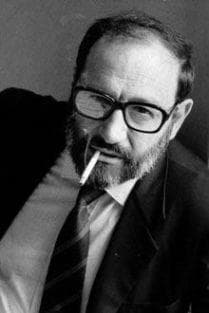
Umberto Eco was an Italian medievalist, philosopher, semiotician, novelist, cultural critic, and political and social commentator. In English, he is best known for his popular 1980 novel The Name of the Rose, a historical mystery combining semiotics in fiction with biblical analysis, medieval studies and literary theory, as well as Foucault's Pendulum, his 1988 novel which touches on similar themes.







