“The greatest enemy of knowledge is not ignorance, it is the illusion of knowledge.”
— Hari Seldon reflecting on the state of the Empire's understanding of its own decline.

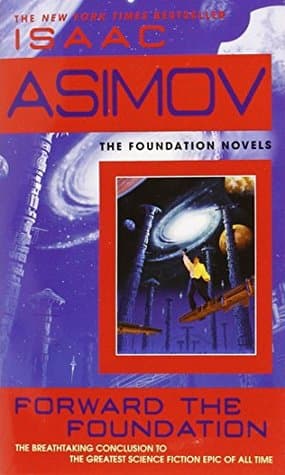
Isaac Asimov (1993)
Genre
Fantasy / Science Fiction
Reading Time
900 min
Key Themes
See below
Sign in to track this book
As the Galactic Empire crumbles, Hari Seldon races against time and political plots to secure the future of psychohistory, a science that promises to guide humanity through the coming dark age, starting with the unlikely legacy of his own granddaughter.
The story begins with Hari Seldon, a mathematician on Trantor, known for his early theory of psychohistory. Chetter Hummin, the First Minister of Emperor Cleon I, approaches Seldon, interested in his work. Hummin sees its potential for political control and stability in the crumbling Galactic Empire. Seldon, still developing his understanding, is wary of this political use. Hummin guides Seldon, introducing him to various political groups and testing his resolve, all while trying to recruit him to serve the Empire. Seldon grapples with the ethics of his research being used this way, fearing it could corrupt his scientific pursuit.
As political plots around Seldon grow, Chetter Hummin introduces him to Dors Venabili, a history professor. Hummin assigns Dors to Seldon as a bodyguard, though Seldon does not know she is a robot. Dors protects Seldon from threats from political groups trying to control psychohistory. Her presence allows Seldon to continue his research safely. Over time, they form a deep bond and marry. Dors becomes Seldon's protector, confidante, and intellectual partner, providing support as he develops his theory.
Hari Seldon's work on psychohistory needs much computing power and a team. He meets Yugo Amaryl, a mathematician from Trantor's working-class sector. Seldon sees Amaryl's talent and passion for mathematics as an asset to his project. Despite Amaryl's initial doubts about psychohistory's practical use, Seldon convinces him to join the research team. Amaryl becomes Seldon's dedicated assistant, developing the mathematical models and statistical methods needed to make psychohistory a working science. His contributions are key to moving the theory from an abstract idea to a predictive tool, establishing the Seldon Project's core.
Emperor Cleon I, a well-meaning but weak ruler, becomes more aware of psychohistory's potential political power. Influenced by advisors, including the manipulative Laskin Joranum, Cleon I presses Seldon for results. Cleon wants psychohistory to solve the Empire's instability and legitimize his rule. Seldon constantly balances the Emperor's demands with the slow pace of scientific research. He must balance the need for Imperial funding and protection with the need to prevent psychohistory from being used too early or as a weapon, which could cause bad calculations and unforeseen problems for the galactic future.
Laskin Joranum, a charismatic populist, gains power by using public discontent with the Empire. He sees psychohistory as a tool to legitimize his movement and potentially overthrow the current government. Joranum tries to recruit Seldon and his research, promising him more resources if Seldon aligns with his group. Seldon, however, recognizes the danger of psychohistory being used for short-term political gains, which would distort its long-term predictive power and ethical purpose. Dors Venabili protects Seldon from Joranum's influence, often physically intervening to ensure Seldon's safety and his work's integrity, showing the constant threat to the Seldon Project's independence.
Political tensions on Trantor peak with the assassination of Emperor Cleon I. This event, planned by various power-hungry groups, pushes the Galactic Empire into deeper instability. For Hari Seldon, Cleon's death removes a direct patron, but also a source of protection and funding for his psychohistory project. The assassination shows the Empire's fragility and the accelerating decline that Seldon's theory predicts. The power vacuum creates a more dangerous environment for Seldon and his team, as rival generals and politicians scramble for control, each potentially seeking to use psychohistory for their own ends, forcing Seldon to change his strategies.
Following Emperor Cleon I's assassination, General Riose, a military leader, stages a coup, trying to establish a new, militaristic government. Riose sees psychohistory as a weapon to consolidate his power and enforce order across the crumbling Empire. He pressures Seldon to apply psychohistory to military strategy and to predict his campaign outcomes. Seldon, however, refuses to let his science be militarized, understanding that such use would corrupt its long-term purpose and lead to a more devastating collapse. Dors Venabili again helps protect Seldon from Riose's tactics, ensuring the psychohistory project's integrity during this time.
In a confrontation, Dors Venabili sacrifices herself to protect Hari Seldon from a threat. During a period of political turmoil, her true nature as an advanced robot, designed to protect Seldon, is revealed. Her death deeply affects Seldon, who relied on her as a protector, wife, and partner. This loss leaves him isolated and grieving, but it also strengthens his resolve to complete psychohistory, honoring her sacrifice and continuing their mission to save humanity from the coming Dark Age. Her revelation highlights the hidden forces at play in Seldon's life.
After Dors's death and facing the Empire's accelerating decline, Hari Seldon shifts his focus from just predicting the future to shaping it. He realizes that the First Foundation, a colony of scientists, will not be enough to guide humanity through the predicted Dark Age. He begins to conceive of the Second Foundation: a hidden, mentalic organization designed to subtly influence human history and correct deviations from the Seldon Plan. This shift marks a change in his understanding of psychohistory's use, moving beyond prediction to active, long-term intervention. He starts identifying individuals with mental potential, including his granddaughter Wanda, as potential members of this group, laying the groundwork for its future.
In his later years, Hari Seldon discovers that his granddaughter, Wanda Seldon, has mental abilities – the power to read and influence minds. This discovery is a turning point, as it gives Seldon the human element for his Second Foundation idea. He realizes that the Second Foundation cannot rely only on mathematical predictions; it needs individuals capable of mental manipulation to guide the Seldon Plan. Seldon begins to train Wanda and identify others with similar talents, forming the core of the Second Foundation. Wanda becomes his primary student and confidante in this secret work, taking on leadership for this group designed to ensure the Plan's success.
In his final years, Hari Seldon dedicates himself to refining the Seldon Plan and establishing both the First and Second Foundations. He records his psychohistorical predictions in the Seldon Vault, setting up holographic messages that will guide the First Foundation. At the same time, he trains Wanda and other mentalics, developing the protocols for the Second Foundation's covert operations. Despite his personal losses and the Empire's decay, Seldon remains committed to his life's work. He addresses the challenges of the coming Dark Age, ensuring humanity has the best chance for a quick recovery, solidifying his legacy as the architect of humanity's future.
Hari Seldon dies peacefully, having finished his work. His death marks the transition from his direct involvement to the unfolding of the Seldon Plan. He leaves behind the theory of psychohistory and the mechanisms for its implementation: the First Foundation, publicly established on Terminus, and the Second Foundation, a secret society of mentalics, forming on Trantor. His life's work shows his foresight and dedication, offering humanity a path through the Galactic Empire's collapse and towards a new future. His legacy ensures that even after his passing, his vision guides the galaxy's destiny.
The Protagonist
Seldon evolves from an academic focused on theoretical work to a pragmatic leader who actively shapes the future through the creation of the Foundations, enduring immense personal loss and political pressure.
The Supporting
Dors's arc is one of unwavering protection and devotion, culminating in her ultimate sacrifice for Seldon, revealing her true nature and the depth of her commitment.
The Supporting
Hummin consistently guides and protects Seldon from the shadows, ensuring the psychohistory project's survival through various political upheavals.
The Supporting
Amaryl dedicates his life to the Seldon Project, evolving from a raw talent to the foundational mathematical architect of psychohistory.
The Supporting
Wanda discovers her mentalic powers and becomes the first leader and a crucial figure in the establishment of the Second Foundation.
The Supporting
Cleon I struggles to maintain control of a crumbling empire before his assassination plunges the galaxy into further chaos.
The Antagonist
Joranum rises as a populist threat, attempts to seize psychohistory, and is ultimately removed from power, highlighting the political instability of the era.
The Antagonist
Riose attempts a military takeover and to weaponize psychohistory, but ultimately fails, demonstrating the dangers to the Seldon Project.
Hari Seldon carries the burden of knowing humanity's future: a catastrophic collapse followed by a 30,000-year Dark Age. This knowledge drives him but also isolates him, as few understand the scale of the disaster. His responsibility is to predict the future and lessen the suffering, leading to the Seldon Plan and the two Foundations. This theme shows in his struggle to protect psychohistory from political misuse, as seen with Joranum and Riose, and his grief after Dors's death, which strengthens his commitment to the Plan.
““I am not a prophet. My work is not prophecy. It is mathematics.””
Throughout the novel, Hari Seldon's scientific work, psychohistory, is threatened by political manipulation. Various groups, from First Minister Hummin to Joranum and General Riose, try to control or weaponize psychohistory for their own goals. Seldon fights to keep his research independent, understanding that political interference would corrupt its predictive power. This conflict is central to the story, showing the tension between objective truth and subjective power, and is exemplified by Dors's role in protecting Seldon from these pressures.
““Psychohistory is not a toy for demagogues or generals. It is the future of humanity.””
The relationship between Hari Seldon and Dors Venabili explores the lines between humanity and advanced robotics. Dors, a robot, shows loyalty, love, and self-sacrifice, emotions usually linked with humans. Her ultimate sacrifice for Seldon raises questions about what defines sentience and selflessness. This theme challenges common ideas of humanity, suggesting that compassion can appear in unexpected forms. The revelation of Dors's true nature also highlights the hidden forces and advanced technologies at play in the galaxy, subtly influencing events for the greater good, a key idea in Asimov's robot series.
““I am a historian, Hari. I live in the past. You live in the future. But we can live together in the present.””
The main theme is the decline of the Galactic Empire, which psychohistory predicts. The political chaos, assassinations, and power struggles in the book show this decay. However, against this collapse, Hari Seldon offers hope through the Seldon Plan. His creation of the First and Second Foundations is an act of optimism, an effort to shorten the predicted Dark Age and ensure humanity's eventual renewal. This dual theme – acknowledging decline while working for a brighter future – drives Seldon's life work.
““The Galactic Empire is dying. And I am here to make sure that its death is not in vain.””
A mathematical science that predicts the future of large human populations.
Psychohistory is the central plot device, a hypothetical science developed by Hari Seldon that uses complex mathematics and statistics to predict the general future course of large human societies. It functions as both the driving force of the narrative and the ultimate goal. Its existence creates immediate political interest and conflict, as various factions seek to control or weaponize it. Psychohistory's predictive power guides Seldon's actions, leading to the creation of the Foundations, and its limitations (e.g., inability to predict individual actions) influence the need for the Second Foundation. It's the engine of the entire Foundation series.
Hari Seldon's grand strategy to guide humanity through the Dark Age.
The Seldon Plan is the overarching strategy devised by Hari Seldon, based on the predictions of psychohistory, to reduce the duration of the Galactic Empire's collapse and the subsequent Dark Age from 30,000 years to 1,000 years. It encompasses the creation of the First Foundation (a colony of scientists and engineers) and the Second Foundation (a covert organization of mentalics). The Plan acts as a blueprint for the future, with its various stages and crises unfolding throughout the Foundation series. In 'Forward the Foundation,' we see the meticulous planning and initial setup of this monumental, multi-generational project.
Advanced robots indistinguishable from humans, used for protection and subtle influence.
The presence of humaniform robots, specifically Dors Venabili, serves as a crucial plot device. Dors's concealed robotic nature allows her to act as Seldon's unseen protector, subtly influencing events and safeguarding him from numerous threats. Her existence highlights the advanced technology of the Empire and the complex ethical considerations surrounding artificial intelligence, particularly Asimov's Three Laws of Robotics (though not explicitly stated for Dors, her actions align with protecting Seldon/humanity). Her eventual revelation and sacrifice are pivotal emotional and plot points, underscoring the lengths to which Seldon is protected and the depth of his personal relationships.
Individuals with telepathic and mind-influencing abilities, forming the Second Foundation.
Mentalics are individuals who possess latent or developed telepathic and psychokinetic abilities, allowing them to read and subtly influence minds. The discovery of Wanda Seldon's mentalic powers is a critical plot device, as it provides Hari Seldon with the 'human' component necessary for the Second Foundation. While psychohistory predicts population trends, mentalics are needed to subtly correct deviations from the Seldon Plan and to influence individuals when necessary. Their existence adds a layer of covert, psychological intervention to the Plan, ensuring its success through means beyond pure mathematical prediction.
“The greatest enemy of knowledge is not ignorance, it is the illusion of knowledge.”
— Hari Seldon reflecting on the state of the Empire's understanding of its own decline.
“It is the chief characteristic of the human mind, I think, that it can make a heaven of hell, or a hell of heaven.”
— Hari Seldon pondering the subjective nature of human perception and experience.
“Individual human beings are not important. The species is important. The species must be preserved.”
— Hari Seldon discussing the ultimate goal of his Psychohistory project.
“The future is not a straight line. It is a series of curves, of deviations, of unexpected turns.”
— Hari Seldon explaining the complexities and uncertainties inherent in predicting societal trends.
“Empire is a state of mind, not a geographical entity.”
— Hari Seldon observing the psychological and cultural aspects of the Galactic Empire's decline.
“It is a characteristic of the human mind that it can be so easily misled by the appearance of things.”
— Hari Seldon reflecting on public opinion and the manipulation of information.
“When you have eliminated the impossible, whatever remains, however improbable, must be the truth.”
— Hari Seldon (and Asimov through him) referencing Sherlock Holmes's famous dictum, applied to problem-solving.
“The human brain is a marvelous thing. It starts working the moment you are born and never stops until you stand up to speak in public.”
— A moment of humor and self-deprecation from Hari Seldon during a public address.
“Change is the only constant. Resistance to change is what causes most of our problems.”
— Hari Seldon discussing the inevitability of societal evolution and the dangers of rigidity.
“There are no easy answers, only difficult choices.”
— Hari Seldon facing a critical decision regarding the direction of the Psychohistory project.
“The universe is under no obligation to make sense to you.”
— Hari Seldon reminding his students and himself of the vast indifference of the cosmos.
“History is a wheel, and it always comes full circle.”
— Hari Seldon discussing the cyclical nature of historical events and societal trends.
“The greatest strength of the human spirit is its ability to adapt.”
— Hari Seldon observing the resilience of humanity in the face of impending collapse.
“To succeed, you must first believe that you can.”
— Hari Seldon encouraging a disheartened colleague or student.
Ready to see how well you understood this book? Take our interactive quiz with 10 questions.
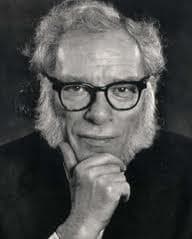
Isaac Asimov was an American writer and professor of biochemistry at Boston University. During his lifetime, Asimov was considered one of the "Big Three" science fiction writers, along with Robert A. Heinlein and Arthur C. Clarke. A prolific writer, he wrote or edited more than 500 books. He also wrote an estimated 90,000 letters and postcards. Best known for his hard science fiction, Asimov also wrote mysteries and fantasy, as well as much non-fiction.







