“Life is like a box of chocolates. You never know what you're gonna get.”
— Forrest's mother tells him this as a child to explain life's unpredictability.

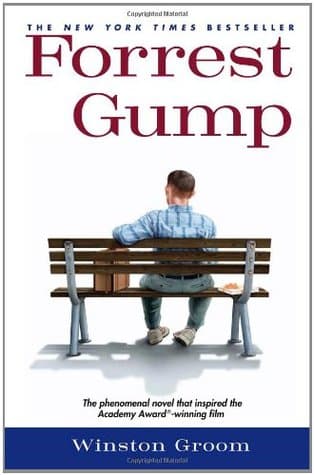
Winston Groom (1986)
Genre
Historical Fiction
Reading Time
250 min
Key Themes
See below
Sign in to track this book
From gridiron glory to jungle warfare and even outer space, an unwitting giant blunders through the most iconic moments of the 20th century, exposing the absurdities of history with every step.
Forrest Gump, a man of large physical size but limited intellect, begins his life story in Mobile, Alabama. He describes his childhood, raised by his practical mother who teaches him a simple but strong moral compass. Despite his low IQ of 70, Forrest often finds himself in the right place at the right time, or rather, the wrong place at the right time for comical effect. He befriends Jenny Curran in elementary school, a girl who is a constant, though often brief, presence in his life. His early experiences include being an exceptional football player, despite not understanding the game's complexities, and navigating the social challenges of being 'different' in a small Southern town.
Forrest's natural athletic ability, especially his speed and strength, gets the attention of college recruiters. Despite his academic shortcomings, he gets a scholarship to the University of Alabama, where he plays under the legendary Coach Bear Bryant. His time in college has bizarre incidents, including accidentally streaking across campus during a protest and meeting President John F. Kennedy. He continues to do well on the football field, becoming an All-American, but his understanding of the world remains simple, leading to constant misunderstandings and accidental involvement in significant events of the era. He also has a brief relationship with a girl named Barbara.
After college, Forrest is drafted into the U.S. Army and sent to Vietnam. There, he befriends Benjamin Buford 'Bubba' Blue, a fellow soldier who dreams of starting a shrimping business after the war. Forrest, loyal as always, promises to go into business with Bubba. During a fierce battle, Forrest heroically saves Bubba and several other men, including his commanding officer, Lieutenant Dan Taylor, though Bubba is killed. Forrest himself is wounded. His actions earn him the Congressional Medal of Honor, presented by President Lyndon B. Johnson, during which Forrest accidentally exposes his wound.
After his recovery, Forrest discovers a talent for ping-pong while recovering in a military hospital. His skill is so great that he is chosen to be part of the U.S. Ping-Pong team sent to China, an important event in easing Cold War tensions. He accidentally meets Chairman Mao Zedong and becomes an international celebrity. Upon returning to the U.S., he is again honored, this time by President Richard Nixon, whom he accidentally helps expose the Watergate break-in by reporting suspicious activity in a hotel across the street. Forrest's fame grows, but his humility and simple nature remain unchanged.
Forrest's post-Vietnam life continues its surreal path. He briefly becomes a professional wrestler, called 'The Dunce' and performing with a gorilla named Sue. His wrestling career is short-lived but entertaining. Later, a film producer scouts him, and he ends up starring in a B-movie, a ridiculous sci-fi flick. His acting career, like his other ventures, is more a product of circumstance and his unique presence than any actual talent or ambition. Throughout these escapades, he occasionally meets Jenny, who is following her own difficult path through the counterculture movement.
In perhaps his most outlandish adventure, Forrest is recruited by NASA, again due to a series of improbable events, to become an astronaut. He goes on an Apollo mission to the moon, sharing the spacecraft with a female chimpanzee named Sue and an alien named 'Yossarian' (though Forrest often misidentifies him as 'the Ape-Man'). The mission has comical mishaps and surreal encounters, further cementing Forrest's reputation as a man who accidentally stumbles into the most extraordinary situations. Upon his return, he is celebrated as a national hero, unaware of the true absurdity of his journey.
After his space adventure, Forrest discovers an unexpected talent for chess, becoming a grandmaster and competing in international tournaments. His simple, logical mind seems to find a natural home in the game's complexities. More significantly, he decides to honor his promise to Bubba. Using the money he accumulated from his various exploits, including his ping-pong earnings and movie residuals, Forrest starts the Bubba Gump Shrimp Company. Despite his lack of business knowledge, the company unexpectedly does well, becoming a massive success due to a combination of Forrest's luck and the capable management of Lieutenant Dan, who has become his business partner.
Years later, Forrest receives a letter from Jenny, who has been mostly absent from his life, living a bohemian and often troubled existence. She asks him to meet her. When they reunite, Jenny reveals that Forrest is the father of her young son, also named Forrest. This revelation greatly impacts Forrest, as he finally has a family of his own. Jenny is ill, but she and Forrest share a period of domesticity, allowing Forrest to experience the joys and responsibilities of fatherhood. He dedicates himself to caring for his son, a role he embraces with his usual earnestness and devotion.
Jenny eventually dies from her illness, leaving Forrest to raise their son alone. Forrest, always resilient, dedicates himself to being a good father. He continues to run the Bubba Gump Shrimp Company, which thrives under Lieutenant Dan's guidance. The novel ends with Forrest reflecting on his incredible, improbable life. Despite his low intellect, he has lived a life richer and more impactful than most, meeting historical figures, participating in events, and finding love and family. He maintains his simple, optimistic outlook, concluding that while he may be a 'dunce,' he has certainly had an eventful existence.
The Protagonist
Forrest begins as an innocent, naive boy and, despite his unchanging intellect, learns to navigate a complex world, eventually finding purpose in fatherhood and business success.
The Supporting
Jenny's arc is one of struggle and self-destruction, eventually finding some peace and motherhood, but ultimately succumbing to illness.
The Supporting
Bubba's arc is tragically cut short, but his dream lives on through Forrest's actions.
The Supporting
Lieutenant Dan transforms from a bitter, disabled veteran to a successful businessman and a loyal friend, finding a new purpose in life.
The Supporting
Her arc is primarily as Forrest's steadfast guide and moral compass, providing a stable foundation for his early life.
The Supporting
Sue's arc is less about personal development and more about serving as a recurring symbol of the absurdity in Forrest's life.
The Supporting
Forrest Jr. is introduced as a child, representing hope and a new chapter for Forrest.
The Mentioned
Not applicable; a historical figure briefly interacted with.
The Mentioned
Not applicable; a historical figure briefly interacted with.
The Mentioned
Not applicable; a historical figure briefly interacted with.
The novel consistently shows life's arbitrary and often nonsensical nature, especially through Forrest's experiences. He stumbles into historical events, meets famous figures, and achieves extraordinary feats not through intellect or ambition, but sheer dumb luck and circumstance. This theme satirizes the idea of a grand, purposeful narrative, suggesting that much of what we perceive as significant is merely a series of accidental occurrences. Forrest's simple perspective often makes the 'important' events seem even more ridiculous.
“''Let me say this: bein' a idiot is no box of chocolates. People laugh at you, they turn you down, they don't understand nothin' what you say. But bein' an idiot ain't all that bad. At least you don't have to worry about nothin'.''”
Forrest's low intelligence is consistently paired with a steady moral simplicity and innocence. He acts out of loyalty, kindness, and a literal interpretation of instructions, often without grasping the complex social or political meanings of his actions. This innocence allows him to cut through societal pretenses and hypocrisy, often exposing the absurdity of the 'sane' world around him. His moral compass remains steady, even as he navigates the corruption and cynicism of the 20th century.
“''Mama always said, 'Stupid is as stupid does.' And I guess I was doin' somethin' stupid when I got myself shot in the butt.''”
The novel is a satire of the American Dream and various aspects of American culture, from sports to politics to war. Forrest, an unlikely hero, achieves success in multiple fields (football, war hero, ping-pong champion, astronaut, businessman) without ever truly trying for it. His journey critiques the superficiality of celebrity, the arbitrary nature of success, and the often-unquestioned patriotism of the era. He represents a distorted, yet ultimately successful, version of the American Dream, achieved through accident rather than ambition.
“''I was famous, you know? And I was an idiot. So I guess that made me a famous idiot.''”
Despite his intellectual limitations, Forrest shows great loyalty and a deep capacity for friendship. His bond with Bubba, his commitment to Lieutenant Dan, and his lasting love for Jenny are central to the narrative. These relationships, especially his promise to Bubba, give Forrest motivation and purpose, even when he doesn't fully understand the complexities of human connection. His steadfastness in these relationships offers a grounding human element amidst the fantastical plot.
“''Bubba had a dream. And I was gonna see that it came true, no matter what.''”
Forrest's life is a continuous exploration of fate versus free will. He rarely makes conscious, ambitious choices; instead, he is swept along by circumstances, often ending up in significant places at significant times. This raises questions about how much control individuals truly have over their destinies and how much is simply a matter of chance. Forrest's simple acceptance of whatever comes his way suggests a fatalistic view, where even the most incredible achievements are simply part of a predetermined, if illogical, path.
“''I don't know if I was just lucky, or if I just happened to be in the right place at the right time. But things just kept happenin' to me.''”
Forrest Gump's simple and literal narration shapes the reader's understanding of events.
The entire novel is told from Forrest Gump's perspective, whose low IQ and literal interpretation of events provide a unique and often humorous lens through which to view complex historical moments and human interactions. His naiveté allows the author to satirize society and politics without explicit commentary, as Forrest simply reports what he sees and experiences, often missing the deeper implications. This device highlights the absurdity of the world by presenting it through an unjaded, innocent viewpoint.
A series of episodic adventures as Forrest journeys through life.
The novel employs a picaresque structure, with Forrest Gump, the 'picaro' (rogue/outsider), embarking on a series of loosely connected, often comical, adventures. Each episode sees Forrest stumble into a new situation, meet new characters, and participate in significant historical events, before moving on to the next. This episodic nature allows for broad social satire and a rapid pace of events, without needing a complex overarching plot, perfectly suiting Forrest's meandering and accidental journey through life.
Forrest's accidental encounters with real historical figures and events.
The novel frequently incorporates real historical figures (e.g., Presidents Kennedy, Johnson, Nixon, Chairman Mao) and events (e.g., Vietnam War, Watergate, Ping-Pong Diplomacy, Apollo missions) into Forrest's fantastical narrative. These allusions serve as a satirical device, showing how a simple-minded individual can inadvertently impact or be present at pivotal moments in history. It grounds the absurd story in a recognizable reality, while simultaneously mocking the gravitas often associated with such events by having Forrest misunderstand or trivialise them.
A recurring simile representing the unpredictable nature of life.
While more famously associated with the film adaptation, the novel also uses simple, homespun aphorisms, often attributed to Forrest's mother, to explain life's complexities. The idea that 'life is like a box of chocolates, you never know what you're gonna get' (or similar sentiments in the book regarding being an idiot) encapsulates the theme of fate and the unpredictable nature of Forrest's journey. It's a simple, relatable image that perfectly reflects Forrest's understanding of the world and his passive acceptance of its randomness.
“Life is like a box of chocolates. You never know what you're gonna get.”
— Forrest's mother tells him this as a child to explain life's unpredictability.
“Stupid is as stupid does.”
— Forrest's mother says this to defend him against people who call him stupid.
“I must have drunk me about fifteen Dr Peppers.”
— Forrest describes meeting Elvis Presley and sharing soda with him.
“We was always taking long walks, and we was always looking for a guy named 'Charlie'.”
— Forrest recounts his time in the Vietnam War with his friend Bubba.
“I'm not a smart man, but I know what love is.”
— Forrest expresses his feelings to Jenny, despite his perceived limitations.
“My mama always said you've got to put the past behind you before you can move on.”
— Forrest reflects on his mother's advice during a difficult time.
“That's all I have to say about that.”
— Forrest uses this phrase to end discussions on topics he finds uncomfortable.
“I just felt like running.”
— Forrest explains why he started his cross-country running journey.
“Bubba was my best good friend. And even I know that ain't something you can find just around the corner.”
— Forrest mourns the loss of his friend Bubba from the Vietnam War.
“Sometimes, I guess there just aren't enough rocks.”
— Forrest says this after Jenny throws rocks at her childhood home.
“I'm not a smart man, Jenny, but I know what love is.”
— A repeated line emphasizing Forrest's heartfelt confession to Jenny.
“From that day on, if I was ever going somewhere, I was running!”
— Forrest describes how he discovered his talent for running as a child.
“We was like peas and carrots.”
— Forrest describes his close friendship with Jenny in their youth.
“I don't know if we each have a destiny, or if we're all just floating around accidental-like on a breeze.”
— Forrest ponders the nature of fate and life's randomness.
Ready to see how well you understood this book? Take our interactive quiz with 10 questions.

Biography coming soon.







