“The world is a dangerous place, not because of those who do evil, but because of those who look on and do nothing.”
— Spoken by Kate Cold, reflecting on injustice.

Genre
Fantasy / Children's / Young Adult / Romance
Reading Time
240 min
Key Themes
See below
Sign in to track this book
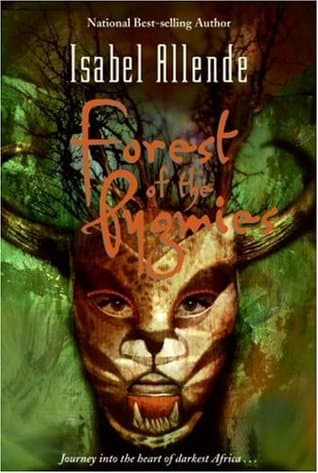
In the plains of Kenya, Alexander and Nadia use their animal spirits to fight corruption and slavery, aiming to free the Pygmies and restore rightful leadership in their most dangerous adventure.
Alexander Cold, seventeen, and Nadia Santos, sixteen, meet in Kenya. Alexander's grandmother, Kate Cold, is there for International Geographic, covering a new safari type led by elephants. The three, with naturalists and guides, start their journey across Kenya's plains. Alexander is at first unsure about the trip, still thinking about his intense Amazon adventures, but Nadia's excitement is contagious. Their first days are full of amazing wildlife and impressive encounters with elephants.
Days into their safari, Father Fernando, a distressed Catholic missionary, approaches the group. He reports that his two companions, Sister Inés and Brother Matías, have disappeared from their remote mission near the Sudan border. Father Fernando suspects foul play and needs help, as local authorities have been slow to act. Kate Cold, a journalist and humanitarian, sees a story and a duty. Despite the risks, she agrees to change the expedition to investigate. Alexander and Nadia, sensing another mystery, are ready to help, their animal totems stirring.
The expedition heads to the remote mission in a less-traveled area. The journey is hard, with difficult terrain and growing unease. At the mission, they find it deserted and messy. Signs of a struggle are present, and the air feels heavy. Alexander and Nadia, using their heightened senses and connection to the environment, find clues suggesting the missionaries were taken, not just lost. Local villagers are too scared to talk, pointing to a powerful, evil presence nearby.
Following a faint trail, Alexander and Nadia go deeper into the forest. They find a hidden Pygmy village. They are horrified to discover the Pygmies live under the brutal control of Colonel Mbembelé. The missionaries, Sister Inés and Brother Matías, are also Mbembelé's captives, forced to work in terrible conditions. The Pygmies, traditionally free and peaceful, are exploited for their forest knowledge and labor, especially in illegal ivory trade.
A young Pygmy named Ma-Ku tells Alexander and Nadia about Colonel Mbembelé's full tyranny. Mbembelé, a former military officer, rules the region with a private militia. He forces the Pygmies to poach elephants for ivory, which he sells on the black market, and also uses them for diamond mining. The missionaries tried to help and protect the Pygmies, leading to their capture. Mbembelé’s men are well-armed and ruthless, making any rescue dangerous.
Kate Cold, with the safari guides and naturalists, including the knowledgeable Timothy Bruce, starts planning to free the missionaries and enslaved Pygmies. They know a direct fight with Mbembelé's armed militia would be suicide. Instead, they decide to use stealth, cleverness, and their group's unique skills. Alexander and Nadia, guided by their animal totems—the jaguar and the eagle—are essential to this plan. Their ability to move unseen and talk with the Pygmies is very valuable. They aim to disrupt Mbembelé's operations and help the Pygmies reclaim their freedom.
At night, Alexander and Nadia, guided by Ma-Ku, quietly enter Colonel Mbembelé's fortified camp. Their animal spirits help them with agility and sharp senses. They see the terrible conditions where the Pygmies and missionaries are held. Alexander, with his jaguar spirit, moves silently. Nadia, with her eagle's sharp vision, watches from high places. They contact Sister Inés and Brother Matías, assuring them help is coming and gathering important information about the camp and guards. This scouting is vital for the rescue.
Using the gathered information, Kate's team organizes an attack. While the safari guides create a distraction, Alexander and Nadia, with the now brave Pygmies, launch their own attack from inside. The Pygmies, led by their rightful chief (who had been imprisoned), use their deep forest knowledge and traditional hunting skills to overpower Mbembelé's surprised guards. The missionaries are freed. The Pygmies, taking back their ancestral spears and bows, fight hard for their liberty. The chaos and surprise turn the battle against the better-armed militia.
During the revolt, Alexander and Nadia confront Colonel Mbembelé. He is a strong and ruthless enemy and tries to run. Alexander, using his jaguar totem's strength and fierceness, chases him. Nadia, with her sharp mind and quick reflexes, helps trap the warlord. The confrontation is tense and dangerous, but the children, empowered by their totems and beliefs, manage to subdue Mbembelé. They prevent his escape and ensure he faces justice for his crimes against the Pygmies and missionaries. His rule of terror ends.
With Colonel Mbembelé captured and his militia gone, the Pygmies are free. Their rightful chief is back in charge, and the community starts rebuilding. The missionaries, though shaken, are safe and promise to help the Pygmies recover. Kate Cold ensures Mbembelé's crimes and the Pygmies' strength are known internationally, hoping to prevent similar exploitation. Alexander and Nadia think about their adventure, deeply affected by the injustices they saw and the Pygmy people's spirit. The forest, once a place of fear, begins to feel alive again.
The Protagonist
Alexander grows from a reluctant adventurer to a confident young man who embraces his unique abilities and fights for the oppressed.
The Protagonist
Nadia continues to hone her spiritual and intuitive abilities, using them to guide and protect her friends and fight for justice.
The Supporting
Kate continues to use her influence and journalistic skills to expose global injustices and protect her grandchildren.
The Antagonist
Mbembelé rises to power through brutal oppression but is ultimately overthrown and brought to justice by the protagonists.
The Supporting
Ma-Ku helps the protagonists, contributing to the liberation of his people and finding his own voice in the process.
The Supporting
Sister Inés endures captivity for her humanitarian efforts and is ultimately freed, continuing her mission to aid the Pygmies.
The Supporting
Brother Matías suffers under oppression for his humanitarian work and is ultimately rescued, reaffirming his dedication.
The Supporting
Father Fernando initiates the quest for his missing companions, ultimately witnessing their rescue.
The Supporting
Timothy adapts from a traditional guide to an active participant in a dangerous humanitarian mission.
The main theme is the fight for justice and freeing the oppressed. Colonel Mbembelé's enslavement of the Pygmies clearly shows injustice. The whole plot focuses on the protagonists' efforts to restore Pygmy freedom. Scenes like finding the Pygmy village and their forced labor, and the revolt against Mbembelé, highlight the human right to liberty and the need to fight tyranny. The story shows that true freedom comes from both physical liberation and reclaiming cultural identity.
“"Freedom is not a gift, but a right to be claimed, fiercely and without compromise."”
The novel clearly shows the harm of exploitation and corruption, especially through Colonel Mbembelé. His illegal ivory poaching and diamond mining, along with Pygmy enslavement, show how greed causes environmental destruction and human suffering. This theme highlights how vulnerable indigenous groups and natural resources are to powerful, unethical forces. The missionaries' attempts to intervene, and their capture, further show how widespread this corruption is and the dangers faced by those who oppose it.
“"The lust for power and wealth blinds men to the suffering they inflict, turning living beings into mere commodities."”
The story celebrates the Pygmy people's valuable knowledge and rich culture. Their deep understanding of the forest, traditional skills, and spiritual connection to nature are shown as key to their survival and freedom. Ma-Ku's guidance and the Pygmies' wisdom are crucial for navigating the wilderness and planning the revolt against Mbembelé. This theme highlights the importance of respecting and preserving indigenous cultures, not just for their value but also for the practical wisdom they offer in living with nature.
“"The forest whispers its secrets to those who listen with an open heart and a knowing spirit."”
Alexander and Nadia's journey shows the power of courage and empathy. Despite danger, their empathy for the suffering Pygmies and captured missionaries pushes them to act. Alexander's initial hesitation turns into strong determination, fueled by his jaguar spirit. Nadia's steady optimism and intuition guide their efforts. Kate Cold's journalistic drive also comes from a wish to expose injustice. The theme suggests that courage is not the absence of fear, but acting despite it, motivated by compassion.
“"It is not the absence of fear, but the will to overcome it for the sake of others, that defines true courage."”
The recurring theme of human-animal connection is central, especially through Alexander's jaguar totem and Nadia's eagle totem. These spiritual bonds give them enhanced senses, strength, and guidance. This allows them to handle African wilderness challenges and connect deeply with nature. The Pygmies also show a strong spiritual connection to their environment and its creatures. This theme suggests that humanity is linked with nature, and using this connection can provide strength, wisdom, and purpose.
“"The spirit of the animal lives within us, guiding our steps and sharpening our senses when the path grows dark."”
Spiritual connections to animals that grant special abilities.
Alexander's jaguar totem and Nadia's eagle totem are central to their abilities. These totems are not merely symbolic but manifest as heightened senses, agility, courage, and an intuitive connection to the natural world. They function as a form of magical realism, allowing the protagonists to perform feats beyond ordinary human capabilities, such as moving silently through the jungle or observing from great distances. The totems also serve as a narrative device to explain their extraordinary competence and link them to ancient, spiritual traditions, emphasizing their unique roles as protectors of the wild and the innocent.
An initial objective that drives the plot forward.
The disappearance of Sister Inés and Brother Matías serves as the primary MacGuffin. While their safety is genuinely important to the characters, their disappearance is primarily the catalyst that draws Kate Cold, Alexander, and Nadia into the deeper conflict involving the enslaved Pygmies and Colonel Mbembelé. The initial mystery of their whereabouts quickly expands to reveal a much larger, more significant injustice, providing the impetus for the protagonists to uncover the truth and engage in a broader fight for freedom. Their rescue is integral to the plot but secondary to the larger goal of liberating the Pygmies.
A native character who provides essential knowledge and assistance.
Ma-Ku, the young Pygmy boy, embodies the 'wise indigenous guide' trope. He possesses intimate knowledge of the local terrain, the Pygmy culture, and the workings of Colonel Mbembelé's camp, which is indispensable to Alexander and Nadia's mission. His guidance allows the protagonists to navigate dangerous territory, understand the nuances of the local situation, and communicate effectively with the Pygmy community. This device highlights the value of local wisdom and cooperation between different cultures, and it empowers the indigenous character by making their knowledge critical to the success of the heroic quest.
A clear, powerful antagonist representing systemic evil.
Colonel Mbembelé is the archetypal corrupt warlord, a figure of absolute power and cruelty. He functions as a clear and present danger, embodying the systemic evil of exploitation, greed, and violence. His presence provides a tangible external conflict that the protagonists must overcome. This device allows the author to explore themes of injustice and oppression through a concrete, malevolent figure, making the stakes clear and the struggle personal. Mbembelé's defeat symbolizes the triumph of justice over tyranny and the restoration of balance to the affected region.
“The world is a dangerous place, not because of those who do evil, but because of those who look on and do nothing.”
— Spoken by Kate Cold, reflecting on injustice.
“Fear is the only thing that can paralyze a person. It's an illusion, nothing more.”
— Nadia's grandmother advising her about facing challenges.
“Sometimes the most important things are invisible to the eye.”
— A wisdom shared by one of the Pygmy elders.
“True strength is not in never falling, but in rising every time you fall.”
— Alex reflects on his own journey and growth.
“The forest has a memory, and it remembers everything.”
— A Pygmy belief about the interconnectedness of nature.
“Adventure is worthwhile in itself.”
— Kate Cold's philosophy on life and travel.
“To truly know someone, you must walk in their shoes, even for a little while.”
— Learned from the cultural exchange with the Pygmies.
“There are more things in heaven and earth, Horatio, than are dreamt of in your philosophy.”
— Kate Cold quoting Shakespeare, hinting at the mystical elements.
“The greatest prison people live in is the fear of what other people think.”
— A lesson learned by Alex during his self-discovery.
“Love is not about possession, it's about appreciation.”
— A nuanced understanding of relationships that develops in the story.
“Silence can be a powerful language.”
— Observing the communication within the Pygmy community.
“Every journey begins with a single step, but it's the spirit that carries you through.”
— Reflecting on the challenges of their expedition.
“The most dangerous illusions are the ones we tell ourselves.”
— A realization about self-deception.
“Home is not a place, it's a feeling.”
— Nadia's evolving understanding of belonging.
Ready to see how well you understood this book? Take our interactive quiz with 10 questions.

Isabel Angélica Allende Llona is a Chilean writer. Allende, whose works sometimes contain aspects of the genre magical realism, is known for novels such as The House of the Spirits and City of the Beasts, which have been commercially successful. Allende has been called "the world's most widely read Spanish-language author." In 2004, Allende was inducted into the American Academy of Arts and Letters, and in 2010, she received Chile's National Literature Prize. President Barack Obama awarded her the 2014 Presidential Medal of Freedom.







