BookBrief
For Whom the Bell Tolls cover
Archivist's Choice

For Whom the Bell Tolls

Ernest Hemingway (1995)

Genre

Literary Fiction / Historical Fiction

Reading Time

12-15 hours

Key Themes

See below

Track Your Reading

Sign in to track this book

An American dynamiter finds love and duty with Spanish guerrillas as he faces a dangerous bridge demolition and the tragedy of war.

Synopsis

Robert Jordan, an American demolition expert fighting for the Republican side in the Spanish Civil War, must blow up a bridge important to a Fascist attack. He joins a guerrilla group in the mountains led by the weary Pablo and the strong Pilar. During his three-day mission, Jordan falls deeply in love with Maria, a young woman rescued from Fascist violence, and deals with loyalty, duty, and war's harshness. As the attack nears, tensions rise in the group, with Pablo's fear clashing with Pilar's leadership. Despite betrayals and heavy losses, Jordan and the guerrillas destroy the bridge. Afterward, Jordan is badly hurt. Knowing he will die, he makes a final stand to cover Maria and the others' escape, thinking about his life and love as his end approaches.
Reading time
12-15 hours
Difficulty
Medium
Pacing
Moderate
Mood
Introspective, Brutal, Romantic, Tragic, Suspenseful
✓ Read this if...
You want a classic war novel exploring themes of duty, love, and the human spirit amidst conflict, with a focus on deep character introspection.
✗ Skip this if...
You prefer fast-paced action over philosophical reflection and detailed character dynamics, or are sensitive to graphic descriptions of war violence and sexual assault.

Plot Summary

The Mission Begins

Robert Jordan, an American university instructor and demolition expert fighting for the Republican side in the Spanish Civil War, is sent behind enemy lines into the Gredos mountains of central Spain. General Golz orders him to blow up a vital bridge at a specific time to match a Republican attack. Anselmo, an old, loyal Republican, guides him to a guerrilla group led by Pablo. Jordan finds Pablo to be a tired and often drunk leader, who is suspicious and unwilling to help with Jordan's mission. Jordan immediately sees the difficulty of his task, not just because of the military challenge, but also because he must rely on unpredictable guerrilla fighters.

Meeting Maria and the Camp Dynamics

When Jordan arrives at Pablo's cave, he meets the guerrilla group, including Pilar, Pablo's strong and practical woman; Agustín, a fierce and loyal fighter; and Maria, a young woman who has suffered terrible acts from the Fascists. Jordan is immediately drawn to Maria, and they quickly form a deep bond. Pilar, who understands people well, helps their growing relationship. Jordan sees the conflicts and loyalties within the group, especially the struggle for power between Pablo and Pilar, and the other guerrilleros' growing anger at Pablo's erratic behavior and fear about the mission.

A Night of Confidences and Love

That night, Maria shares the horrific details of her capture and rape by the Fascists, an experience that has left her deeply hurt. Jordan listens with great care, and their shared vulnerability makes their love stronger. He comforts her, promising her a future free from pain. Their love story develops quickly and intensely, becoming a main part of the story. Jordan finds comfort and purpose beyond his military mission in his relationship with Maria, despite the constant danger and the approaching deadline for the bridge's destruction. This close connection contrasts with the harsh realities of war around them.

Pablo's Betrayal and Pilar's Leadership

As the time for the bridge operation nears, Pablo's fear grows. In a desperate act to save himself, he steals Jordan's detonators and some explosives during the night, hoping to stop the mission and avoid Fascist revenge. This betrayal angers the other guerrilleros, who are already tired of Pablo's leadership. Pilar, showing her strength and commitment, takes charge, rallying the group and asserting her authority. She sends Agustín and Primitivo to get the stolen equipment, while Jordan, though frustrated, adapts to the new problem, knowing he must continue the mission.

Reconciliation and Reinforcement

Surprisingly, Pablo returns later, sorry for what he did and with five other guerrilleros he has recruited from a nearby group. He has gotten back the stolen detonators, though some explosives are still missing. His return, partly driven by shame and a wish to regain his standing, provides much-needed extra men for the coming attack. The group, now slightly larger and with the essential equipment, begins final preparations. Jordan carefully plans the demolition, giving roles to each guerrilla, including the new fighters. Tension builds as the hour for the attack gets closer, and the sounds of distant fighting grow louder.

The Attack on the Fascist Outpost

Before the main bridge demolition, the guerrilleros, led by Jordan, launch a surprise attack on a small Fascist outpost guarding the road to the bridge. The attack is quick and brutal, with close combat. Jordan, Anselmo, and Agustín are key in taking out the sentries and other soldiers. The goal is to prevent any warning to the main bridge guards and to clear a path for the demolition team. This violent fight acts as a grim start to the larger mission, showing war's brutality and the guerrilleros' efficiency, while also showing Jordan's strategic thinking and leadership under fire.

The Bridge Demolition

At the planned time, as the Republican attack begins, Jordan and his team destroy the bridge. Despite strong Fascist resistance and their growing awareness, Jordan successfully places and detonates the explosives. The bridge collapses in a huge explosion, completing his main goal. However, the operation costs lives. Anselmo, the old guide, is killed by a piece of shrapnel from the explosion, a sad loss that deeply affects Jordan. The mission's success is overshadowed by the immediate need to escape the quickly gathering enemy forces, who are now fully alert and chasing the guerrilleros.

The Retreat and Casualties

The guerrilleros begin their desperate retreat under heavy fire from the chasing Fascists. The escape is chaotic and dangerous. During the withdrawal, El Sordo's group, who were supposed to create a diversion, are wiped out in a separate, equally brutal fight described earlier in the book. The remaining members of Pablo's group fight fiercely, but they are outnumbered. Several more guerrilleros are killed during the retreat, including Primitivo. Casualties rise, showing the high cost of their victory and the harsh reality of guerrilla warfare. Jordan, Maria, Pilar, and Pablo, with a few others, manage to avoid immediate capture, but their situation remains dangerous.

Jordan's Injury and Final Stand

During the chaotic retreat, Robert Jordan's horse is shot, falling and trapping his leg, breaking his femur. The injury is severe, making him unable to move. Realizing he cannot continue with the group and would only slow them down, he makes the hard choice to stay behind and cover their escape. He urges Maria, Pilar, and the others to flee, promising to join them later, though he knows this is a lie. He prepares for a final stand, positioning himself with his machine gun to ambush the approaching Fascists, buying precious time for Maria and his friends to get to safety. This act shows his self-sacrifice and dedication.

Maria's Departure and Jordan's Last Thoughts

Maria is distraught and refuses to leave Jordan, but Pilar, with firm resolve, physically pulls her away, knowing that staying means certain death for everyone. Jordan uses his will to send a final, comforting thought to Maria, urging her to go and live for both of them. Alone and in great pain, Jordan waits for the Fascist cavalry. His thoughts turn to Maria, to their brief love, and to the meaning of his sacrifice. He thinks about war's complexities, his comrades' loyalty, and life's shortness. He prepares himself mentally and physically to do as much damage as possible to the enemy before he is inevitably killed.

The Inevitable End

As the Fascist cavalry approaches, Jordan positions his submachine gun, ready to fire. He feels his broken leg throbbing but focuses on the task. He thinks of General Golz, his mission, and the importance of holding the line, even in death. He considers the irony of his situation, an intellectual fighting a brutal war, finding love in it, and now facing his end. His last moments are filled with grim resolve, acceptance of his fate, and a desire to make his death count. The novel ends with Jordan aiming his gun, waiting for the first enemy soldier to enter his sights, ready for his final, heroic act.


Principal Figures

Robert Jordan

The Protagonist

Jordan begins as a detached professional but evolves into a man deeply connected to others, ultimately sacrificing himself for the group he has come to love.

Maria

The Supporting

Maria is initially broken by trauma but finds healing and a renewed sense of self through her love for Jordan, ultimately gaining strength to survive.

Pilar

The Supporting

Pilar remains a steadfast, powerful force, acting as the moral compass and de facto leader for much of the story, demonstrating unwavering resolve.

Pablo

The Antagonist/Supporting

Pablo descends from a respected leader to a fearful, self-serving figure, but ultimately finds a measure of redemption by returning to assist the mission.

Anselmo

The Supporting

Anselmo remains a steadfast, moral presence throughout, embodying quiet loyalty and a profound connection to the land, ultimately sacrificing himself for the cause.

Agustín

The Supporting

Agustín remains a consistent force of loyalty and fierce dedication to the Republican cause, proving his unwavering commitment through action.

El Sordo

The Supporting

El Sordo remains a steadfast, courageous leader, demonstrating unwavering commitment to the cause through his final, heroic stand.

General Golz

The Mentioned

Not applicable as he does not appear directly in the story.

Themes & Insights

The Brutality and Futility of War

The novel clearly shows the harsh realities of the Spanish Civil War, focusing on the senseless violence, loss, and moral compromises required. From detailed accounts of atrocities by both sides (like Maria's rape and the Fascist executions) to the constant threat of death and the psychological toll on characters like Pablo and Maria, Hemingway highlights war's destructive power. The high number of deaths, the endless cycle of violence, and Robert Jordan's ultimate sacrifice for a possibly doomed attack show the tragic pointlessness of much of the fighting, even for a good cause.

You'll not be so good a man when you are dead. But you will be dead. And you will be dead forever.

Robert Jordan's internal monologue

Love and Human Connection Amidst Conflict

Despite the widespread violence, the novel explores the deep and sudden love that grows between Robert Jordan and Maria. Their intense, three-day romance contrasts with the surrounding brutality, offering moments of beauty, hope, and healing. This theme highlights humanity's need for connection and intimacy, even in the worst situations. Their love gives both characters purpose and a brief break from war's horrors, suggesting that human connection can overcome destructive forces, offering a glimpse of what they are fighting for.

I have been all my life waiting for you.

Maria to Robert Jordan

Duty, Loyalty, and Sacrifice

The characters in the novel deal with their duties to the cause, to their friends, and to themselves. Robert Jordan's strong commitment to his mission, even against huge odds and his coming death, shows the theme of duty and sacrifice. Anselmo's quiet loyalty, Pilar's fierce dedication, and even El Sordo's final stand show different aspects of loyalty. The novel explores the moral difficulties in these commitments, especially when personal desires (like Jordan's wish to live with Maria) conflict with war's demands.

If we win here we will win everywhere. The world is a fine place and worth the fighting for and I hate very much to leave it.

Robert Jordan's internal monologue

The Nature of Leadership and Courage

The novel looks at different kinds of leadership, comparing Pablo's slide into fear and self-preservation with Pilar's strong, intuitive, and decisive command. Robert Jordan himself becomes a leader, showing strategic thinking, courage under fire, and the ability to inspire trust. The story suggests that true leadership in a crisis needs not just tactical skill but also moral strength, empathy, and the willingness to make hard, often selfless, decisions. Courage is shown not as a lack of fear, but as the ability to act despite it, as seen in the guerrilleros' actions during the bridge demolition and retreat.

There are some things you cannot do alone. You must have others. And if you have others you must be loyal to them.

Pilar to Robert Jordan

Death and the Meaning of Life

Death is always present in the novel, seen through the eyes of characters who face it daily. Robert Jordan often thinks about his own death and the meaning of his life and coming end. The novel explores the idea that life's value is greater when one knows it is short, and that one can live a lifetime in a few days. The characters' acceptance, struggle, or fear of death reveals their core values. For Jordan, death becomes a final act of purpose and love, a sacrifice that gives meaning to his life and his commitment to the cause.

I have lived a long time in these three days.

Robert Jordan's internal monologue

Plot Devices & Literary Techniques

Foreshadowing

Hints and clues about future events, particularly death.

Hemingway uses foreshadowing extensively, especially regarding the deaths of characters. For example, Pilar's ability to 'smell death' and her grim predictions about the mission create a pervasive sense of impending doom. Jordan's internal monologues frequently touch upon his own mortality and the likelihood of his death, preparing the reader for his ultimate sacrifice. The descriptions of the Fascist movements and the escalating sounds of battle also foreshadow the difficult retreat and the high casualties the guerrilleros will suffer, building tension and a sense of tragic inevitability.

Stream of Consciousness

Narrative technique that reveals a character's unfiltered thoughts and feelings.

Much of the novel is narrated through Robert Jordan's internal monologues and thoughts, allowing readers direct access to his complex mind. This device provides deep insight into his strategic planning, his moral dilemmas, his philosophical reflections on war and life, and his intense emotional experience of falling in love with Maria. It also reveals his anxieties, his professional discipline, and his attempts to maintain objectivity amidst chaos. This technique immerses the reader in Jordan's subjective experience, making his struggle and eventual sacrifice deeply personal and resonant.

The Three-Day Timeframe

The entire novel unfolds over a compressed, intense period of three days.

The compressed timeframe of three days intensifies the narrative, creating a sense of urgency, immediacy, and heightened emotional stakes. This limited period allows for the rapid development of profound relationships, particularly the love between Robert Jordan and Maria, which feels both epic and fleeting. It forces characters to make swift, life-or-death decisions and confront their deepest fears and desires in a very short span. The brevity of the action underscores the intensity of war and the idea that a lifetime of experience can be condensed into a few crucial days, making every moment significant.

Symbolism of the Bridge

The physical bridge as a representation of connection and destruction.

The bridge itself is a central symbol. Physically, its destruction is a military objective, representing the disruption of enemy supply lines and the Republican offensive. Metaphorically, a bridge often symbolizes connection and passage. Its destruction here signifies the severing of ties, the breaking point in the war, and the irreversible commitment to a violent path. It also symbolizes the 'bridge' between life and death for Robert Jordan, as his mission to destroy it ultimately leads to his own demise. The act of blowing the bridge is both a beginning (of the offensive) and an end (of Jordan's life and the innocence of the land).

Animal Imagery

The use of animals to represent human characteristics or natural elements.

Hemingway frequently employs animal imagery to describe characters and their instincts. For example, Pablo is often associated with a fox or a bear, highlighting his cunning, fear, and sometimes brute strength. Maria is described with bird-like qualities, emphasizing her innocence and vulnerability. The horses are central to the guerrilleros' lives and escape, symbolizing freedom, mobility, and the natural world. This imagery grounds the characters in their primal instincts and the natural environment of the mountains, often reflecting their more savage or innocent aspects and underscoring the raw, untamed nature of war.

Critical analysis

Notable Quotes

No man is an island, entire of itself; every man is a piece of the continent, a part of the main. If a clod be washed away by the sea, Europe is the less, as well as if a promontory were, as well as if a manor of thy friend's or of thine own were. Any man's death diminishes me, because I am involved in mankind, and therefore never send to know for whom the bells tolls; it tolls for thee.

The famous passage from John Donne's Devotions, which serves as the book's epigraph and central theme.

You'll be all right. You'll be fine. Don't worry about anything. Just go to sleep. You'll be fine.

Robert Jordan's internal monologue, trying to reassure himself and maintain control in a stressful situation.

The world is a fine place and worth fighting for and I hate very much to leave it.

Robert Jordan's final thoughts as he faces his impending death, reflecting on his life and commitment.

I have fought for what I believed in. If I have to die, I will die. But I will die fighting.

Pilar's resolute statement, embodying her strong will and dedication to the cause.

But if you are going to get it, you get it. And if you are not, you don't. And that is all.

Robert Jordan's pragmatic internal thought about the unpredictability of fate and survival.

And he felt himself, in the rain and the wind and the cold, to be a part of the earth.

Robert Jordan's feeling of connection to nature and the land during a difficult moment.

He knew that he had done what he could and that he had done it well.

Robert Jordan's reflection on his actions and performance, finding a measure of satisfaction.

You do not have to be a man to fight. You just have to be a person.

Maria's simple yet profound statement about courage and participation in the war.

The best way to find out if you can trust somebody is to trust them.

Robert Jordan's internal thought, reflecting a straightforward approach to building trust in difficult circumstances.

He was a good man. And he died well.

A simple elegy for a fallen comrade, highlighting the importance of how one faces death.

It is not the time to think. It is the time to act.

A recurring theme of urgency and the need for decisive action in a war zone.

There is no one thing that is true. It is all true.

Pilar's philosophical insight into the complexity of truth and different perspectives.

And he felt the great brotherhood of men that was a part of the war and the struggle.

Robert Jordan's feeling of camaraderie and shared purpose with his fellow fighters.

He thought that perhaps it was a good thing to be alone, if you knew how to be alone.

Robert Jordan's reflection on solitude and self-sufficiency, especially in his line of work.

Quiz

Test Your Knowledge

Ready to see how well you understood this book? Take our interactive quiz with 10 questions.

10
Questions
~5
Minutes
?
Best Score

Key Questions (FAQ)

Robert Jordan, an American dynamiter, is ordered to blow up a bridge crucial for preventing an enemy counter-attack during a Republican offensive. He must coordinate this action with a local band of guerillas led by Pablo, timing it precisely with the main assault to maximize its impact.

About the author

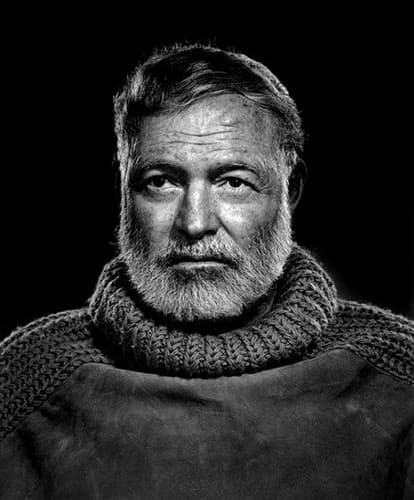
Ernest Hemingway

Ernest Miller Hemingway was an American novelist, short-story writer, and journalist. His economical and understated style—which included his iceberg theory—had a strong influence on 20th-century fiction, while his adventurous lifestyle and public image brought him admiration from later generations. Hemingway produced most of his work between the mid-1920s and the mid-1950s, and he was awarded the 1954 Nobel Prize in Literature. He published seven novels, six short-story collections, and two nonfiction works. Three of his novels, four short-story collections, and three nonfiction works were published posthumously. Many of his works are considered classics of American literature.