“Sometimes you have to break the rules to find your own rhythm.”
— Ren encourages Ariel to embrace her individuality.

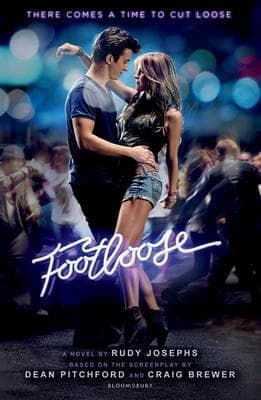
Rudy Josephs (2011)
Genre
Young Adult / Romance
Reading Time
228 min
Key Themes
See below
Sign in to track this book
When a big-city teen moves to a small town that has outlawed dancing, he ignites a rebellion to challenge restrictive traditions and win the heart of the local preacher's daughter.
Ren McCormack, a teenager from Boston, must move to the rural town of Bomont, Tennessee, to live with his Aunt Lulu and Uncle Wes after his mother dies. Ren immediately feels like an outsider in the close community, which is still recovering from a car accident three years earlier. This accident, involving five local teenagers who died after drinking and dancing, led the town council and Reverend Shaw Moore to create strict rules, including a ban on unsupervised dancing and loud music. Ren quickly sees the repressive atmosphere and the deep grief and fear in Bomont.
Ren's first attempts to fit in meet resistance. People make fun of his city clothes and attitude, and his love for music and dancing is seen as a threat. When he tries to show his friends dance moves and loud music, teachers and even the local sheriff quickly reprimand him. Ren learns about the town's ban on dancing and loud music, which resulted from the car accident. Frustrated by the rules, Ren questions the ban's logic, believing it unfairly punishes Bomont's youth for a past tragedy they did not cause. His defiance quickly makes him a target for authorities and some conservative townspeople.
Ren soon meets Ariel Moore, Reverend Shaw Moore's rebellious daughter. Ariel is known for her provocative behavior and her difficult relationship with her father, who still grieves the loss of his son, Bobby, in the same accident that caused the dancing ban. Ariel is drawn to Ren's outsider status and his willingness to challenge authority. Their connection is immediate, but complicated by Ariel's boyfriend, Chuck Cranston, a local troublemaker. Ariel's rebellious actions, like riding on car hoods and dating Chuck, are often a cry for attention and a way to lash out at her father's control and the town's stifling atmosphere.
As Ren and Ariel become closer, the dislike between Ren and Chuck Cranston grows. Chuck, possessive and aggressive, sees Ren as a rival for Ariel's affection and a threat to his power among the local youth. They have several confrontations, including a tense scene where Chuck and his friends ambush Ren, leading to a fight. Ren's refusal to back down further establishes his reputation as a defiant outsider, but also earns him some respect from those tired of Chuck's bullying. Ariel, increasingly fed up with Chuck's behavior, is more drawn to Ren's genuine spirit and courage.
Believing in freedom of expression and the joy of dancing, Ren decides to take a stand. He suggests holding a senior prom for the high school students, directly challenging the town's strict anti-dancing rule. He enlists the help of his friends, Willard Hewitt and Rusty Rodriguez, and Ariel, to gather support. This bold move immediately causes controversy, dividing the town between those who believe the ban is necessary for safety and morals, and those who feel it is an outdated and unfair restriction on young people. Ren's proposal forces a direct confrontation with the town council and, more importantly, with Reverend Shaw Moore.
Determined to make his case, Ren researches legal issues, finding that there is no state law against dancing, only a local rule. He finds a way around it, realizing that if they can prove dancing is not bad or dangerous, they might have a chance. He prepares a speech, carefully gathering arguments and facts to present to the town council. This research shows Ren's commitment and intelligence, moving beyond just rebellion to a more structured challenge to the system. Ariel and Willard help him with his research, strengthening their bond and shared goal.
The peak of Ren's challenge comes during a town council hearing. Ren, despite his nervousness, gives a passionate and logical speech, citing Bible passages that mention dancing as a form of celebration and joy. He argues for young people's right to express themselves. He says that dancing itself is not the problem, but rather the situations and choices people make. His speech directly addresses Reverend Shaw Moore, appealing to his compassion and understanding. While many on the council remain unmoved, Ren's words connect with some, especially those who have quietly questioned the ban themselves.
Reverend Shaw Moore is deeply affected by Ren's arguments and, more so, by his daughter Ariel's growing distance and the pain he sees in his wife, Vi. He must confront his own unresolved grief over his son Bobby's death, realizing that his rigid control over the town showed his inability to cope with his personal tragedy. Vi, his wife, gently but firmly challenges his position, reminding him that young people need to experience joy. This internal struggle is important, as the Reverend begins to question whether his actions have truly protected his community or just suppressed it.
After much thought and a heartfelt talk with his wife and Ariel, Reverend Shaw Moore changes his mind. He visits the town council and, unexpectedly, supports allowing the senior prom. He admits that while the pain of the past is real, denying young people their joy is not the answer. His support is a turning point, swaying many undecided council members and showing a shift in the town's conservative views. This act of humility and understanding from the Reverend allows the dance to finally be approved, to the delight of Ren and the other teenagers.
With the ban lifted, the senior prom happens at an old mill outside of town, a neutral place chosen to avoid direct conflict with lingering conservative views. The dance is a joyous celebration of freedom, music, and community. Ren and Ariel dance, their relationship stronger. Willard, with Ren's help, overcomes his dancing shyness and dances confidently with Rusty. The event is a success, not just for the teenagers, but for the entire town, showing a step towards healing and agreement. It shows that expression and joy can exist with responsibility, and that a community can move past tragedy without sacrificing its future.
The Protagonist
Ren transforms from an angry outsider to a respected leader who successfully challenges an unjust law, finding a new home and purpose in Bomont.
The Supporting
Ariel evolves from a self-destructive rebel to a more hopeful individual, finding peace with her past and her father through her connection with Ren.
The Antagonist (initially) / Supporting
Reverend Moore transitions from a grief-stricken, authoritarian figure to a more compassionate and understanding leader, reconciling with his daughter and supporting the town's youth.
The Supporting
Vi consistently offers quiet support and wisdom, guiding her husband and daughter towards understanding and reconciliation.
The Supporting
Willard transforms from an insecure, awkward local into a confident and self-assured young man, embracing dancing and his relationship with Rusty.
The Supporting
Rusty remains a supportive and spirited friend, finding love and joy as the town embraces dancing.
The Antagonist
Chuck remains a static antagonist, serving as an obstacle to Ren and Ariel's relationship and the town's progress.
The Supporting
Aunt Lulu provides consistent emotional support and a stable home for Ren throughout his time in Bomont.
The Supporting
Uncle Wes provides consistent support and a stable home for Ren, eventually coming to support his nephew's efforts for change.
The main conflict of 'Footloose' is about Bomont's ban on dancing and loud music, which stops young people from expressing themselves. Ren McCormack believes dancing is a basic form of expression and joy, challenging the town's strict control. This theme is clear in Ren's speech to the town council, where he argues for the right to dance as a healthy outlet for young people, contrasting it with the town's fear-driven rules. The film shows that there is a balance between order and the human need for self-expression.
“''There is a time for every purpose under heaven.' A time to weep, a time to laugh, a time to mourn, and there is a time to dance. This is our time! This is our time to dance!'”
Bomont's strict rules show the town's collective grief after a tragic accident killed five teenagers. Reverend Shaw Moore, especially, is stuck in his grief over his son, Bobby, and his rigid control is a desperate attempt to prevent future tragedies. The film explores how unaddressed grief can lead to unhealthy societal restrictions. Ren's arrival forces the town, and especially the Reverend, to face their past and start healing. It shows that acknowledging pain and allowing joy are both needed to move forward.
“'We've all been hurt. We've all lost something. But if we don't move on, we're just stuck in the past.'”
A major theme is the clash between the older generation's fear and desire for control, and the younger generation's desire for freedom and self-discovery. The adults in Bomont, hurt by past tragedy, impose severe restrictions, believing they are protecting their children. However, this creates anger and rebellion among the young people, who feel misunderstood and unfairly punished. Ren acts as a link, explaining the young people's view and forcing the adults, especially Reverend Moore, to understand their desire for normalcy and joy. This leads to a better understanding between the generations.
“'Your generation wants to forget, and my generation wants to remember. I just want to understand.'”
Ren, an outsider at first, struggles to find his place in Bomont's close, conservative community. His journey involves challenging the town's rules and earning the respect and acceptance of its residents. The film explores what it means to belong to a community, showing both the comfort and the stifling parts of small-town life. By the end, Ren's efforts to unite the youth and bring joy back to Bomont solidify his place in the community, showing that true belonging comes from mutual understanding and shared experience, not just following tradition.
“'This town needs a little rock and roll.'”
The central conflict-driving ordinance prohibiting unsupervised dancing and loud music.
The dancing ban is the primary plot device, serving as the inciting incident and central conflict of the story. It establishes the oppressive atmosphere of Bomont and directly clashes with Ren's character and beliefs. The ban is a physical manifestation of the town's unresolved grief and fear, driving Ren's mission to challenge authority and providing a clear goal for the protagonist. Its existence allows for the exploration of themes like freedom of expression, generational divides, and the process of healing within a community.
The tragic event that serves as the catalyst for Bomont's strict ordinances.
The car accident, which killed five teenagers including Reverend Moore's son, Bobby, three years prior to Ren's arrival, is the foundational backstory and motivation for the town's dancing ban. It is a powerful plot device that explains the deep-seated fear and grief in Bomont, providing context for the adults' resistance to change. The memory of the accident creates high stakes for Ren's challenge and adds emotional depth to Reverend Moore's character, making his eventual change of heart more impactful and hard-won.
The contrast between Ren's urban upbringing and Bomont's rural conservatism.
Ren's background as a city kid from Boston juxtaposed with Bomont's rural, conservative culture is a key plot device that fuels much of the initial conflict and character development. This contrast highlights the generational and cultural divide, making Ren an immediate outsider. His urban sensibilities, including his love for modern music and dancing, directly challenge Bomont's traditional values. This device allows for comedic moments, cultural misunderstandings, and ultimately, a catalyst for the town to re-evaluate its insular perspective.
Ren's use of scripture to argue for the right to dance.
Ren's strategic use of biblical passages to support his argument for dancing is a clever and effective plot device. By quoting scripture (Ecclesiastes 3:4: 'A time to weep, and a time to laugh; a time to mourn, and a time to dance') directly back to the devout town council and Reverend Moore, Ren challenges their interpretation of faith. This device shows Ren's intelligence and resourcefulness, disarming his opponents by using their own foundational texts to argue for his cause, ultimately contributing to the Reverend's change of heart and the resolution of the conflict.
“Sometimes you have to break the rules to find your own rhythm.”
— Ren encourages Ariel to embrace her individuality.
“Dancing isn't just movement; it's a language of the soul.”
— Ren explains his passion for dance to Reverend Moore.
“You can't live your life in fear of what others might think.”
— Ariel confronts her father about his strict rules.
“Music has a way of healing wounds that words can't reach.”
— Ren reflects on how music helped him cope with loss.
“Love isn't about control; it's about letting someone be free.”
— Ariel argues with her boyfriend Chuck about their relationship.
“A town without dance is a town without a heartbeat.”
— Ren makes a case for lifting the dance ban at a town meeting.
“Sometimes the quietest voices have the loudest truths.”
— Willard, Ren's friend, gains confidence to speak up.
“Grief can build walls, but it can also teach us to dance again.”
— Reverend Moore reflects on his son's death and the town's ban.
“Don't let anyone dim your light just because it shines differently.”
— Ren advises Ariel to stay true to herself.
“Rules are meant to protect, not to imprison.”
— A debate between Ren and town elders about the dance prohibition.
“In a world full of noise, sometimes you have to listen to your own heart.”
— Ariel contemplates her future and desires.
“Change doesn't happen by standing still; it happens by moving forward.”
— Ren motivates his friends to challenge the status quo.
“Friendship is the dance of souls in perfect harmony.”
— Ren and Willard bond over their shared struggles.
“The greatest rebellion is to love in a world that tries to divide.”
— Ariel and Ren's relationship defies town expectations.
Ready to see how well you understood this book? Take our interactive quiz with 10 questions.