“The past is a monster. It can eat you alive.”
— Joe's past actions catching up to him, a recurring theme.

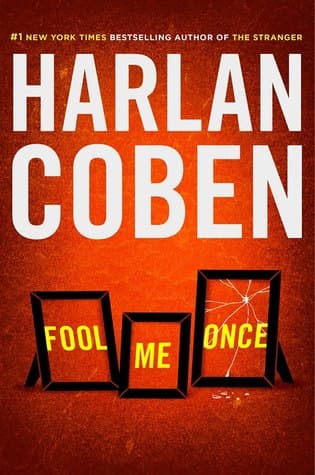
Harlan Coben (2016)
Genre
Thriller / Mystery / Romance
Reading Time
7-8 hours
Key Themes
See below
Sign in to track this book
A former special ops pilot's life changes when her supposedly murdered husband appears on her nanny cam, forcing her to confront the possibility that everything she believes about her past, her husband, and even herself, is a lie.
Two weeks after her husband, Joe Burkett, was murdered in a park, former special ops pilot Maya Stern tries to cope with her grief and raise her two-year-old daughter, Lily. While reviewing footage from a nanny cam she installed to monitor Lily and her new nanny, Isabella, Maya is stunned to see Joe playing with Lily. The image is brief but clear. Believing she is hallucinating or that the video is somehow altered, Maya confronts Isabella, who denies seeing anyone but Lily. Maya hides the nanny cam, determined to understand what she saw, questioning her sanity and the reality of Joe's death.
Detective Sergeant Roger Kierce is assigned to Joe Burkett's murder case. He is thorough, but also secretly battling a neurological condition that causes blackouts and memory lapses, which he tries to conceal. Kierce finds Maya's calm, almost detached demeanor unusual for a grieving widow. Her background as a military pilot with a controversial past raises his suspicions. He questions Maya about her relationship with Joe, the circumstances of his death, and her family, particularly her sister Claire, who was also murdered a few months prior in what was deemed a home invasion.
After reviewing the nanny cam footage multiple times, Maya decides to show it to Detective Kierce, hoping to prove her sanity or uncover a conspiracy. However, when she goes to retrieve the camera, it is gone. She suspects Isabella, but has no proof. Meanwhile, Maya recalls that her sister, Claire, had a secret safe hidden in her home. Feeling that Claire's murder and Joe's death might be connected, Maya breaks into Claire's house and finds the safe. Inside, she discovers a framed photograph of Joe and Claire, with a handwritten note on the back that reads, 'He knows.'
The Burkett family, Joe's wealthy parents Judith and Neil, control Maya and Lily. They insist on caring for Lily, often making Maya feel like an outsider. Judith Burkett is cold and manipulative, subtly pressuring Maya to accept her version of events. Maya also learns more about the Burkett family's pharmaceutical company, which has been involved in several controversies and cover-ups over the years, hinting at a darker side to their public image. Their power makes Maya wary, sensing they are hiding something about Joe.
Maya remembers that Claire had been in contact with Corey Rudzinski, an online whistleblower and former military colleague of Maya's, who ran a website exposing corporate corruption. Corey had been investigating the Burkett family for years, specifically their alleged involvement in a cover-up related to faulty pharmaceutical products. Maya contacts Corey, who is initially reluctant but eventually shares information, revealing that Claire had provided him with sensitive documents about the Burketts shortly before her death. Corey believes both Claire and Joe's deaths are connected to the family's secrets.
Corey Rudzinski uncovers a connection between Joe Burkett and the death of Andrew Kierce, Detective Kierce's younger brother, years ago. Andrew had died during a hazing incident at the private school he attended with Joe. The incident was ruled an accident, but Corey's investigation, supported by Claire's findings, suggests that Joe was directly responsible for Andrew's death and that the Burkett family used their influence to cover it up. This revelation adds another layer of dark secrets to Joe's past and explains Detective Kierce's intense focus on the Burkett family, though he hides his personal connection.
Armed with the information from Corey, Maya confronts Judith Burkett, accusing her of covering up Joe's past crimes and possibly being involved in Claire's and Joe's deaths. Judith remains stoic and deflects, maintaining the family's innocence. However, her composure begins to crack, and she subtly threatens Maya, warning her to stop digging. This encounter confirms Maya's belief that the Burketts are involved in a web of deceit and are willing to go to great lengths to protect their reputation and secrets, including silencing anyone who gets too close to the truth.
Maya obtains security footage from a nearby building in the park where Joe was murdered. The footage, though grainy, shows a figure resembling Joe shortly after his supposed death. Simultaneously, Isabella, the nanny, reappears and, under pressure, confesses to Maya that she did see Joe on the nanny cam and that she was paid by Judith Burkett to take the camera and keep silent. Isabella, terrified, explains that Judith warned her about the consequences of speaking out. This confirms Maya's suspicions about the nanny cam footage and the Burkett family's involvement.
Maya confronts Joe, who reveals he faked his death to escape his past and the pressure of his family. He admits to killing Claire because she was about to expose his involvement in Andrew Kierce's death and other Burkett family secrets. Joe, a remorseless psychopath, then confesses that he was also responsible for killing Maya's sister, Claire, because she had uncovered his involvement in Andrew Kierce's death and was about to expose him. He explains how he manipulated the nanny cam footage and orchestrated his 'murder' to escape his life and start anew, planning to take Lily with him.
Realizing the extent of Joe's depravity and the danger he poses to Lily, Maya makes a decision. During their confrontation, she shoots and kills Joe, ensuring he can never harm anyone again. To ensure the truth comes out and the Burkett family's power is broken, Maya orchestrates her own death, using the nanny cam to record Joe's confession and her subsequent actions. She leaves the evidence for Detective Kierce, knowing that her sacrifice will expose Joe's crimes and the Burkett family's cover-ups, ultimately protecting Lily and bringing justice to Claire and Andrew.
Years later, Detective Kierce, now a celebrated hero, has fully recovered from his illness. He receives the nanny cam footage and other evidence left by Maya. The footage, combined with his own investigation, exposes Joe Burkett's crimes, including the murders of Claire and Andrew Kierce, and the Burkett family's extensive cover-ups. Judith and Neil Burkett are implicated and face legal consequences, their empire crumbling. Lily, now grown, lives a normal life, unaware of the full extent of her mother's sacrifice, but carrying the legacy of a mother who loved her fiercely enough to give everything.
The Protagonist
Maya transforms from a grieving widow questioning her sanity into a calculated avenger, ultimately sacrificing herself to expose the truth and protect her daughter.
The Antagonist
Joe's character arc is one of gradual revelation, from grieving husband to a calculated, remorseless murderer.
The Supporting
Kierce overcomes his personal demons and health issues to become the key figure in exposing the Burkett family's corruption and Joe's crimes.
The Supporting
Lily remains an innocent, growing up protected by her mother's ultimate sacrifice.
The Supporting
Claire's arc is revealed in flashbacks and through Maya's investigation, showing her transformation from a concerned sister to a determined whistleblower, ultimately leading to her death.
The Antagonist
Judith's arc sees her initial control and manipulation slowly unravel as Maya uncovers her family's dark secrets, leading to her downfall.
The Supporting
Corey evolves from a cautious informant to a key collaborator, helping Maya expose the truth.
The Supporting
Isabella's arc is brief, showing her initial complicity and subsequent confession under pressure.
The Supporting
Shane's arc is largely static, serving as a consistent support for Kierce.
The central theme of 'Fool Me Once' is that what we see as reality can be a carefully constructed illusion. Maya's shock at seeing Joe on the nanny cam immediately thrusts her into a world where her own eyes betray her. This theme is reinforced by the Burkett family's efforts to control narratives and cover up their dark secrets, making it difficult for anyone to discern the truth. The story constantly challenges the reader and Maya to question every piece of evidence and every assumption, culminating in the revelation that Joe, the supposed victim, is the ultimate deceiver. The novel suggests that truth is often buried under layers of lies and personal biases.
“Can you believe everything you see with your own eyes, even when you desperately want to?”
Maya's character is shaped by her military experiences and the losses of her sister, Claire, and husband, Joe. The novel explores the complex process of grief, particularly how it can manifest in unusual ways or be intertwined with a quest for justice. Maya's resilience, honed by her special ops training, allows her to navigate emotional pain while maintaining a tactical focus. Her trauma, however, also makes her vulnerable to self-doubt and manipulation. The story highlights how individuals cope with personal tragedy and the strength required to confront painful truths, even when they involve loved ones.
“I was a soldier. I could handle anything. Right?”
The Burkett family shows how wealth and influence can be used to manipulate justice and cover up crimes. Their pharmaceutical company gives them the resources to silence witnesses, control media narratives, and evade legal consequences for generations. Joe's psychopathic tendencies are enabled and protected by his family's power, allowing him to escape accountability for Andrew Kierce's death and continue his pattern of violence. The novel critiques the corruption that can arise when powerful elites operate above the law, suggesting that true justice often requires extraordinary measures against such forces.
“The Burketts didn't just have money. They had power. And power, Maya had learned, could erase anything.”
At its heart, 'Fool Me Once' is a story about the impact of family secrets and betrayal. The Burkett family's history is full of dark truths, from Joe's role in Andrew Kierce's death to the cover-ups orchestrated by Judith. The ultimate betrayal comes from Joe himself, who not only faked his death but also murdered Maya's sister. This theme explores how secrets within families can fester and lead to catastrophic consequences, and how the people closest to us can be the most dangerous. Maya's journey is one of peeling back layers of familial deception to uncover the reality of those she trusted.
“Sometimes, the people closest to you were the ones who could hurt you the most.”
The novel explores different facets of justice: legal justice, personal retribution, and the moral need to expose wrongdoing. Maya's pursuit is not just about solving a mystery, but about achieving a form of justice for Claire and Andrew Kierce, and ultimately protecting Lily. When the legal system, influenced by the Burketts' power, fails to deliver, Maya takes matters into her own hands, leading to a climactic act of retribution. Her final sacrifice ensures that, even in her death, the truth is revealed and the corrupt are brought to justice, demonstrating that true justice sometimes demands the ultimate price.
“Some truths needed to be set free, no matter the cost.”
The catalyst for the entire mystery.
The nanny cam footage, showing Joe alive after his supposed murder, serves as the primary inciting incident and a powerful symbol of the novel's central theme of perception vs. reality. It immediately plunges Maya into a state of disbelief and triggers her relentless quest for answers. The footage acts as a tangible piece of evidence that challenges Maya's sanity and the official narrative, driving the plot forward and creating intense suspense. Its disappearance and reappearance are crucial to the unfolding mystery.
A source of crucial information and external validation.
Corey Rudzinski functions as an information broker and an external validator for Maya's suspicions. His independent investigation into the Burkett family, combined with the information Claire provided him, offers Maya critical pieces of the puzzle that she could not have discovered on her own. He connects seemingly disparate events (Andrew Kierce's death, Claire's investigation, Joe's past) and provides the necessary context for Maya to understand the full scope of the Burkett family's corruption and Joe's true nature.
A red herring and a source of internal conflict.
Detective Kierce's secret neurological condition, causing blackouts and memory lapses, functions as a red herring, subtly suggesting that he might be an unreliable investigator or even involved in a conspiracy. It adds a layer of internal conflict for the character and creates doubt in the reader's mind about the integrity of the official investigation. Ultimately, it highlights his dedication to justice, as he overcomes his personal struggles to pursue the truth, making his eventual role in exposing the Burketts more impactful.
Revealing crucial backstory and motivations.
The novel strategically uses flashbacks and references to past events, such as Maya's military experiences, Claire's murder, and Andrew Kierce's death. These serve to build character depth, reveal hidden motivations, and provide context for the present-day mystery. They slowly unravel the complex web of relationships and secrets surrounding the Burkett family, ultimately demonstrating how past actions directly impact the present and drive the characters' decisions, particularly Maya's quest for retribution.
“The past is a monster. It can eat you alive.”
— Joe's past actions catching up to him, a recurring theme.
“Sometimes the people closest to you are the ones who hurt you the most.”
— Maya's realization about the betrayal within her own family.
“How many times can you fool yourself before you stop believing the lie?”
— Maya grappling with the truth about Joe and the video footage.
“Grief is a funny thing. It makes you do things you never thought you'd do.”
— Maya's actions driven by the loss of her sister and husband.
“There are no accidents. Only things we haven't explained yet.”
— Detective Kierce's investigative philosophy.
“You can't outrun your past, not really. It always catches up.”
— Maya's attempts to move on from her military past.
“The truth is rarely simple. It's usually a tangled mess.”
— Maya piecing together the complex web of lies and secrets.
“Sometimes you have to break the rules to do the right thing.”
— Maya's unconventional and often illegal methods to uncover the truth.
“Love can blind you to a lot of things. Even the obvious.”
— Maya's initial inability to see Joe's true nature.
“Every lie eventually unravels. It's just a matter of time.”
— The slow exposure of the many falsehoods in the story.
“You never truly know someone, not completely, no matter how close you are.”
— Maya's shocking discovery about her husband's secret life.
“Revenge is a dish best served cold, but it can also burn you alive.”
— Maya's pursuit of justice for her family.
“The dead don't stay dead in our memories. They live on, for better or worse.”
— Maya's constant struggle with the memories of her deceased loved ones.
“Some secrets are meant to stay buried. Others demand to be found.”
— The central conflict of hidden truths versus the need for disclosure.
Ready to see how well you understood this book? Take our interactive quiz with 10 questions.

Biography coming soon.







