“I am not a person, I am a story.”
— Susan Barton reflecting on her identity and existence after being marooned and then returned to England.

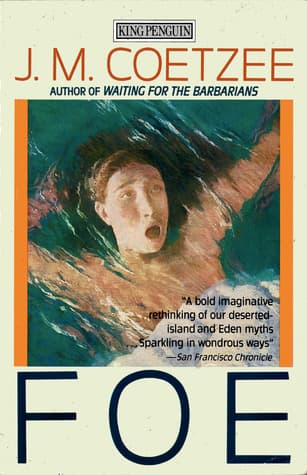
Genre
Literary Fiction / Historical Fiction
Reading Time
90 min
Key Themes
See below
Sign in to track this book
A castaway asks a writer to immortalize her story of survival with Cruso and the silent Friday; this request becomes a deep look at truth, authorship, and narrative's power.
Susan Barton arrives in London in 1720. She has been on a deserted island for a year after a shipwreck, living with a man named Cruso and his mute servant Friday. She immediately seeks out writer Daniel Foe, hoping he will write down her experiences. Susan wants her story, especially her time with Cruso and Friday, to be remembered. She finds Foe living in poverty, burdened by debt and a mysterious daughter named Fanny. He agrees to consider her offer, interested in the story's potential.
Susan begins telling her story to Foe, describing her year on the island. She details Cruso's strange life, his self-imposed isolation, and his lack of interest in rescue, having accepted his situation years ago. Cruso, she explains, had lost his tongue before she arrived, making him unable to speak. Friday, his servant, also has his tongue cut out, a detail Susan finds both terrible and intriguing. Susan struggles to convey Cruso's true nature – his passivity, his hard but pointless work terracing the island – and the deep silence of their lives, often questioning Foe's interpretations.
As Susan continues, Foe starts to take control of the narrative. He often interrupts, suggesting changes and new plot ideas. Foe is particularly interested in the more dramatic parts of her story, such as possible mutinies, hidden treasures, or a more exciting escape. He pushes Susan to invent reasons for Cruso's self-mutilation and Friday's muteness, believing a story needs clear causes and a more engaging plot. Susan resists, insisting on the 'truth' of her experience, but she finds herself increasingly subject to Foe's creative demands and storytelling rules.
Foe suddenly disappears, leaving Susan alone in his rundown house with his mysterious 'daughter,' Fanny, and his growing debts. Susan must act as housekeeper and guardian, trying to keep order and protect Friday, who remains silent. She continues writing letters to Foe, detailing her struggles and urging him to return to finish her story. This period shows Susan's strength and her growing sense of responsibility, but also her vulnerability and reliance on Foe to give her experiences a voice. She becomes an active part of Foe's life, not just a narrator.
Susan tries hard to teach Friday to speak. She believes if he could tell his own story, it would improve her narrative and perhaps reveal the truth about his past and Cruso's. She tries various methods, from simple words to complex ideas, but Friday remains silent, communicating only through gestures and a unique humming. His inability to speak becomes a central frustration for Susan and a barrier to fully understanding the past. Foe, when he returns, also tries to 'uncover' Friday's story, but Friday's silence resists all attempts to interpret it.
Foe eventually returns, but his presence only makes Susan's fight for narrative independence harder. He continues to push for a more dramatic, marketable version of her story, often ignoring her focus on facts. He suggests adding a love affair between Susan and Cruso, or a more heroic escape, which upsets Susan. Foe also starts to blend his own life with Susan's, bringing her into his chaotic home life and the story of his fictional daughter, Fanny. Susan finds herself not only the subject of a story but also a character within Foe's own changing narrative.
Throughout Susan's stay, the identity of Foe's 'daughter,' Fanny, remains a mystery. Sometimes she appears as a young girl, sometimes as a woman, and her presence is often brief and dreamlike. Foe gives conflicting accounts of her origin, suggesting she is a real daughter, a product of his imagination, or even a ghost. Fanny symbolizes the changing nature of truth and the unreliability of memory and storytelling. Susan herself starts to question Fanny's reality, yet she cares for her, adding another complex responsibility to her life.
Foe's main concern shifts from simply telling Susan's story to making it a commercial success. He constantly reminds Susan that the story needs a compelling plot, dramatic details, and a clear moral message to attract readers. He suggests framing the story as an adventure, a tale of survival, or a cautionary lesson. This commercial focus further alienates Susan, who feels her real experience is being twisted. Foe's emphasis on profit shows the tension between artistic integrity and the demands of the literary market, turning Susan's life into a product.
Susan grows increasingly unhappy with Foe's methods and the entire storytelling process. She realizes her 'truth' is being filtered, changed, and used by Foe's literary ambition. Her attempts to correct his additions are often met with resistance or ignored. She begins to understand that once a story is written, it becomes separate from the original experience. This disappointment extends to her own ability to convey what truly happened, as she struggles with language's limits in capturing raw experience.
A significant part of the book addresses the problem of Friday's story. Both Susan and Foe acknowledge that Friday, being mute, cannot tell his own tale. Foe even suggests that Friday's story, if it could be told, might be the most valuable. However, Friday remains a mystery, his past and inner life inaccessible to language. The novel repeatedly highlights the unfairness of his silence, representing the untold histories of marginalized and colonized people. His lack of a tongue is the ultimate symbol of narrative suppression, showing the power in who gets to tell a story and whose story is considered worth telling.
Towards the novel's end, the narrative voice becomes more complex and unclear. The reader moves from Susan's direct account, to Foe's letters, to a more distant, almost all-knowing voice that seems to go beyond both characters. The final sections are less about Susan's direct story and more about writing and the nature of the text itself. The story's 'author' becomes a vague figure, observing and commenting, further blurring the lines between the 'real' Susan Barton, the 'fictional' Daniel Foe, and the ultimate creator of the narrative. This metafictional turn questions the story's source and authority.
In the final, very abstract chapters, a new, unnamed narrator goes into the deep, dark water around the island where Cruso and Friday lived. The narrator finds Cruso's body, preserved and calm, at the bottom of the sea. This narrator then meets Friday, who is still alive but mute. The narrator tries to understand Friday's silence, trying to find what lies beneath his tongueless mouth. This scene is symbolic, representing a journey into the unconscious, the unwritten, and the historical silences that resist easy explanation. It emphasizes the lasting mystery of Friday's identity and the stories that can never be fully told.
The Protagonist
Susan evolves from a hopeful storyteller to a disillusioned participant in her own narrative, ultimately recognizing the tyranny of authorship.
The Antagonist/Supporting
Foe remains largely static in his ambition to control and commercialize stories, but his character serves to reveal the inherent power of the writer.
The Supporting
Cruso's arc is largely complete before the story begins; he represents a fixed, almost mythical figure of solitude and self-sufficiency.
The Supporting
Friday remains a static, symbolic figure whose silence challenges the very foundations of storytelling and representation.
The Mentioned
Fanny's arc is not one of development but of persistent ambiguity, highlighting the novel's metafictional themes.
The Supporting
This narrator's arc is not personal development, but an exploration of the deeper philosophical implications of the story.
The novel explores how stories are built, controlled, and changed. Daniel Foe, as the writer, holds great power over Susan Barton's experiences, shaping them to fit common narrative forms and market demands. Susan's frustration with Foe's additions and his refusal to accept her 'truth' shows how writers can distort reality. The act of writing turns raw experience into a crafted story, often at the cost of authenticity. This theme asks who has the right to tell a story and how that telling changes the story itself. Foe's need for a 'plot' and 'meaning' for Cruso's and Friday's lives is an example of this manipulation.
“As for Cruso, he is to be found in my book, and in no other place. The island is to be found in my book, and in no other place. The island is a book, and the book is an island.”
Foe consistently blurs the lines between fact and fiction, making it nearly impossible for Susan, and the reader, to know what truly happened. The uncertainty around Fanny's identity, Foe's changing explanations, and his additions to Susan's island experiences all support this theme. The novel suggests that 'truth' is not fixed but changes, constantly reinterpreted by memory, perspective, and narrative. The 'real' story of Cruso and Friday is always just out of reach, lost to time, silence, or the writer's changes. This makes the reader question how reliable any story is.
“I will make the story, and then I will write it. Thus I am a maker of stories, and a writer of stories.”
Friday's muteness is a strong example of this theme. His lack of a tongue symbolizes the historical silencing of colonized people, whose stories are often denied, erased, or told by their colonizers. Both Susan and Foe try to 'give' Friday a voice or interpret his past, but his silence resists their efforts, showing that it is impossible to truly represent the less powerful without further appropriation. The novel implicitly criticizes the historical narrative of 'Robinson Crusoe' itself, which largely ignores Friday's agency. Friday's presence constantly reminds the reader of the stories that remain untold and unheard.
“It is not Friday's story that is missing, but Friday's tongue.”
Susan Barton's fight to have her story told accurately is a fight for her own identity. She understands that having her experiences written down will solidify her place in history and define who she is. However, Foe's involvement threatens to take away her control over her own story, turning her into a character in his creation rather than the author of her own life. The novel explores how much of our identity is shaped by the stories we tell about ourselves, and how vulnerable that identity becomes when others control our narrative. Susan's resistance is an assertion of self against the writer's power.
“I am a woman of parts, with a past and a future, not a mere blank page upon which you may write what you please.”
The novel self-consciously draws attention to its own fictional nature and the process of its creation.
Foe is a highly metafictional novel, constantly reminding the reader that they are reading a constructed text. It features characters discussing the act of writing, the challenges of narrative, and the role of the author. Daniel Foe himself is a writer, and his interactions with Susan Barton explicitly explore the choices and manipulations inherent in storytelling. The novel's shifting narrative voices and its self-referential comments on its own making draw attention to the artifice of literature, inviting the reader to critically analyze the relationship between reality and representation.
The reader is presented with multiple, often conflicting, accounts of events, making it difficult to ascertain a definitive truth.
The novel employs unreliable narration through various means. Susan Barton, while insisting on 'truth,' is still recounting events from her perspective and memory, which can be fallible. More significantly, Daniel Foe actively manipulates and embellishes Susan's story, presenting his own versions of events or suggesting fabricated details. The ambiguity surrounding Fanny's identity further destabilizes the narrative. This device forces the reader to question every detail and interpretation, highlighting the subjective nature of truth and the inherent limitations of any single narrative voice.
Friday's inability to speak serves as a powerful symbol for historical silencing and the limits of representation.
Friday's cut tongue is a central and recurring symbol in the novel. On a literal level, it prevents him from telling his own story. Symbolically, it represents the historical muting of marginalized voices, particularly those of colonized peoples. His silence highlights the injustice of having one's history and identity defined by others. It also functions as a challenge to the very act of storytelling, suggesting that some truths are inexpressible or cannot be captured by language, thereby undermining the authority of the 'author' to represent all experiences.
The novel directly engages with and reinterprets Daniel Defoe's 'Robinson Crusoe,' challenging its original narrative.
Foe is a direct intertextual engagement with Daniel Defoe's classic novel, 'Robinson Crusoe.' Coetzee takes the familiar characters of Crusoe and Friday, but crucially introduces Susan Barton, a female perspective, and Daniel Foe, a writer. By placing Defoe (or a character named Foe) within the story, Coetzee critiques the original's colonialist undertones, its patriarchal narrative, and its silencing of Friday's voice. This device allows Coetzee to deconstruct the myths and assumptions embedded in the original text, offering a postcolonial and feminist re-reading of a foundational work of English literature.
“I am not a person, I am a story.”
— Susan Barton reflecting on her identity and existence after being marooned and then returned to England.
“To tell my story, I must have a voice, and a voice needs a mouth, and a mouth needs a body, and a body needs a history.”
— Susan Barton contemplating the necessity of physical presence and past events to validate her narrative.
“He is a man without words, yet he is a man.”
— Susan Barton observing Friday's muteness and asserting his humanity despite his inability to speak.
“The world is full of stories, but they are not all true.”
— Susan Barton's cynical realization about the nature of narratives and the blurred lines between fact and fiction.
“We are all castaways, each in our own way.”
— Susan Barton's broader reflection on the human condition, extending the metaphor of being stranded.
“Perhaps I am writing to him, not to myself.”
— Susan Barton considering the true recipient and purpose of her writing, possibly addressing Foe or even Crusoe.
“What is a story without a beginning, a middle, and an end?”
— Susan Barton's frustration with the elusive nature of her own story and the struggle to give it a coherent form.
“He does not speak, yet he speaks.”
— Susan Barton's paradoxical observation about Friday's communication through non-verbal means.
“A true story is a dangerous thing.”
— Susan Barton acknowledging the potential impact and ramifications of revealing unvarnished truth.
“The past is never truly past; it is always with us, shaping who we are.”
— Susan Barton's contemplation of the enduring influence of past events on present identity.
“I will give you a story, but it will be my story, not his.”
— Susan Barton asserting her authorial control and perspective over the narrative she intends to create.
“Silence is also a kind of speech.”
— Susan Barton reflecting on Friday's muteness and inferring meaning from his unspoken presence.
“Perhaps the only true freedom is to be forgotten.”
— Susan Barton's weary thought on the burden of memory and narrative, suggesting oblivion as a form of liberation.
Ready to see how well you understood this book? Take our interactive quiz with 10 questions.
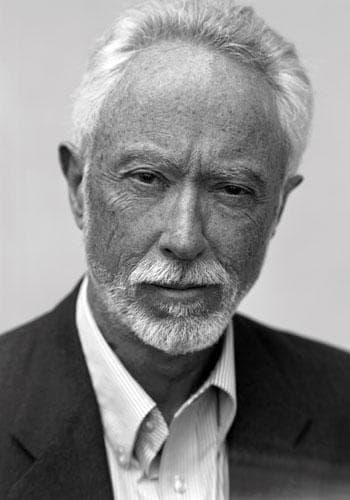
John Maxwell Coetzee OMG is a South African and Australian novelist, essayist, linguist, translator and recipient of the 2003 Nobel Prize in Literature. He is one of the most critically acclaimed and decorated authors in the English language. He has won the Booker Prize (twice), the CNA Prize (thrice), the Jerusalem Prize, the Prix Femina étranger, and The Irish Times International Fiction Prize, and holds a number of other awards and honorary doctorates.







