“Sometimes you have to break a few rules to do what's right.”
— Noah's father explains his environmental activism.

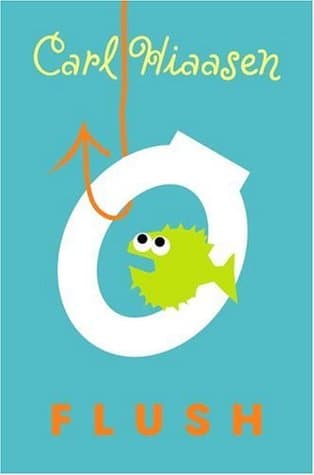
Carl Hiaasen (2005)
Genre
Children's / Mystery / Young Adult
Reading Time
260 min
Key Themes
See below
Sign in to track this book
A determined boy in the Florida Keys teams up with his feisty sister and an eccentric old-timer to expose a sewage-dumping casino boat owner, after his environmentalist dad's attempts land him in jail.
The story starts with Noah Underwood's father, Paine, in jail for sinking the Coral Queen, a casino boat owned by Dusty Muleman. Paine thinks Dusty illegally pumps raw sewage from his boat into the waters of the Florida Keys, polluting Thunder Beach and harming sea life. Despite his wife Donna's pleas and Noah's worry, Paine believes his actions were right to protect the environment. Dusty Muleman, a known corrupt local businessman, quickly gets his boat refloated and back in business. This frustrates Paine and upsets the community, as many suspect Dusty's illegal activities but have no proof.
With his father in jail, Noah feels he must continue the fight against Dusty Muleman. He thinks his father's method was too extreme and did not work, and he wants to find a legal way to expose Dusty's sewage dumping. Noah gets help from his younger sister, Abbey, who is known for her fiery temper and adventurous spirit. Together, they start watching the Coral Queen from a distance, trying to understand Dusty's operations and find a weakness in his illegal scheme. Their first attempts are careful, as they know Dusty is a dangerous man with connections.
While watching the Coral Queen, Noah is confronted by Luno, Dusty Muleman's bodyguard, who tells him to stay away from the boat. This encounter makes Noah more determined. Later, Shelly, Dusty's ex-girlfriend and a bartender on the Coral Queen, talks to Noah and Abbey. She confirms their suspicions about Dusty's illegal dumping and wants to help. She is disgusted by Dusty's actions and still cares for Paine. Shelly's inside knowledge helps them, as she knows the boat's layout and Dusty's habits.
With Shelly's help, Noah plans to use a harmless, biodegradable green dye to expose Dusty's sewage dumping. The idea is to pour the dye into the Coral Queen's sewage holding tank. When Dusty illegally flushes it, the green plume will be visible in the harbor, providing proof. Abbey, in disguise, gets onto the boat and pours the dye into what they think is the right tank. However, their first attempt fails when the dye does not appear. They realize they might have targeted the wrong tank or that Dusty has a more complex system for his illegal operations.
While Noah and Abbey investigate, Paine, frustrated by being in jail and the lack of progress, escapes. He thinks he needs to take action again. His escape makes Donna and the children very worried, as it puts him in more legal trouble and makes the family a bigger target for Dusty Muleman. Sheriff Shucker, though he understands Paine's environmental concerns, must pursue him. Paine is eventually found and recaptured, returned to jail. His escape causes a brief stir and adds to the family's already stressful situation.
Noah realizes he needs more help and a better plan. He reluctantly asks for help from Jasper Jr., Dusty Muleman's spoiled and often mean son, and Jasper Jr.'s friend, Bull. Surprisingly, Jasper Jr. agrees to help, partly to get back at his father and partly because Luno has bullied him. The new plan involves using multiple bottles of dye and a coordinated effort. Shelly again provides important access and timing information. The idea is to dump the dye into the toilet system at the same time, making sure it reaches the correct holding tank and is flushed out, so the evidence is clear.
On the night of the second attempt, Noah, Abbey, Jasper Jr., and Bull, with Shelly's help, succeed with their plan. They get the green dye into the Coral Queen's sewage system. As expected, Dusty, unaware of the trap, flushes the illegally stored sewage into the harbor. The bright green plume of water spreads across the channel. Noah had told a local news reporter, Miles Umlaut, who arrives just in time with a camera crew. The visual evidence is undeniable, filmed for all to see, finally exposing Dusty Muleman's environmental crimes to the public and authorities.
With the video evidence of the green plume on the local news, authorities cannot ignore Dusty Muleman's illegal activities. Sheriff Shucker, now with proof, arrests Dusty. The Coral Queen's operations stop, and Dusty faces legal consequences for his environmental violations. After Dusty's downfall, Paine Underwood's actions, though illegal, are seen in a new way. Because Dusty is proven guilty and Paine clearly wanted to protect the environment, the charges against Paine are lessened or dropped, and he gets out of jail, returning home a local hero to many.
With Dusty Muleman gone, the Coral Queen gets sold to a new owner, and the community hopes for cleaner waters. The Underwood family celebrates their win, and life returns to normal, though Paine stays watchful about environmental protection. However, the story ends with a hint that the fight is not truly over. Noah sees a mysterious red glow in the water near the old Coral Queen dock, suggesting that even though Dusty is gone, other pollution or environmental threats might still be in the Florida Keys. This implies that protecting nature needs constant vigilance.
The Protagonist
Noah evolves from a concerned bystand to a proactive investigator, learning to achieve justice through strategic planning rather than impulsive acts.
The Supporting
Abbey's character remains consistently brave and loyal, her actions reinforcing her role as a vital, if sometimes impetuous, partner.
The Supporting
Paine starts as an incarcerated activist and ends as a vindicated local hero, his extreme actions justified by the eventual exposure of Dusty's crimes.
The Supporting
Donna consistently acts as the family's anchor, her primary arc being the emotional strain of dealing with her husband's legal troubles and her children's dangerous mission.
The Antagonist
Dusty begins as an untouchable local villain and ends as an exposed and arrested environmental criminal.
The Supporting
Shelly transitions from a reluctant informant to a courageous and active participant in exposing Dusty's crimes.
The Supporting
Luno remains a static character, serving as a menacing physical obstacle for the protagonists.
The Supporting
Jasper Jr. shifts from a bully to a reluctant, self-serving accomplice, demonstrating a complex relationship with his father.
The Supporting
Bull remains a minor supporting character, primarily serving as Jasper Jr.'s loyal sidekick.
The Supporting
Sheriff Shucker moves from arresting Paine to arresting Dusty, demonstrating the legal system's eventual response to clear evidence.
The main theme is the need to protect the natural environment, specifically the waters of the Florida Keys, from pollution. Paine Underwood's act of sinking the Coral Queen, though illegal, comes from a love for nature and a try to stop environmental damage. Noah and Abbey continue this fight, choosing a more careful, less destructive way to expose Dusty Muleman's sewage dumping. The book shows that individuals have a responsibility to care for the environment, even when facing powerful and corrupt people, and it shows different ways to be an activist.
“"Some things are worth fighting for, Noah. Some things are worth going to jail for."”
The novel looks at the relationship between legal justice and what is morally right. Paine Underwood breaks the law by sinking the Coral Queen, but he thinks his actions are morally right, and they lead to the exposure of a greater wrong (Dusty's pollution). Noah, however, seeks justice through legal means by gathering evidence. The story considers if it is ever okay to break the law for a higher moral purpose. It suggests that while direct action can start things, big change often needs proof and following rules, even if they are not perfect.
“"Dad said he'd done it because somebody had to take a stand, and he was tired of waiting for the law to do its job."”
Despite the unusual and often dangerous situations, the Underwood family shows strong loyalty and support for each other. Noah and Abbey risk their safety to help their father, both by trying to expose Dusty and by dealing with the emotional impact of Paine's time in jail. Donna, though frustrated, supports her husband. This theme shows the strength of family bonds when things are hard, showing how a family can unite around a shared cause and help each other even when members make questionable choices.
“"He was still Dad, and we were still his kids, and we were sticking together."”
The bad guy, Dusty Muleman, shows themes of corruption and greed. His illegal sewage dumping is only for profit, as it saves him the cost of proper waste disposal. His influence in the community, his use of Luno as an enforcer, and his first ability to avoid justice all show how widespread corruption can be. The story criticizes people and systems that value money over ethics and environmental responsibility, showing that even powerful corrupt people can be held accountable.
“"He was a rich man, Dusty Muleman, and he liked to keep his money, even if it meant turning the ocean into a toilet."”
Noah and Abbey, as young main characters, grow a lot and take on adult responsibilities. Noah, especially, takes charge against Dusty Muleman, making complex plans and facing dangerous situations. He learns about strategy, persistence, and the value of evidence. Both children mature through their experiences, realizing that protecting their community and environment needs courage, intelligence, and a willingness to act. This theme shows that young people can make a difference and handle serious challenges.
“"It was up to me now. Up to Abbey and me."”
A harmless, biodegradable substance used as irrefutable evidence of pollution.
The green dye is the central plot device for exposing Dusty Muleman's illegal sewage dumping. It's chosen because it's harmless to the environment yet highly visible. Noah's plan to introduce the dye into the Coral Queen's sewage system, knowing Dusty will illegally flush it, creates a dramatic and undeniable visual spectacle of pollution. The green plume serves as the 'smoking gun' that finally provides the concrete evidence needed to incriminate Dusty, making it a crucial element in the resolution of the mystery and the achievement of justice.
The casino boat, both the source of pollution and the target of the environmental activism.
The Coral Queen is more than just a setting; it's a symbolic plot device. As Dusty Muleman's casino boat, it represents greed, corruption, and environmental exploitation. Its initial sinking by Paine sets the entire plot in motion. Later, it becomes the primary target for Noah's investigation and the site of the 'flush' operation. The boat's physical structure, including its sewage system, becomes integral to the plot, and its fate mirrors the struggle between environmental protection and corporate malfeasance. Its eventual closure and sale symbolize a victory for the community and nature.
The vibrant natural environment that serves as both backdrop and motivation for the characters.
The Florida Keys are not merely a backdrop but a vital plot device that drives the characters' motivations and actions. The unique ecosystem, with its clear waters, diverse marine life, and reliance on tourism, is the very thing Paine, Noah, and Abbey are fighting to protect. The beauty of the Keys contrasts sharply with the pollution caused by Dusty, intensifying the stakes of the conflict. The setting emphasizes what is at risk and provides a constant visual reminder of the environmental cause, making the characters' fight deeply personal and regionally specific.
The narrative technique of building tension through an unfolding investigation.
Carl Hiaasen employs suspense and mystery as a key narrative technique throughout the book. The plot is structured around Noah's investigation to prove Dusty's guilt, creating a sense of urgency and danger. Readers are kept guessing about whether Noah's plans will succeed, how he will overcome obstacles like Luno, and what new challenges will arise (like Paine's escape). This device engages the reader, drawing them into the children's perilous mission and making them actively root for the protagonists as they navigate the unpredictable path to justice.
“Sometimes you have to break a few rules to do what's right.”
— Noah's father explains his environmental activism.
“Pollution is a crime, and the polluters are the criminals.”
— Noah's father's passionate declaration about environmental harm.
“You can't just flush a problem away and expect it to disappear.”
— Noah reflects on the casino boat's illegal dumping.
“The truth has a way of bubbling to the surface, just like sewage.”
— Noah observes how evidence of dumping eventually emerges.
“Even a small voice can make a big difference if it's loud enough.”
— Noah learns about the power of speaking up.
“Money can't buy a clean conscience.”
— Comment on the casino owner's unethical actions.
“Sometimes the most dangerous thing in the water isn't a shark, it's what humans put there.”
— Noah's realization about man-made environmental threats.
“A hero isn't someone who never gets scared. A hero is someone who does what's right even when they're scared.”
— Noah's father encouraging him to take action.
“If you love a place, you have to fight for it.”
— Noah's determination to protect the Florida Keys.
“The ocean doesn't belong to anyone, so it's everyone's job to protect it.”
— Noah discussing environmental responsibility.
“You don't need a badge to stand up for what's right.”
— Noah's father on taking personal responsibility.
“Sometimes the quietest people have the loudest ideas.”
— Noah noticing his own growing confidence.
“A clean environment is a basic human right, not a luxury.”
— Argument against the casino's pollution.
“The best way to predict the future is to create it.”
— Noah's father on taking proactive environmental action.
Ready to see how well you understood this book? Take our interactive quiz with 10 questions.

Carl Hiaasen is a celebrated American author known for his satirical crime novels often set in Florida. His works, including "Stormy Weather," "Hoot," "Scat," and "Flush," are characterized by their sharp wit, environmental themes, and eccentric characters. Hiaasen's distinctive voice has earned him a significant following and critical acclaim for his unique brand of Florida noir.
Dan Gemeinhart
4.5
Kate O'Hearn
4.4

Jeanne Birdsall
4.4

Jen Wang
4.4
Wendelin Van Draanen
4.3

John Marsden
4.3

Chris Van Allsburg
4.3
Jennifer A. Nielsen
4.2