“Like everything else, we had to take what was given to us and bear it.”
— Cathy reflecting on their imprisonment in the attic.

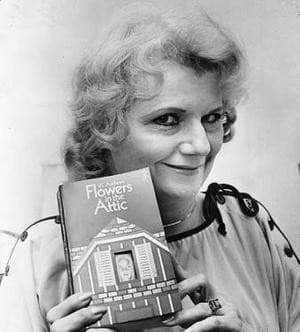
V.C. Andrews (1979)
Genre
Thriller / Mystery / Young Adult / Romance
Reading Time
9-10 hours
Key Themes
See below
Sign in to track this book
Trapped in an attic by their greedy mother and cruel grandmother, four beautiful children fight for survival and sanity as years of isolation twist their innocence into a desperate struggle for freedom and revenge.
The story begins with the seemingly idyllic life of the Dollanganger family: Malcolm Foxworth, Corrine, and their four beautiful, blond children—Chris, Cathy, and the twins, Cory and Carrie. Their perfect world shatters when their father, Christopher Dollanganger Sr., dies in a car accident. Destitute, Corrine reveals a shocking secret: she is the estranged daughter of Malcolm Foxworth, a wealthy and powerful patriarch who disinherited her for marrying her half-uncle, Christopher Sr. Corrine convinces her children that they must hide in the attic of Foxworth Hall for a short period while she attempts to reconcile with her dying father and reclaim her inheritance. She promises it will be temporary, just until her father dies and she is reinstated in his will.
Upon arrival at Foxworth Hall, the children are led by Corrine and her stern, fanatically religious mother, Olivia Foxworth, to a large, opulent attic room. Initially, the children are optimistic, believing their confinement will be brief. Corrine visits them frequently, bringing them gifts and promising their imminent release. However, Olivia Foxworth, a severe and unforgiving woman, sees the children as products of incest and sin. She subjects them to physical and emotional abuse, constantly reminding them of their sinful origins and the shame they bring to the family name. The attic, while spacious, becomes a gilded cage, its windows barred, and their only view of the outside world through a small skylight.
As weeks turn into months, and then years, the children's initial hope transforms into despair. Corrine's visits become increasingly sporadic and brief, her promises of release hollow. Chris, the eldest, takes on a paternal role, trying to protect and educate his siblings using the books their mother occasionally provides. Cathy, the second eldest, grows into a beautiful but rebellious young woman, her spirit chafing under the confinement. The twins, Cory and Carrie, remain innocent but are increasingly frail and sickly. The children are forced to live in constant fear of Olivia's wrath, relying on each other for comfort and companionship, their only escape being their imaginations and the stories they tell.
Confined to the attic with no other human contact, Chris and Cathy's relationship evolves from sibling affection to a complex, incestuous love. Driven by loneliness, their burgeoning sexuality, and a desperate need for intimacy and connection, they find solace and forbidden comfort in each other's arms. This taboo relationship becomes a central, disturbing aspect of their confinement, a twisted mirroring of their parents' own incestuous union. They struggle with the morality of their actions, yet their desperate circumstances make them feel it is their only source of love and warmth in an otherwise cold and cruel world, further blurring the lines of what is right and wrong.
The children's already grim existence takes a tragic turn when Cory, the younger of the twins, begins to suffer from a mysterious illness. He experiences severe stomach pains, vomiting, and extreme weakness. Despite Chris and Cathy's desperate attempts to care for him, and their pleas to Corrine and Olivia for medical help, Cory's condition rapidly deteriorates. He eventually succumbs to his illness, dying in the attic. His death shatters the remaining innocence of the children, particularly Carrie. Chris and Cathy become convinced that Cory was deliberately poisoned, attributing his death to the sugar donuts Olivia brought, which tasted bitter.
After Cory's death, Chris and Cathy's suspicions solidify. They recall the bitter taste in the sugar donuts and begin to test their food. They discover that the sugar they are given is laced with arsenic. This horrifying realization confirms their grandmother's murderous intent and their mother's complicity. The children understand that they are being slowly poisoned to death. This revelation fuels their resolve to escape. Chris, using his ingenuity, begins to meticulously plan their escape, hoarding supplies and observing the routines of the house. Cathy, driven by anger and a thirst for revenge, becomes an active participant in the dangerous plan.
During their confinement, the children learn through overheard conversations and glimpses through the skylight that Corrine has successfully charmed her dying father and inherited his vast fortune. She has also become engaged to Bart Winslow, a wealthy and influential man. Corrine's wedding day is a devastating blow to the children, particularly Cathy, who witnesses the lavish ceremony through the attic window. This event signifies Corrine's complete abandonment of her children and her embrace of a new, untainted life, leaving them to die in the attic. It strengthens their resolve to escape and expose her treachery.
After years of planning, Chris, Cathy, and Carrie finally put their escape plan into action. Chris manages to pick the lock of the attic door, and they cautiously navigate the labyrinthine passages of Foxworth Hall. They steal clothes and money from Corrine's room, careful to avoid detection by Olivia or the servants. The escape is fraught with tension and near-misses, but their desperation for freedom propels them forward. They manage to slip out of the mansion under the cover of darkness, leaving behind the only home they have known for years, along with the graves of their father and brother, and the chilling memories of their imprisonment.
The escaped children make their way to a nearby town, where they clean themselves up and buy new clothes with the stolen money. Driven by a burning desire for justice and revenge, they crash Corrine's lavish wedding reception. Dressed in their new finery, they confront Corrine, exposing her heinous crimes—the confinement, the neglect, and the poisoning of her own children, which led to Cory's death. The revelation shocks the guests, including Corrine's new husband, Bart Winslow. Corrine, horrified and cornered, collapses in a state of denial and mental breakdown.
After the dramatic confrontation, Chris, Cathy, and Carrie flee the scene, their future uncertain. They adopt new identities, changing their last name to Sheffield, and attempt to build new lives. Chris pursues a career in medicine, fulfilling his desire to heal and protect. Cathy, driven by her passion for dance and her desire for recognition, dedicates herself to ballet, finding an outlet for her intense emotions. Carrie, still fragile and traumatized, struggles to adapt to the outside world. Despite their newfound freedom, the psychological scars of their attic confinement and the incestuous bond between Chris and Cathy remain, deeply influencing their choices and relationships, ensuring their past continues to dictate their future.
The Protagonist
Cathy transforms from an innocent child to a vengeful, traumatized woman, forever marked by her experiences, yet determined to find a place in the world.
The Protagonist
Chris evolves from a responsible boy into a man haunted by his past, struggling with his forbidden love for Cathy while striving for a normal life.
The Antagonist
Corrine descends from a seemingly loving mother to a monstrous, self-serving betrayer, ultimately suffering a mental breakdown when confronted with her crimes.
The Antagonist
Olivia remains a static, cruel figure, a symbol of unyielding judgment and malevolence.
The Supporting
Cory's arc is brief and tragic, serving as a catalyst for the older children's awakening and escape.
The Supporting
Carrie remains fragile and emotionally scarred, struggling to find stability and happiness in the outside world.
The Mentioned
His death is the inciting incident, and his life's choices shape the children's fate.
The Mentioned
His will and legacy dictate the actions of others, despite his physical absence.
The theme of incest is central and deeply disturbing in 'Flowers in the Attic.' It manifests directly through Corrine's marriage to her half-uncle, Christopher Sr., which is the original 'sin' that leads to her disinheritance and the children's imprisonment. More poignantly, it develops between Chris and Cathy in the attic, born out of extreme isolation, emotional deprivation, and burgeoning sexuality. This forbidden relationship is portrayed as a desperate search for comfort and intimacy in an inhumane environment, blurring moral lines and highlighting the psychological damage inflicted upon them. It is a direct consequence of their unnatural confinement.
“We were a secret, and secrets are never good. We were a sin, and sins are never forgiven.”
Betrayal is the driving force of the narrative, primarily embodied by Corrine's actions. She betrays her children's trust, their safety, and their very lives for the sake of wealth and social status. Her initial 'loving' facade crumbles as she becomes increasingly absent and complicit in their abuse. This theme extends to Olivia, who betrays her role as a grandmother by inflicting physical and psychological torture. The children experience a profound sense of abandonment and betrayal, which shapes their worldview and fuels their desire for revenge and self-preservation. The ultimate betrayal is Corrine's role in the slow poisoning of her own children.
“She had stopped being our mother the moment she locked that door.”
Despite the horrific circumstances, the Dollanganger children display remarkable resilience and a fierce will to survive. Chris takes on the role of protector and educator, while Cathy finds solace and strength in her creativity and dreams of dancing. They adapt to their cramped, dark world, creating their own routines, games, and stories to maintain their sanity and hope. Their determination to escape, even after enduring years of abuse and witnessing Cory's death, showcases an indomitable human spirit that refuses to be completely broken, even when faced with seemingly insurmountable odds.
“We had to be strong. Stronger than any children should ever have to be.”
The entire tragedy is set in motion by Corrine's insatiable greed and her desperate desire to regain the wealth and social standing she lost by marrying Christopher Sr. The Foxworth fortune is presented as a corrupting force, leading Corrine to abandon and systematically endanger her own children. The rigid class structure and the importance placed on inherited wealth by the Foxworth family are what drive Corrine to such extreme measures. This theme highlights how material desires can override natural maternal instincts and moral integrity, leading to monstrous acts in pursuit of an opulent lifestyle.
“Money, money, money. It was the only god my mother knew.”
The children's journey is a harrowing descent from childhood innocence into a world of profound trauma. They are robbed of their childhood, forced to confront the darkest aspects of human nature, and experience abuse, death, and forbidden love at an age when they should be carefree. The attic itself becomes a symbol of their lost innocence. Even after their escape, the trauma of their confinement leaves indelible psychological scars, particularly evident in Carrie's fragility and Chris and Cathy's inability to fully escape their past, demonstrating how early-life trauma can permanently alter an individual's psyche.
“We were children, but we had seen too much, known too much, felt too much.”
A confined space representing imprisonment, isolation, and the 'closeting' of family secrets.
The attic is not merely a setting but a powerful symbol. It represents the children's literal and metaphorical imprisonment, their isolation from the outside world, and the 'closeting' of the Foxworth family's dark secrets—incest, greed, and abuse. Its gradual decay mirrors the children's fading hope and physical deterioration. The contrast between its initial 'luxury' and its eventual squalor highlights the deceptive nature of their mother's promises and the slow erosion of their lives. It is a gilded cage that becomes a tomb for their innocence and Cory's life.
Provides an intimate, subjective, and emotionally charged perspective on the horrific events.
The story is primarily told from Cathy Dollanganger's first-person perspective. This narrative choice immerses the reader directly into her thoughts, fears, and emotional turmoil. It allows for an intimate portrayal of the psychological impact of the confinement, the development of her forbidden relationship with Chris, and her growing resentment and desire for revenge. Her subjective viewpoint creates a sense of claustrophobia and immediacy, making the reader feel trapped alongside her and deeply invested in her struggle for survival and justice. It also allows for a biased, yet compelling, account of her family members.
A literal and metaphorical device for betrayal, slow death, and the loss of trust.
The poisoned sugar doughnuts serve as a crucial plot device. Initially, they are a rare treat from Corrine, symbolizing a fleeting connection to the outside world and a mother's love. However, when they become the vehicle for arsenic poisoning, they transform into a symbol of ultimate betrayal and a slow, agonizing death. The discovery of the poison confirms the children's worst fears about their grandmother's malice and their mother's complicity, acting as a catalyst for their escape plan and shattering any remaining illusion of safety or maternal care.
A symbol of limited hope, the outside world, and voyeurism.
The small skylight in the attic serves as the children's only connection to the outside world, offering glimpses of seasons changing, the family below, and eventually, Corrine's wedding. It represents a tantalizing but unattainable freedom, a constant reminder of what they are missing. It also functions as a voyeuristic device, allowing them to witness events in the 'real' world—Corrine's new life, the arrival of new furniture—which further underscores their abandonment and fuels their anger. The window offers a sliver of light, but also highlights the darkness of their confinement.
“Like everything else, we had to take what was given to us and bear it.”
— Cathy reflecting on their imprisonment in the attic.
“We were like flowers, forced to bloom too soon, and wither in the attic.”
— Cathy describing their stunted growth and lost childhood.
“Sometimes I think we are all in the attic, looking out at the world through a dirty window.”
— Cathy's philosophical observation about isolation.
“Love shouldn't be a secret. If you keep it a secret, you're letting it die.”
— Cathy expressing her frustration with hidden emotions.
“We were prisoners of our own flesh and blood.”
— Cathy realizing their family is both their captors and their only connection.
“The attic was our world, and the world was our attic.”
— Cathy describing how their confinement distorted their perception of reality.
“I would rather be hated for who I am than loved for who I am not.”
— Cathy asserting her identity despite the circumstances.
“Hope is the worst of evils, for it prolongs the torments of man.”
— A reflection on how hope can be a source of suffering in their situation.
“We were children of sin, and sin was our inheritance.”
— Cathy grappling with the shame and stigma imposed on them.
“The heart has its reasons which reason knows nothing of.”
— Cathy contemplating the irrational nature of love and desire.
“In the attic, we learned that love and hate are two sides of the same coin.”
— Cathy observing the complex emotions within their family.
“We were ghosts in our own home, haunting the attic where we were meant to be forgotten.”
— Cathy describing their invisibility and neglect.
“The only way to deal with an unfree world is to become so absolutely free that your very existence is an act of rebellion.”
— Cathy's determination to maintain her spirit despite imprisonment.
“We were taught to fear the world, but the real monster was in the house with us.”
— Cathy realizing the true source of their danger.
Ready to see how well you understood this book? Take our interactive quiz with 10 questions.
Biography coming soon.







