“I understood then that the world is a network of connections, and that these connections are made in our minds. It's not about what's there, but what we perceive.”
— Reflecting on the nature of understanding and perception during travel.


Genre
Literary Fiction / Lifestyle
Reading Time
600 min
Key Themes
See below
Sign in to track this book
Olga Tokarczuk's 'Flights' takes readers on a journey through the human body and the urge to travel, connecting stories like Chopin's heart, mysterious disappearances, and a woman's difficult return home. The book explores the nature of movement, migration, and our brief time on Earth.
The book starts with the narrator's thoughts on airports, train stations, and the temporary feel of modern life. She describes the joy of moving, and the freedom travel offers. She compares this to the fixed nature of the past, suggesting that today's people are defined by constant movement. This section introduces the book's fragmented style, mixing personal observations with historical stories about maps, navigation, and the feeling of being a 'traveler.' The narrator is fascinated by the brief connections made while traveling and the unique view from a distance, noting the beauty and impermanence of the world seen from a train or plane.
This historical story describes Ludwika Jędrzejewicz's difficult journey from Paris to Warsaw, carrying her dead brother Frédéric Chopin's heart in a jar of cognac. She does this secretly to fulfill his dying wish, dealing with border checks and the emotional weight of her task. The story highlights the secret nature of her act and the cultural importance of keeping a national treasure. The journey is tense, as Ludwika fears being caught and the heart being disrespected. This section explores national identity, keeping memories alive, and the physical remains of genius, showing the difference between life's briefness and art's lasting power.
The narrator gives a detailed account of the different types of travelers at an airport. She sorts them into categories: business travelers, tourists, families, and solo wanderers. She guesses their destinations, worries, and hidden stories, seeing the airport as a small example of global society. These observations are mixed with thoughts on airport design and psychology—places meant for transition, where time and identity often feel paused. The narrator finds a special interest in the anonymity and shared vulnerability of people in transit, highlighting the common human experience of moving and waiting.
Kunicki, a Polish man, is on vacation with his wife, Anna, and their young son, Adam, on a distant Croatian island. One morning, he wakes to find Anna and Adam gone from their rented house. Local authorities offer no help, and Kunicki's frantic search finds no clues. He becomes desperate and paranoid, questioning his own mind and what is real. The disappearance is sudden and unexplainable, leaving Kunicki alone and desperate in a foreign country. This section sets up a main mystery, exploring loss, memory, and the fragile nature of human connection when faced with the unknown, showing the psychological impact of an unexplained absence.
After several days of agonizing searching, Anna and Adam suddenly reappear as mysteriously as they vanished. They are unharmed and give no clear reason for their absence, saying they were just 'out.' Kunicki is relieved but also deeply troubled and suspicious. Their casual manner and lack of memory about the time they were gone further unsettle him. He struggles to accept the joy of their return with the puzzling mystery of their disappearance, leading to a deep feeling of distance within his own family. This part explores the psychological effects of trauma and how hard it is to rebuild trust when a basic reality has been broken.
This historical section focuses on Philip Verheyen, a 17th-century anatomist who had his own gangrenous leg amputated. After his death, he asked for his leg to be dug up and put back with his body. The story goes into Verheyen's careful work on human anatomy, his detailed drawings, and his deep understanding of the body's workings. The story shows the contradiction of a man so familiar with the physical form, yet separated from a part of himself. This section explores the body, dissection, the link between mind and body, and the philosophical meaning of having a whole body or a fragmented one, connecting the physical journey of a body part to the larger story of travel.
A woman, now living abroad, gets a letter from her dying high school boyfriend, asking her to return to Poland to help him end his life. She struggles with the moral and emotional weight of this request, remembering their past relationship and the harsh reality of his suffering. Her trip back is a kind of pilgrimage, a facing of a past she had left behind. The story explores the difficulties of love, compassion, and the right to choose one's own death, set against a sad reunion. This part looks at the limits of human connection and the tough choices illness and death force upon people.
This story introduces a Russian woman who lives a quiet, lonely life in a village. She dreams of traveling but never leaves her home. Instead, she finds great joy and a sense of freedom in studying maps and atlases, tracing routes and imagining herself in faraway places. Her 'travels' are only in her mind, yet deeply satisfying. She collects brochures and learns about different cultures, creating a whole world in her mind. This section explores the idea that travel can be an inner journey, a result of imagination and curiosity, challenging the usual definition of a 'traveler' and showing the mind's power to go beyond physical limits.
The narrator tells of her childhood helping her father, a taxidermist. She describes the careful process of preserving animals, watching them change from living creatures to still displays. This early experience with death and preservation gives her a unique view of the body, its temporary nature, and the human desire to stop decay. The workshop becomes a place for deep thought, where the lines between life, death, and art blur. This part explores death, the artificiality of preservation, and the human need to control or understand the natural cycle of life and decay, connecting to the novel's interest in the body.
This short piece features a ferryman who regularly carries people and cars across water. He watches his passengers, guessing about their lives and destinations, much like the narrator in an airport. He sees himself as a silent witness to countless individual journeys, a temporary keeper of their passage. His thoughts touch on the repeating nature of his work, the constant flow of people, and the small, personal dramas that happen on his ferry. This section acts as a metaphor for life's journey, with the ferryman as a guide through a transitional space, highlighting the common experience of moving from one place to another, both physically and in life.
The narrator explores 'drifting islands'—pieces of land that break off and float freely—as a metaphor for the human condition and the fragmented nature of modern life. She describes historical accounts and scientific explanations of these events, linking them to the feeling of being unanchored, of always moving without a fixed point. These islands symbolize the temporary nature of identity, the impermanence of place, and the individual's journey through a fluid world. This section deepens the novel's exploration of movement and displacement, suggesting that stability is an illusion and that life itself is a continuous, unpredictable drift.
The narrator describes her visits to various anatomical museums, admiring the preserved specimens, dissections, and medical oddities. She thinks about the ethical questions of displaying human remains and the scientific urge to classify and understand the body's inner workings. These museums become places for deep reflection on death, the fragility of life, and the lasting human fascination with what lies beneath the skin. This section reinforces the novel's main idea of the body as both a container for consciousness and a temporary physical object, highlighting the tension between the sacred and the scientific in understanding human existence.
Towards the end of the novel, the narrator shifts her focus from traveling to the inevitable end of all journeys. She thinks about arriving, settling down, and the possible sadness that can come with stopping movement. There is a subtle acknowledgment that while movement offers freedom, it also delays resolution. The idea of returning to a fixed point, or finding a final resting place, is explored with both longing and worry. This section brings the main ideas of motion, stillness, life, and death together, suggesting that even when still, the echoes of past journeys and the potential for future ones remain.
The Protagonist/Observer
Her arc is less about personal transformation and more about an evolving understanding of the interconnectedness of human existence, finding profound meaning in the transient and fragmented aspects of life.
The Supporting
He descends into paranoia and suspicion after his family's inexplicable disappearance and return, his trust in reality and his loved ones permanently fractured.
The Supporting
Her character remains enigmatic, her motivations and experiences during her disappearance unknown, serving as a catalyst for Kunicki's psychological breakdown.
The Historical Figure/Supporting
She successfully carries out her solemn duty, ensuring her brother's heart finds its way home, cementing her role as a guardian of his legacy.
The Historical Figure/Mentioned
His story is recounted through his sister's actions, emphasizing his desire for his heart to return to Poland even after death, connecting him to his homeland.
The Historical Figure/Supporting
His life and post-mortem wishes illuminate the profound connection between identity and the physical body, even when fragmented.
The Supporting
She undertakes a difficult journey to honor her ex-lover's wish for euthanasia, demonstrating profound compassion and confronting the moral complexities of such an act.
The Supporting
She achieves a profound sense of global connection and personal freedom not through physical movement, but through the imaginative exploration of maps.
The Supporting
Her childhood experiences with taxidermy instill in her a profound understanding of the body's impermanence and the human desire to preserve life, influencing her later philosophical reflections.
The Supporting
He remains a constant, observing the endless stream of transient lives, symbolizing the continuous flow of existence.
Tokarczuk carefully examines the human body, not as a whole, but as separate parts, organs, and systems, often subject to decay, dissection, and preservation. This theme appears in Ludwika Jędrzejewicz's trip with Chopin's heart, the story of anatomist Philip Verheyen and his amputated leg, and the narrator's visits to anatomical museums. The novel questions the body's wholeness, its link to identity, and the human desire to understand, control, or preserve it against the certainty of death. It also looks at the philosophical meaning of a body separated from its mind or broken down for science.
“What does a heart separated from a body remember? Does it remember anything at all? Or is it like a stone that remembers nothing?”
A main theme in 'Flights' is travel and the human state of being in motion. The narrator celebrates the freedom and anonymity of airports and train stations, seeing modern life as defined by constant movement. This theme is explored through various characters: Kunicki's difficult vacation, the Russian woman who travels through maps, and Ludwika's historical journeys. The novel suggests that displacement is not just physical but also mental, leading to a fragmented sense of self and place. It examines the appeal and anxiety of being unanchored, always moving between places and identities.
“I don't want to be rooted. I am a restless soul, a traveler, a voyager. I want to see the world, to feel the wind in my hair, to taste the salt on my tongue.”
With constant movement comes questions about where one truly belongs and what makes up identity. The characters in 'Flights' are often in in-between spaces, between cultures, homes, and states of being. Kunicki's story shows how easily one's sense of self and family can be broken by unexplained absence. Historical figures, like Chopin, want their physical remains returned to their homeland, highlighting the strong connection between identity and place. The novel suggests that identity changes, shaped by travel experiences and the shifting landscapes of the modern world, making belonging a complex and often hard-to-find idea.
“Where are you from? Where are you coming in from? Where are you going? we call to the traveler.”
The novel often explores how humans try to preserve memories, both personal and shared, and how these efforts shape lasting legacies. Chopin's heart is a literal relic, a physical symbol of a national memory. The taxidermist's work shows a desire to stop decay and keep a semblance of life. Anatomical museums display the scientific preservation of the body. 'Flights' looks at how fragile memory is, what we choose to remember, and the various ways people and cultures try to immortalize what is temporary, questioning whether these acts of preservation are effective or ethical.
“We are like those tiny pieces of amber, in which the life of a mosquito or a gnat has been preserved.”
Tokarczuk skillfully connects seemingly different stories, showing that all human experiences, regardless of time or place, are fundamentally linked. The novel's fragmented structure itself reflects this theme, as short stories, historical accounts, and modern tales shed light on each other. The narrator acts as the main connecting thread, drawing comparisons between a 17th-century anatomist and a modern traveler, or between a national hero's preserved heart and a personal family tragedy. This theme suggests that individual lives are part of a larger, complex human experience, where echoes and connections exist across vast distances and centuries.
“Everything is connected. There are no isolated islands, no separate stories. It's all one great, flowing river.”
The novel is composed of numerous short stories, essays, and meditations.
Instead of a linear plot, 'Flights' is a collection of vignettes, anecdotes, and philosophical reflections. This fragmented structure mirrors the themes of travel, displacement, and the transient nature of modern life. Each piece is a 'flight' or a 'stopover,' contributing to a larger mosaic without strictly adhering to a traditional narrative arc. This device allows Tokarczuk to explore a wide range of characters, historical periods, and philosophical ideas, creating a sense of interconnectedness while maintaining the novel's fluid and exploratory tone. It encourages the reader to make connections and ponder the relationships between seemingly disparate elements.
The narrator often comments on the act of storytelling and the nature of the novel itself.
The narrator frequently breaks the fourth wall, discussing her writing process, the challenges of creating a coherent narrative, and the philosophical implications of the stories she tells. This self-reflexivity highlights the artificiality of fiction while simultaneously inviting the reader to engage more deeply with the ideas presented. By drawing attention to the construction of the novel, Tokarczuk emphasizes the subjective nature of perception and the power of narrative to shape our understanding of the world, blurring the lines between author, narrator, and reader.
Stories from different historical periods are juxtaposed with modern experiences.
Tokarczuk seamlessly blends historical accounts (Chopin's heart, Philip Verheyen) with contemporary stories (Kunicki's vanishing family, the narrator's travel observations). This device creates a rich tapestry of human experience across time, demonstrating the enduring relevance of certain themes—like the body, travel, and identity—throughout history. It suggests that human concerns and fascinations are cyclical, and that past events illuminate present anxieties. This interweaving also contributes to the novel's fragmented yet cohesive feel, allowing for a broader, more universal exploration of its central ideas.
Preserved body parts and anatomical displays symbolize mortality, identity, and the desire for knowledge.
Throughout the novel, preserved body parts—Chopin's heart, Verheyen's leg, specimens in anatomical museums—serve as powerful symbols. They represent the fragility of life, the inevitability of death, and the human drive to understand and control the physical form. These specimens highlight the tension between the spiritual and the material, the transient and the preserved. They force contemplation on where identity resides—in the whole body, a single organ, or perhaps beyond the physical entirely—and serve as a constant reminder of the body's role in shaping human experience and legacy.
“I understood then that the world is a network of connections, and that these connections are made in our minds. It's not about what's there, but what we perceive.”
— Reflecting on the nature of understanding and perception during travel.
“What does it mean to be a traveler? It means to be a collector of fragments, a gatherer of stories, a witness to the unknown.”
— Pondering the identity and purpose of a traveler.
“Each of us has a soul, and this soul is like a map, constantly being drawn and redrawn by our experiences.”
— Considering the evolving nature of the self through life's journey.
“The world is an endless labyrinth, and we are all just trying to find our way out, or further in.”
— A metaphor for life's complexities and human navigation.
“We are condemned to movement, to constant change. Stagnation is death.”
— A philosophical statement on the necessity of motion and evolution.
“”
— Emphasizing the importance of embodied experience in travel.
“”
— Discussing the role of maps as tools for understanding and control.
“”
— Reflecting on the transformative power of travel.
“To be lost is to be found, in a different way.”
— A paradoxical statement on the unexpected discoveries made when disoriented.
“”
— Considering the ephemeral nature of the physical self.
“”
— A call for mindfulness and appreciation of the world's beauty.
“Time is not a line, but a series of moments, each one unique and unrepeatable.”
— A non-linear perception of time, common in the novel's structure.
“What is memory but a collection of fragments, pieced together to create a story that may or may not be true?”
— Questioning the reliability and construction of memory.
“”
— A profound reason for the human impulse to travel.
Ready to see how well you understood this book? Take our interactive quiz with 10 questions.
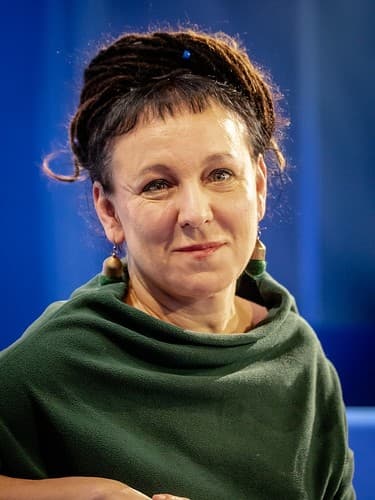
Biography coming soon.







