“The very least you can do in your life is to figure out what you hope for. And the most you can do is live inside that hope.”
— Dellarobia reflects on her life and aspirations.


Barbara Kingsolver (2012)
Genre
Literary Fiction
Reading Time
10-12 hours
Key Themes
See below
Sign in to track this book
When a restless Appalachian farm wife discovers a valley filled with monarch butterflies, she faces scientific findings, religious views, and personal changes that challenge her beliefs about her life and the changing world.
Dellarobia Turnbow, a restless young farm wife in Feathertown, Tennessee, plans to meet a young lover, Cub, in a secluded spot on the mountain behind her family's failing sheep farm. As she goes up the familiar path, she is surprised to discover the valley below her is filled not with trees, but with an orange sight. Thousands, perhaps millions, of monarch butterflies cover the Oakhaven valley, their wings creating an illusion of a burning forest. Overwhelmed and seeing it as a divine sign, she abandons her meeting and returns home, shaken by what she has seen. Her first attempts to describe the 'miracle' are met with skepticism by her husband, Cub, and his parents, Hester and Bear, who are more concerned with their struggling farm.
Dellarobia eventually convinces her family to see the sight for themselves, and they, too, are amazed. Word of the 'miracle' quickly spreads beyond Feathertown, attracting local news crews, then national media, and eventually, a team of scientists led by the entomologist Dr. Ovid Byron. Dr. Byron, a Black man from the Caribbean, establishes a research station in the valley, much to the initial suspicion and curiosity of the rural community. The arrival of outsiders brings both excitement and disruption to the town, with tourists and religious pilgrims coming to witness the phenomenon, creating a boom for local businesses but also an uneasy tension between locals and visitors.
Intrigued by Dr. Byron and his scientific approach, Dellarobia offers her help at the research station. She begins working as his assistant, learning about monarch butterflies, their migration, and the serious implications of climate change. Dr. Byron explains that the butterflies have gone thousands of miles off their usual migration route to Mexico, driven north by unusual weather patterns, and are now spending winter in an unexpected location. He warns that the cold Appalachian winter will likely kill them all. This scientific explanation clashes sharply with the common religious interpretations of the phenomenon as a sign from God, particularly supported by Pastor Bobby Ogle and Dellarobia's mother-in-law, Hester.
Amidst the scientific and religious excitement, the Turnbow family's financial struggles grow. Cub, Dellarobia's husband, is overwhelmed by the failing sheep farm and his father Bear's declining health and increasing demands. Their son, Preston, is developing asthma, made worse by the family's old, moldy house. Dellarobia's small earnings from working for Dr. Byron are barely enough to make a difference. The family considers selling a portion of their land to a timber company, which would destroy the butterfly habitat. Dellarobia feels increasingly trapped by her circumstances, her early marriage and motherhood having stopped her own aspirations for education and a different life.
As Dr. Byron's research progresses, he gives presentations to the community, explaining the science behind the butterflies' displacement and linking it directly to climate change. Many of the locals, including Hester and Pastor Ogle, resist this message, seeing it as an attack on their faith or simply too abstract and distant to affect their daily lives. Dellarobia, however, begins to grasp the urgency of the situation, realizing the global implications of the local phenomenon. She finds herself caught between the scientific understanding she is acquiring and the ingrained beliefs and skepticism of her family and community, particularly her mother-in-law's strong denial.
Working with Dr. Byron and engaging with his team broadens Dellarobia's worldview significantly. She starts to question her early marriage to Cub, realizing how it limited her potential. She reflects on her own intellectual curiosity, which had been dormant for years. Her interactions with Dr. Byron, while professional, awaken a sense of purpose and intellectual stimulation she had not experienced before. She begins to see the world, her family, and her own life through a new lens, recognizing how environmental issues connect with personal choices and socio-economic factors. She feels a growing responsibility to understand and communicate the truth about the butterflies.
The Turnbows' financial situation becomes serious, forcing them to consider selling a section of their forested land, the Oakhaven valley where the butterflies are spending winter, to a timber company. This decision would provide much-needed money but would also destroy the habitat and doom the monarch colony. Dellarobia, now aware of the ecological significance, tries to convince Cub and his parents to find an alternative. She argues that the land is more valuable intact, both for the butterflies and potentially for future ecotourism, but the family's immediate financial pressures are immense and override her environmental concerns.
As winter deepens in Feathertown, the temperature drops dramatically. The scientific team, including Dr. Byron, predicts a devastating outcome for the monarchs. The community witnesses the reality as the butterflies, unable to withstand the prolonged cold and lack of food, begin to die in large numbers. The 'lake of fire' transforms into a carpet of dead and dying insects. This tragic event is a clear illustration of the climate crisis, forcing some, even the most skeptical, to confront the scientific reality. The timber deal remains a threat, as the family still needs money despite the butterflies' fate.
After the butterfly catastrophe, Dellarobia faces critical decisions. She confronts Cub about their marriage, acknowledging its limitations but also their shared history and love for their children. She also actively works to prevent the timbering of the Oakhaven valley, despite the family's financial needs. She secures a small grant to study local plant species, offering a potential path to sustainable income without destroying the forest. She realizes that while the butterflies are gone, the underlying environmental issues and the need for ecological awareness remain. Her personal 'flight behavior' ends in a determination to forge a new, more informed path for herself and her family.
Dellarobia enrolls in community college, pursuing an education in environmental studies, supported by her family. She continues to work on the land, now with a scientific understanding of its ecosystems. The novel concludes with Dellarobia and her family finding a fragile balance. While the immediate crisis of the butterflies is over, the larger question of climate change and humanity's impact on the planet remains. Dellarobia has transformed from a restless farm wife to an informed advocate, committed to understanding and protecting her environment, even as the future of the planet and her community is uncertain. She has found her voice and her purpose.
The Protagonist
From a stifled, discontented farm wife seeking escape, Dellarobia evolves into an empowered, environmentally conscious woman pursuing education and a new purpose.
The Supporting
He gradually comes to accept Dellarobia's intellectual growth and supports her pursuit of education, demonstrating a quiet loyalty.
The Supporting
He remains steadfast in his scientific mission, successfully documenting a critical climate event, and subtly influences Dellarobia's personal transformation.
The Supporting
She remains firm in her faith and skepticism of climate change, but eventually shows grudging acceptance of Dellarobia's new path.
The Supporting
His health declines, and he struggles to maintain control of the farm, eventually ceding more decision-making to Cub and Dellarobia.
The Supporting
His health remains a concern, but his presence motivates Dellarobia to seek a better future for her children.
The Supporting
He maintains his religious interpretation, serving as a foil to the scientific perspective throughout the narrative.
The Supporting
They successfully conduct their research, documenting the butterfly catastrophe and contributing to the scientific understanding of climate change.
The Supporting
She remains a consistent friend to Dellarobia, offering support through her friend's transformation.
The novel directly addresses the reality and impact of climate change through the unexpected arrival of monarch butterflies in Appalachia. Dr. Byron's scientific explanations, the community's varied reactions, and the ultimate tragic fate of the butterflies illustrate the consequences of a warming planet. The story shows the difficulty of communicating scientific truths to a skeptical public, especially when economic concerns and deeply held beliefs are involved, as seen in the Turnbows' consideration of timbering their land despite its ecological importance.
““The earth is speaking. And the species are listening. We are the only ones who aren't.””
A central tension in the novel is the clash between scientific understanding and religious belief in interpreting the monarch phenomenon. Dellarobia initially sees the butterflies as a 'miracle,' an interpretation reinforced by her mother-in-law Hester and Pastor Ogle. Dr. Byron, however, offers a scientific explanation rooted in climate change. The book explores how individuals reconcile these two worldviews, showing the comfort and community faith provides, but also its potential to hinder acceptance of urgent scientific realities. Dellarobia's journey is largely one of moving from a faith-based interpretation to a scientific one.
““People don't want to hear about what's going to happen to them in the future. They want to hear about what's going to happen to them tomorrow.””
Dellarobia's personal journey is one of self-discovery. Trapped in a life she did not choose, she feels her identity is defined by her roles as wife and mother, and by her rural community. Her encounter with the butterflies and her work with Dr. Byron awaken her intellectual curiosity and a desire for something more. She questions her past choices, her marriage, and her place in the world, ultimately finding a new sense of purpose and identity through education and environmental advocacy. Her 'flight behavior' mirrors the butterflies' migration, symbolizing a search for a new, more sustainable path.
““She had the feeling that she had been sleeping for ten years, and this was the alarm clock.””
The novel explores the economic struggles of rural Appalachia, showing the Turnbow family's failing farm and their constant financial anxieties. This poverty drives their consideration of timbering their land, demonstrating how immediate survival needs can overshadow environmental concerns. The arrival of urban scientists and media also exposes a class and cultural divide, with misunderstandings and prejudices arising between the locals and outsiders. The disparity in resources, education, and opportunities between rural and urban populations is a persistent element, shaping characters' perspectives and choices.
““It's easy to be green when you're rich.””
Dellarobia's identity and choices are influenced by her role as a mother. Her accidental pregnancy at seventeen led her to abandon her educational aspirations and marry Cub. Throughout the novel, her children, Preston and Cordelia, are a central motivation for her actions, from trying to improve their living conditions to seeking a better future. The theme explores the sacrifices mothers make, the guilt they carry, and the protectiveness they feel. Preston's asthma, in particular, links her maternal concerns directly to the environmental issues, as she seeks a healthier environment for her child.
““She had married Cub because she had to, and she loved him because she did.””
A central symbol of environmental crisis and natural beauty.
The millions of monarch butterflies are the primary plot device, serving as both a literal natural phenomenon and a powerful symbol. They represent the beauty and fragility of the natural world, as well as the undeniable evidence of climate change. Their unprecedented detour from their migration route forces the characters and the reader to confront the reality of environmental disruption. Their eventual demise underscores the urgency and devastating consequences of human impact on the planet, making an abstract global problem tangible and immediate for the Feathertown community.
The setting for the butterfly phenomenon, symbolizing contested land.
The Oakhaven Valley is the specific location where the butterflies settle, making it a focal point for the conflict between science, faith, economic need, and environmental protection. It is a real place on the Turnbow family's land, making the environmental crisis deeply personal and immediate for them. The valley symbolizes the contested ground where human needs intersect with ecological imperative. Its potential timbering represents the ongoing struggle between short-term economic gain and long-term environmental stewardship, and its natural beauty contrasts with the poverty of the Turnbows.
Provides insight into her intelligence, wit, and inner conflict.
Dellarobia's vivid and often sarcastic internal monologue is a crucial plot device, allowing the reader deep access to her thoughts, frustrations, and intellectual awakening. It highlights her sharp mind, her observations about her community, and her struggle to reconcile her personal desires with her societal roles. This internal voice provides humor, pathos, and a nuanced perspective on the complex issues she faces, making her a relatable and compelling protagonist. It's through her inner voice that the reader fully grasps her transformation.
A catalyst for change and a voice of scientific reason.
Dr. Ovid Byron, as an educated Black man from the Caribbean, is a stark 'outsider' in the predominantly white, rural Appalachian community. His presence serves as a catalyst, introducing scientific knowledge and a global perspective that challenges the locals' insular worldview and religious interpretations. He embodies reason and patience, acting as a foil to the community's skepticism and prejudice. His role is to educate Dellarobia and, by extension, the reader, about the scientific realities of climate change, forcing a confrontation with uncomfortable truths.
“The very least you can do in your life is to figure out what you hope for. And the most you can do is live inside that hope.”
— Dellarobia reflects on her life and aspirations.
“A person could get lost in the woods of her own life.”
— Dellarobia contemplates her confusion and direction.
“The butterflies were a sign, but of what she could not say.”
— Dellarobia observes the monarch butterflies on the mountain.
“People see what they want to see.”
— Commentary on how different characters interpret the butterfly phenomenon.
“The world is not disposable, and neither are we.”
— Reflection on environmental responsibility and human value.
“Faith is a different animal than proof.”
— Discussion between characters about belief versus evidence.
“Sometimes the thing you're most afraid of is the thing that saves you.”
— Dellarobia considers her fears and unexpected outcomes.
“We are all just passing through, temporary as weather.”
— Meditation on human impermanence and nature's cycles.
“The truth has a way of changing its clothes.”
— Observation about how facts can be perceived differently.
“Home is where you know the stories.”
— Dellarobia thinks about her connection to place and community.
“You can't unsee a thing once you've seen it.”
— Dellarobia reflects on irreversible awareness and change.
“The whole world depends on everything staying in its place.”
— Scientific explanation of ecological balance and disruption.
“Grief is a house where the chairs have forgotten how to hold us.”
— Metaphorical description of loss and emotional emptiness.
“We are each other's harvest; we are each other's business; we are each other's magnitude and bond.”
— Reflection on human interconnectedness and responsibility.
Ready to see how well you understood this book? Take our interactive quiz with 10 questions.
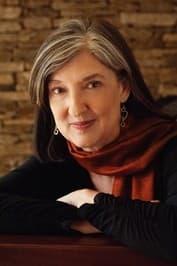
Barbara Kingsolver is a Pulitzer Prize winning American novelist, essayist and poet. She was raised in rural Kentucky and lived briefly in the Congo in her early childhood. Kingsolver earned degrees in biology at DePauw University and the University of Arizona and worked as a freelance writer before she began writing novels. Her widely known works include The Poisonwood Bible, the tale of a missionary family in the Congo, and Animal, Vegetable, Miracle, a non-fiction account of her family's attempts to eat locally.







