
Biography coming soon.

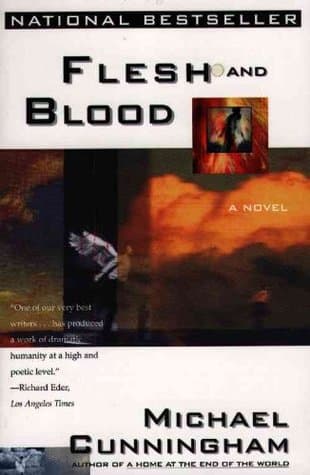
Michael Cunningham (1995)
Genre
Literary Fiction
Reading Time
12 Minutes
Key Themes
See below
Sign in to track this book
Across four generations, the Stassos family navigates love, loss, and the evolving definition of family in a sweeping story that echoes with the power of Greek tragedy.
The novel begins in 1950 with the marriage of Constantine Stassos, a Greek immigrant laborer, and Mary Cuccio, an Italian-American woman from a large, lively family. Their wedding, a mix of their cultures, starts their life together in an American city. Constantine wants stability and tradition, while Mary dreams of romance and a life beyond their working-class existence. Their early years are marked by passion but also frequent disagreements, as they deal with cultural differences and the expectations placed on a young couple starting a family. Mary soon becomes pregnant, leading to the arrival of their three children, who will each inherit and struggle with the complicated effects of their parents' marriage.
Constantine and Mary have three children: Susan, Billy, and Zoe. Susan, the oldest, is beautiful, ambitious, and very aware of how others see her, often trying to be perfect. Billy, the middle child, is intelligent, sensitive, and artistic, but he struggles with being gay in a conservative home. Zoe, the youngest, is spirited and rebellious, often feeling ignored and misunderstood. Each child reflects parts of their parents' personalities and unfulfilled hopes, and their individual difficulties start early. The family is already under strain, with Mary feeling increasingly trapped and Constantine becoming more rigid in his expectations. This creates an environment where the children must find their own ways to cope and define themselves.
As the children grow, Mary's early romantic ideas about marriage and family life turn into deep disappointment and a feeling of being trapped. She feels unappreciated by Constantine, who is often distant and focused on work and traditional male roles. Her lively spirit fades under the weight of home life and her husband's emotional unavailability. This unhappiness leads her to look for comfort elsewhere, eventually starting an affair that further separates her from Constantine and, to some extent, her children. Her emotional withdrawal leaves a gap in the family, making the children navigate their developing identities and problems with less parental guidance and support, which increases their individual feelings of isolation.
Susan, driven by ambition and a desire for social acceptance, carefully builds an image of success. She marries Michael, a wealthy, seemingly perfect man, and creates an affluent life. However, beneath her polished exterior is a secret: she is pregnant with another man's child, a truth she hides from Michael and her family. This secret shapes her life, influencing her decisions and interactions, and creating constant anxiety. Her pursuit of perfection and control becomes a way to defend against the fear of exposure and the judgment she expects, making her relationships, especially with her son, complicated and often distant.
Feeling stifled by his family's traditional expectations and his father's unspoken disapproval, Billy, the brilliant and sensitive middle child, moves to New York City. There, he fully embraces his identity as a gay man and pursues his artistic talents. He finds love and companionship with an older, established man named Paul, who gives him the emotional and intellectual support he needs. Billy builds a new family among his chosen community of friends and artists. This period is a liberation for Billy, allowing him to thrive authentically, far from the restrictive confines of his childhood home and his parents' unspoken judgments.
Zoe, the spirited child, finds herself pregnant and alone, rejecting traditional societal expectations. She chooses to raise her daughter, Iris, as a single mother, defying her family's norms. Her unconventional path leads her to a deep and lasting friendship with a transvestite named Cassandra, who becomes a loving presence in her and Iris's lives. Cassandra offers Zoe the emotional support, stability, and unconditional love she often lacked from her own family. This chosen family, though unconventional, shows the diverse forms love and family can take, challenging the traditional definitions held by Constantine and Mary.
The world Billy and Paul built in New York City is tragically affected by the unfolding AIDS crisis. Paul contracts the virus, and Billy dedicates himself to caring for him through his illness. This time is marked by immense grief, fear, and an awareness of mortality. The epidemic devastates their community, and Billy experiences great loss, forcing him to face the fragility of life and the deep love he shares with Paul. This crisis also brings Billy into closer, though strained, contact with his biological family, especially his mother, as they deal with the reality of his life and the impending tragedy.
As years pass, Constantine Stassos grows old and his health declines. His illness draws his estranged children back to the family home. This forced reunion brings out decades of unspoken resentments, misunderstandings, and unfulfilled desires. Mary, who has long been emotionally distant, is also present, and the complex, often painful dynamics of their marriage are re-examined. The impending loss of their father forces Susan, Billy, and Zoe to confront their individual histories within the family, their relationships with each other, and the impact of their parents' choices on their own lives, leading to moments of both reconciliation and renewed tension.
During Constantine's final days, the intensity of family proximity and impending loss causes long-buried secrets and resentments to surface. Susan's carefully guarded secret about her son's paternity is revealed, shocking the family. Billy confronts his father, both directly and indirectly, about the lack of acceptance for his sexuality. Zoe expresses her lifelong feelings of neglect and misunderstanding. These raw, emotional confrontations are painful but necessary, allowing for a degree of honesty and catharsis that has been absent for decades. The family is forced to remove their facades and confront the messy, imperfect reality of their shared history and individual truths.
After Constantine's death and the subsequent revelations, the Stassos family is changed forever. While some wounds may never fully heal, there is a growing understanding and acceptance of each other's lives and choices. Susan, Billy, and Zoe, along with their children and chosen families (like Cassandra), represent a modern, expanded definition of what makes a family. The novel ends with a sense that despite their imperfections and the pain they have endured, the Stassos family, in its various forms, embodies a resilient and evolving understanding of love, connection, and belonging, extending beyond traditional blood ties and societal expectations into a more inclusive future.
The Patriarch
Constantine begins as a traditional patriarch, struggling with emotional expression and his children's choices. His arc culminates in a forced reckoning during his illness, where he implicitly confronts his family's truths, leading to a degree of quiet understanding before his death.
The Matriarch
Mary's arc traces her transformation from a hopeful newlywed to a disillusioned wife and mother, marked by emotional withdrawal and an affair. By the end, she experiences a degree of reconciliation and understanding with her children, particularly Billy, as she confronts the consequences of her choices.
The Protagonist
Susan begins as an ambitious young woman seeking an ideal life, but her arc involves the gradual unraveling of her carefully constructed facade as her secret is revealed. She eventually confronts her choices and begins a path toward greater honesty and emotional openness, particularly with her son.
The Protagonist
Billy's arc is one of self-discovery and finding chosen family, marked by his embrace of his homosexuality and artistic life. He endures profound loss during the AIDS crisis but emerges with a deeper understanding of love and resilience, ultimately achieving a form of peace and acceptance with his birth family.
The Protagonist
Zoe's arc is defined by her rebellion against traditional expectations and her creation of an unconventional, loving family as a single mother. She grows into a strong, independent woman who redefines what family means, ultimately achieving a degree of understanding with her birth family without compromising her identity.
The Supporting
Paul's arc is one of providing profound love and stability for Billy, then facing the tragic reality of the AIDS crisis with dignity. His death becomes a catalyst for Billy's further growth and understanding of life and loss.
The Supporting
Cassandra's arc is consistent, serving as a steadfast pillar of unconditional love and chosen family for Zoe and Iris, embodying an alternative, inclusive definition of kinship.
The Supporting
Leo's arc begins with an unconscious awareness of his mother's emotional distance, growing into a young man grappling with his identity. His arc culminates in the revelation of his paternity, forcing him to reconstruct his understanding of his family and himself.
The novel explores how family extends beyond traditional nuclear structures and biological ties. Through Billy's chosen family in New York, made up of his lover Paul and their friends, and Zoe's unconventional household with her daughter Iris and Cassandra, the story challenges Constantine's rigid, patriarchal definition of family. It suggests that love, support, and shared experience are the true foundations of kinship, showing that family can be found and formed in unexpected places and forms, often providing deeper connection than blood relations.
“Family, after all, was less a matter of blood than of the stories you told and the people you told them to.”
A constant theme throughout the Stassos family story is the undercurrent of unfulfilled desires and unspoken longings that shape each character's life. Mary longs for romance and a life beyond domesticity; Constantine wants respect and traditional order; Susan craves perfection and social acceptance; Billy wants understanding and self-expression; and Zoe seeks freedom and real connection. These unmet desires often lead to resentment, secrets, and emotional distance, creating a sense of what might have been and the heavy cost of suppressed dreams on individual lives and family dynamics.
“They were all, in their different ways, living out the consequences of wishes never spoken, of hungers never quite satisfied.”
The novel illustrates how secrets harm individuals and family relationships. Susan's hidden paternity of her son, Leo, creates constant anxiety and emotional distance in her life and marriage. Other unspoken truths, such as Billy's early homosexuality and the general lack of open communication in the Stassos household, fester and cause misunderstanding and resentment. The story shows how secrets, even those meant to protect, ultimately isolate characters and delay true connection, eventually erupting with painful consequences when they are finally exposed.
“A secret, once it was born, had a life of its own; it grew and twisted and took up residence, eventually becoming more powerful than the truth it replaced.”
The Stassos family struggles with the weight of societal and familial expectations, especially those based on traditional gender roles and cultural heritage. Constantine, as a Greek immigrant father, adheres to tradition, expecting his children to follow conventional paths. Mary feels stifled by the domestic expectations placed on her as a wife and mother. Billy fights against the heterosexual norms of his upbringing, while Zoe rebels against all traditional expectations. The novel highlights the tension between individual desires for self-realization and the often suffocating pressure to uphold inherited traditions, showing how these conflicts shape identity and destiny.
“They were all tethered, in one way or another, to the expectations that had been born generations before them, heavy as old stones.”
The theme of love and loss is explored, particularly through Billy's story during the AIDS crisis. The love between Billy and Paul is tested and ultimately shattered by the devastating epidemic, illustrating the fragility of life and the endurance of love in the face of immense suffering. The novel portrays not only the personal grief of loss but also the collective mourning of a generation. This adversity forces characters to confront their deepest fears and to value their connections, reinforcing that even in heartbreak, love continues to shape and define their lives, often revealing its true strength.
“Love, he understood, was not a shield against sorrow, but a way of carrying it.”
Spanning four generations, showcasing the enduring impact of family history.
The novel utilizes an intergenerational saga structure, tracing the Stassos family from Constantine and Mary's marriage in 1950 through to their grandchildren's generation. This device allows Cunningham to explore the ripple effects of parental choices, cultural heritage, and unfulfilled desires across decades. It highlights how patterns of behavior, secrets, and emotional dynamics are passed down, shaping the identities and relationships of subsequent generations. By providing a long historical view, the saga emphasizes the enduring power of family legacy and the slow, often painful, evolution of individual and collective understanding within a family unit.
Providing deep insight into the internal lives of multiple characters.
The use of third-person omniscient narration grants the reader intimate access to the thoughts, feelings, and motivations of almost every significant character—Constantine, Mary, Susan, Billy, and Zoe. This perspective allows for a comprehensive and empathetic understanding of each individual's struggles, even when their actions are flawed or contradictory. It reveals the complex web of misunderstandings and unspoken truths that plague the family, showing how each person's internal world contributes to the overall family dynamic. This device underscores the idea that every character is a protagonist in their own story, fostering a nuanced appreciation of their interconnected lives.
Highlighting cultural clashes and evolving societal norms within the family.
Cunningham frequently employs the juxtaposition of traditional Greek-American and Italian-American values with evolving 20th-century societal norms. Constantine embodies rigid tradition, while his children, particularly Billy and Zoe, represent a more modern, individualistic approach to life, sexuality, and family structure. This contrast creates inherent conflict within the Stassos household, driving much of the plot and character development. It underscores the generational divide and the struggle to reconcile cultural heritage with personal freedom, illustrating the challenges faced by families navigating rapid social change and redefining what it means to belong and to love.
The family home as a repository of memories, secrets, and emotional history.
The Stassos family home functions as a powerful symbol throughout the novel. Initially, it represents Constantine's aspiration for stability and traditional family life. Over the years, it becomes a repository of shared memories, unspoken resentments, and buried secrets. The house witnesses the family's joys, struggles, and eventual fragmentation. Its physical presence and gradual decline mirror the emotional state of the family itself—once a seemingly solid foundation, it eventually holds the weight of their fractured relationships. Returning to the house for Constantine's final days forces the family to confront the history contained within its walls, making it a tangible representation of their collective past.
Ready to see how well you understood this book? Take our interactive quiz with 10 questions.
Biography coming soon.







