“The past is never dead. It's not even past.”
— A recurring theme throughout the book, and Faulkner's work, about the inescapable influence of history and tradition on the present.


William Faulkner (1948)
Genre
Literary Fiction / Historical Fiction
Reading Time
1200 min
Key Themes
See below
Sign in to track this book
In the post-World War I South, the last member of a declining aristocratic family deals with his family's past and the effects of war, heading towards a tragic end amid fading glory and tradition.
The novel begins with young Bayard Sartoris returning to Jefferson, Mississippi, after flying in World War I. His twin brother, John Sartoris, a brave pilot, died in the war. This loss deeply affects Bayard and darkens the Sartoris family. The family head, old Bayard Sartoris (Colonel Sartoris), a banker and the last of the Civil War generation, is a quiet man who struggles to understand his grandson's post-war trauma. Aunt Jenny Du Pre, the strong and clever older woman, tries to keep order and tradition in the chaotic Sartoris house. She often talks about the great past of the Sartoris family. Young Bayard immediately drives his car very fast and does dangerous stunts, seemingly trying to escape his sadness and his brother's memory.
Narcissa Benbow, a refined and somewhat delicate young woman, lives a quiet life in Jefferson with her brother, Horace Benbow, a lawyer and glassblower. Narcissa is the opposite of the reckless Sartoris spirit; she values stability and proper behavior. Young Bayard Sartoris, despite his unpredictable actions, is drawn to her delicate beauty and quiet nature. He starts to pursue her, often in a forceful way, showing he cannot express his emotions normally. Narcissa, though at first careful of his dangerous reputation and the Sartoris family's wild history, finds herself drawn to his intensity, perhaps seeing a vulnerability under his boldness. Their interactions show a tension between her wish for peace and his need for excitement and escape.
Young Bayard's dangerous acts increase, leading to a serious car accident where he barely survives. This event shows his physical strength but does little to stop his self-destructive habits. Old Bayard, though stern on the outside, worries deeply about his grandson's behavior. He sees reflections of the Sartoris family's historical recklessness and the tragic ends of previous generations. Aunt Jenny, always practical, tries to step in, scolding young Bayard and trying to teach him responsibility. Narcissa, seeing his close calls with death, worries more about his apparent wish to die. Yet, her concern for him only grows, making her feelings of apprehension and attraction more complex.
Amid the family's worries, young Bayard and Narcissa Benbow marry. For a short time, their marriage seems to calm Bayard. He appears to settle into a more domestic routine. Narcissa, despite her fears, hopes their marriage will bring him peace and stability. The family, especially old Bayard and Aunt Jenny, feels careful optimism, believing Narcissa's gentle presence might be the answer to the Sartoris pattern of recklessness. This period, however, is fragile, a temporary quiet before Bayard's inner problems and the weight of his past trauma return.
The fragile peace in young Bayard's life breaks as his post-war trauma and John's memory return. He goes back to reckless driving and dangerous pursuits, unable to escape the emptiness left by his brother's death and his war experiences. Narcissa gets pregnant, but instead of settling him, the coming fatherhood seems to make his fear and restlessness worse. Unable to handle the responsibilities of family life and his own grief, Bayard suddenly leaves Narcissa, disappearing from Jefferson without explanation. His departure devastates Narcissa and greatly disappoints the Sartoris family, confirming their fears about his inability to find lasting peace.
After Bayard leaves, Narcissa gives birth to a son, whom she names Benbow Sartoris, after her own family. The birth brings a mix of joy and sadness amid her heartbreak and uncertainty. Around this time, her brother, Horace Benbow, returns to Jefferson after being away. Horace, a sensitive and artistic person, gives much-needed emotional support to Narcissa, helping her with the challenges of being a single mother and the social judgment that comes with Bayard's leaving. He restarts his law practice and his glassblowing hobby, offering a quiet, intellectual contrast to the loud and often tragic Sartoris world. Horace's presence shows the difference between the two families' ways of life and their burdens.
Young Bayard eventually returns to Jefferson, but his self-destructive habits continue. In a tragic event, he takes his grandfather, old Bayard Sartoris, for a ride in a new, powerful car. Despite old Bayard's age and weak health, young Bayard drives very fast, repeating his earlier reckless behavior. The ride is too much for the old man, who has a heart attack and dies. This event is a terrible blow to the family, especially Aunt Jenny, who sees the ongoing pattern of Sartoris men causing their own destruction. Young Bayard feels guilty, but this only makes him seek self-destruction more, rather than finding a way to heal.
After his grandfather's death, young Bayard seeks oblivion more intensely. He does dangerous stunts, drinks too much, and generally acts as if he wants to die. He cannot find comfort or escape the constant grief and guilt. Meanwhile, Horace Benbow, while supporting Narcissa, gets involved with a woman named Belle Mitchell, a divorced woman with a troubled past. Horace, with his romantic and somewhat naive feelings, is drawn to her, despite Narcissa's quiet disapproval. Their relationship creates tension, showing Horace's own struggles with identity and his wish to escape the small-town limits of Jefferson, much like Bayard, though in different ways.
Aunt Jenny Du Pre, the strong will of the Sartoris household, tries very hard to instill some sense of responsibility and order in young Bayard. She scolds him, talks to him about the family legacy, and tries to make him recognize his duties to Narcissa and his son. However, her efforts fail against Bayard's deep trauma and his constant pursuit of danger. He continues to waste his inheritance and do increasingly risky things, seemingly unable to break free from the cycle of Sartoris recklessness. The family, especially Aunt Jenny, watches helplessly as he declines further, affected by his brother John's memory and the weight of their family's past.
The novel reaches its tragic end as young Bayard Sartoris, unable to escape his inner problems, leaves Jefferson again. He goes to an airfield in Ohio, where he starts to test a new, experimental airplane. This final act is the ultimate sign of his death wish, a desperate attempt to rejoin his brother in the freedom of the sky. Despite warnings and the danger, he pushes the plane to its limits. The plane crashes, killing Bayard. His death, while devastating to Narcissa and the family, feels almost expected, the result of his post-war trauma and the Sartoris family's inherited pattern of recklessness and self-destruction. The news reaches Jefferson, leaving Narcissa and Aunt Jenny to mourn the last Sartoris male of their generation.
With young Bayard's death, Narcissa is left a widow, raising their son, Benbow Sartoris, alone. She is a resilient person, determined to protect her son from the destructive legacy of the Sartoris name. Aunt Jenny, though heartbroken, remains the steadfast older woman, making sure the family's traditions continue, even if only in memory. The novel ends with the lasting presence of the Sartoris past, the grand, tragic history of a family known for its courage, recklessness, and ultimate self-destruction. Narcissa and her son represent a fragile hope for a different future, one perhaps free from the past that defined and destroyed the Sartoris men.
The Protagonist
He descends into increasing recklessness and despair, unable to escape his trauma, ultimately succumbing to a self-willed death.
The Supporting
She transitions from a naive young woman to a resilient mother, determined to protect her son from the Sartoris curse.
The Supporting
He watches the decline of his family and dies as a direct result of his grandson's recklessness.
The Supporting
She remains a steadfast, enduring presence, observing and trying to mitigate the Sartoris family's tragic trajectory.
The Supporting
He returns to Jefferson, provides support to his sister, and becomes entangled in a problematic romantic relationship, revealing his own vulnerabilities.
The Mentioned
His death is the inciting incident for young Bayard's psychological struggles and self-destruction.
The Supporting
They navigate their roles within the Sartoris household, observing and commenting on the family's decline while adapting to changing social norms.
The Supporting
She enters Horace's life, creating conflict and ultimately leading to his disillusionment.
The novel is about the lasting impact of the past, especially the Civil War and the romanticized ideas of the Old South, on the present. The Sartoris family, with its history of courage, honor, and recklessness, shows the fading glory and decline of this era. Young Bayard's self-destruction is a modern example of an inherited 'curse' that affects Sartoris men, who cannot adapt to a changing world. Aunt Jenny constantly talks about past glories, while old Bayard represents the quiet, dying generation. The family's inability to escape its own history leads to its tragic fall, symbolizing the broader societal change in the South.
“'That's the Sartoris curse,' Aunt Jenny said, 'and it's been the ruin of every man in the family, as far back as I can remember.'”
Young Bayard's character explores post-war trauma and unresolved grief. The death of his twin brother, John, and his experiences in World War I leave him deeply scarred. This leads to a constant search for escape through reckless behavior. His self-destructive acts—speeding cars, dangerous flying—are desperate attempts to outrun his inner pain and his brother's memory. This theme shows the psychological cost of war and the difficulty of returning to civilian life when affected by loss and guilt. His death is a tragic result of his inability to process his trauma and find healing.
“'He was trying to die, he knew it. He was trying to die to get rid of the ghost of his brother, and the ghosts of all the Sartoris men who had gone before him.'”
The novel examines changing ideas of masculinity and honor after World War I, contrasting the traditional, often destructive, Sartoris code with new realities. Sartoris men are defined by a heroic, almost mythical, courage that often borders on recklessness, leading to their deaths. Young Bayard struggles to combine this inherited code with his modern trauma. Horace Benbow shows a different, more sensitive and artistic masculinity, though he also struggles to find his place. The theme explores how the pressure to conform to or reject traditional masculine ideals affects the characters' fates and the family's decline, especially in a South still dealing with its history of martial honor.
“'The Sartoris men were a race of soldiers, and they died in battle or on the field of honor, or trying to break their necks in some foolhardy way.'”
In contrast to the self-destructive men, the women in the novel, especially Aunt Jenny and Narcissa, show resilience, practicality, and life's enduring strength. Aunt Jenny is the steady older woman who tries to keep the family together and preserve its legacy, even as she sees its decline. Narcissa, though delicate at first, shows quiet strength and determination in raising her son after Bayard leaves and dies. These women often pick up the pieces, mourn, and carry on, symbolizing a hope for continuity and a different future, perhaps one free from the men's destructive tendencies.
“'It was the women who had to keep the Sartorises alive, to bear them and bury them and keep their names alive, while the men went out and got themselves killed.'”
Memory and storytelling are central to the novel. The past is often brought up and reinterpreted through family legends and personal stories. Aunt Jenny is the main storyteller, recounting tales of past Sartoris men, especially the Civil War John Sartoris. She shapes the family's identity and keeps its myths alive. These stories offer a sense of heritage but also trap the characters in a cycle of repetition, as young Bayard feels he must live up to or tragically repeat his ancestors' reckless acts. The story itself moves between present events and historical echoes, showing how the past always influences the present in Yoknapatawpha County.
“'The past is never dead. It's not even past.'”
A perceived inherited doom of recklessness and self-destruction afflicting the male line.
The 'Sartoris curse' is a recurring motif that explains the inherent recklessness and self-destructive tendencies of the Sartoris men. It's not a literal curse, but a pattern of behavior passed down through generations, characterized by an almost pathological need for danger, a romanticized view of honor, and an inability to adapt to modern life. It manifests in young Bayard's daredevil flying and driving, mirroring the martial exploits of his ancestors. This device provides a tragic framework for the narrative, suggesting that the characters are fated to repeat the mistakes of their forebears, making their downfall seem inevitable and deeply ingrained in their very being.
Vehicles representing speed, modernity, and young Bayard's self-destructive drive.
The automobile, and later the airplane, are powerful symbols throughout the novel. Young Bayard's reckless driving of cars at breakneck speeds immediately establishes his post-war trauma and death wish. The car represents modernity, speed, and a dangerous freedom, contrasting with the slower, more traditional pace of Jefferson. The airplane, specifically, links young Bayard to his deceased twin, John, and symbolizes the ultimate escape, a return to the freedom and danger of wartime, and ultimately, a means to self-destruction. These vehicles are not merely modes of transport but extensions of Bayard's internal turmoil and his desperate pursuit of oblivion.
The ghost of young Bayard's twin brother, a constant, haunting presence driving the protagonist's actions.
Though deceased before the novel begins, John Sartoris, young Bayard's twin brother, is a pervasive and powerful presence. He functions as a psychological plot device, a ghost that haunts young Bayard and fuels his self-destructive behavior. John represents the idealized, heroic, and ultimately tragic Sartoris male, and Bayard's actions are often an attempt to either emulate, escape, or somehow rejoin his brother. The memory of John's death is the central trauma that young Bayard cannot overcome, making John a crucial, though invisible, character who drives the protagonist's entire arc towards self-annihilation.
A thematic juxtaposition highlighting the clash between traditional values and post-WWI modernity.
This device highlights the transitional period in which the novel is set, where the romanticized, aristocratic values and traditions of the Old South (represented by old Bayard, Aunt Jenny's stories) clash with the realities of the post-WWI era and the emerging New South. Young Bayard's trauma and reckless modern vehicles symbolize the destructive aspects of this transition, while characters like Caspey and Simon represent changing racial dynamics. The novel explores how individuals and families struggle to adapt to a world that no longer values the old codes of honor in the same way, leading to cultural and personal disintegration. This tension underscores the tragedy of the Sartoris family's inability to move forward.
“The past is never dead. It's not even past.”
— A recurring theme throughout the book, and Faulkner's work, about the inescapable influence of history and tradition on the present.
“Living is a process of breaking yourself free from the shell of your birth.”
— A reflection on the individual's struggle for identity and independence against societal and familial expectations.
“Man is the sum of his misfortunes.”
— A somewhat fatalistic view on the human condition, suggesting that suffering and adversity define one's existence.
“It's not when you die that's important, it's what you do before you die.”
— Emphasizing the significance of one's actions and life choices over the inevitability of death.
“Memory, like a house, has many rooms.”
— A metaphor for the complex and multi-layered nature of memory, with different aspects and recollections stored within.
“The quality of courage is not to be judged by the result, but by the effort.”
— Highlighting the importance of perseverance and the act of trying, regardless of whether the effort leads to success.
“There is no such thing as 'was,' only 'is.'”
— Another powerful statement on the persistence of the past and its continuous presence in the present moment.
“A man is the sum of his ancestors.”
— Reflecting on the profound influence of heritage and lineage on an individual's character and destiny.
“The aim of every artist is to arrest motion, which is life, by artificial means and hold it fixed so that a hundred years later, when a stranger looks at it, it begins to move again since it is life.”
— A profound statement on the purpose of art, capturing the essence of life and making it timeless.
“We are all of us, always, the sum of what we have done.”
— Emphasizing accountability for one's actions and the cumulative effect of choices on one's identity.
“Grief has no language; it is a silence.”
— Describing the inexpressible and isolating nature of profound sorrow.
“The heart of man is a dark forest.”
— A metaphor for the complexity, mystery, and often hidden depths of human emotions and motivations.
“You cannot swim for new horizons until you have courage to lose sight of the shore.”
— A powerful call for courage and the willingness to leave behind the familiar in pursuit of new experiences or goals.
“The only thing that can save a man is to work.”
— Highlighting the redemptive and grounding power of labor and effort in overcoming personal struggles.
Ready to see how well you understood this book? Take our interactive quiz with 10 questions.
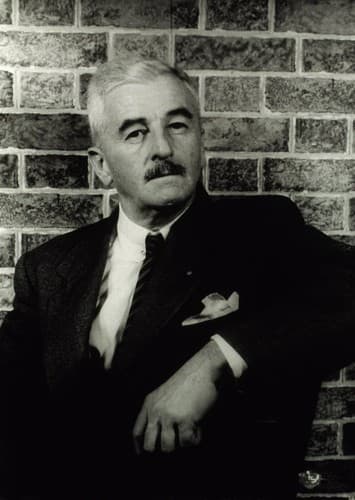
William Cuthbert Faulkner was an American writer known for his novels and short stories set in the fictional Yoknapatawpha County, based on Lafayette County, Mississippi, where Faulkner spent most of his life. A Nobel laureate, Faulkner is one of the most celebrated writers of American literature and often is considered the greatest writer of Southern literature.







