“The wind was a steady, insistent hand, pushing at them, reminding them of the vastness of the world and their small place in it.”
— Early in the book, describing the setting and the characters' initial feelings.

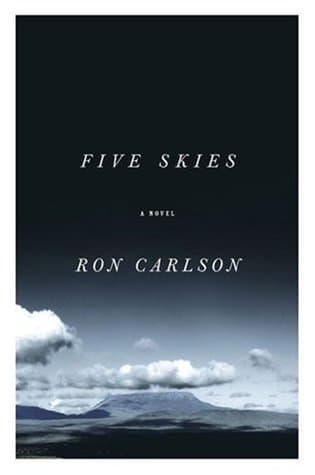
Ron Carlson (2008)
Genre
Literary Fiction
Reading Time
240 min
Key Themes
See below
Sign in to track this book
High in the Rockies, three men—a silent giant, a charming drifter, and a rage-filled foreman—build a stunt ramp across a chasm, confronting their pasts and the raw forces of life.
Arthur Key, a man of great size and quiet nature, arrives at a remote ranch in southern Idaho. He carries the weight of a recent, unspoken betrayal in Los Angeles and seeks a place to lose himself in physical work. He meets Darwin Gallegos, the ranch foreman, a man marked by deep anger, who hires him on the spot. Darwin explains the project: they are to build a large stunt ramp overlooking a vast canyon, a structure that seems too grand for its isolated spot. Arthur, curious about the ramp's purpose, accepts the job, finding comfort in the task's simplicity and scale, a contrast to the complexities he left behind.
Soon after Arthur arrives, the third crew member, Ronnie Panelli, appears. Ronnie is younger than Arthur and Darwin, known for his charm, quick wit, and a lack of commitment. He is a drifter, like Arthur, but driven by a different kind of restlessness. Darwin is immediately wary of Ronnie's casual attitude and perceived unreliability, creating initial tension in the new team. Despite Darwin's doubts, Ronnie is part of the plan, and the three men, a mismatched group, begin the hard work of hauling materials and setting the groundwork for the huge ramp.
The days quickly settle into a rhythm of intense physical labor. Arthur, with his strength and careful nature, proves to be a dedicated worker. Ronnie, though initially prone to distractions, has an innate cleverness and sharp instincts when focused. Darwin, the foreman, drives them hard, his anger often just below the surface, sometimes erupting in terse commands or frustrated outbursts. As they work, the vast, silent Rocky Mountains become a backdrop for their growing relationships. They share meals, brief talks, and the unspoken language of shared effort, slowly breaking down the walls each man has built around himself.
As construction continues, Darwin's deep anger becomes clearer. It is not just aimed at his crew or the work's challenges; it is a basic anger at life, at God, at his own situation. He often curses the sky and the harsh land. The ramp's purpose, at first vague, is slowly revealed: it is for a movie stunt, a single, spectacular jump over the canyon. This explanation, while practical, does not fully explain the intense focus Darwin brings to the project. For him, the ramp is more than a movie prop; it is a monument, a challenge, or perhaps an offering, filled with his personal struggles and a desperate need for control or meaning.
Arthur, usually quiet, begins to open up in pieces. He eventually shares his past in Los Angeles, revealing that he was involved in a significant betrayal, though the specifics remain somewhat unclear. It involved a woman and a deep emotional wound, leaving him with strong guilt and a feeling of being lost. This confession is not a dramatic outburst but a gradual revealing, shared during quiet moments, often prompted by a shared task or the vastness of the landscape. His guilt is clear, and the hard labor on the ramp acts as a form of penance, a way to physically exhaust his emotional turmoil.
Ronnie, despite his charm and carefree attitude, also shows glimpses of his inner weaknesses. He talks about his past, his transient life, and his fear of commitment or responsibility. He is a survivor, quick-witted and adaptable, but also deeply insecure about his place in the world. He often uses humor and a reckless attitude to avoid deeper conversations, but there are times, usually late at night or during a break, when his facade cracks, showing a young man searching for direction and a sense of belonging. He respects Arthur's quiet strength and is both fascinated and intimidated by Darwin's intensity.
A critical moment occurs when a section of the ramp structure threatens to collapse, or a piece of heavy equipment fails, putting one of the men in danger. This crisis requires immediate, coordinated action from all three. Facing shared danger, their individual differences fade, and they work together smoothly, relying on each other's strengths and instincts. This shared experience of overcoming a life-threatening challenge strengthens their bond. It is a moment of clear human connection, where their individual pasts briefly disappear in the urgency of the present, and they emerge with a deeper, unspoken respect for one another.
After weeks of effort, the large stunt ramp is finished. It stands as an imposing, almost alien structure against the canyon's natural backdrop, a result of the combined labor, sweat, and unspoken struggles of the three men. The completion brings a mix of satisfaction, exhaustion, and a strange emptiness. The men look at their work, a monumental achievement in isolation. The ramp, once an abstract goal, is now real, and its presence marks a turning point in their individual journeys, symbolizing both an end to their shared task and a new beginning for each of them.
The day of the stunt arrives, bringing a small film crew and a professional stuntman. The atmosphere is full of anticipation. The stunt itself is brief and spectacular: a vehicle launches off the ramp, flying over the vast canyon. The moment is breathtaking, a quick display of human daring and engineering. For the construction crew, seeing the stunt is the culmination of their summer's work. While the stunt is the film's focus, for Arthur, Darwin, and Ronnie, the structure, the building, and the shared experience of its creation hold the true meaning, leaving them with a sense of closure and an understanding of what they accomplished.
With the ramp built and the stunt done, the purpose that connected the three men is fulfilled. They share a final meal, a quiet acknowledgment of their shared journey. There is no grand statement, but a clear sense of mutual respect and understanding. Ronnie, always restless, is the first to leave, ready for his next adventure, but carrying a new maturity. Arthur, having found some peace and forgiveness through his labor, prepares to leave the ranch, ready to face his future with a clearer conscience. Darwin stays, the ranch still his, but perhaps with a slightly softened edge, his anger at least temporarily calmed by the monumental act of creation.
The Protagonist
Arthur begins as a man burdened by guilt, seeking escape, and through the shared labor and connection with the other men, he finds a path towards self-forgiveness and a renewed sense of purpose.
The Antagonist/Supporting
Darwin starts as a man defined by his rage and control, but the shared experience of building and the unexpected bonds formed with Arthur and Ronnie subtly soften his edges, allowing for moments of vulnerability.
The Supporting
Ronnie begins as a directionless young man, but through the challenging work and the influence of Arthur and Darwin, he gains a sense of responsibility and a clearer understanding of his own potential.
The novel explores how hard physical labor, especially on a grand and seemingly impossible project, can be a path to redemption and self-forgiveness. Arthur Key, burdened by past betrayal, finds comfort and a form of penance in the demanding work of building the ramp. The physical exhaustion and the visible progress of construction allow him to process his guilt and rebuild his sense of self. The act of creation becomes a way to make up for past destruction, showing how purposeful work can heal internal wounds and offer a new beginning, as seen in Arthur's quiet change throughout the summer.
“There was a kind of grace in the hard work, a clean, clear line drawn from the ache in his muscles to the quiet in his head.”
Each of the three men, in their own way, seeks meaning in their lives. Darwin's intense dedication to the ramp, despite its temporary purpose as a movie prop, comes from his need to control and find significance in a world he sees as chaotic and unfair. Ronnie, the drifter, seeks a sense of belonging and direction, finding temporary purpose in the shared project. Arthur, having lost his way, desperately seeks a new purpose that can cleanse his past. Building the ramp becomes a test for these individual searches, offering them a shared, tangible goal that, for a time, gives their lives deep meaning.
“They were building something that would be gone as quickly as it came, but for now, it was everything.”
The novel looks at the complex dynamics of male bonding, especially in isolated, physically demanding environments. The three men, initially strangers with different personalities and pasts, are forced into close quarters and mutual reliance. Their communication is often brief, with long silences, yet a deep, unspoken understanding and respect grow between them. This bonding forms not through explicit emotional confessions but through shared effort, overcoming challenges, and seeing each other's strengths and weaknesses. At the same time, the vast, unforgiving landscape highlights their individual solitude, showing that even with companionship, each man must ultimately face his own inner world.
“They were three men in a vast, empty world, and for a summer, they were all each other had.”
The remote, majestic, and often harsh landscape of the Rocky Mountains acts as both a mirror for the characters' internal states and a place for their transformation. The vastness of the canyons reflects the emptiness and despair some of them feel, while the towering peaks and endless skies offer perspective and the possibility of transcendence. The physical challenges of the environment—the weather, the isolation, the sheer scale of the task—remove pretenses and force the men to confront their true selves. The natural world is not just a backdrop but an active force, shaping their experiences and influencing their journey toward self-discovery and a deeper understanding of life.
“The five skies above them held all the colors of their lives, the storms and the clear, bright days.”
A physical structure serving as a symbolic representation of the characters' internal struggles and aspirations.
The monumental stunt ramp is the central object and catalyst of the narrative. Physically, it's a massive, complex construction project that demands the men's collective strength and skill. Symbolically, it represents different things to each character: for Arthur, it's a vehicle for redemption and a tangible act of rebuilding; for Darwin, it's a testament to his will and a challenge against the forces of nature and fate; for Ronnie, it's a temporary purpose and a place to belong. Its eventual purpose – a fleeting, spectacular jump – highlights the ephemeral nature of their efforts while underscoring the profound, lasting impact the building process has on them.
The remote Rocky Mountain ranch as a crucible for introspection and transformation.
The remote, vast, and largely uninhabited setting of the Rocky Mountain ranch is crucial to the novel's atmosphere and character development. Its isolation removes the men from the distractions and societal pressures of their past lives, forcing them into intense introspection and direct confrontation with themselves and each other. The unforgiving natural environment acts as a crucible, stripping away their defenses and highlighting their vulnerabilities. This solitude fosters an environment where deep, unspoken bonds can form, and where the characters are compelled to face their inner demons without external interference, accelerating their personal journeys.
Arthur's ambiguous past trauma that drives his need for penance.
Arthur Key's past betrayal in Los Angeles is largely unspecified, remaining vague in its details. This narrative choice serves to universalize Arthur's guilt, allowing readers to project their own understanding of regret and moral failing onto his experience. The lack of explicit details means the focus remains not on the specifics of the act, but on its profound emotional impact and Arthur's subsequent journey towards redemption. It creates a sense of mystery around his character, slowly unraveled through his actions and quiet reflections rather than a direct confession, emphasizing the internal nature of his struggle and the universal theme of seeking forgiveness.
“The wind was a steady, insistent hand, pushing at them, reminding them of the vastness of the world and their small place in it.”
— Early in the book, describing the setting and the characters' initial feelings.
“He didn't know what he was building, not really, but he knew it had to be strong enough to hold up the sky.”
— One of the characters reflecting on the immense and abstract nature of their construction project.
“There was a certain beauty in the repetition, in the slow, deliberate rhythm of their work, like a prayer without words.”
— Describing the meditative quality of the men's daily construction tasks.
“Every morning was a fresh start, a new chance to get it right, or at least to get it done.”
— The men's outlook as they face the daunting project day after day.
“The silence out here wasn't empty; it was full of everything they weren't saying.”
— Highlighting the unspoken communication and shared understanding among the isolated workers.
“Sometimes you just had to trust that the ground beneath you was solid, even if you couldn't see it.”
— A character grappling with uncertainty and the need for faith in their endeavor.
“They were building something bigger than themselves, something that would outlast them, a monument to their effort.”
— Reflecting on the legacy and significance of the structure they are constructing.
“The world had a way of shrinking when you focused on a single task, a single beam, a single bolt.”
— Describing the intense focus required by their work and how it narrows their perception.
“He carried his past like a stone in his pocket, heavy and always there, but rarely seen.”
— A character's internal struggle with his personal history.
“There were moments when the structure seemed to hum, alive with the energy of their hands and their will.”
— Personifying the bridge as it takes shape, imbued with the workers' dedication.
“A man's worth wasn't in what he said, but in what he built.”
— A prevailing sentiment among the men regarding their identity and value.
“The sky was always there, an indifferent witness to their struggles and their triumphs.”
— Emphasizing the vast, unchanging natural backdrop to the human drama.
“You couldn't rush perfection, not when perfection meant holding up the world.”
— Reflecting on the meticulousness and high stakes of their work.
“They were leaving their mark, not just on the land, but on each other.”
— Acknowledging the deep personal bonds formed through shared labor and isolation.
Ready to see how well you understood this book? Take our interactive quiz with 10 questions.

Biography coming soon.







