“The past is the past. It cannot be changed.”
— A character reflects on the irreversible nature of past events.

Agatha Christie (1942)
Genre
Thriller / Mystery
Reading Time
224 min
Key Themes
See below
Sign in to track this book
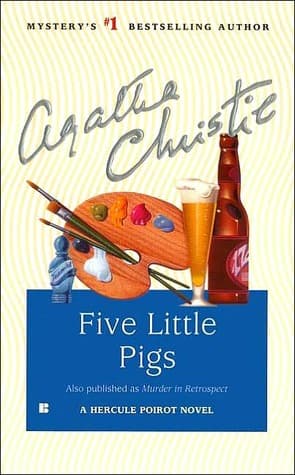
Sixteen years after a woman is convicted of poisoning her artist husband, Hercule Poirot must examine the memories and desires of five witnesses to find the truth behind the seemingly clear case.
Sixteen years after her mother, Caroline Crale, was convicted of poisoning her artist husband, Amyas Crale, Lucy Crale approaches Hercule Poirot. Lucy has recently received a letter from her deceased mother, written shortly before her death in prison, in which Caroline states her innocence. This letter has disturbed Lucy, causing her to ask Poirot for help. Poirot, initially hesitant to reopen such a cold case, is interested in the psychological challenge and agrees to investigate. He understands that solving the mystery depends on the memories and views of the five other people present the day Amyas Crale died.
Poirot begins his investigation by finding the five people who were at Alderbury, the Crale estate, the day Amyas Crale was poisoned. These five become his 'five little pigs,' each a potential suspect or witness whose testimony is important. They are: Philip Blake, a stockbroker and Amyas's half-brother; Meredith Blake, Philip's reclusive brother and an amateur herbalist; Elsa Greer (now Lady Dittisham), a socialite who was sitting for a portrait by Amyas and was openly in love with him; Cecilia Williams, a governess; and Angela Warren, Caroline's disfigured younger half-sister. Poirot decides to interview each of them separately, asking them to write their accounts of the events before and after Amyas's death, focusing on their individual views and memories.
Philip Blake, Amyas's half-brother, gives his account, describing Amyas and Caroline's difficult marriage. He recalls Amyas's many affairs, which Caroline usually tolerated with cynical amusement. He also notes that Caroline was possessive of her husband. Philip describes the tension during Elsa Greer's stay, as Amyas was openly planning to leave Caroline for Elsa. He recounts seeing Caroline upset the day of the murder and hearing an argument between the couple. He believes Caroline killed Amyas out of jealousy and because Amyas was finally leaving her for Elsa, which Philip felt was different from previous affairs.
Meredith Blake, Philip's brother and a botanist, offers a more detached account. He admits to having a quiet affection for Caroline and recalls seeing her upset but also resigned. His testimony focuses on details about the poison, coniine, which he kept in his laboratory. He describes how the coniine was stored and how it could have been accessed. Meredith also recalls seeing Caroline handle a glass of beer that Amyas later drank. He remembers Amyas complaining of a bitter taste before collapsing. He notes Caroline's calm after Amyas's death, which he found chilling, supporting the general belief in her guilt.
Elsa Greer, now Lady Dittisham, gives a passionate and self-serving account. She openly admits her intense love for Amyas and her belief that he genuinely intended to leave Caroline for her. Elsa describes Caroline as cold and calculating, seemingly not bothered by the affair, which she found unsettling. She recalls Amyas telling her he would tell Caroline that very day. Elsa's story is filled with triumph and anger, portraying Caroline as a woman who killed out of possessive jealousy rather than true love, to stop Amyas from leaving her. She saw Caroline's calm exterior as a mask for her murderous intent.
Cecilia Williams, the governess, gives a sympathetic account of Caroline. She describes Caroline as a woman of great inner strength and loyalty, who, despite her outwardly cynical appearance, truly loved Amyas. Cecilia portrays Amyas as a selfish genius who used Caroline's support. She recalls Caroline's distress over Amyas's affair with Elsa, seeing it as a particularly painful betrayal. Cecilia's testimony shows Caroline's protective nature towards her younger sister, Angela, and suggests that Caroline would never intentionally harm anyone, let alone commit murder. She struggles to reconcile the Caroline she knew with the murderer she was convicted of being.
Angela Warren, Caroline's younger half-sister, gives a fragmented but important account. Her testimony is poignant as she was only a child at the time of the murder, and her face was disfigured in an incident involving Amyas and Caroline years before. Angela remembers Caroline's deep protectiveness and her own resentment towards Amyas, whom she blamed for her disfigurement. Importantly, Angela recalls seeing Caroline handle a glass of beer that day. She also remembers a distinct argument between Caroline and Amyas earlier, where Amyas threatened to send her away, which Caroline strongly opposed. Angela's story hints at a deeper, more complex dynamic between the sisters and Amyas.
After receiving and carefully analyzing the five written accounts, Poirot finds several inconsistencies and psychological details. He notes that while all five accounts suggest Caroline's guilt, they offer very different ideas of her character and motives. He focuses on the timing of events, the nature of the arguments, and the specific details surrounding the poison. Poirot considers each of the five individuals as a potential killer and begins to build a timeline of events, paying close attention to who had access to the poison and a plausible motive. He examines the 'psychology' of each individual, not just their stated facts.
Poirot's investigation uncovers an important detail about Angela Warren's disfigurement. He learns that the accident was not, as commonly believed, caused by Amyas throwing a paperweight at Caroline, which accidentally hit Angela. Instead, Caroline, in a fit of rage after Amyas confessed to an affair and mocked her, threw a bottle at him, missing and hitting Angela instead. This revelation changes how Caroline's character is seen, showing a passionate, volatile side often hidden. It also provides a possible reason for Angela to resent Amyas, or for Caroline to feel immense guilt, making the simple murder story more complicated.
Poirot carefully reconstructs the day of the murder, revealing the truth. He concludes that Meredith Blake, who had a long, unreturned love for Caroline, was the murderer. Meredith had fallen in love with Caroline and was deeply distressed by Amyas's affair and his plan to leave Caroline for Elsa. The day of the murder, Meredith, alone with Amyas, saw an opportunity. He knew Amyas would drink a beer before lunch. He swapped Amyas's usual tonic for a glass containing coniine, which he had available. He then subtly implicated Caroline by making sure she was seen handling a glass of beer, knowing her reputation for cynicism would make her seem capable of the crime. His motive was a twisted act of 'love' to save Caroline from further heartbreak and to remove the man he saw as her tormentor.
When confronted by Poirot's logic and psychological insights, Meredith Blake confesses to the murder. He explains that he had loved Caroline for years and could not watch Amyas destroy her. He saw Amyas's decision to leave Caroline for Elsa as the final insult, a cruelty Caroline could not endure. Meredith believed he was protecting Caroline and acting out of a misguided sense of chivalry. He describes how he carefully planned the poisoning, using his knowledge of herbal toxins and ensuring that Caroline would be framed. He had carefully planted the seeds of suspicion, knowing that Caroline's calm exterior and her history of arguments with Amyas would make her the obvious suspect. His confession brings a difficult end to the sixteen-year-old mystery.
The Protagonist
Poirot takes on a challenging cold case, demonstrating his enduring skill and intuition in uncovering truth through psychological analysis rather than physical evidence.
The The Deceased Accused
Her character is explored retrospectively, revealing her true nature and innocence through others' memories and Poirot's deductions.
The The Victim
His death is the starting point of the mystery, and his character is revealed through the memories of others, posthumously influencing the narrative.
The Supporting
She moves from a state of uneasy acceptance of her mother's guilt to finding peace through the truth of her innocence.
The Supporting
His initial certainty about Caroline's guilt is challenged by Poirot's re-investigation, forcing him to reconsider his understanding of the past.
The Antagonist
Initially appearing as a detached witness, he is revealed to be the calculating murderer, driven by a possessive, unrequited love.
The Supporting
She remains convinced of Caroline's guilt, her perspective warped by her own intense emotions and self-interest.
The Supporting
Her unwavering faith in Caroline's innocence is ultimately validated by Poirot's findings.
The Supporting
She moves from a childhood trauma and incomplete understanding to finally learning the full truth about her past and her sister's innocence.
The novel explores how individual perceptions and biases can change the truth over time. Each of the 'five little pigs' tells their story of the murder day, but their accounts are colored by their personal relationships with Amyas and Caroline, their own desires, and how they understand events. For example, Elsa Greer sees Caroline as cold and calculating, while Cecilia Williams sees her as strong and loyal. Poirot's job is to look past these subjective memories to find the objective truth, showing that what people believe happened is often different from what actually occurred.
“''There are five people,'' said Poirot, ''who can tell us what happened. But what they tell us will not be the same. Each will tell us what they saw, what they thought, what they believed. And in that way, each will tell us a different truth.''”
The book examines different kinds of love: the difficult, often cruel love between Amyas and Caroline; Elsa Greer's passionate, possessive love for Amyas; Cecilia Williams's loyal, platonic affection for Caroline; and most importantly, Meredith Blake's unrequited, obsessive love for Caroline that leads him to murder. Each character's actions and memories are shaped by their emotional attachments, showing how love, when twisted or not returned, can lead to destructive outcomes. Meredith's 'love' for Caroline is so strong that he believes killing Amyas is an act of chivalry to save her from more pain. This shows the thin line between devotion and dangerous obsession.
“''Love is not a gentle thing, Mademoiselle. It can be fierce, demanding, cruel.''”
Sixteen years have passed since the murder, and the passage of time is a central theme. Poirot knows he cannot rely on new evidence, but rather on the witnesses' memories. The novel shows how memory can fade, be added to, or be selectively remembered to fit a personal story. The 'five little pigs' are asked to write their accounts, allowing Poirot to analyze not just what they remember, but how they remember it and what emotional importance they give to certain events. The challenge is to find the consistent truths within these different and old recollections, proving that time can obscure but not erase the truth.
“''Time... Time is a great revealer, Mademoiselle. But it is also a great concealer.''”
Amyas Crale's identity as a talented artist is important to the plot. His artistic nature, his need for muses, and his disregard for usual morality are often mentioned. The novel explores how artistic talent and personal behavior connect, suggesting that great art can sometimes be made by people with deep flaws. The portraits Amyas painted, especially those of Caroline and Elsa, symbolize his relationships and how he saw these women. The artistic setting also provides a background for the bohemian lifestyle and emotional intensity in the Crale household, which contributed to the unstable atmosphere that led to the murder.
“''He was a genius, yes. But a cruel genius. He took life and twisted it to his own ends, to make his art.''”
A nursery rhyme device used to categorize the five main witnesses/suspects.
This is the central narrative device, inspired by the nursery rhyme 'This Little Piggy.' Poirot identifies the five individuals present at Alderbury on the day of the murder as his 'five little pigs.' Each 'pig' represents a different perspective and a potential suspect or key witness. By interviewing each one separately and asking them to write down their accounts, Poirot gathers five distinct, often conflicting, narratives. This structure allows the reader to experience the story from multiple viewpoints, highlighting the subjective nature of memory and contributing to the gradual unveiling of the truth, as Poirot sifts through each 'pig's' story.
The entire plot is reconstructed through individual, written accounts of past events.
The entire investigation is conducted retrospectively, sixteen years after the crime. Poirot does not uncover new physical evidence but relies entirely on the memories of the five key individuals. Each 'pig' writes their personal account of the day Amyas Crale was murdered, providing a unique and subjective perspective on the events, the characters involved, and their motives. This device creates a complex tapestry of conflicting viewpoints, forcing Poirot (and the reader) to piece together the objective truth from a mosaic of biased, emotional, and sometimes unreliable recollections. It emphasizes the psychological aspect of the mystery, as Poirot analyzes the 'why' behind each person's memory.
Caroline Crale's letter declaring innocence, which initiates the entire investigation.
Caroline Crale's letter, written shortly before her death in prison and delivered to her daughter Lucy sixteen years later, serves as the primary catalyst for the entire plot. Without this letter asserting her innocence, Lucy would never have approached Poirot, and the case would have remained closed. The letter introduces doubt into a seemingly clear-cut conviction and provides the initial motive for Poirot to delve into the past. It acts as a powerful symbol of a mother's last attempt to clear her name and give her daughter peace, setting the stage for the dramatic re-evaluation of the murder.
A 'locked room' scenario where the physical facts are known, but the psychological truth is hidden.
While not a literal 'locked room' in terms of physical impossibility, 'Five Little Pigs' functions as a psychological locked room mystery. The 'who' (Caroline Crale) and 'how' (poison) were seemingly established during the original trial. However, the 'why' and the 'true who' remain hidden within the confines of the past and the minds of the witnesses. Poirot's investigation is about unlocking the psychological 'room' of the past, dissecting motives, emotions, and hidden relationships to reveal the true perpetrator. The physical facts are known, but the psychological truth, the sequence of intentions and actions, is what Poirot must uncover.
“The past is the past. It cannot be changed.”
— A character reflects on the irreversible nature of past events.
“There is nothing so dangerous for anyone who has something to hide as conversation!”
— Hercule Poirot advises on the risks of talking too much.
“I have always been of the opinion that the truth, however painful, is better than a lie.”
— Poirot emphasizes his commitment to uncovering the truth.
“The little grey cells—they are what matter.”
— Poirot highlights the importance of using one's intellect.
“One must always consider the psychology.”
— Poirot discusses the role of human psychology in solving mysteries.
“It is the little things that are significant.”
— Poirot points out that small details often hold the key to the mystery.
“The poison was in the bottle, but the motive was in the heart.”
— Reflection on how emotions drive criminal actions.
“Memory is a tricky thing. It can play tricks on you.”
— A character discusses the unreliability of memory over time.
“Jealousy is a green-eyed monster which doth mock the meat it feeds on.”
— A reference to Shakespeare, used to describe destructive jealousy in the case.
“The truth is like a jigsaw puzzle. You must fit all the pieces together.”
— Poirot explains his method of piecing together evidence.
“In crime, as in life, it is the unexpected that often happens.”
— Observation on the unpredictable nature of events.
“A woman scorned is a dangerous thing.”
— Comment on the potential for revenge when someone feels wronged.
“The dead cannot speak, but they leave behind clues.”
— Poirot notes how evidence from the past can reveal the truth.
“It is not always the obvious suspect who is guilty.”
— A reminder to look beyond surface appearances in a mystery.
Ready to see how well you understood this book? Take our interactive quiz with 10 questions.
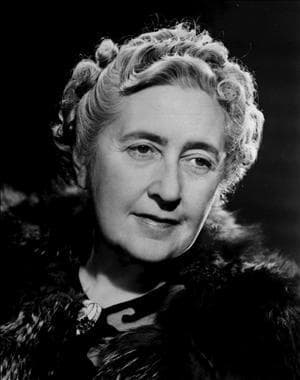
Dame Agatha Mary Clarissa Christie, Lady Mallowan, was an English writer known for her 66 detective novels and 14 short story collections, particularly those revolving around fictional detectives Hercule Poirot and Miss Marple. She also wrote the world's longest-running play, the murder mystery The Mousetrap, which has been performed in the West End since 1952. A writer during the "Golden Age of Detective Fiction", Christie has been called the "Queen of Crime". She also wrote six novels under the pseudonym Mary Westmacott. In 1971, she was made a Dame (DBE) by Queen Elizabeth II for her contributions to literature. Guinness World Records lists Christie as the best-selling fiction writer of all time, her novels having sold more than two billion copies.







