“They drew first blood, not me.”
— Rambo's justification for his violent actions.

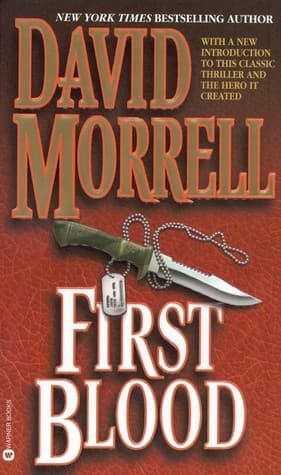
David Morrell (1972)
Genre
Thriller / Mystery
Reading Time
6-8 hours
Key Themes
See below
Sign in to track this book
A Vietnam veteran's quiet journey through rural Kentucky explodes into a brutal war for survival when a small-town sheriff pushes him too far, unleashing the soldier within.
John Rambo, a young, long-haired drifter wearing a fatigue jacket, arrives in Madison, Kentucky, seeking a meal. He is immediately accosted by Chief of Police Wilfred Teasle, who views Rambo with suspicion and prejudice due to his appearance. Teasle, a decorated Korean War veteran, orders Rambo to leave town, citing vagrancy laws. Rambo, tired and hungry, attempts to comply but is repeatedly intercepted by Teasle, who escalates his harassment, eventually arresting Rambo for resisting an officer and vagrancy. Rambo is taken to the police station, where Teasle's deputies further torment him.
At the station, Rambo is subjected to a humiliating shave with a straight razor and further abuse by the deputies. This sensory overload, combined with the confinement and aggressive handling, triggers severe flashbacks to his time as a prisoner of war in Vietnam. His training kicks in, and Rambo, perceiving the police as enemy interrogators, snaps. He violently retaliates, disarming the deputies, killing one with his own razor, and injuring others. He then steals a motorcycle and a rifle, fleeing into the rugged Kentucky wilderness, initiating a desperate manhunt.
Chief Teasle is consumed by a personal vendetta after his deputy is killed and his authority undermined. He mobilizes the entire Madison police force and calls for state police assistance, determined to capture Rambo. Teasle, an experienced hunter and former soldier, believes he understands Rambo's mindset and uses his knowledge of the terrain to track him. He disregards official protocols and becomes obsessed with Rambo, viewing the pursuit as a personal duel that mirrors his own combat experiences, pushing his men to their limits in the treacherous mountains.
Using his elite Special Forces training, Rambo transforms the wilderness into his battlefield. He sets traps, camouflages himself, and moves with stealth, turning the dense forests and caves into his advantage. He ambushes the pursuing officers, inflicting injuries and deaths to slow them down and create diversions, always aiming to escape rather than engage in prolonged combat. His actions, while brutal, are driven by a desperate need for survival and a distrust of authority, reinforcing his perception that he is still fighting a war.
As the body count rises and the local authorities prove ineffective, the military is called in. Colonel Sam Trautman, Rambo's former commanding officer and the man who trained him, arrives on the scene. Trautman immediately recognizes the gravity of the situation and Rambo's combat capabilities. He attempts to reason with Teasle, explaining Rambo's psychological state and suggesting a less aggressive approach. However, Teasle, blinded by pride and vengeance, refuses to listen, insisting on a direct confrontation, believing Rambo is nothing more than a criminal.
Colonel Trautman establishes contact with Rambo via radio, attempting to talk him down and convince him to surrender. He appeals to Rambo's loyalty and discipline, acknowledging his past sacrifices. Rambo, however, is deeply traumatized and distrustful, convinced he will be killed if he surrenders. Teasle, impatient and convinced that Trautman is being too soft, ignores the colonel's advice and orders his men to close in, disrupting the delicate negotiation. This action further solidifies Rambo's belief that he is being hunted without mercy, leading to more violent confrontations.
After evading a massive search party and a helicopter attack, Rambo, injured but still determined, makes his way back to Madison. He orchestrates a series of explosions and diversions, targeting gas stations and businesses, creating chaos and panic in the town. His intention is not random destruction, but a calculated effort to draw Teasle out and force a final confrontation. The town is thrown into disarray, and the local population is terrified, as Rambo uses his tactics to turn the tables on his pursuers, making them the hunted.
The pursuit ends in a fierce, brutal showdown within the streets and buildings of Madison. Rambo, now a phantom in the night, systematically targets the remaining police officers. He and Teasle engage in a cat-and-mouse game, each using their combat experience and knowledge of the terrain (now the urban setting) to gain an advantage. Teasle, severely wounded, finds himself cornered, his vendetta having led him to the brink of death. Rambo, also injured and exhausted, is driven by a need to end the conflict that began with Teasle's initial harassment.
Just as Rambo is about to deliver the final blow to a gravely wounded Teasle, Colonel Trautman appears. Trautman, understanding the cycle of violence and Rambo's shattered psyche, intervenes. He appeals to Rambo's last vestiges of humanity and discipline, reminding him of his identity and the futility of further bloodshed. In a final, desperate act, Rambo, broken by the ordeal and the realization of what he has become, allows Trautman to kill him, ending the rampage. Teasle succumbs to his wounds shortly after, leaving Trautman as the sole witness to the tragic end of two warriors.
The Protagonist
Rambo devolves from a quiet drifter into a relentless killing machine, ultimately succumbing to his own trauma and the violence he was forced to commit.
The Antagonist
Teasle's pride and prejudice lead him down a path of escalating violence and obsession, culminating in his death.
The Supporting
Trautman attempts to salvage Rambo and the situation, ultimately forced to make a tragic choice to end the violence.
The Supporting
Lester goes from being a confident small-town deputy to a terrified participant in a war he doesn't understand.
The Supporting
Galt's death serves as the critical inciting incident for the entire plot.
The Supporting
Galt's initial skepticism gives way to alarm and the mobilization of significant resources as the situation spirals out of control.
The Mentioned
Though not a living character, Orval's memory serves as a constant, haunting reminder of Rambo's past trauma and a trigger for his violence.
The Supporting
Rogers goes from a confident state trooper to a witness of Rambo's destructive capabilities.
The novel explores the lasting psychological impact of war, particularly Post-Traumatic Stress Disorder (PTSD). Rambo's extreme violence is not portrayed as inherent evil, but as a direct consequence of his unresolved combat trauma, particularly his experiences as a POW. The seemingly innocuous actions of the police — a shave, confinement, aggressive questioning — trigger vivid flashbacks that plunge him back into a wartime mindset, where he perceives the police as enemy interrogators. This theme is central to understanding Rambo's character and the tragedy of his rampage, showing how soldiers can be broken by their experiences and struggle to reintegrate into civilian life.
“"He was a walking time bomb, wired to explode at the slightest touch of a memory, a sound, a smell that brought back the jungle, the torture, the fear."”
A theme is the clash between institutional authority (represented by Chief Teasle and law enforcement) and the individual's right to freedom and dignity (represented by Rambo). Teasle's initial harassment of Rambo is an abuse of power, born from prejudice and a desire to control. Rambo's violent reaction, while extreme, is his desperate attempt to reclaim his autonomy and escape perceived oppression. The novel questions the nature of 'justice' and 'order' when wielded by flawed individuals, and how the state's power can crush or provoke those who don't conform. This conflict escalates into a full-blown war, showing the dangers when authority is misused and when an individual is pushed beyond their breaking point.
“"He didn't want trouble. He just wanted to be left alone. But they wouldn't leave him alone."”
The book explores the cyclical and destructive nature of violence and vengeance. Teasle's initial act of aggression against Rambo ignites a chain reaction of violence. Rambo's retaliatory violence, while rooted in trauma, fuels Teasle's personal vendetta, leading to an escalating cycle of death and destruction. Neither character can disengage from the conflict, driven by pride, anger, and a perceived need for retribution. The novel suggests that once this cycle begins, it is difficult to break, consuming both the perpetrator and the victim, ultimately leading to a tragic outcome for all involved. The violence is often graphic, emphasizing its brutal reality.
“"The war was over, but it was still inside him. And now, thanks to Teasle, it was outside too."”
First Blood critiques society's failure to understand, support, and reintegrate its veterans. Rambo, a highly trained soldier, returns from Vietnam only to be met with suspicion, hostility, and a lack of understanding. His unique skills, honed for war, are seen as a threat in civilian life. The novel argues that the society that created such a formidable warrior is unprepared and unwilling to deal with the consequences of his training and trauma. Colonel Trautman embodies this theme, recognizing the responsibility the military has for Rambo, and lamenting how society discards its heroes, turning them into outcasts.
“"We trained him to be a killer. We told him to kill. And now you expect him to just turn it off?"”
The novel uses the contrast between the untamed wilderness and the confines of civilization to highlight Rambo's struggle. In the wilderness, Rambo is in his element, a master of survival and combat, effectively turning the natural environment into his ally and weapon. He thrives in this primal setting, reverting to his basic, trained instincts. Conversely, civilization, represented by Madison, its laws, and its police, is where he is persecuted and where his trauma is triggered. The conflict moves from the wild mountains back into the town, blurring the lines and showing how Rambo brings the 'wilderness' of war into the 'civilized' world, exposing its vulnerability.
“"The forest was his home, his sanctuary, his battlefield. He knew its secrets, and it protected him."”
Narrative device revealing Rambo's past trauma and explaining his actions.
Flashbacks are a crucial device in 'First Blood,' providing insight into Rambo's fractured psyche. The novel uses specific sensory details—the cold razor blade, the confined space, the aggressive questioning—to trigger Rambo's memories of being a POW in Vietnam. These flashbacks are not just exposition; they directly drive his violent reactions, transforming the present-day police into his past torturers in his mind. This device allows the reader to understand, if not condone, Rambo's extreme behavior as a symptom of severe PTSD, making him a more complex and tragic figure rather than a simple villain.
Reversal of roles that explores power and survival.
This device is central to the narrative, initially establishing Teasle as the hunter and Rambo as the hunted. However, once Rambo's combat instincts are unleashed, the dynamic frequently reverses. Rambo, using his superior training and knowledge of guerrilla tactics, often turns the tables, ambushing and outmaneuvering his pursuers, making them the hunted. This reversal highlights Rambo's capabilities and the unpreparedness of the local authorities. It also emphasizes the primal nature of the conflict, blurring the lines between predator and prey, and demonstrating how quickly power dynamics can shift in a life-or-death struggle.
The natural environment plays an active role in the conflict.
The rugged Kentucky wilderness is more than just a setting; it acts as a character in the story. Its dense forests, treacherous ravines, and hidden caves become Rambo's ally and his weapon. He uses its features for camouflage, traps, and escape routes, demonstrating his profound connection to and mastery over nature. Conversely, the wilderness becomes a formidable enemy for Teasle and his men, hindering their pursuit and exposing their vulnerabilities. This device emphasizes Rambo's primal skill set and contrasts it with the more conventional, less adaptable tactics of law enforcement.
Contrasting characters highlighting similar yet divergent paths.
Rambo and Teasle serve as foil characters, both decorated war veterans, skilled in combat, and possessing strong wills. However, their paths diverge dramatically. Teasle, a Korean War veteran, represents established authority and a sense of order, albeit one tainted by prejudice. Rambo, a Vietnam veteran, represents the discarded, traumatized soldier, alienated from society. Their shared military backgrounds create a perverse understanding between them, yet their differing responses to their experiences lead to their fatal clash. This device underscores the novel's themes of war's impact and the clash between individual trauma and societal norms.
“They drew first blood, not me.”
— Rambo's justification for his violent actions.
“You just don't turn it off!”
— Rambo's desperate plea to Colonel Trautman about his inability to reintegrate into society.
“I could have killed 'em all, I could've killed you. In town you're the law, out here it's me. Don't push it. Don't push it or I'll give you a war you won't believe.”
— Rambo's warning to Teasle from the mountains.
“There was a war going on and everybody was doing things they didn't want to do, but they were doing them for their country.”
— Rambo reflecting on the Vietnam War.
“He was a machine, a programmed killer, and they had turned him on.”
— A description of Rambo's transformation back into a soldier.
“It was not a war of good against evil, but of men against men, and the evil was in the fighting itself.”
— The narrator's philosophical observation about conflict.
“He felt the old familiar surge of adrenaline, the animalistic joy of the hunt.”
— Rambo embracing his survival instincts in the wilderness.
“They had taught him to kill, but they hadn't taught him how to live.”
— A poignant summary of Rambo's plight.
“A man's got to do what a man's got to do.”
— A common phrase used by both Teasle and Rambo, highlighting their mirroring stubbornness.
“The wilderness was his only friend, his only sanctuary.”
— Rambo finding solace and capability in nature.
“He didn't want to be a hero. He just wanted to be left alone.”
— Rambo's initial desire before being provoked.
“The uniform was gone, but the soldier remained.”
— A concise description of Rambo's internal state.
“He was a ghost, a legend, a nightmare made real.”
— How the authorities perceive Rambo during the hunt.
“It was impossible to kill a man who didn't care if he lived or died.”
— Teasle's realization about the futility of his pursuit.
Ready to see how well you understood this book? Take our interactive quiz with 10 questions.
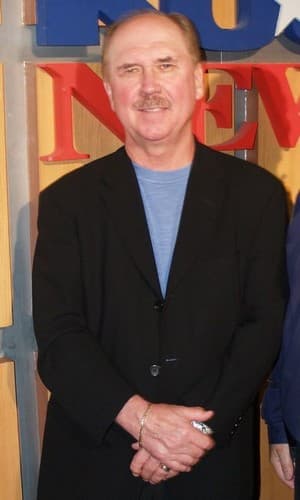
David Morrell is a critically acclaimed author known for his gripping thrillers and suspense novels. He is best known for creating the iconic character John Rambo in his debut novel, *First Blood*. Morrell's other notable works include *Fireflies* and the award-winning historical mystery *Murder as a Fine Art*, showcasing his versatility across genres.







