“The dragon was not a thing of scales and fire, but of hope and a promise.”
— Reflecting on the true nature of thephenomenon.

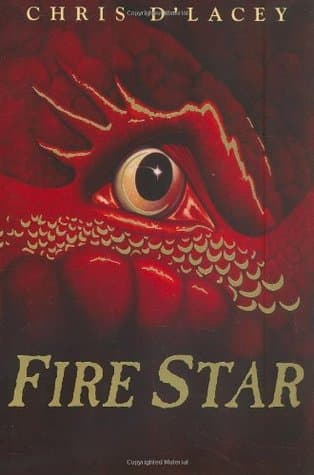
Chris d'Lacey (2005)
Genre
Fantasy / Children's / Mystery / Young Adult
Reading Time
548 min
Key Themes
See below
Sign in to track this book
A mysterious fire star brings back ancient dragons, turning author David Rain's Arctic research trip into a fight against an old enemy as his fantasy novel and a real-world apocalypse merge.
David Rain, an author and former ice sculptor, accepts an invitation from Dr. Bergstrom to join an Arctic research trip to study polar bears. His publisher, Henry, offers him a large advance for a new book, a dragon legend. David, with his polar bear, Conker, travels to the remote Arctic research station. Inspired by the icy landscape and wildlife, David starts writing a tale about a young polar bear named Ingavar and a powerful dragon named Gwilanna, who wants to use the energy of a celestial event called the Fire Star. As he writes, David feels a strange link between his story and the real world.
David's legend describes Ingavar's search for the Fire Star and ancient dragon lore, including a prophecy about dragons returning. In the story, Gwilanna, an evil dragon, plans to use the Fire Star's power for destruction. In the real world, strange things begin to happen at the research station. Equipment fails, odd energy changes are detected, and the crew feels uneasy. David also starts having vivid dreams and visions, which seem directly influenced by his story, blurring the lines between fiction and reality.
A new member, Liz Pennykettle, joins the expedition. David quickly recognizes her. She is Gwilanna, the antagonist from his past adventures and the dragon he is writing about. Gwilanna, in human form, reveals her true goal: she has come to the Arctic for the approaching Fire Star, a cosmic event that will release immense energy. She plans to use this energy to bring back her dragon kin and unleash them on the world, aiming to restore dragons to power, even if it means destroying humanity.
As the Fire Star nears its peak, its energy starts to affect the environment and ancient artifacts. David learns that the Arctic holds more than polar bears; it is rich in ancient dragon lore, with hidden caverns and relics linked to the Fire Star prophecy. Gwilanna, using her dragon magic, activates these dormant sites. The prophecy speaks of dragons rising again, for good or ill, depending on who controls the Fire Star's power. David realizes the fate of both dragons and humans depends on him finishing his story and influencing the outcome.
David races against time. He believes that by finishing his legend in a specific way, he can influence real-world events and stop Gwilanna. He struggles with writer's block and the pressure of his words holding such power. He tries to write a way for Ingavar to defeat Gwilanna and use the Fire Star's energy for creation instead of destruction. However, Gwilanna senses his efforts and tries to disrupt his writing, sending malevolent energy and visions to distract him, making his task harder.
Throughout this, Conker, David's loyal polar bear, remains a constant presence. He senses Gwilanna's evil and protects David, often warning him of danger. Conker, as an Arctic creature, seems to have a natural link to the land's ancient magic and the spirit of the polar bears in David's legend. His loyalty and strength comfort and inspire David, reminding him of the pure parts of nature that Gwilanna wants to corrupt. Conker's presence highlights the bond between humans and animals.
The Fire Star reaches its peak, bathing the Arctic in an ethereal, pulsing light. Gwilanna, in her true dragon form, unleashes her full power, trying to channel the Fire Star's energy into herself and ancient dragon relics. She reveals a vast, hidden cavern under the ice, filled with dormant dragon eggs and old mechanisms designed to amplify the Fire Star's power. She begins the ritual to awaken her kin and transform the world. David, knowing this is his last chance, desperately writes the final chapters of his legend, focusing on a positive resolution.
In David's legend, Ingavar, the polar bear, confronts Gwilanna. Instead of falling to hatred, Ingavar makes a selfless choice, sacrificing himself to redirect the Fire Star's energy. He does not destroy Gwilanna, but rather channels the power to prevent her destructive goal, allowing for balance. This act of selflessness and choice for creation over destruction is important. As David writes this, he feels a powerful connection, sensing his words affecting the real world, directly influencing the events in the Arctic.
As David finishes his legend, the real-world Gwilanna, despite her power, falters. The Fire Star's redirected energy, influenced by David's story, does not destroy her but strips her of her destructive intent and much of her power, leaving her weakened and changed. The dormant dragon eggs begin to hatch, but instead of evil creatures, the new dragons are peaceful, embodying the balance David wrote into his story. The Arctic landscape, though changed, is not destroyed, marking a new beginning.
Afterward, Gwilanna is no longer a threat; her power is lessened, and her malice seems gone. The new dragons, innocent and curious, symbolize new hope. David, tired but victorious, understands the power of his storytelling and its ability to shape reality. He realizes that the Fire Star was not just a destructive force but a trigger for change, starting an era where dragons and humans could coexist. He leaves the Arctic, forever changed, knowing his words completed a legend and saved a world, cementing his place as a storyteller.
The Protagonist
David evolves from a writer observing the world to an active participant shaping its destiny through his narrative, accepting the immense power of his words.
The Antagonist
Gwilanna remains steadfast in her destructive ambition until her power is stripped away and her intent transformed by David's narrative, leading to a forced, albeit non-fatal, change.
The Supporting
Conker remains a steadfast and loyal companion, acting as a grounding force and protector for David throughout the magical conflict.
The Supporting
Ingavar begins as a character in a story and becomes the decisive agent of change, embodying the selfless act that saves the world.
The Supporting
Dr. Bergstrom remains largely a scientific observer, witnessing inexplicable events that challenge his understanding of the world.
The Mentioned
Henry's role is primarily as a catalyst, setting the stage for David's adventure without undergoing significant personal development.
A main theme is how stories affect reality. David Rain's writing directly influences events and the world's fate. His legend of Ingavar and Gwilanna mirrors and then changes the real-world conflict; Ingavar's selfless act in the story leads to Gwilanna's real-world defeat. The book suggests stories are not just entertainment but powerful forces for creation and destruction.
“''His words were not just ink on a page; they were threads of fate, weaving the very fabric of existence.''”
The Fire Star represents great power that can either create or destroy. Gwilanna wants to use it for destruction, aiming to kill humans and restore dragon rule. David, however, tries to write a story that promotes balance and creation. Ingavar's sacrifice, which redirects the Fire Star's energy for a new beginning rather than total destruction, shows this theme. The new, peaceful dragons further emphasize that power can be used for good, leading to coexistence.
“''The Fire Star offered a choice: utter destruction or a new, fragile beginning. The outcome depended on the heart that dared to shape its power.''”
The novel blurs the lines between fiction and reality, suggesting that the human world, the dragon world, and the story world are linked. David's legend is not separate from the Arctic expedition; it is an active part of it. Ancient dragon lore, the Fire Star's mystical energy, and modern scientific research all meet in the Arctic. This theme is clear in Gwilanna's ability to cross these realms and David's growing understanding that his 'fiction' is 'real,' hinting at a magical undercurrent to existence.
“''The line between his legend and the icy reality of the Arctic was not just thin; it was dissolving, like frost in the morning sun.''”
David Rain deals with the great responsibility that comes with his unique storytelling ability. He knows his words have direct consequences, and the world's fate depends on how he uses this power. Gwilanna, in contrast, misuses her power, driven by selfish and destructive desires. The novel explores the moral implications of having such influence and stresses the importance of using power for good, for balance, and to protect others, not for personal gain or revenge. This burden weighs on David throughout his writing.
“''With every word, he felt the weight of a thousand futures resting on his pen.''”
A celestial event with immense power, acting as a catalyst.
The Fire Star is a cosmic phenomenon, a celestial body or event that approaches Earth, releasing vast amounts of energy. It serves as the primary MacGuffin and catalyst for the entire plot. Its impending arrival is what draws Gwilanna to the Arctic and provides the power source she seeks to exploit. For David, it represents a ticking clock and the ultimate test of his storytelling power. The Fire Star's energy is neutral; its outcome (creation or destruction) depends entirely on who harnesses it and for what purpose, making it a powerful symbol of choice and consequence.
David's written story directly influences real-world events.
This is the central magical realism element of the novel. David's act of writing a legend about Ingavar and Gwilanna is not just a creative endeavor but a direct means of altering the real-world conflict. The choices made by characters in his story, particularly Ingavar's, manifest as real-world outcomes. This device creates immense narrative tension, as David must not only write a compelling story but also one that ensures a positive outcome for the world. It blurs the lines between author and deity, giving David an almost divine power over his narrative and, by extension, reality.
Hidden knowledge and objects that hold magical significance.
The Arctic is revealed to be a repository of ancient dragon lore, prophecies, and dormant artifacts. These elements provide the backstory for Gwilanna's motivations and the significance of the Fire Star. They serve as tangible links to the magical past and provide Gwilanna with the means to enact her plan, such as the hidden caverns and dormant dragon eggs. For David, uncovering this lore helps him understand the true stakes of his conflict and provides context for the epic battle he is writing and experiencing.
David's polar bear companion serves as a magical barometer and protector.
Conker is more than a pet; he acts as a magical barometer, sensing Gwilanna's presence and the shifts in mystical energy. His deep bond with David allows for a form of intuitive communication and protection. Conker's unwavering loyalty and connection to the wild, untamed spirit of the Arctic serve as a grounding force for David and a contrast to Gwilanna's destructive ambition. He often provides timely warnings or comfort, embodying the pure, natural magic that Gwilanna seeks to corrupt.
“The dragon was not a thing of scales and fire, but of hope and a promise.”
— Reflecting on the true nature of thephenomenon.
“Sometimes, the greatest mysteries are hidden in plain sight, if only you know how to look.”
— Exploring the clues to the mystery of the dragons.
“A legend isn't just a story; it's a memory that refuses to die.”
— Discussing the enduring power of myths and legends.
“Fear can be a terrible master, but courage is a powerful ally.”
— Facing a dangerous challenge.
“The past has a way of catching up to the present, especially when it's been forgotten.”
— Uncovering ancient secrets that impact the present day.
“Even the smallest spark can ignite the greatest fire.”
— A metaphor for the beginning of the adventure.
“Trust is a fragile thing, easily broken, hard to mend.”
— Dealing with betrayal and forming alliances.
“The world is full of wonders, if you only open your eyes to them.”
— A moment of awe and discovery.
“Every choice we make, no matter how small, casts a ripple into the future.”
— Considering the implications of a critical decision.
“Sometimes, you have to lose yourself to find your true path.”
— A character's journey of self-discovery.
“The greatest treasures are not always gold and jewels, but the bonds we forge.”
— Appreciating friendship amidst danger.
“Silence can speak volumes, if you know how to listen.”
— Interpreting subtle clues and unspoken feelings.
“To truly understand something, you must first believe in the impossible.”
— Embracing the fantastical elements of the story.
“The most dangerous lies are the ones we tell ourselves.”
— Confronting internal doubts and self-deception.
Ready to see how well you understood this book? Take our interactive quiz with 10 questions.
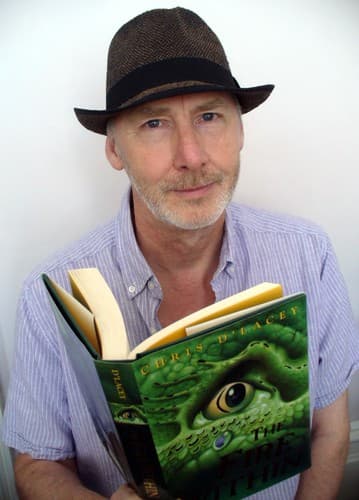
Chris d'Lacey is a British author celebrated for his "Last Dragon Chronicles" series, which includes titles like "The Fire Within," "Icefire," and "The Fire Eternal." His imaginative tales often blend fantasy with themes of courage and friendship, captivating young adult readers worldwide. D'Lacey's work has earned him a dedicated following and established him as a prominent voice in children's fantasy literature.







