“All her life she had been fleeing from the actual, and it had led her to this, a desert.”
— Nanda Kaul reflects on her past and her chosen isolation at Kasauli.

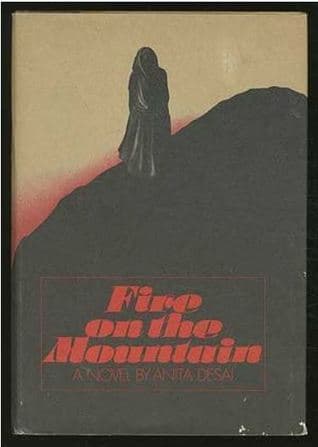
Anita Desai (1976)
Genre
Literary Fiction
Reading Time
180 min
Key Themes
See below
Sign in to track this book
An elderly woman's solitude in the Himalayas unravels when her wild great-granddaughter arrives, forcing her to face buried memories and the past's grip.
Nanda Kaul, an elderly woman, lives alone in her bungalow, Carignano, in the Kasauli hills. After a life as a Vice-Chancellor's wife and raising a large family, she now enjoys quiet and freedom from home duties. She manages her house with her cook, Ram Lal, and spends her days watching nature, reading, and thinking. Her solitude is a chosen refuge, an escape from her past life's demands and expectations, which she often felt was a performance. She finds peace in the mountains' stark, wild beauty, preferring nature's company to people.
Nanda's quiet life is suddenly broken by a telegram announcing her great-granddaughter, Raka, will arrive soon. Raka's mother, Tara, is unwell and needs to recover, so Raka comes to Kasauli. Nanda is upset and resents this intrusion, seeing Raka's presence as a burden on her hard-won peace. She prepares for Raka's arrival out of duty, feeling the familiar weight of responsibility return. Raka, a thin, quiet, and wild child, arrives without much fuss, immediately showing she prefers exploring the hills to talking with her great-grandmother.
Raka, unlike most children, shows no interest in Nanda's attempts at home life or stories. Instead, she is drawn to Kasauli's wild environment. She spends her days walking through dry grass, climbing trees, exploring ravines, and watching insects and animals. Her explorations are solitary and intense, showing a deep, almost basic connection to nature. Nanda watches Raka's independence with a mix of confusion and respect, seeing a similar wild spirit in the child that she herself has, but had suppressed for years.
Despite being close, Nanda and Raka remain emotionally distant. Nanda tries to engage Raka with stories from her past, adding wild details to make her life seem more exciting than it was. However, Raka stays mostly quiet, preferring her own silent world. Still, a subtle connection begins to form. Both Nanda and Raka strongly prefer being alone, dislike social pleasantries, and are fiercely independent. Raka's strong self-reliance reflects Nanda's own wish to escape her past life's limits and demands.
Feeling the need to justify her life and perhaps impress the indifferent Raka, Nanda starts telling elaborate tales about her past. She describes grand parties, important guests, and her husband's high position, making herself seem like a central, admired person. These stories are mostly made up, exaggerations of a life that was, in truth, often stifling and demanding. She describes living in a beautiful house, riding horses, and enjoying an easy, adventurous life, trying to make up for the unglamorous truth of her former existence as a dutiful, often resentful, wife and mother.
The fragile peace of Carignano is further broken by the arrival of Ila Das, Nanda's childhood friend. Ila Das is a clear opposite to Nanda's calm, isolated life; she is a cheerful, somewhat sad figure, still working as a social worker despite her age and poverty. Her arrival forces Nanda to face the harsh truths of their shared past. Ila Das, through her innocent talk, accidentally reveals the truth behind Nanda's made-up stories, showing the struggles and disappointments both women faced, including Nanda's husband's affairs and their general hard lives.
Ila Das tells her own tragic story: her family's financial ruin, her brothers' failures, and her ongoing, low-paid work as a social worker in rural areas, trying to teach villagers and fight child marriage. She then shares a terrible personal experience — she was recently raped and beaten by a villager on her way home. This confession deeply troubles Nanda, bringing the brutal reality of the world into her secluded haven. The incident highlights women's vulnerability and the widespread violence outside Nanda's carefully built sanctuary.
Ila Das's horrific account makes Nanda face painful, hidden memories of her own life. The glamorous stories she told Raka and even believed herself begin to fall apart. She remembers her marriage's suffocating demands, her husband's infidelity, and her own emotional neglect. The idea of her contented, solitary life starts to crack, showing the deep resentments and unfulfilled desires that had long been hidden. She realizes her escape to Carignano was not just for peace, but also from a life of quiet desperation and pretense.
While Nanda is reeling from Ila Das's revelations, Raka, who has been quietly watching the adults, acts drastically. Driven by her wild spirit and perhaps sensing the underlying trouble, she purposefully sets fire to the dry grass and pine needles on the surrounding mountainside. The fire quickly spreads, burning the dry land. This act is Raka's ultimate expression of wildness and defiance, a destructive urge that mirrors Nanda's internal burning and emotional upheaval. It shows a rejection of domestic life and a powerful statement of a raw, untamed nature.
As the fire burns on the mountain, consuming the landscape, Nanda gets a phone call from Ram Lal, her cook. He tells her that Ila Das has been found dead, likely murdered by the same villager who attacked her. This news, coming amid the physical fire, completely shatters Nanda. The fire on the mountain becomes a literal and symbolic representation of her illusions' destruction, her carefully built solitude, and life's painful reality. Nanda is left alone, her world consumed by fire and tragedy, with her past's stark truth finally revealed.
The Protagonist
Nanda's arc is one of confronting her past illusions. She moves from a carefully constructed solitude based on denial to a shattering realization of her repressed pain and the harsh realities of life.
The Supporting
Raka remains largely unchanged externally, a force of nature. Her arc is more about her catalytic effect on Nanda, culminating in her destructive act of setting the mountain on fire.
The Supporting
Ila Das's arc is tragic and culminates in her violent death, which serves as the final catalyst for Nanda's breakdown.
The Supporting
Ram Lal remains a steadfast, unchanging presence throughout the story, representing the continuity of domestic life.
The Mentioned
Tara's arc is not explored, as she remains a background figure.
The Mentioned
His influence is primarily historical, shaping Nanda's motivations for seeking solitude.
The novel explores chosen solitude and loneliness. Nanda Kaul seeks solitude in Carignano, seeing it as freedom from her past life's performance and family duties. She finds peace in quiet and nature. However, her talks with Raka and Ila Das show that her solitude also hides painful truths and unresolved feelings. Others' arrival breaks her peace, forcing her to confront the loneliness and emotional neglect beneath her 'solitary' life, ending in deep isolation after Ila Das's death. This theme is central to Nanda, as her 'solitude' is a fragile defense against a deeper, more devastating loneliness.
“She wanted to be left alone. She wanted to be left alone, at last. She had got what she had wanted – solitude. But solitude is an oppressive thing to a woman. It is a thing that will not let her alone.”
The past strongly influences the characters, especially Nanda. Her life in Carignano is a reaction to her past as a Vice-Chancellor's wife, a role she found stifling. She tries to escape it by making up grand stories for Raka, but Ila Das's arrival forces her to face painful truths: her husband's affairs, her own emotional neglect, and her sacrifices. The past is not just memory but an active force that shapes Nanda's present and leads to her emotional breakdown, showing that truly escaping one's history is impossible.
“All her life she had been a provider, a giver, a nurturer. Now she was empty, dry, like a husk. And the past, like a torrent, came rushing in.”
Untamed nature and wildness appear in the Kasauli landscape and Raka. The dry, rugged mountains, with their ravines and sparse plants, show a raw, untamed beauty. Raka, with her solitary explorations and dislike of home life, mirrors this wildness. She is untamed, preferring trees and insects to people. Her act of setting the mountain on fire is a powerful, destructive expression of this wildness, a force that cannot be controlled, and which connects with Nanda's own suppressed, wild spirit and her wish for freedom from social rules.
“She liked the untended garden, the wild, dry hills, the ravines and gorges, the wild animals that came to the water hole.”
Nanda builds a world of illusions to escape her past's harsh realities. She tells Raka embellished stories of a glamorous life, creating a facade of contentment and self-sufficiency. This illusion breaks when Ila Das arrives. Ila, through her simple honesty and tragic experiences, reveals the painful truths of Nanda's marriage, her husband's affairs, and their shared history's struggles. The novel shows how these self-deceptions, while offering temporary comfort, eventually crumble under reality's weight, leading to a profound and devastating confrontation with truth. The fire on the mountain symbolizes these illusions burning away.
“She had invented it all to amuse Raka, but it was to amuse herself too. It was a game, a performance, a charade.”
The Kasauli mountains reflect the characters' internal states.
The setting of Carignano in the Kasauli hills is not merely a backdrop but a powerful metaphor. The isolated, dry, and rugged mountain landscape mirrors Nanda's desire for solitude and her internal barrenness. The wildness of the hills reflects Raka's untamed nature and her destructive impulses. The eventual fire on the mountain serves as a literal and symbolic representation of the emotional conflagration within Nanda, the destruction of her illusions, and the harsh, unyielding reality of life and death. The environment directly influences and reflects the psychological states of the characters.
Subtle hints of impending tragedy and revelation.
The novel employs subtle foreshadowing to build tension and hint at the tragic climax. Nanda's initial dismay at Raka's arrival, her carefully constructed solitude, and her repeated attempts to escape the past all suggest that her peace is fragile and will eventually be shattered. The dry, flammable nature of the Kasauli landscape is frequently described, hinting at the eventual fire. Ila Das's vulnerability and her work in dangerous rural areas foreshadow her brutal assault and murder, creating a sense of impending doom that culminates in the novel's tragic ending.
Fire represents destruction, purification, and emotional intensity.
Fire is a potent symbol throughout the novel, culminating in the literal 'fire on the mountain.' Initially, it can represent Nanda's suppressed anger and the burning resentments from her past. Raka's act of setting the mountain ablaze symbolizes a destructive, untamed wildness, a rejection of order, and a parallel to the emotional conflagration within Nanda. The fire ultimately signifies the destruction of Nanda's illusions, the burning away of her carefully constructed peace, and the raw, unvarnished reality of suffering and death that she can no longer escape. It is both an end and a stark, painful revelation.
The audience is aware of truths characters are not, or are unwilling to face.
Dramatic irony is present in Nanda's narrative of her past. The reader quickly understands that her glamorous stories are fabrications, designed to impress Raka and perhaps herself, while Nanda continues to present them as truth. This creates a tension as the reader anticipates the inevitable moment when these illusions will be challenged or shattered. Ila Das's arrival serves as the catalyst for this, as her naive honesty inadvertently exposes the harsh realities that Nanda has long suppressed, making Nanda's eventual emotional collapse more poignant.
“All her life she had been fleeing from the actual, and it had led her to this, a desert.”
— Nanda Kaul reflects on her past and her chosen isolation at Kasauli.
“The house was a shell, and she was a hermit crab within it, perfectly suited.”
— Nanda's perception of her life and home in Kasauli before Raka's arrival.
“Children, she thought, were like little animals, with instincts so clear, so unadulterated.”
— Nanda observes Raka's wild and independent nature.
“She had thought that by coming to Kasauli, she was escaping, not just from the plains, but from life itself.”
— Nanda's initial motivation for moving to the mountains.
“It was her own creation, this silence, this emptiness, this freedom.”
— Nanda's internal justification for her solitary existence.
“The wind was a constant presence, a reminder of the vast, indifferent spaces beyond the small confines of her life.”
— The natural environment of Kasauli as it affects Nanda.
“She had always been a storyteller, but the stories had been for others, not for herself.”
— Nanda's realization about her past life as a wife and mother, always performing.
“Raka, with her fierce independence, her absolute detachment, was a mirror of her own deepest, most unacknowledged desires.”
— Nanda sees her younger self or ideal self in Raka.
“The past was a long, dusty corridor, full of closed doors.”
— Nanda's reluctance to revisit her memories.
“She had wanted to be left alone, and now she was.”
— Nanda's reflection on the fulfillment of her desire for solitude, and its consequences.
“The fire was not in the mountain, but in her own heart, a slow, smouldering resentment that had finally burst into flame.”
— The metaphorical meaning of the title in relation to Nanda's internal state.
“There was no one to tell, no one to hear, no one to understand.”
— Nanda's ultimate realization of her profound isolation.
“She had thought the truth would set her free, but it had only left her more utterly exposed.”
— Nanda's experience after revealing her true feelings and past to Raka, or to herself.
“The mountain was indifferent. It had seen fires before. It would see them again.”
— The final scene, emphasizing the timeless and impersonal nature of the setting.
Ready to see how well you understood this book? Take our interactive quiz with 10 questions.







