“The world was a puzzle, and she was just one small piece, trying to find where she fit.”
— Sylvia reflects on her place in a changing and often unfair world.

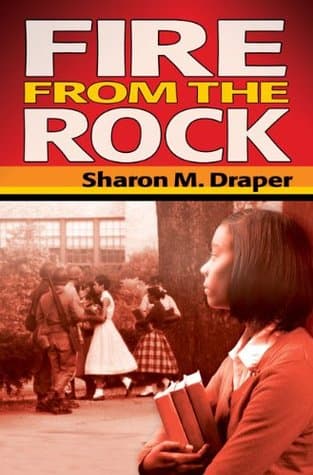
Sharon M. Draper (2007)
Genre
Children's / Historical Fiction / Young Adult
Reading Time
240 min
Key Themes
See below
Sign in to track this book
In the racially charged atmosphere of 1957 Little Rock, Sylvia, a young Black girl, must decide if she has the courage to be one of the first students to integrate Central High, facing the prejudice that threatens her community.
It is the summer of 1957 in Little Rock, Arkansas. Fourteen-year-old Sylvia Patterson enjoys her last carefree months before starting high school. She spends her days with her best friend, Corinne, reading books, dreaming about boys like Gary D. Schmidt, and helping her mother, Mrs. Patterson, with chores. Sylvia's older brother, Freddy, works at a local grocery store, saving money for college. The family, including her father, Mr. Patterson, and younger sister, Donna, lives a modest but comfortable life within the Black community. The talk of school integration is a distant hum, a topic discussed by adults but not yet fully understood or felt by Sylvia, who expects to attend Horace Mann, the Black high school.
One sweltering afternoon, a letter arrives at the Patterson home, addressed to Sylvia. It is an official communication from the NAACP, inviting her to be one of the first Black students to integrate Central High School, a previously all-white institution. The letter sends the family into discussion. Sylvia is initially overwhelmed and confused, never having considered such a path. Her parents, Mr. and Mrs. Patterson, are cautious but see the historical importance and potential for a better education. Freddy is supportive, recognizing the courage it would take. Sylvia feels a mix of fear and a growing sense of responsibility, weighing the comfort of Horace Mann against the challenge of Central.
Sylvia tells Corinne, who expresses admiration but also concern for her safety. News of the integration plan spreads through the Black community, leading to mixed reactions. Some older residents express pride and hope, while others warn of danger and potential violence. Sylvia overhears conversations at church and in her neighborhood, realizing the weight of the decision. She feels conflicted, questioning if she is brave enough to face the inevitable hostility. Her father, a man of quiet strength, encourages her to think deeply about the opportunity, emphasizing the importance of education and standing up for what is right.
Before making a final decision, Sylvia and a small group of other Black students who received similar invitations are taken on a guided tour of Central High School. The school is grand and imposing, far more elaborate than Horace Mann. They are shown classrooms, the library, and the gymnasium. During the visit, Sylvia feels a mix of awe and trepidation. She notices the stark contrast in resources and facilities compared to her current school. The experience solidifies for her the educational advantages Central offers, but also highlights the immense challenge of navigating such an environment as an outsider, under the watchful, and often hostile, eyes of the white students and community.
As September approaches, Governor Orval Faubus of Arkansas takes a firm public stand against the integration of Central High. His statements inflame racial prejudices and embolden segregationists. Media coverage intensifies, and Little Rock becomes a focal point of the national civil rights struggle. Sylvia and her family watch the news with growing apprehension. Protests by white citizens, some violent, begin to erupt around the city. The once distant hum of integration now becomes a roar, directly impacting Sylvia's decision and the safety of her community. The Pattersons discuss contingency plans and the increasing need for vigilance.
One evening, while Sylvia is at home, a large white supremacist rally takes place near her neighborhood. The protest quickly turns into chaos and violence. Rocks are thrown, racial slurs are shouted, and fires are set. Sylvia, along with her family, hunkers down in their house, terrified by the sounds of the mob. The experience is a terrifying realization of the hatred and danger she would face if she chose to attend Central High. The incident deeply shakes Sylvia, forcing her to confront the reality of the societal opposition. It clarifies for her that this struggle is not just about education, but about human rights and dignity.
After the violent rally, Sylvia is more conflicted than ever. The fear is palpable, but so is a growing sense of resolve. She talks at length with her parents, who reiterate their support for whatever she decides, but also subtly remind her of the importance of taking a stand. Sylvia spends a restless night, weighing the risks against the potential for change. She thinks about the future, not just her own, but for Donna and future generations. The next morning, with a newfound clarity and determination, Sylvia informs her parents that she will go to Central High. She recognizes that this is bigger than herself.
On September 4, 1957, Sylvia, along with eight other Black students, prepares to enter Central High School. They are met by a hostile mob of white segregationists and, to their shock, the Arkansas National Guard, deployed by Governor Faubus, who block their entry. The image of the soldiers with bayonets, preventing Black children from entering a public school, becomes a national scandal. Sylvia experiences the raw hatred of the crowd firsthand, the shouts, the threats, the spitting. She is forced to turn back, along with the others, unable to enter the school. The humiliation and fear are immense, but a sense of defiance also begins to solidify within her.
The standoff at Central High gains international attention. After the National Guard's obstruction, President Dwight D. Eisenhower federalizes the Arkansas National Guard and sends in the 101st Airborne Division of the U.S. Army to Little Rock. These federal troops are tasked with ensuring the safety of the Black students and upholding the Supreme Court's desegregation order. Sylvia and her family watch the news with a mixture of relief and disbelief. The presence of the federal troops marks a major turning point, a clear statement that the federal government will enforce civil rights, even against state resistance. It gives Sylvia a renewed sense of hope and protection.
With the protection of federal troops, Sylvia and the other eight Black students, now known as the Little Rock Nine, finally enter Central High School. Their days are filled with emotional and psychological torment. They face constant verbal abuse, racial slurs, physical shoves, and social isolation from many white students. Teachers often ignore the harassment. Sylvia relies on the strength of her fellow Black students and the unwavering support of the federal soldiers who escort them. She finds solace in her studies and in the knowledge that she is part of a monumental change. Despite the hardship, she remains resolute, understanding the importance of her presence.
Despite the pervasive hostility, Sylvia encounters small, unexpected acts of kindness. A white student might offer a fleeting glance of sympathy, or a cafeteria worker might offer a reassuring smile. These moments, though rare, provide glimmers of hope. She also draws strength from her family's steadfast love and the encouragement of civil rights leaders who visit and speak to the students. Sylvia learns to develop an inner resilience, focusing on her academics and the larger purpose of her mission. She realizes that even in the face of overwhelming prejudice, individual acts of courage and compassion can make a difference, and that her own quiet determination is a powerful force.
As the school year progresses, Sylvia endures the daily trials at Central High. The federal troops eventually withdraw, but the Little Rock Nine continue to face challenges. Sylvia, though weary, emerges from the experience stronger and more aware of her own capabilities. The integration of Central High becomes a landmark event in the Civil Rights Movement, and Sylvia, though a fictional character, embodies the real-life courage of the students who broke down racial barriers. She understands that the fight for equality is far from over, but she is now an active participant, ready to contribute to a future where all colors can learn and thrive together, carrying the fire of change within her.
The Protagonist
Sylvia transforms from an ordinary girl into a courageous pioneer, finding her voice and purpose in the face of systemic racism and personal danger.
The Supporting
He remains a consistent source of strength and moral guidance for Sylvia throughout her ordeal.
The Supporting
She overcomes her initial fears to become a steadfast source of emotional support and encouragement for Sylvia.
The Supporting
Corinne remains a constant, supportive presence, adapting to the changing circumstances of their friendship.
The Supporting
He provides consistent support and intellectual grounding for Sylvia's decision and journey.
The Supporting
Her presence serves as a constant reminder of the future generations benefiting from the struggle.
The Antagonist (historical figure)
His actions directly escalate the conflict, leading to federal intervention and ultimately failing to prevent integration.
The Mentioned
His mention establishes Sylvia's initial normalcy before her life takes an extraordinary turn.
This theme is central to Sylvia's journey. She, along with the other Black students, shows immense courage by choosing to attend Central High, knowing the dangers. Their resilience is tested daily by verbal abuse, social isolation, and the threat of physical harm. Sylvia's internal struggle, from initial fear to quiet determination, is an example of this. The scene where she witnesses the violent rally near her home (Plot Summary, Section 6) forces her to confront the depth of hatred, yet she still chooses to go, showing deep inner strength. Even inside the school, facing constant harassment (Plot Summary, Section 10), her ability to persevere and focus on her education highlights her unwavering resilience.
“"The fire from the rock was not just the hatred thrown at them, but the burning resolve within them."”
The entire narrative is about the struggle to desegregate schools and ensure equal educational opportunities for Black children. Central High, with its superior resources compared to Horace Mann, shows the difference in education provided under segregation. Sylvia's initial tour of Central (Plot Summary, Section 4) highlights the benefits of integration. The plot emphasizes that access to quality education is not just about learning, but about dignity, opportunity, and breaking cycles of disadvantage. The students' perseverance in the classroom, despite the hostile environment, shows their belief in education as a tool for liberation and advancement.
“"They knew that the books inside Central High held not just knowledge, but the keys to a different future."”
Sylvia's decision is not just personal; it is a historical act. She feels the weight of generations of struggle and the responsibility to pave the way for future Black children, including her younger sister, Donna. Her parents and older brother, Freddy, understand this historical context and encourage her to consider the bigger picture. The narrative portrays the Little Rock Nine as reluctant heroes, placed in a moment in the Civil Rights Movement. Their actions become a symbol of change, showing that even young individuals can ignite significant societal shifts. The story shows how individual choices can have a monumental historical impact, shaping the legacy for those who follow.
“"This wasn't just about her. It was about every black child who would come after, every door that needed to be opened."”
The novel explores the complex interaction between the strong, supportive Black community and the isolation experienced by the integrating students. Sylvia draws immense strength from her family and friends like Corinne, and the broader Black community that supports the Little Rock Nine. However, once inside Central High, Sylvia and the others face extreme social isolation from the white students, creating a sense of deep loneliness amidst the crowds. The contrast between the warmth of her home and the coldness of the school highlights the dual nature of their experience. Even amidst isolation, small acts of kindness (Plot Summary, Section 11) become significant, showing that human connection can exist even in hostile environments.
“"They were together, the nine of them, but also utterly alone in a sea of white faces."”
The novel is firmly rooted in the real events of the 1957 Little Rock Central High School integration.
The plot is built upon the factual events surrounding the integration of Central High. By placing a fictional character, Sylvia Patterson, within this historical context, the author makes the grand historical narrative personal and relatable. The specific dates, the involvement of Governor Faubus, the National Guard, President Eisenhower, and the 101st Airborne Division are all historically accurate, lending authenticity and educational value to the story. This device allows readers to understand the human impact of a pivotal moment in the Civil Rights Movement through the eyes of someone living through it.
The story is told primarily through Sylvia's experiences and internal thoughts.
While not explicitly stated as first-person, the narrative focuses almost entirely on Sylvia's point of view, her feelings, fears, and observations. This allows the reader to deeply empathize with her journey and understand the emotional toll of the integration. We experience the confusion of the invitation, the terror of the mob, and the daily indignities within the school through her eyes, making the historical events more immediate and impactful. This perspective highlights her personal growth and her evolving understanding of the world around her.
Central High represents both the promise of opportunity and the bastion of segregation.
Central High School is more than just a building; it symbolizes the systemic inequalities of segregation and the promise of a more equitable future. Its grand architecture and superior resources, contrasted with Horace Mann, highlight the educational disparities. For Sylvia, entering Central is not just about attending school, but about breaking down racial barriers and claiming a fundamental right. It represents a battleground for civil rights, where the fight for equality is waged daily within its walls, and its integration marks a significant victory against entrenched prejudice.
The group of black students integrating Central High, providing collective strength and shared experience.
While Sylvia is the protagonist, she is part of a larger group, the Little Rock Nine (though the book focuses on her as one of them, the group's collective identity is implied). This collective identity provides a crucial support system for Sylvia. Knowing she is not alone in facing the immense pressure and hostility is vital for her endurance. Their shared experience of isolation and harassment within the school, and their collective courage, amplify the story's message of solidarity and the power of unified action in the face of systemic oppression.
“The world was a puzzle, and she was just one small piece, trying to find where she fit.”
— Sylvia reflects on her place in a changing and often unfair world.
“Fear was a heavy cloak, but hope was a flickering candle that refused to be put out.”
— Sylvia experiences moments of trepidation but also resilience in the face of adversity.
“Sometimes, the quietest voices carried the loudest truths.”
— Referring to the power of individual acts of courage and the wisdom of overlooked people.
“A book was a window, and sometimes, it was a shield.”
— Sylvia's love for reading and the way books offer both escape and understanding.
“The past was not just history; it was the ground on which the present stood.”
— Understanding the historical context of racial inequality and the ongoing struggle.
“Every step forward, no matter how small, chipped away at the mountain of injustice.”
— Emphasizing the importance of perseverance in the fight for civil rights.
“Prejudice was a poison that seeped into the soul, but kindness was the antidote.”
— Observing the pervasive nature of racism and the healing power of compassion.
“Silence could be a weapon, but so could a voice raised in defiance.”
— The choice between remaining quiet in the face of injustice or speaking out.
“The strength of a community wasn't in its walls, but in the hearts of its people.”
— The solidarity and support found within the African American community.
“To deny someone their dream was to deny them a piece of their very soul.”
— The impact of segregation on the aspirations and potential of young people.
“Change didn't come easy, but it came to those who dared to demand it.”
— The active role individuals play in bringing about social transformation.
“Sometimes, the bravest thing you could do was simply show up.”
— Highlighting the quiet courage of those who participated in early integration efforts.
“The fire in her heart burned brighter than any fear they could ignite.”
— Sylvia's internal resolve to face threats and continue her fight for education.
Ready to see how well you understood this book? Take our interactive quiz with 10 questions.

Biography coming soon.

Dan Gemeinhart
4.5

Kate O'Hearn
4.4

Jeanne Birdsall
4.4

Jen Wang
4.4

Wendelin Van Draanen
4.3

John Marsden
4.3

Chris Van Allsburg
4.3

Jennifer A. Nielsen
4.2