“The gods do not love a man who is afraid of himself.”
— Philip II of Macedon to young Alexander, urging him to accept his own nature.

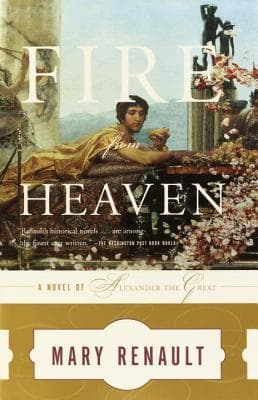
Mary Renault (1969)
Genre
Historical Fiction
Reading Time
9-10 hours
Key Themes
See below
Sign in to track this book
Born into the Macedonian court, young Alexander is shaped by a warring mother and king, a philosopher's wisdom, and a deep bond of love, preparing him to become a legendary world conqueror.
The story begins with young Alexander, son of King Philip II of Macedon and Queen Olympias, watching the wild horse, Bucephalus. Despite the efforts of experienced stable hands and even Philip, the horse remains untamed. Alexander notices the horse's fear of its own shadow. He calmly approaches Bucephalus, turns its head towards the sun so it cannot see its shadow, and speaks gently to it. To his father's and the court's surprise, Alexander mounts the horse and rides it skillfully, earning Philip's admiration and establishing his reputation as a boy of unusual talent. This event shows Alexander's early brilliance and his ability to connect with others.
Alexander's childhood is marked by constant conflict between his parents, Olympias and Philip. Olympias, a devoted and mystical woman, often uses omens and her connection to Dionysus to influence Alexander, subtly turning him against Philip. Philip, a brilliant military strategist and leader, tries to shape Alexander into a Macedonian king through practical training and exposure to court politics. Alexander is caught between his mother's emotional intensity and his father's strength. This parental conflict teaches Alexander early lessons in manipulation, loyalty, and the harsh realities of power, forcing him to navigate a difficult home life.
Alexander's first teachers, Leonidas and Lysimachus, are important in his early development. Leonidas, a stern Spartan relative of Olympias, teaches Alexander discipline, thrift, and physical endurance, often using harsh methods. Lysimachus, a more imaginative teacher, encourages Alexander's love for literature and poetry, especially Homer's *Iliad*. Lysimachus inspires Alexander to identify with Achilles, a hero whose fate influences Alexander's desire for glory and conquest. These early educational experiences build Alexander's physical resilience and spark his intellectual curiosity and ambition, setting the stage for his future conquests.
At thirteen, Alexander goes to Mieza to study with the philosopher Aristotle. With his friends, including Hephaistion, Ptolemy, and Craterus, Alexander studies many subjects: rhetoric, philosophy, ethics, medicine, science, and the arts. Aristotle challenges Alexander's mind, encouraging critical thinking and a scientific approach to the world, while also fostering his appreciation for Greek culture. This period is important for Alexander, broadening his view beyond Macedonian traditions and instilling in him a deep respect for knowledge and excellence. It also strengthens his bond with Hephaistion, who becomes his closest confidant.
During his time with Aristotle, Alexander forms a close and lasting bond with Hephaistion. Hephaistion is a fellow student and Alexander's most loyal and understanding friend. Their relationship is marked by deep affection, mutual respect, and an unspoken understanding beyond mere companionship. Hephaistion provides Alexander with emotional stability, a trusted confidant, and a calm presence amidst the political turmoil and personal pressures that surround Alexander. This friendship becomes a foundation of Alexander's life, offering him comfort and unwavering support.
Alexander's military training progresses quickly. At twelve, he joins his father on campaigns and experiences battle for the first time, killing a man in combat. This early exposure to warfare, under Philip's guidance, sharpens Alexander's military skills and strengthens his resolve. He quickly proves to be a natural leader and a skilled fighter, showing courage and an understanding of tactics and strategy. These experiences establish his reputation as a warrior prince, ready to follow his father and lead the Macedonian army.
At eighteen, Alexander commands the Companion Cavalry at the Battle of Chaeronea against the combined forces of Athens and Thebes. Philip places Alexander on the left flank, facing the elite Sacred Band of Thebes. Alexander shows tactical brilliance and bravery, leading a decisive charge that breaks enemy lines and secures a victory for Macedon. This battle is a turning point, establishing Alexander as a military commander in his own right, not merely his father's son, and showing his leadership on a grand scale.
King Philip's marriage to Cleopatra Eurydice, a young Macedonian noblewoman, and the birth of their son, threaten Olympias and Alexander's position. At the wedding feast, Attalus, Cleopatra's uncle, questions Alexander's legitimacy, asking if he is a 'true' Macedonian heir. Alexander, angry, confronts Philip, leading to a fight where Philip, drunk, lunges at Alexander but falls. This incident creates a serious rift between father and son, and between Philip and Olympias, forcing Alexander and his mother into temporary exile and showing the instability of Alexander's claim to the throne.
After the wedding incident, Alexander, Olympias, and some loyal friends, including Hephaistion, leave Macedon and seek refuge with Olympias's brother, King Alexander I of Epirus. This exile is tense, with Alexander feeling his father's perceived betrayal. However, Philip, recognizing the strategic importance of Alexander's leadership and the need for unity before his planned Persian campaign, eventually seeks reconciliation. Through diplomacy, Alexander returns to Pella, though underlying tensions and mistrust within the royal family remain.
King Philip II is assassinated by Pausanias, a disgruntled former lover and bodyguard, during the wedding celebration of his daughter Cleopatra (not Eurydice) to Alexander I of Epirus. The assassination happens at the theater in Aegae, during a grand procession. Philip's sudden death throws Macedon into chaos. Alexander, with the quick support of loyal generals like Antipater and Parmenion, moves to secure his claim to the throne, eliminating rivals and consolidating his power. At twenty, Alexander becomes King of Macedon, inheriting his father's ambitious plans for the invasion of Persia.
Upon becoming king, Alexander faces immediate challenges to his authority. He quickly eliminates all potential claimants and conspirators, including Amyntas IV (his cousin), and other Macedonian nobles who might challenge his legitimacy. He also deals with the powerful Attalus, uncle of Cleopatra Eurydice, who had previously insulted Alexander. This swift and brutal consolidation of power shows Alexander's ruthlessness and his determination to secure his position as king, ensuring no one could question his right to rule or hinder his ambitions.
Before starting his campaign, Alexander seeks the blessing of the Delphic Oracle. Arriving on a day when the Oracle is forbidden to give prophecies, Alexander, impatient, physically pulls the priestess Pythia to the tripod. Overwhelmed, she exclaims, 'You are invincible, my son!' Alexander accepts this as a divine prophecy, strengthening his belief in his own destiny and his connection to the gods. This event reinforces his conviction that he is not just a king, but a divinely favored leader destined for greatness, a belief that will drive his future conquests.
The Protagonist
Alexander transforms from a precocious prince navigating a treacherous court into a decisive, ruthless, and divinely-inspired king, ready to embark on world conquest.
The Supporting
Olympias remains a constant, powerful, and often destructive influence on Alexander, her character unchanging in her ambition for him.
The Supporting
Philip is a fully formed character whose actions drive much of the early plot, preparing the stage for Alexander's ascent.
The Supporting
Hephaistion develops from a fellow student into Alexander's indispensable emotional anchor and most trusted advisor.
The Supporting
Aristotle serves as a pivotal mentor whose influence is largely established during Alexander's youth, shaping his intellectual foundation.
The Supporting
Bucephalus is a constant, loyal companion, a symbol of Alexander's innate greatness.
The Supporting
Parmenion remains a consistent, loyal military figure, providing a bridge between Philip's reign and Alexander's.
The Mentioned
Attalus is a catalyst for conflict, his actions serving to highlight Alexander's precarious position.
The novel shows Alexander's belief in his divine destiny and connection to the gods. From Olympias's claims of his parentage by a serpent-god to the Delphic Oracle's pronouncement of his invincibility, Alexander is portrayed as someone chosen for greatness. This belief fuels his ambition and gives him unwavering conviction in his mission to conquer the world. His actions often appear to fulfill a preordained path, making his triumphs seem inevitable rather than simply the result of strategic genius.
“You are invincible, my son!”
Alexander's early life is described in detail to show how every interaction and experience contributes to the man he becomes. The fierce rivalry between Olympias and Philip teaches him cunning and the need for loyalty. His teachers, from the Spartan Leonidas to the philosopher Aristotle, shape his physical endurance, intellectual curiosity, and moral framework. Taming Bucephalus and his early battle experiences build his leadership and martial skill. These formative years are presented as essential in developing his character and preparing him for his future role as a world conqueror.
“The child is father of the man.”
The relationships in Alexander's life – especially with his parents and Hephaistion – explore the many sides of love and loyalty. Olympias's fierce, possessive love is mixed with manipulation, while Philip's love is complicated by rivalry and political maneuvering. In contrast, Hephaistion's loyalty and deep affection provide Alexander with emotional stability, a rare source of pure trust. The constant threat of betrayal, seen in court intrigues and Philip's multiple marriages, teaches Alexander to be both charismatic and pragmatic in securing his position.
“Hephaistion was his other self, the one place where Alexander could lay down his burdens and be truly seen.”
Alexander is born into a legacy of military skill and political ambition, mainly from his father, Philip. He constantly feels pressure to live up to, and surpass, his father's achievements. His identification with Achilles from Homer's *Iliad* further fuels his desire for lasting glory. This theme explores how Alexander accepts this expectation, using it as a driving force for his conquests, but also how it creates internal and external conflicts, particularly with Philip, as he tries to make his own place in history.
“Let him seek a kingdom worthy of him, for Macedon is too small to hold him.”
Hints and predictions of future events and Alexander's destiny.
Foreshadowing is extensively used to build anticipation and reinforce the idea of Alexander's preordained greatness. The taming of Bucephalus, Philip's pronouncements about Alexander needing a kingdom 'worthy of him,' and Olympias's mystical visions all hint at Alexander's future conquests and his unique abilities. The prophetic pronouncement by the Delphic Oracle directly foreshadows his 'invincible' nature and his destined triumphs, creating a sense of inevitability around his rise to power.
Contrasting characters highlighting Alexander's traits.
The novel effectively uses character foils to illuminate Alexander's personality and development. Philip II serves as a foil, showcasing Alexander's raw ambition and military genius against his father's established, pragmatic leadership. Hephaistion acts as a foil for Alexander's emotional intensity and impulsiveness, providing a calm, steady counterpoint that highlights Alexander's need for deep connection. These contrasts emphasize Alexander's unique qualities while also revealing his vulnerabilities and reliance on others.
Objects and actions representing deeper meanings.
Symbolism is woven throughout the narrative. Bucephalus is a potent symbol of Alexander's unique connection, his mastery over the untamable, and his innate leadership. Olympias's association with snakes symbolizes her mystical power, cunning, and potentially dangerous nature. The *Iliad* itself symbolizes Alexander's heroic aspirations and his identification with Achilles, fueling his desire for glory (kleos). These symbols deepen the thematic resonance of the story and enrich the characterizations.
Starting the narrative at a critical point in Alexander's youth.
While not strictly *in medias res* in the traditional sense of starting in the middle of an action, the novel begins at a pivotal moment in Alexander's childhood with the taming of Bucephalus. This immediately establishes his extraordinary character and sets the stage for his future. It skips over his infancy to focus on the key formative years that directly lead to his accession, immersing the reader in the crucial experiences that shape the legendary figure.
“The gods do not love a man who is afraid of himself.”
— Philip II of Macedon to young Alexander, urging him to accept his own nature.
“It is not enough to be born a king. One must be made one.”
— Olympias reflecting on the upbringing of Alexander.
“He who would command others must first command himself.”
— Aristotle's teaching to Alexander.
“There are some men who are born to be kings, and some who are made so by their deeds.”
— Reflecting on the difference between inherited and earned leadership.
“Fear is a poor counselor. Hope is a better one.”
— Philip to Alexander before a battle.
“The greatest victories are not won on the battlefield, but in the heart.”
— Alexander grappling with personal conflicts and ambitions.
“A man's worth is measured not by his possessions, but by his spirit.”
— Alexander considering the nature of true wealth.
“To be a leader is to be a servant.”
— Aristotle's lesson on the responsibilities of power.
“The gods give us challenges not to break us, but to show us our strength.”
— Alexander facing a difficult situation.
“Glory is a fleeting thing. Honor is eternal.”
— Philip's advice on the true nature of reputation.
“Even the mightiest oak began as a small acorn. Patience is the key to greatness.”
— Olympias observing Alexander's early development.
“There is no greater knowledge than to know oneself.”
— Aristotle's philosophical teaching to Alexander.
“The future belongs to those who believe in the beauty of their dreams.”
— Alexander's youthful ambition and vision.
“Power is a dangerous weapon, best wielded with wisdom and restraint.”
— Philip reflecting on the burdens of kingship.
Ready to see how well you understood this book? Take our interactive quiz with 10 questions.
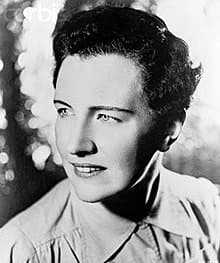
Biography coming soon.







