“You write your first draft with your heart. You rewrite with your head.”
— Forrester advising Jamal on the writing process.

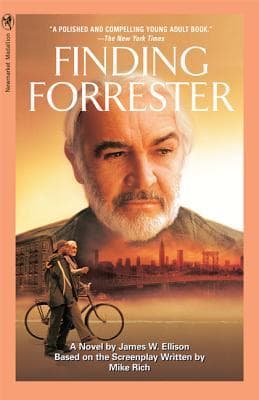
James W. Ellison (2000)
Genre
Young Adult
Reading Time
240 min
Key Themes
See below
Sign in to track this book
A quiet Pulitzer-winning author's four-decade silence ends when a street-smart, basketball-playing prodigy with a hidden talent for writing accidentally enters his life, starting a mentorship that changes them both.
Jamal Wallace, a sixteen-year-old student from the South Bronx, is good at basketball but secretly loves writing. He attends a local public high school where he often gets average grades to avoid standing out. One day, his friends dare him to break into the apartment of William Forrester, a reclusive man known as 'the Window' to neighborhood kids. Jamal enters Forrester's dimly lit apartment. Startled by Forrester's sudden appearance, Jamal runs away, accidentally leaving his backpack. The next day, he finds his backpack returned, but all his writings inside have been critiqued and edited with red pen.
Jamal's high scores on standardized tests, especially in English, combined with his basketball talent, earn him a scholarship to Mailor-Callow, a prestigious Manhattan prep school. He hesitates to leave his friends and familiar surroundings but accepts. On his first day, while in the school library, Jamal sees William Forrester watching him. This second meeting makes Jamal curious, and he confronts Forrester, asking why he edited his writings. This starts their unusual mentorship, as Forrester, a Pulitzer Prize-winning author who disappeared from public life years ago, begins to guide Jamal's writing.
Jamal starts visiting Forrester's apartment regularly for secret writing sessions. Forrester, a gruff and eccentric man, sets rules: Jamal must never speak of their meetings, and he must never ask about Forrester's past or why he stopped writing. In their sessions, Forrester critiques Jamal's writing, pushing him to find his own voice and to 'write the first draft with your heart, then go back and rewrite with your head.' Forrester stresses originality and warns Jamal against plagiarism. He gives Jamal typewriters and books, creating an intense, unconventional learning environment that challenges Jamal more than his new school does.
At Mailor-Callow, Jamal faces challenges beyond schoolwork. He is a star player on the basketball team, but his coach, Coach Crawford, is demanding. His English teacher, Professor Robert Crawford (the coach's brother), initially doubts Jamal's writing talent, suspecting plagiarism due to his sudden improvement. Jamal becomes friends with Claire Spence, a kind classmate, and learns the social rules of the elite school. He constantly switches between his Bronx identity and Mailor-Callow's expectations, all while keeping his writing sessions with Forrester secret from everyone, including his family and new friends.
Professor Crawford assigns an essay for a writing contest. Jamal, inspired by a writing exercise with Forrester, submits a piece that uses some themes and phrases Forrester had used in his own exercises. Unknowingly, it echoes Forrester's Pulitzer-winning novel, 'Avalon Landing.' Professor Crawford, already suspicious of Jamal's writing skill, notices the similarities and accuses Jamal of plagiarism. Jamal is put on academic probation, risking his scholarship and basketball eligibility. He has to choose between revealing his secret mentorship with Forrester or facing expulsion.
Desperate, Jamal tells Forrester about the plagiarism accusation, explaining that his academic future and his place at Mailor-Callow are at risk. He asks Forrester to come forward and confirm their mentorship, clearing his name. However, Forrester, who has not left his apartment or been seen publicly for decades, is very reluctant. He explains that his reclusion comes from the pressure he faced after winning the Pulitzer, and the pain of losing his brother shortly after. He feels guilt and fear about returning to public view, even to help Jamal.
Despite his initial refusal, Forrester eventually changes his mind. He takes a big step by leaving his apartment to attend one of Jamal's important basketball games. His presence, though mostly unnoticed, is a strong show of support for Jamal and a sign that he is starting to overcome his fear of the outside world. This act strengthens their bond and gives Jamal hope that Forrester might help clear his name. It also shows Forrester's growing fatherly feelings for Jamal, recognizing the importance of Jamal's future.
The Mailor-Callow writing contest arrives, and Jamal is expected to read an essay. As part of the plagiarism hearing, Jamal is pressured to apologize publicly, but he refuses. To everyone's surprise, William Forrester walks into the auditorium. He takes the stage, first reading from Jamal's disputed essay. Then he reveals that he himself is the author of 'Avalon Landing,' and that the essay's similarities are due to their shared writing exercises, not plagiarism. He then reads a new, deeply personal essay written by Jamal, 'A Season in Hell,' which moves the audience and clearly shows Jamal's unique voice and talent, clearing his name.
After the dramatic events at Mailor-Callow, Forrester tells Jamal that he has cancer and is near the end of his life. He plans to return to Scotland, his homeland, to live out his remaining days. He thanks Jamal for reigniting his passion for life and writing. Before leaving, Forrester leaves his apartment and all its contents — including his library and unpublished manuscripts — to Jamal. He asks Jamal to keep writing and to eventually publish Forrester's final, unfinished work. This act establishes Jamal as Forrester's literary heir and surrogate son.
Two years later, Jamal is doing well at Mailor-Callow. He is a successful student and athlete, having overcome the plagiarism scandal. He receives a letter from Forrester's lawyer, saying Forrester has passed away in Scotland. The letter also includes Forrester's final manuscript, completed before his death, with a note encouraging Jamal to finish and publish it under his own name, if he chooses. Jamal, now a confident young man, continues to write, inspired by Forrester's mentorship. He has found his own voice and a path forward, shaped by his extraordinary friendship with the reclusive literary legend.
The Protagonist
Jamal transforms from an insecure, closeted writer into a confident young man who embraces his unique talents and finds his voice.
The Supporting/Mentor
Forrester slowly emerges from his decades-long reclusion, finding redemption and a renewed will to live through his mentorship of Jamal.
The Antagonist
Crawford remains largely static, representing the narrow-mindedness and prejudice that Jamal must overcome.
The Supporting
Claire's arc is less about personal transformation and more about her steadfast support for Jamal.
The Supporting
Terrell provides consistent brotherly support, remaining a stable figure in Jamal's life.
The Supporting
Coach Crawford's arc is limited to his role in pushing Jamal's athletic development.
The Supporting
Dr. Spence's role is to provide a voice of reason and authority during Jamal's crisis.
The Mentioned
Her role is to provide a stable, loving home environment for Jamal.
The film explores how mentorship can change lives through the relationship between Jamal and Forrester. Forrester, a reclusive literary genius, sees Jamal's talent and provides the guidance and challenges Jamal needs to develop his unique writing voice. This theme is central to the story, as Forrester's influence directly leads to Jamal's growth and eventual exoneration. Their bond shows how a mentor can teach skills, build confidence, and help a student navigate life's problems, as seen when Forrester leaves his reclusion to defend Jamal.
“You write your first draft with your heart. You rewrite with your head.”
Jamal's story is about finding himself. He deals with many identities: the basketball star, the quiet intellectual from the Bronx, and the aspiring writer at an elite prep school. He first hides his writing talent to fit in, but Forrester's mentorship pushes him to be true to himself. The plagiarism accusation forces him to publicly defend his identity as a writer. By the end, Jamal combines these different parts of himself, learning to be authentic and confident in his intellectual and creative abilities, rather than conforming to others' expectations or hiding his gifts.
“The hardest thing to do is to write something that is true.”
The film addresses prejudice and stereotypes Jamal faces as a talented African-American student from the Bronx attending an elite, mostly white school. Professor Crawford's quick suspicion of Jamal's writing, despite his high test scores, shows implicit bias. The assumption that a student like Jamal could not produce such sophisticated work without cheating highlights societal stereotypes about race and class. Jamal constantly has to prove himself against these ideas, both in school and socially, making his eventual victory against the plagiarism charge a win over prejudice.
“What's the difference between a good writer and a bad writer? The bad writer is afraid to look like a fool.”
Both Jamal and Forrester struggle with fear. Jamal initially fears standing out and the scrutiny that comes with success, causing him to deliberately underperform in school. Forrester, on the other hand, fears public attention and the pressures that came with his Pulitzer Prize, leading to his decades-long reclusion after a personal tragedy. Their relationship helps each overcome their fears: Jamal learns to use his talent, and Forrester finds the courage to re-enter the world, even briefly, to defend his student. The film suggests that real growth often comes from facing these fears.
“He who writes for himself has a fool for a reader.”
The film celebrates writing and the creative process. Forrester teaches Jamal not just technique, but how to find one's voice, write from the heart, and the discipline of revision. He emphasizes originality, authenticity, and overcoming writer's block. The film shows writing as a powerful tool for self-expression, connection, and even vindication, as Jamal's final essay ultimately proves his talent and clears his name. It makes the creative process understandable while showing its impact.
“No thinking - that comes later. You must write your first draft with your heart, not your head. You can't think and write at the same time.”
Forrester's mysterious seclusion creates intrigue and a unique mentorship dynamic.
William Forrester's self-imposed reclusion is a central plot device. It establishes him as an enigmatic figure, drawing Jamal's initial curiosity and setting the stage for their secret mentorship. His isolation highlights the film's themes of overcoming fear and the burden of fame, and it creates the dramatic tension when Jamal needs him to come forward. Forrester's apartment, filled with books and typewriters, becomes a sanctuary and a symbol of intellectual pursuit, inaccessible to the outside world, mirroring his own withdrawal.
A major conflict that forces Jamal to confront his fears and Forrester to break his reclusion.
The accusation of plagiarism serves as the primary external conflict driving the plot. It jeopardizes Jamal's future, forcing him to choose between protecting Forrester's secret and clearing his own name. This device highlights themes of prejudice, academic integrity, and the difficult choices faced when loyalty conflicts with self-preservation. Crucially, it acts as the catalyst for Forrester's eventual public appearance, forcing him to overcome his deepest fears for Jamal's sake, thus bringing their mentorship to its emotional climax.
Symbolic objects initiating the mentorship and representing critical guidance.
Jamal's backpack, accidentally left in Forrester's apartment, is the inciting incident that begins their relationship. The red pen marks and critiques inside the backpack symbolize Forrester's initial, anonymous guidance and his discerning eye. Later, the red pen becomes a tool of their direct mentorship, representing the rigorous but ultimately beneficial process of revision and critical feedback. These objects underscore the accidental yet fated nature of their meeting and the direct, hands-on approach of Forrester's teaching.
A symbolic nickname for Forrester, representing his observational nature and eventual connection to the world.
Forrester's neighborhood nickname, 'the Window,' initially refers to his habit of observing the world from his apartment without being part of it. It symbolizes his reclusive nature and his role as a detached observer. As his relationship with Jamal develops, the 'window' takes on a new meaning: it's through Jamal that Forrester begins to reconnect with the outside world and eventually 'opens' himself up. The window, initially a barrier, ultimately becomes a metaphor for his gradual re-engagement and the perspective he offers Jamal.
“You write your first draft with your heart. You rewrite with your head.”
— Forrester advising Jamal on the writing process.
“The key to a woman's heart is an unexpected gift at an unexpected time.”
— Forrester giving romantic advice to Jamal.
“Punch the keys, for God's sake!”
— Forrester urging Jamal to write freely without overthinking.
“You're the man now, dog!”
— Forrester's quirky encouragement to Jamal.
“Why is it the words we write for ourselves are always so much better than the words we write for others?”
— Forrester reflecting on authenticity in writing.
“Sometimes the simple things are the most extraordinary.”
— Forrester appreciating life's small moments.
“You must write to your own drummer.”
— Forrester advising Jamal to find his unique voice.
“We walk away from our dreams afraid that we may fail or worse yet, afraid we may succeed.”
— Forrester discussing fears that hold people back.
“The rest of the world might not see it, but I do.”
— Forrester recognizing Jamal's potential.
“You have a gift, but you also have a responsibility.”
— Forrester reminding Jamal of his duties as a writer.
“Writers write. That's what we do.”
— Forrester emphasizing the discipline of writing.
“It's not about where you're from, it's about where you're going.”
— Forrester encouraging Jamal to look forward.
“The first step to writing is reading.”
— Forrester stressing the importance of reading for writers.
Ready to see how well you understood this book? Take our interactive quiz with 10 questions.