“It wasn't a dream, not really. It was more like an echo of something that had already happened, a memory I couldn't quite grasp.”
— Main character, Mary Rose, reflecting on unsettling feelings and fragmented recollections.

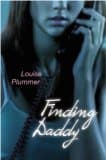
Louise Plummer (2007)
Genre
Thriller / Mystery / Young Adult
Reading Time
176 min
Key Themes
See below
Sign in to track this book
With only a faded photograph and her mother's vague answers, a determined teen sets out to find the truth about the father she's never known, even if it means uncovering a past her mother wants to keep hidden.
Mira Kent is a thoughtful, somewhat quiet teenager about to turn sixteen. She lives with her mother, who has always avoided talking about Mira's father. Her mother only offers vague compliments about his 'good qualities' and insists he chose to stay out of their lives after the divorce for everyone's sake. Mira, however, wants to know him. Her only link is a faded photograph of a man she doesn't remember. This longing shows in imaginary letters she writes to him, expressing her desire for a connection, detailing her life, and quietly questioning her mother's story about his absence. She is determined to find him, despite the lack of information.
Mira tells her boyfriend, Dylan, that she wants to find her father. Dylan is supportive and understanding, offering comfort as Mira deals with her mother's secrecy. With little more than the photograph and her father's name, David Kent, Mira starts her search. Her first attempts are clumsy, involving searching phone books and asking discreet questions, but she quickly realizes how hard her task is with so few details. Her mother's continued silence only makes Mira more determined, making her feel that a significant secret is being kept from her.
Driven by her growing suspicion, Mira begins to discreetly search her mother's belongings. She finds a shoebox filled with old letters, photographs, and legal documents. These items show a very different picture than the one her mother has presented. The letters, some from her father, reveal a troubled relationship, not just a simple, friendly divorce. There are hints of arguments, financial problems, and a sense of desperation from both parents. This discovery both excites and frightens Mira, as the idealized image of her father begins to break apart, replaced by a more complicated, human figure.
Among the documents, Mira finds receipts, betting stubs, and correspondence that strongly suggest her father, David Kent, was involved in professional gambling. This revelation is a shock. It explains her mother's financial struggles mentioned in the letters and clarifies the 'good qualities' her mother vaguely referenced – perhaps his charm or risk-taking nature. This new information gives her a more concrete direction for her search, as professional gamblers often frequent specific places or have networks. However, it also adds a darker, more uncertain aspect to her father's character, raising questions about his reliability and potential dangers.
With the knowledge of her father's gambling past, Mira starts visiting local casinos and card rooms, places she wouldn't normally go. She shows his photograph to employees and patrons, asking if anyone recognizes him. This part of her search is uncomfortable and sometimes met with hostility, as some people are suspicious of her motives. She meets people who won't talk or who give her vague, unhelpful information. Despite the setbacks and the increasingly seedy environments she finds herself in, Mira stays determined, driven by the desire to put together the puzzle of her father's life and understand why he disappeared.
Mira's persistent questions eventually lead her to a man named 'Slick,' a former associate of her father's. Slick is initially evasive but eventually warns Mira to stop looking, suggesting her father was involved in dangerous activities and that continuing her search could put her at risk. He tells her that David owed money to dangerous people. This encounter is a turning point. Mira realizes her quest is not just about finding a loving father, but possibly uncovering a dangerous past. The excitement of discovery is now mixed with a clear sense of fear, making her question the true cost of finding the truth.
Through Slick's reluctant admissions and further digging into old newspaper archives and police reports, Mira uncovers the shocking truth: her father, David Kent, did not simply abandon them. He faked his own death to escape significant gambling debts and the dangerous individuals he owed money to. He staged a disappearance, leaving behind a carefully crafted trail to suggest he had died, which allowed him to start a new life under a different identity. This revelation is a deep betrayal, not just of her and her mother, but of the very idea of family and responsibility.
Devastated and angry, Mira confronts her mother with all the evidence she has painstakingly gathered. Her mother, no longer able to keep up the pretense, finally breaks down and confesses. She admits that she knew about David's gambling problems and the faked death. She explains that she went along with the charade to protect Mira from the dangerous people David was involved with, and to give them both a chance at a normal, safe life, free from his destructive influence. The confession is heartbreaking for both of them, revealing the depth of her mother's sacrifice and the heavy burden of the secret she carried for years.
The truth about her father's deception leaves Mira reeling. The idealized image of a lost, loving father is shattered, replaced by the reality of a flawed, selfish man who put his own escape before his family. She feels a deep sense of loss, not for the father she thought she knew, but for the father she wished she had. With Dylan's unwavering support and her mother's now honest communication, Mira slowly begins to process this painful revelation. She understands her mother's desperate actions, even if she struggles to forgive her father's.
After the revelations, Mira's relationship with her mother is strained but ultimately made stronger by honesty. She starts to see her mother not just as a protector, but as a survivor who made impossible choices under immense pressure. Her bond with Dylan deepens as he continues to be her steady confidant. Mira realizes that the 'daddy' she was searching for was an illusion, but the family she has – her mother and Dylan – is real and resilient. She begins to understand that family isn't always about blood, but about love, honesty, and lasting support, even through the most painful truths.
The Protagonist
Mira transforms from an innocent, yearning girl into a more mature and resilient young woman, accepting painful truths and redefining her understanding of family.
The Supporting
She moves from a state of guarded secrecy to one of painful honesty, ultimately strengthening her bond with Mira through vulnerability.
The Antagonist/Mentioned
His character is revealed retrospectively, shattering Mira's idealized image of him and exposing his true, flawed nature.
The Supporting
He remains a consistent source of support, solidifying his role as a reliable and loving partner.
The Supporting
He serves as a reluctant messenger, pushing Mira closer to the truth while also warning her of the inherent dangers.
Mira's search for her father is a search for her own identity and belonging. She believes understanding her father will help her understand herself. His absence creates a void she tries to fill by imagining an ideal version of him. When the truth comes out, her identity is challenged, forcing her to redefine who she is in relation to a flawed parent. This theme appears in her imaginary letters, "Daddy, darling, where are you? I need you in my life," and her eventual acceptance of a different kind of family and self-worth.
“I'll look until I find you.”
The novel is built on layers of secrets and deception, mainly the one Mira's mother keeps about her father's true fate. This theme explores how hidden truths affect individuals and relationships. The mother's deception, though meant to protect, causes a rift and mistrust with Mira. David Kent's ultimate deception – faking his own death – is the deepest betrayal, showing the destructive power of lies. The slow uncovering of these secrets drives the plot and makes characters face difficult realities, as seen when Mira confronts her mother with the hidden box of documents.
“Mom says you both made the decision during the divorce that you wouldn't be part of my life. It was easier, she says. It hasn't been easier for me.”
The book questions traditional ideas of family. Initially, Mira idealizes the two-parent family structure she lacks. As she uncovers her father's true character, she must face the idea that biological ties don't always mean love or responsibility. Her understanding of family shifts to include the steady support of her mother and boyfriend, Dylan. This theme is explored through the painful realization that her biological father betrayed her, while her mother, despite her secrets, acted out of love, and Dylan provides loyal support. The novel suggests that true family is defined by honesty, love, and support, not just blood.
“It was easier, she says. It hasn't been easier for me.”
Mira's journey is a coming-of-age story marked by deep disillusionment. Her sixteenth birthday acts as a symbolic entry into adulthood, where she loses her childlike innocence and faces the harsh complexities of the adult world. She moves from an idealized fantasy of her father to a painful understanding of his flaws and betrayals. This process forces her to mature quickly, deal with difficult emotions, and develop a more realistic, though less comforting, view of the world and its people. Her encounter with 'Slick' and the final truth are key moments in this transition.
“Daddy, darling, where are you? I need you in my life. Aren't you curious about me?”
Mira's private way of communicating with her absent father.
The imaginary letters Mira writes to her father serve multiple functions. They provide insight into her inner thoughts, feelings, and the depth of her longing. They also act as a narrative device to reveal initial plot points, such as her age and the existence of her boyfriend, Dylan. Crucially, they highlight the emotional void left by her father and establish her driving motivation for the search, setting the stage for the entire mystery.
A physical repository of secrets and clues.
The shoebox discovered by Mira, filled with old letters, photographs, and legal documents, is a classic MacGuffin and a powerful symbol. It represents the buried past and the secrets her mother has kept. Its discovery is the catalyst that moves Mira's search from vague longing to concrete investigation, providing the crucial clues that lead her towards the truth about her father's gambling and eventual disappearance. It directly unravels the protective narrative her mother had constructed.
The only tangible link to Mira's father, serving as both a clue and a symbol.
The faded photograph of her father is Mira's sole physical connection to him. It acts as a primary clue she uses to identify him during her search, but also symbolizes the elusive and incomplete nature of her knowledge about him. It represents the idealized image she holds, which is eventually shattered by the truth. The photograph's faded quality also subtly hints at the passage of time and the deteriorating truth.
A protective barrier that creates suspense and drives Mira's investigation.
Her mother's consistent evasiveness and refusal to discuss Mira's father acts as a significant plot device. It creates initial mystery and suspense, fueling Mira's determination to uncover the truth. This secrecy is a source of conflict between mother and daughter, pushing Mira to take matters into her own hands. Ultimately, the mother's secret is revealed to be a protective measure, adding complexity to her character and the moral dilemmas within the narrative.
“It wasn't a dream, not really. It was more like an echo of something that had already happened, a memory I couldn't quite grasp.”
— Main character, Mary Rose, reflecting on unsettling feelings and fragmented recollections.
“The house felt different when she wasn't there, like a silent, empty stage waiting for the play to begin again.”
— Mary Rose observing the atmosphere of her home when her mother is absent.
“Sometimes I felt like I was living in a story where I was the only one who didn't know the ending.”
— Mary Rose's growing sense of being manipulated or kept in the dark.
“Secrets are like shadows. The harder you try to outrun them, the longer they get.”
— A character's philosophical observation about the nature of hidden truths.
“He had a way of looking at you that made you feel like you were the only person in the world, and also, somehow, completely transparent.”
— Mary Rose describing an unsettling quality of a male character.
“The truth isn't always pretty, but it's always necessary.”
— A character urging Mary Rose to confront difficult realities.
“Fear has a smell, I think. A metallic, sharp scent that clings to everything.”
— Mary Rose's sensory description of a moment of intense fear.
“Every family has its ghost, whether they admit it or not.”
— A comment made about the hidden burdens and histories within families.
“I was looking for a father, but I found a puzzle.”
— Mary Rose's realization about the complexity of her quest.
“The world keeps turning, even when your own world feels like it's stopped dead.”
— Mary Rose's internal reflection on the contrast between her personal crisis and external reality.
“You can't choose your past, but you can choose what you do with it.”
— A piece of advice given to Mary Rose about moving forward.
“The silence in the room was louder than any scream.”
— Describing a moment of intense unspoken tension or shock.
“Sometimes the safest place is the one you're most afraid to look.”
— A character hinting that the answers lie in confronting the terrifying truth.
“I learned that day that some monsters don't live under your bed; they live inside people.”
— Mary Rose's profound realization about the nature of evil and human darkness.
Ready to see how well you understood this book? Take our interactive quiz with 10 questions.







