“The first rule of Fight Club is: you do not talk about Fight Club.”
— The narrator introduces the central rule of the secret society.

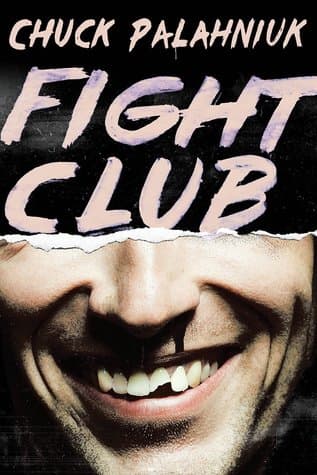
Chuck Palahniuk (1996)
Genre
Thriller / Mystery
Reading Time
240 min
Key Themes
See below
Sign in to track this book
An insomniac office worker, an anarchist, and a fight club come together in a look at consumerism, masculinity, and the search for identity in a modern world.
The unnamed narrator has an unsatisfying job as a recall coordinator for a car company and cannot sleep. He blames this on feeling trapped in a materialistic life. Doctors offer no help, so he starts attending support groups for terminal illnesses like cancer. He finds that seeing real suffering and sharing emotions with others allows him to cry and then sleep. This works until Marla Singer, a woman who is also faking illness, starts attending the same groups, stopping his emotional release and bringing back his sleeplessness.
On a business trip, the narrator meets Tyler Durden, a soap salesman, on a plane. They find common ground in their dislike for modern society. Soon after returning home, the narrator's apartment, filled with IKEA items, explodes due to a suspected gas leak. With nowhere to go, he calls Tyler, who lets him stay at his run-down house on Paper Street. This event makes the narrator get rid of his belongings and live a more chaotic life under Tyler's influence.
Outside a bar, after drinking, Tyler Durden asks the narrator to hit him. The narrator agrees, and they have a street fight. This experience becomes a ritual, and soon, other men gather in the bar's basement to watch or join in these fights. They set rules for 'Fight Club,' the first rule being 'You do not talk about Fight Club,' and the second rule being 'You DO NOT talk about Fight Club.' The club quickly gets many followers, giving men an escape from their consumerist lives.
Marla Singer, the support group faker, reappears in the narrator's life, moving into the Paper Street house. To the narrator's discomfort, she and Tyler start a sexual relationship, often having loud encounters next to his room. Tyler makes the narrator promise not to talk to Marla about him. Marla's presence creates an awkward situation and shows the narrator's growing reliance on Tyler, as he feels ignored by his friend, especially when Marla is around.
Tyler's plans grow beyond just fighting. He starts recruiting members from Fight Club for a more organized, destructive group called 'Project Mayhem.' The new recruits, called 'space monkeys,' move into the Paper Street house and undergo strict, often humiliating, training. Project Mayhem's actions go from small acts of vandalism against corporate art to more serious sabotage targeting symbols of consumerism and corporate power. The narrator becomes more worried by Tyler's extreme actions and loss of control.
As Project Mayhem expands, its operations become more violent and widespread, with groups forming in different cities. The narrator sees Tyler's increasing control over the 'space monkeys' and their loyalty. He witnesses disturbing acts, like the destruction of a coffee shop and the making of homemade explosives. He also notices Tyler's frequent disappearances, often returning with new plans and recruits. The narrator feels alienated and powerless, realizing that Tyler is leading a movement far beyond what he first imagined, and he fears the consequences of their actions.
Tyler Durden suddenly disappears, leaving the narrator to manage Project Mayhem, which is out of control. The narrator tries to find Tyler, following clues across different cities and meeting members of Project Mayhem who believe he is Tyler. During a talk with Marla Singer, she reveals that whenever she talked to Tyler, he would call the narrator by his name, suggesting a close link. This, along with his own memory gaps and the 'space monkeys' mistaking him for Tyler, makes the narrator face the truth: he and Tyler Durden are the same person, a split personality.
The narrator puts together Tyler's plan: to use the explosives made by Project Mayhem to destroy several skyscrapers that house major credit card companies. Tyler believes this will erase all debt, resetting modern civilization. The narrator, horrified by the plan, realizes he must stop Tyler, who is currently in control of his body during his 'blackouts.' He understands that Tyler has been using his body to plan Project Mayhem and that the destruction is about to happen.
The narrator rushes to the tallest of the targeted credit card buildings, where he finds Tyler setting up the last explosives. A struggle happens between the narrator's mind and Tyler's personality. Tyler says that the narrator is a 'host' and that Tyler will soon become the main personality permanently. In a desperate attempt to stop Tyler and Project Mayhem, the narrator puts a gun in his mouth. Tyler tries to stop him, but the narrator pulls the trigger, shooting himself through the cheek. This act, however, only kills the Tyler personality.
Even after shooting himself, the narrator lives. The bullet, passing through his cheek, does not kill him, but it removes Tyler's personality. He wakes up in what he thinks is heaven, but is actually a mental institution. Outside, the credit card buildings explode as planned, a success for Project Mayhem. The 'space monkeys' enter the institution, believing the narrator is Tyler. They tell him they are waiting for Tyler's return and that they have 'big plans' for him, leaving the narrator in a state of mixed triumph and terrifying uncertainty, stuck in the world Tyler created.
The Protagonist
From a passive, consumer-driven drone to a self-aware individual who fights for control against his destructive alter ego.
The Antagonist/Alter Ego
Evolving from a liberating fantasy to a destructive force that threatens to consume the narrator entirely.
The Supporting
From an irritating stranger to a witness and survivor of the narrator's psychological breakdown.
The Supporting
From a suffering support group member to a loyal 'space monkey' who tragically dies for the cause.
The Supporting
From an eager recruit to a disfigured, unquestioning follower of Project Mayhem.
The Mentioned
Static, serving as a brief point of contact with law enforcement.
The Mentioned
Static, her death serves as a symbolic turning point for the narrator's support group attendance.
The main theme is about the narrator's split identity and his self-destruction as a way to find himself. His creation of Tyler Durden is an attempt to escape his ordinary, consumerist life and find a more real self. However, this pursuit quickly turns into self-destruction, as Tyler's nihilistic ideas lead to violence and chaos. The narrator's act of shooting himself to kill Tyler is a desperate attempt to get back his single identity, even if it means destroying a part of himself.
“It's only after we've lost everything that we're free to do anything.”
The book strongly criticizes modern consumer culture and how it makes people feel alone. The narrator's early life is defined by his IKEA furniture and possessions, which offer no real satisfaction or connection. Tyler Durden appears as a radical rejection of this, advocating for the destruction of consumer symbols and a more primal, anti-materialistic life. Fight Club and Project Mayhem are direct responses to the feeling of being less masculine and meaningless that consumerism creates, offering a violent option to the sterile comfort of modern life.
“You are not your job, you're not how much money you have in the bank. You're not the car you drive. You're not the contents of your wallet. You're not your fucking khakis.”
Fight Club looks at the challenges for men in society, where they feel less masculine due to corporate jobs, consumer culture, and a lack of real struggle. The fights are a return to a more basic form of masculinity, allowing men to feel pain, show dominance, and connect physically. Tyler Durden supports this aggressive masculinity, rejecting the 'domestication' of men. The theme questions what it means to be a man in a world that no longer needs traditional masculine roles, suggesting that suppressed urges can appear in destructive ways.
“We're a generation of men raised by women. I'm wondering if another woman is really the answer we need.”
Tyler Durden's ideas are rooted in anarchy and nihilism, supporting the complete breakdown of social structures and the rejection of all established values. Project Mayhem's actions, from vandalism to blowing up buildings, are meant to create chaos and 'reset' civilization. This theme explores how appealing nihilism can be for those who feel powerless and unhappy, offering a radical solution to perceived societal decay. However, the story also shows the dangerous, destructive results of such an idea when taken too far, as the narrator tries to control the monster he helped create.
“The first step to eternal life is you have to die.”
The story is told from the perspective of a character whose mental state distorts reality.
The narrator's account of events is inherently unreliable due to his chronic insomnia, mental instability, and ultimately, his dissociative identity disorder. He frequently experiences blackouts and memory lapses, which are later revealed to be periods when Tyler Durden is in control. This device creates suspense and mystery, as the reader is gradually led to question the reality of the events and characters presented, culminating in the shocking revelation that Tyler is not a separate person. The unreliable narration forces the reader to re-evaluate everything they thought they knew about the story.
The psychological condition driving the central conflict between the narrator and Tyler.
DID is the core plot device that underpins the entire narrative. The narrator, suffering from extreme alienation and a desire to escape his life, unconsciously creates Tyler Durden as a separate, more capable, and aggressive personality. This allows him to enact destructive fantasies and form Fight Club and Project Mayhem without conscious guilt. The gradual revelation of DID is the main twist of the novel, explaining the narrator's blackouts, Tyler's mysterious disappearances, and the 'space monkeys' mistaking the narrator for Tyler. It externalizes the internal conflict of self-destruction and rebellion.
Physical fighting as a symbol for inner struggle and societal rebellion.
The act of fighting in Fight Club serves as a powerful metaphor on multiple levels. On a personal level, it represents the narrator's internal struggle with his own repressed anger and desire for authenticity. For the men of Fight Club, it's a way to feel alive, to connect, and to reclaim a sense of primal masculinity in a world that has emasculated them. On a societal level, the fights symbolize a rebellion against the sterile, consumerist, and emotionally detached modern world. The pain and violence are seen as necessary catalysts for self-awareness and liberation.
Specific brand names and consumer goods are used as symbols of materialism and conformity.
Palahniuk frequently mentions specific consumer brands, particularly IKEA, to highlight the narrator's initial entrapment in a materialistic lifestyle. The narrator's apartment is described in excruciating detail through the lens of an IKEA catalogue, emphasizing how his identity is defined by his possessions. Tyler's disdain for these brands and his encouragement to destroy them serve as a direct critique of consumerism. These brands become symbols of false comfort, conformity, and the superficiality that Fight Club and Project Mayhem aim to dismantle, making the critique of capitalism concrete and relatable.
“The first rule of Fight Club is: you do not talk about Fight Club.”
— The narrator introduces the central rule of the secret society.
“The second rule of Fight Club is: you do not talk about Fight Club.”
— Reinforcing the absolute secrecy required by the club.
“It's only after we've lost everything that we're free to do anything.”
— Tyler Durden explains his philosophy of liberation through destruction.
“You are not your job, you're not how much money you have in the bank. You are not the car you drive. You're not the contents of your wallet.”
— Tyler challenges the narrator's materialistic identity.
“We're the middle children of history, man. No purpose or place. We have no Great War. No Great Depression. Our Great War's a spiritual war... our Great Depression is our lives.”
— Tyler critiques modern existential emptiness and lack of purpose.
“This is your life, and it's ending one minute at a time.”
— The narrator reflects on mortality and the passage of time.
“I am Jack's smirking revenge.”
— From the narrator's internal monologue referencing a parody of self-help articles.
“The things you own end up owning you.”
— Tyler warns about the trap of consumerism and materialism.
“You have to consider the possibility that God does not like you. He never wanted you. In all probability, he hates you.”
— Tyler expresses a nihilistic view of divine indifference or hostility.
“Sticking feathers up your butt does not make you a chicken.”
— Tyler uses a crude analogy to criticize superficial attempts at change.
“It's amazing how mature you can be when you're not afraid of dying.”
— The narrator reflects on the clarity gained from facing mortality.
“We are consumers. We are by-products of a lifestyle obsession.”
— The narrator critiques modern society's focus on consumption.
“You are not a beautiful and unique snowflake. You are the same decaying organic matter as everyone else, and we are all part of the same compost pile.”
— Tyler dismisses notions of specialness to emphasize shared mortality.
“I felt like destroying something beautiful.”
— The narrator expresses a desire for chaos and destruction.
“On a long enough timeline, the survival rate for everyone drops to zero.”
— The narrator comments on the inevitability of death.
Ready to see how well you understood this book? Take our interactive quiz with 10 questions.
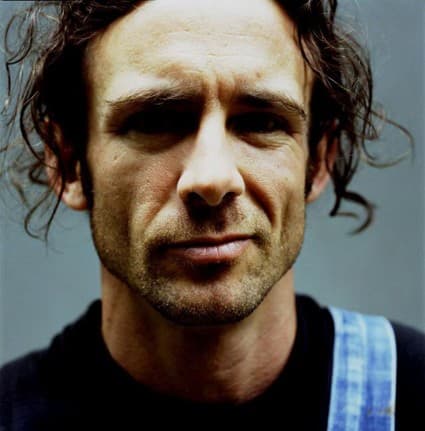
Chuck Palahniuk is a highly influential contemporary author, best known for his debut novel "Fight Club." His works, including "Haunted" and "Guts," are characterized by their transgressive themes, dark humor, and often shocking narratives. Palahniuk's distinctive style has earned him a significant cult following and cemented his reputation as a master of postmodern fiction.







