“The only difference between a hero and a villain is who tells the story.”
— Tyler Durden's philosophical musings on morality and narrative.

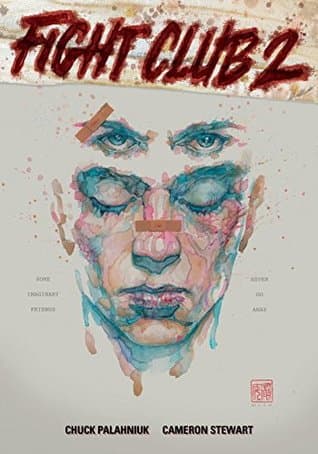
Chuck Palahniuk (2016)
Genre
Thriller / Fantasy
Reading Time
150 min
Key Themes
See below
Sign in to track this book
Ten years after Project Mayhem, a domesticated Tyler Durden grapples with a wife who's resurrected his destructive alter-ego, forcing him to fight not just for his sanity, but for the future of his family and the world.
Ten years after *Fight Club*, the Narrator, now Sebastian, lives a suburban life with Marla Singer and their nine-year-old son, Junior. Sebastian works a dead-end job, takes medication to manage his anxiety and suppress Tyler Durden, and attends a support group for people with Progeria, where he makes up stories about his son's condition. Marla, frustrated by Sebastian's passivity and the lack of excitement in their marriage, replaces his pills with placebos, hoping to bring back the dangerous spark she once loved. This act allows Tyler to return, as Sebastian's peace begins to unravel under Marla's manipulation.
Marla's placebo swap works, and Tyler Durden appears more often, disrupting Sebastian's mundane life. Tyler, now more dangerous, takes control, leading Sebastian's support group members into violent acts and restarting Project Mayhem. Tyler, in Sebastian's body, kidnaps Junior. This abduction is a calculated move, as Project Mayhem has become a global terror network, and Junior's disappearance is part of Tyler's plan to indoctrinate him into this new, extreme organization. Sebastian realizes the extent of Tyler's return and the danger to his son.
Devastated by Junior's abduction and seeing Sebastian controlled by Tyler, Marla Singer acts. She forms an alliance with the support group members Tyler had manipulated. This group of terminally ill individuals shows resilience and a desire for revenge against Tyler. Marla and her team, calling themselves the 'Fight Club' survivors, track Tyler and Junior globally. Their journey shows the vast network of Project Mayhem, which has expanded beyond its original scope, suggesting a deeper conspiracy and Tyler's global influence.
As Sebastian occasionally regains consciousness from Tyler's control, he learns about Project Mayhem's changes. Tyler has rewritten the rules, changing it from a domestic anti-consumerist movement into a global, generational cult focused on 'creative destruction' and reordering society. Sebastian discovers that Project Mayhem now recruits and indoctrinates children, including Junior, to become the next generation of 'space monkeys.' The new rules emphasize legacy, global reach, and a nihilistic approach to societal collapse, revealing Tyler's goal of creating a self-sustaining, worldwide anarchist movement that outlasts him. Sebastian is horrified by Tyler's ambition and his son's involvement.
A meta-narrative element enters with Chuck Palahniuk, the author, appearing as a character. Palahniuk hosts a writers' workshop, where he critiques his characters and interacts with the story. This fourth-wall break highlights the constructed nature of the narrative and suggests that the characters know they are fictional. Palahniuk's intervention is not just stylistic; he influences the plot, often to the characters' frustration, by revealing plot points or commenting on their choices. This meta-commentary adds irony and self-awareness, challenging the reader's perception of reality within the story.
Sebastian begins to uncover the truth about Tyler Durden's origin. Tyler is not just a figment of Sebastian's imagination but a recurring personality, a 'germ line' or ancestral memory, passed down through generations of his family. This explains why Tyler is so strong and hard to remove, as he represents a primal, destructive urge inherited from Sebastian's ancestors. This 'germ line' appears whenever a male in the family faces extreme societal pressure or personal emasculation, offering a violent, anarchic solution. This hereditary aspect deepens Sebastian's understanding of his identity and his connection to Tyler, making the struggle an intergenerational battle.
With knowledge of Tyler's 'germ line' origin, Sebastian and Marla, along with their Project Mayhem survivors, plan to stop Tyler and rescue Junior. Their strategy involves using Tyler's reliance on this ancestral memory and the triggers that allow him to appear. They aim to confront Tyler at a critical moment, hoping to break the generational link or neutralize the conditions that allow him to thrive. This plan is dangerous, as Tyler has anticipated many of their moves, and his global network gives him immense power. The climax of their efforts brings them closer to Tyler's inner circle and his new Project Mayhem operations.
The narrative ends with a tense confrontation between Sebastian, Marla, and Tyler. Junior, exposed to Tyler's ideology, is a pawn in their struggle. Sebastian, using insights about the 'germ line,' tries to reason with Tyler and appeal to Junior's goodness. Junior, caught between Tyler's Project Mayhem and his parents' love, faces a choice about his identity and future. The confrontation is not just physical but psychological, as Sebastian tries to reclaim his son's mind from Tyler's influence, leading to a dramatic resolution that challenges identity and free will within the story.
As the story goes on, the meta-narrative elements become more prominent and disruptive. Chuck Palahniuk, the author, appears more often, talking directly with the characters and acknowledging the readers. This constant breaking of the fourth wall creates instability, making the audience question what is 'real' within the comic's universe. Palahniuk's interventions are often humorous but also highlight themes of authorship, control, and the power of narrative. The characters express frustration with their creator, suggesting a struggle for agency against their writer, blurring the lines between the fictional world and the creative process.
After the confrontation, the immediate threat of Tyler and Project Mayhem seems contained, and Junior is safe. However, the ending of *Fight Club 2* leaves a sense of unease and suggests that the cycle of Tyler Durden may be an inescapable, generational phenomenon. Despite Sebastian's efforts to reclaim his identity and protect his family, subtle hints and questions imply that the 'germ line' is still active, or that the destructive impulse Tyler represents will find another host or way to appear. The narrative avoids a definitive happy ending, instead suggesting that the fight against Tyler is an ongoing, perhaps eternal, struggle that goes beyond individual lives and specific timelines, leaving the reader with a sense of cyclical despair.
The Protagonist
Sebastian evolves from a medicated, passive shell to a man actively fighting for his son and identity, confronting the generational roots of Tyler Durden.
The Supporting
Marla moves from a catalyst for chaos to a determined, resourceful mother fighting to reclaim her family from the very chaos she helped unleash.
The Antagonist
Tyler's character arc reinforces his role as an eternal, generational force of destruction, solidifying his status as an inescapable antagonist.
The Supporting
Junior is initially a victim, but by the end, he is forced to make a choice that defines his nascent identity and potential future alignment.
The Mentioned
Palahniuk's arc is less about personal development and more about exploring the nature of authorship and meta-narrative, his influence growing throughout the story.
The Supporting
They transform from passive victims of Tyler's manipulation to active, vengeful participants in the fight against him.
The Supporting
Chloe's arc is primarily to demonstrate the unwavering devotion and fanaticism of Tyler's new Project Mayhem followers.
The book looks at the human desire between societal rebellion and the comfort of conformity. Sebastian's medicated suburban life is conformity, while Tyler Durden is rebellion. Marla's frustration with Sebastian's passivity and her role in bringing Tyler back show the human need for excitement and meaning, even if it is destructive. The cyclical nature of Tyler's return, especially through the 'germ line' concept, suggests that this struggle is not just personal but an ongoing societal pattern, where each generation might create its own 'Tyler Durden' in response to perceived societal emasculation or stagnation.
“Maybe you weren't trying to destroy the world, Tyler. Maybe you were trying to save it.”
Central to *Fight Club 2* is the look at identity, especially through multiple personalities and the meta-narrative's breaking of the fourth wall. Sebastian struggles with his identity, battling Tyler Durden for control. The revelation of Tyler as a 'germ line' complicates this, suggesting identity is not just personal but inherited. Chuck Palahniuk's presence as a character directly challenges the idea of free will for the characters, as they know they are written. This blurs the lines between character and author, questioning who controls the narrative and what it means to have an identity that is both self-created and externally imposed.
“You're not real. You're just a story I tell myself.”
The theme of generational legacy is introduced with the 'germ line' concept, where Tyler Durden is an inherited personality. This changes the conflict from Sebastian's personal struggle into a broader, ancestral one. The abduction and attempted indoctrination of Junior by Tyler highlight the dangers of passing on destructive ideas and the fight to break harmful cycles. Tyler's new Project Mayhem recruits children, emphasizing the fear of a future generation being groomed for chaos. This theme explores the impact of parental choices and societal influences on children, and the struggle to protect the innocence and future of the next generation from past mistakes.
“Some imaginary friends never go away. They just get passed down.”
The constant breaking of the fourth wall, with Chuck Palahniuk's appearance and the characters' awareness of being in a comic book, questions the nature of reality within the story. The narrative blurs the lines between fiction and reality, leading readers to consider the constructed nature of all stories, including their own lives. This meta-commentary invites readers to think about the power of narrative to shape perception and belief, and how authors (both within and outside the story) control. It challenges the audience to consider their role as consumers of fiction and the impact of stories on their understanding of the world.
“This is where the story ends. Or begins. Depending on who's holding the pen.”
Characters and the author directly address the audience or acknowledge their fictional nature.
This device is extensively used, primarily through the character of Chuck Palahniuk, who appears as the author within the story, hosting writers' workshops and commenting on the plot. Characters sometimes acknowledge their existence in a comic book. This breaks the illusion of a self-contained fictional world, forcing the reader to confront the constructed nature of the narrative. It adds layers of meta-commentary, humor, and psychological depth, challenging the reader's perception of reality and the characters' agency within their own story. It also serves to highlight themes of authorship and control.
Tyler Durden is revealed as an inherited ancestral personality, not just a mental illness.
This plot device recontextualizes Tyler Durden from a singular manifestation of Sebastian's dissociative identity disorder into a recurring, generational personality passed down through Sebastian's family line. This elevates Tyler from a personal antagonist to an ancestral, almost mythical force. It provides a deeper, more profound reason for Tyler's resilience and expands the scope of the conflict to an intergenerational battle. This concept makes Tyler an almost inescapable aspect of Sebastian's lineage, raising the stakes and suggesting that the fight against him is a continuous, perhaps endless, struggle that transcends individual lives.
Sebastian's perspective is constantly shifting and influenced by medication or Tyler's control.
While not as overt as in the first *Fight Club*, Sebastian's narration remains unreliable due to his medicated state and the constant battle for control with Tyler. His memories are fragmented, his perceptions are skewed, and he often struggles to differentiate between his actions and Tyler's. This device keeps the reader off-balance, questioning the truth of events and Sebastian's understanding of his own reality. It emphasizes his fragmented identity and the psychological toll of his condition, making his journey to reclaim his mind and protect his family fraught with internal conflict and uncertainty.
Objects and visual elements are used to convey deeper meaning and thematic resonance.
The comic medium allows for powerful visual metaphors. For instance, the constant presence of prescription pills symbolizes Sebastian's attempt to control his identity and suppress Tyler. The recurring motif of explosions and destruction visually represents Tyler's ideology of 'creative destruction.' The panels themselves sometimes break apart or are obscured by objects (like pills or comic bubbles), symbolizing the fragmented nature of reality and Sebastian's mind. This visual storytelling adds layers of meaning beyond the dialogue, reinforcing themes and character states in a highly impactful way that is unique to the comic book format.
“The only difference between a hero and a villain is who tells the story.”
— Tyler Durden's philosophical musings on morality and narrative.
“Your life is a story. Make it a good one.”
— A recurring theme, urging the protagonist to take control of his narrative.
“We are all just characters in someone else's script.”
— The narrator's realization about the manipulation he's undergoing.
“Sometimes you have to burn down your own house to see what's really inside.”
— A metaphor for radical self-destruction leading to discovery.
“Every generation has its own fight club. And its own Tyler Durden.”
— A commentary on the cyclical nature of rebellion and societal discontent.
“The greatest trick the devil ever pulled was convincing the world he didn't exist. The greatest trick Tyler ever pulled was convincing the world he *did*.”
— A twist on a famous quote, highlighting Tyler's manipulative power.
“You don't know what you want until someone tells you what you want.”
— Tyler Durden explaining how desires are often manufactured.
“Maybe the real fight club was the friends we made along the way.”
— A satirical take on the common trope, highlighting the absurd.
“We're all just trying to escape the mundane, one explosion at a time.”
— Reflecting on the motivations behind the chaotic actions.
“The only true freedom is the freedom to choose your own chains.”
— A cynical view on the nature of liberty and limitations.
“Some stories are too big to contain in a single timeline.”
— A meta-commentary on the sprawling narrative and its complexities.
“You can't kill an idea. Not really. It just finds a new host.”
— The enduring nature of Tyler Durden's philosophy and influence.
“Our parents made us. But we get to choose who we become.”
— A theme of self-determination despite inherited circumstances.
“When you have nothing left to lose, you have everything to gain.”
— The liberating power of hitting rock bottom.
Ready to see how well you understood this book? Take our interactive quiz with 10 questions.
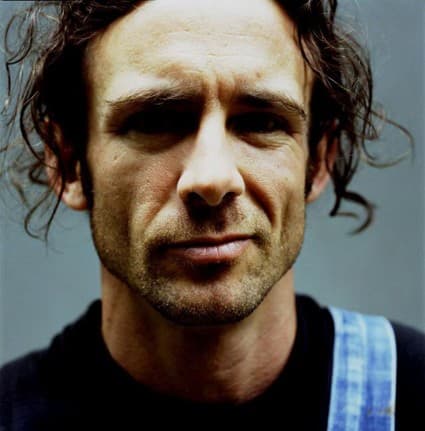
Chuck Palahniuk is a highly influential contemporary author, best known for his debut novel "Fight Club." His works, including "Haunted" and "Guts," are characterized by their transgressive themes, dark humor, and often shocking narratives. Palahniuk's distinctive style has earned him a significant cult following and cemented his reputation as a master of postmodern fiction.







