“My lifelong involvement with saints began at 8:10 p.m. on 27 December 1908.”
— The opening line of the novel, setting the stage for Dunstan Ramsay's lifelong obsession.


Robertson Davies (2001)
Genre
Literary Fiction / Historical Fiction
Reading Time
360 min
Key Themes
See below
Sign in to track this book
A WWI veteran, shaped by a boyhood snowball incident and a life of unusual influence, confronts memory, history, and myth as he finds the wonderful in the everyday.
The story starts with Dunstan Ramsay, an older schoolmaster, thinking about his life, especially an event from his childhood in the small Canadian town of Deptford, Ontario. One winter evening in 1908, his friend Percy Boyd Staunton (Boy) throws a snowball at Dunstan, but it misses and hits Mrs. Dempster, the pregnant wife of the local Baptist minister, Reverend Amasa Dempster. The hit causes her to go into early labor, and her son, Paul, is born with a clubfoot. Dunstan feels guilty, thinking he should have taken the hit. This event connects his life to the Dempster family, especially Mrs. Dempster, whom he starts to visit and care for secretly, noticing her unusual nature and the town's growing dislike of her.
Dunstan joins the Canadian Army during World War I. He experiences the horrors of trench warfare, including the Battle of Passchendaele. During a particularly bad fight, he acts very bravely, saving several men under heavy fire. This earns him the Victoria Cross, Britain's highest military award. He is badly hurt and thought to be dead, but he lives. While recovering, he decides to change his first name from 'Dunstable' to 'Dunstan.' He connects this name with a saint and wants to leave his old self behind, becoming a new, more scholarly and thoughtful person. This time shows a big change in how he sees himself and his role as an observer.
After the war, Dunstan becomes an academic, a history master at Colborne College, a well-known boys' school in Toronto. He studies hagiography, the lives of saints, becoming an expert. He is especially interested in Saint Dunstan, his namesake, researching his life deeply. This academic work helps him understand the unusual events and people in his own life, especially Mrs. Dempster, whom he increasingly sees as a 'fool-saint.' He continues to visit her, even after she is put in an institution, keeping a quiet, almost spiritual, connection.
Meanwhile, Boy Staunton, Dunstan's childhood rival, has a very successful business career, getting rich and socially important. He marries Leola Cruikshank, a beautiful but delicate woman, and they have two children, David and Caroline. Boy represents the materialistic, worldly success Dunstan purposely avoids. Dunstan stays a constant, though often unseen, presence in Boy's life, watching his friend's successes and failures with some distance, judgment, and a lingering sense of their shared history from the snowball incident. Boy often tries to downplay or forget the past, especially his connection to Mrs. Dempster.
Mrs. Dempster, after the snowball incident, starts acting more and more unusually. She is involved in two events seen as miracles: bringing a dead tramp back to life and helping a lost boy, Willie, escape a mining shaft. These events make the conservative Deptford community dislike her more; they call her 'mad' or 'loose.' Her husband, Reverend Dempster, cannot cope and eventually has her put in a mental institution. Dunstan, however, sees her differently, as a person touched by the divine, a 'saint' in her own way, showing a spiritual truth the world around her cannot understand.
Years later, Dunstan meets Paul Dempster, Mrs. Dempster's son, who was born early because of the snowball incident. Paul ran away from Deptford and became a professional magician, first as Cassamay, then as the famous 'Faustus Legrand.' Their paths cross several times, often unexpectedly. Paul, despite his success, remains emotionally complex and carries the scars of his childhood. He knows about Dunstan's connection to his mother and the fateful event, and their talks are full of shared history and unresolved guilt.
Leola Staunton, Boy's wife, struggles deeply with her husband's self-centeredness and ambition. Despite her beauty and social status, she is very unhappy. Dunstan, who once had a youthful liking for her, watches her slow decline. Boy's lack of emotional closeness and his constant need for control and admiration add to her despair. Eventually, Leola, unable to bear her life any longer, kills herself. Her death deeply affects Dunstan, showing how destructive Boy's personality can be and the sad results of superficiality.
When he retires from Colborne College, Dunstan travels to Europe, continuing his saint research. In Switzerland, he meets Liesl Vitzlipützli, a strange but very smart and insightful woman who works with Paul Dempster (Faustus Legrand). Liesl becomes an important person in Dunstan's self-discovery, challenging his carefully built identity and his detached observer role. She makes him face his own involvement, his 'fifth business' – the role of the necessary character who is neither hero nor villain but important to the plot. She also shows him the depth of Paul's resentment and his understanding of the past.
Liesl explains the theater term 'fifth business' to Dunstan: the character in a play who is not the hero, the heroine, the villain, or the confidante, but is important to how the plot unfolds. She says this is Dunstan's role in the lives of Boy Staunton and Mrs. Dempster, and by extension, Paul. This news affects Dunstan deeply, giving him a way to understand his lifelong pattern of observation, his guilt, and his seemingly minor but ultimately important involvement in the lives of the people from Deptford. He starts to accept his unique place as a moral witness and catalyst.
Boy Staunton's life, despite his great success, ends suddenly and mysteriously. He is found dead in his car, which has driven into the water. The cause of death is at first unclear, called an accident or suicide. However, during a final meeting with Paul Dempster (Faustus Legrand) in Mexico, Paul reveals a key detail: Boy had a sugar-rock in his mouth when he died, a trick he had learned from Paul as a boy. This suggests Paul's direct involvement in Boy's death, or at least his knowledge of its true nature. Dunstan is left to think about the complex web of fate, revenge, and the unresolved past that finally took Boy.
The Protagonist
Dunstan evolves from a guilt-ridden boy to a detached, scholarly observer, ultimately coming to terms with his 'fifth business' role in the lives of others, accepting his unique position as a catalyst and witness.
The Antagonist/Supporting
Boy rises to the pinnacle of material success and social power, but his emotional and spiritual emptiness leads to the tragic downfall of those around him and ultimately his own mysterious death.
The Supporting
Mary's life tragically deteriorates after the snowball incident, leading to institutionalization, yet her spiritual essence remains intact, inspiring Dunstan's hagiographical studies and serving as a central mystery.
The Supporting
Paul transforms from a rejected, clubfooted boy into a powerful, mysterious magician who subtly orchestrates a form of karmic justice, ultimately revealing a hidden aspect of Boy's death.
The Supporting
Liesl serves as a catalyst for Dunstan's self-realization, guiding him to understand his 'fifth business' role and challenging his intellectual detachment with her profound, often unsettling, insights.
The Supporting
Leola descends from a beautiful, desirable young woman into a despairing wife, ultimately committing suicide, symbolizing the human cost of Boy's superficial ambition.
The Mentioned/Supporting
The Reverend's inability to reconcile his wife's unconventional spirituality with his rigid religious beliefs leads him to institutionalize her, showcasing his limitations.
The Supporting
Milo remains a consistent, rational counterpoint to Dunstan's more mystical leanings, serving primarily as a sounding board for intellectual debates.
The novel explores the contrast between a rational, scientific view and the 'marvelous'—the unexplained, the miraculous, the mythical. Dunstan Ramsay, an academic, is drawn to the marvelous, especially through his study of saints and his view of Mrs. Dempster's life. Characters like Boy Staunton represent the purely rational and materialistic, rejecting anything not logically explained. The 'miracles' linked to Mrs. Dempster and Paul Dempster's illusions as Faustus Legrand show that reality is more complex than it seems, blurring the lines between fact, belief, and perception. The novel suggests that accepting the marvelous helps fully understand human experience.
“What is a saint? A saint is a person who makes it possible for others to believe in God.”
The main theme of guilt comes from the snowball incident. Dunstan feels lifelong responsibility for Mrs. Dempster's condition and Paul's clubfoot, believing he should have taken the hit. This guilt shapes his life, driving his care for Mrs. Dempster and his academic work. Boy Staunton, in contrast, tries to deny his responsibility, leading to a different kind of moral decay. The novel suggests that actions, even small ones, have far-reaching consequences that connect people over decades. The characters constantly deal with how their past actions, both on purpose and by accident, affect their present and future.
“I was a moral casualty of the war, and I was going to be one for the rest of my life.”
The characters in 'Fifth Business' constantly deal with their identities. Dunstan changes his name and dedicates his life to learning, trying to understand his place in the world. Boy Staunton builds a public identity of success and power, hiding his inner emptiness. Paul Dempster completely changes himself into a magician, leaving his Deptford past behind. The novel looks at how identity is shaped by childhood experiences, personal choices, and what others think. Liesl Vitzlipützli's explanation of the 'fifth business' concept gives Dunstan a way to understand his own unique, often overlooked, role in the lives of those around him, leading to a key moment of self-acceptance.
“You are fifth business. You are the one who is necessary to the plot, but who is neither hero nor heroine, neither villain nor confidant.”
The whole novel is Dunstan Ramsay's memoir, his life story told through his memory, which is subjective and mixed with his understanding of history and myth. He carefully describes events, but his interpretations are influenced by his academic interest in saint biographies and his personal guilt. The characters' different memories of the same events (e.g., the snowball incident) show how unreliable memory is and how personal stories are made. Dunstan uses myth and sainthood to understand the unusual events in his life, suggesting that personal history can become its own kind of myth, offering deeper truths than just facts.
“The past is a work of art, free to be interpreted by whoever can get his hands on it.”
The novel explores different kinds of art and observation. Dunstan observes everything, a scholar who carefully records and interprets the lives around him, seeing his own life as a developing story. Paul Dempster is an artist of illusion, a magician who creates fantastical realities, manipulating what people see. Boy Staunton, in his own way, is an artist of self-creation, building a public image of success. The difference between Dunstan's internal, scholarly 'art' and Paul's external, performative 'art' shows different ways of engaging with and shaping reality. Dunstan's role as 'fifth business' confirms his place as the important, though often passive, witness to the dramatic lives of others.
“I am a man of the spirit, not of the flesh.”
An elderly schoolmaster recounts his life, offering a subjective and reflective lens.
The entire novel is narrated in the first person by Dunstan Ramsay, written as a letter to the Headmaster of Colborne College in response to a disparaging article. This retrospective narration allows Dunstan to reflect on his past from a detached, scholarly perspective, imbuing events with layers of meaning, guilt, and philosophical insight that were not apparent at the time. It also highlights the subjective nature of memory and history, as Dunstan's account is his personal interpretation of events, shaped by his intellectual interests and his lifelong role as an observer. This device makes Dunstan himself a central 'device' for understanding the narrative.
A theatrical term used to define Dunstan's essential, yet secondary, role in the lives of others.
This is a key concept introduced by Liesl Vitzlipützli, referring to a theatrical role that is neither hero, heroine, villain, nor confidante, but is crucial to the plot's unfolding. It serves as a meta-narrative device, providing Dunstan (and the reader) with a framework for understanding his seemingly peripheral but ultimately vital role in the lives of Boy Staunton, Mrs. Dempster, and Paul Dempster. This device allows Dunstan to reconcile his lifelong guilt and sense of being an outsider with a profound sense of purpose, recognizing his own unique agency as a catalyst and witness within the 'play' of his life.
A seemingly innocuous childhood prank that acts as the inciting incident and binds the characters' fates.
The throwing of the snowball by Boy Staunton, which inadvertently hits Mrs. Dempster and causes her premature labor, is the foundational event of the novel. It is not merely an incident but a powerful symbol of fate, guilt, and interconnectedness. This single act irrevocably links the lives of Dunstan, Boy, Mrs. Dempster, and Paul, setting in motion a chain of consequences that spans decades. It symbolizes the arbitrary nature of fate and the profound impact of seemingly small actions, serving as the originating 'sin' that Dunstan spends his life trying to atone for or understand, and which Boy tries to ignore.
Dunstan's scholarly pursuit of saints' lives as a lens for interpreting personal experience.
Dunstan's academic specialization in hagiography (the study of saints' lives) is not just a personal interest but a central plot device. He uses the framework of sainthood and mythology to understand the 'marvelous' in his own life, particularly in his interpretation of Mary Dempster as a 'fool-saint' and the 'miracles' attributed to her. This device allows the novel to explore the tension between the rational and the spiritual, and how ancient narratives can provide meaning to modern experiences. It elevates the personal story to a mythical level, suggesting that human lives can embody archetypal patterns and spiritual truths.
Paul Dempster's career as a magician, blurring the lines between reality and deception.
Paul Dempster's transformation into the world-renowned illusionist Faustus Legrand serves as a powerful plot device, directly connecting to the theme of the marvelous and the nature of reality. His magic acts are not merely entertainment but symbolize the hidden forces at play in the characters' lives, the power of perception, and the deliberate creation of alternative realities. The 'sugar-rock' trick, learned by Boy from Paul as a child, becomes a crucial element in Boy's mysterious death, demonstrating how illusion can have tangible, even fatal, consequences and how the past, through the guise of magic, can exact its revenge.
“My lifelong involvement with saints began at 8:10 p.m. on 27 December 1908.”
— The opening line of the novel, setting the stage for Dunstan Ramsay's lifelong obsession.
“The world is like a board-game, and we are just pieces on it. We are not free.”
— Dunstan's reflection on the predetermined nature of life after a significant event.
“There are some people who are never content with what they have, and they are always striving for something more.”
— Dunstan observing Boy Staunton's relentless ambition.
“A miracle is an event which creates faith; it does not presuppose faith.”
— Dunstan's theological discussion about the nature of miracles.
“The greatest saints are those who have sinned most grievously.”
— Dunstan's controversial perspective on sainthood, reflecting his complex views on morality.
“Every man is a mystery, and every life is a story.”
— Dunstan's general philosophical outlook on human existence.
“What is a fifth business? It is the one who is neither hero nor villain, neither lover nor beloved, but the one who is necessary to bring about the catastrophe.”
— Dunstan explaining the theatrical term 'fifth business' and its relevance to his own life.
“The past is never dead. It's not even past.”
— Dunstan's realization about the enduring influence of past events on the present.
“We are all in the power of things we do not understand.”
— Dunstan reflecting on the mysterious forces that shape human lives.
“Life is a series of surprises, and it is a good thing to be surprised once in a while.”
— Dunstan's acceptance of the unexpected turns in life.
“The worst sin is to be a bore.”
— Dunstan's personal opinion on what constitutes a significant failing.
“It is not what we are, but what we become, that matters.”
— Dunstan's contemplation on personal growth and transformation.
“The world is full of people who are trying to live up to other people's expectations.”
— Dunstan's observation about societal pressures and conformity.
“The greatest art is to conceal art.”
— Dunstan discussing the nature of true artistic mastery.
Ready to see how well you understood this book? Take our interactive quiz with 10 questions.
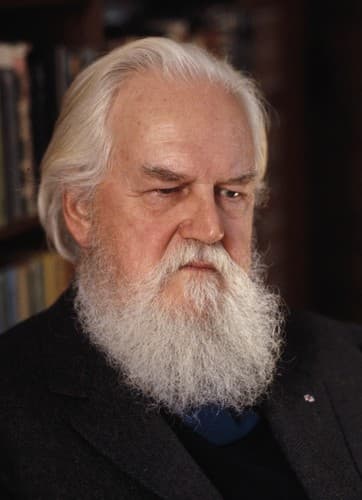
William Robertson Davies was a Canadian novelist, playwright, critic, journalist, and professor. He was one of Canada's best known and most popular authors and one of its most distinguished "men of letters", a term Davies gladly accepted for himself. Davies was the founding Master of Massey College, a graduate residential college associated with the University of Toronto.







