“Tradition! Tradition! ... Without our traditions, our lives would be as shaky as a fiddler on the roof!”
— Tevye's opening monologue, introducing the central theme of tradition in Anatevka.

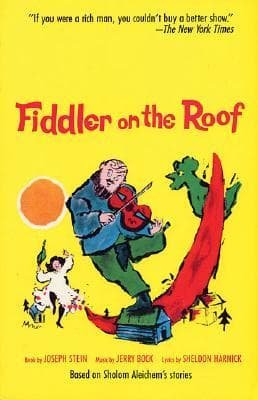
Joseph Stein (1964)
Genre
Historical Fiction
Reading Time
120 min
Key Themes
See below
Sign in to track this book
In pre-revolutionary Russia, a Jewish milkman and his family navigate tradition and a changing world as his daughters choose love over custom, forcing him to confront progress and the pain of displacement.
Tevye, a poor Jewish milkman in Anatevka, introduces his life and the lives of his fellow villagers. He explains that 'Tradition' guides their community, from dress to marriage. He highlights the roles of Papa, Mama, Sons, and Daughters, stressing that without tradition, their lives would be like a 'fiddler on the roof.' He also introduces his wife, Golde, and their five daughters, especially the eldest three: Tzeitel, Hodel, and Chava, who are nearing marriage age.
Tevye's three eldest daughters, Tzeitel, Hodel, and Chava, discuss their future at home. Tzeitel worries about not being matched yet, while Hodel and Chava dream of marrying for love, which goes against village traditions. They sing 'Matchmaker, Matchmaker,' sharing their fears and hopes about the husbands Yente, the village matchmaker, might find. They dread being paired with old, unappealing men, but also recognize the security an arranged marriage offers.
While on his milk route, Tevye thinks about being a rich man. He imagines the luxuries wealth would bring: a large house, many servants, and enough money to study holy books without working. He fantasizes about buying a 'small, respectable' wife, even though he loves Golde. His humorous and heartfelt song, 'If I Were a Rich Man,' shows his deep faith and his desire for a life free from poverty.
Yente visits Golde with news of a match for Tzeitel: Lazar Wolf, the wealthy but much older butcher. Golde is happy about the good provider. Tevye is hesitant because Lazar Wolf is significantly older than Tzeitel, but Golde convinces him to meet the butcher. Over drinks at the tavern, Tevye reluctantly agrees to the match, believing it is the best financial choice for his daughter. He returns home to tell Golde, unaware of Tzeitel's secret love.
Tzeitel is upset by the news of her engagement to Lazar Wolf. She tearfully tells Tevye she loves Motel Kamzoil, the poor tailor, and they have secretly promised to marry. Tevye, torn between tradition and his daughter's happiness, agrees to let them marry, breaking the arranged marriage custom. Meanwhile, Perchik, a radical student from Kiev, arrives in Anatevka. He challenges the villagers' traditional ways and asks Tevye for room and board in exchange for tutoring his younger daughters.
To convince Golde to let Tzeitel marry Motel instead of Lazar Wolf, Tevye invents a terrifying dream. In his 'dream,' Golde's deceased grandmother, Tzeitel, and Lazar Wolf's formidable deceased wife, Fruma-Sarah, appear. Fruma-Sarah threatens to haunt Tzeitel if she marries Lazar Wolf, while Grandma Tzeitel blesses Tzeitel and Motel's union. Golde, scared by the dream, agrees to the marriage. Tzeitel and Motel's wedding is joyful, but Russian authorities interrupt it with a pogrom.
Perchik, the student, keeps challenging the villagers' traditions. He encourages young people to dance together, which was previously unheard of between unmarried men and women. During these interactions, Hodel and Perchik grow close. He proposes to her, not asking Tevye for permission, but informing him of their decision. Tevye is shocked by this further break from tradition but, seeing their love and Perchik's conviction, he gives his reluctant blessing, realizing times are changing.
Tsarist police arrest Perchik for his revolutionary activities and exile him to Siberia. Hodel, in love and committed to Perchik's ideals, decides to follow him. Tevye takes her to the train station, where they share a heartbreaking farewell. Hodel explains her decision to Tevye, singing 'Far From the Home I Love,' showing her loyalty to Perchik despite the great personal sacrifice. Tevye is left to cope with another daughter choosing love and a new path over his cherished traditions.
Chava, Tevye's third daughter, falls in love with Fyedka, a young Russian Orthodox Christian. Their relationship deeply defies Jewish tradition and Tevye's religious beliefs. When Chava asks Tevye for permission to marry Fyedka, Tevye is devastated. He forbids the marriage, unable to accept a union outside their faith. Despite his prohibition, Chava and Fyedka elope, marrying in a church, leading Tevye to disown her and treat her as if she were dead.
The Jewish community of Anatevka receives official orders from the Tsar to evacuate their village within three days. The news brings shock and despair. The villagers, who have lived in Anatevka for generations, must pack their belongings and leave their homes, synagogue, and way of life. They sing 'Anatevka,' a lament for the home they are losing and the traditions being uprooted. Tevye and his family prepare for their forced migration, unsure of their future.
As the villagers prepare to leave Anatevka, Tevye and Golde make plans for their family. Tzeitel and Motel, now with a baby, decide to go to Warsaw. Lazar Wolf, having lost his match, also plans to leave. Tevye, Golde, and their two youngest daughters, Shprintze and Bielke, decide to travel to America, where Golde's brother lives. Before they leave, Chava and Fyedka appear, announcing they are leaving for Krakow and offering to send for Tevye's family when settled. Tevye, still unable to fully accept Chava, acknowledges her presence with a subtle gesture, showing his lingering love.
Tevye and his family, with the remaining villagers, gather their few belongings and begin their exodus from Anatevka. The stage fills with carts and people, all heading toward an uncertain future. Tevye, carrying his milk cart, sees the fiddler on the roof, a symbol of their precarious yet enduring traditions. He gestures for the fiddler to come with them, showing that while their physical home is lost, their traditions and faith will go with them wherever they go. The musical ends with the villagers scattering, carrying their heritage into the unknown.
The Protagonist
Tevye gradually learns to accept the erosion of tradition in the face of love and changing times, though his core faith remains unshaken.
The Supporting
Golde, while initially resistant to change, slowly accepts her daughters' choices, especially after Tevye's fabricated dream, showing a grudging adaptability.
The Supporting
Tzeitel asserts her desire to marry for love, successfully convincing her father, thus paving the way for her sisters' more radical choices.
The Supporting
Hodel evolves from a traditional girl dreaming of love to a strong, independent woman willing to sacrifice everything for her beliefs and the man she loves.
The Supporting
Chava, driven by love, makes the most radical break from her family's traditions, leading to her painful estrangement but also finding a new path.
The Supporting
Motel transforms from a shy, impoverished tailor into a confident husband and father, finding his voice and asserting his right to marry for love.
The Supporting
Perchik brings revolutionary ideas to Anatevka, inspiring Hodel and challenging Tevye, before being exiled for his activism.
The Supporting
Fyedka, an outsider, demonstrates profound love and respect by marrying Chava despite the cultural and religious barriers, offering her a new life.
The Supporting
Yente's role diminishes as her traditional matchmaking services become less relevant in the face of changing social norms and personal choices.
The Supporting
Lazar Wolf's traditional match is rejected, signifying the decline of arranged marriages and his own displacement in a changing world.
The main theme of 'Fiddler on the Roof' is the struggle to keep tradition in a changing world. Tevye constantly deals with this conflict as his daughters' choices challenge the customs of arranged marriages and religious boundaries. Each daughter's marriage shows a further weakening of the 'Tradition' Tevye values, forcing him to adjust his views. The forced eviction from Anatevka at the end of the play symbolizes the ultimate, unavoidable change that uproots their entire way of life, making them carry their traditions in a new, less structured way.
“Tradition! Without our traditions, our lives would be as shaky as... as a fiddler on the roof!”
The musical explores different kinds of love and marriage, from traditional arranged unions to modern romantic love. Tzeitel's choice of Motel, Hodel's commitment to Perchik, and Chava's forbidden love for Fyedka all highlight the growing importance of individual affection over communal expectations and financial security. Tevye's conversations with Golde about their own love, in 'Do You Love Me?', show a deep, lasting bond that goes beyond the initial practicality of their arranged marriage, bridging old and new ideals of partnership.
“Is there a custom for this? Of course there is, Tevye. It's called 'love.'”
Despite constant hardship, poverty, and persecution, the Jewish community of Anatevka, especially Tevye, keeps strong faith in God. Tevye's frequent, often humorous, talks with God show his reliance on faith for guidance and comfort. Even as their traditions are challenged and they are forced from their homes, their spiritual resilience remains. The final image of Tevye carrying his milk cart and gesturing to the Fiddler suggests their faith and traditions are portable, essential parts of their identity that will continue wherever they go.
“Dear God, did you have to make me a poor man? Couldn't you have made me a rich man, just once?”
The story's setting includes rising anti-Semitism and political unrest in Tsarist Russia. The pogrom at Tzeitel's wedding and the eventual expulsion of the Jewish community from Anatevka are reminders of the constant threat of persecution and forced displacement. This theme highlights the unstable existence of minority groups and the impact of political instability on individual lives. The villagers' forced exodus symbolizes the historical reality of Jewish diaspora and the ongoing struggle for safety and a homeland.
“We have been chosen, Tevye. Chosen to suffer.”
A symbolic figure representing precarious tradition and survival.
The Fiddler is a recurring visual and symbolic motif. He represents the precariousness of the Jewish community's life in Anatevka, balancing precariously on the roof, much like their traditions are constantly at risk of falling. He also symbolizes the enduring spirit, music, and cultural heritage that persists despite the instability and changes. Tevye's final gesture to the Fiddler, inviting him to come along, signifies that while their physical home is lost, their traditions and spirit will travel with them.
Direct addresses to God that reveal Tevye's inner thoughts and struggles.
Tevye frequently addresses God directly, often in a conversational and even argumentative manner. These monologues serve as a device to reveal his innermost thoughts, his struggles with faith, tradition, and his daughters' choices, and his unique sense of humor. They allow the audience direct insight into his philosophical and emotional journey, making him a deeply relatable character as he grapples with universal questions of existence, family, and belief. They also provide comic relief and exposition.
A fabricated dream used to manipulate Golde into accepting Tzeitel and Motel's marriage.
Tevye invents a terrifying dream involving Golde's dead grandmother and Lazar Wolf's formidable deceased wife, Fruma-Sarah. This elaborate fabrication is a clever and humorous plot device Tevye uses to bypass Golde's traditional resistance and persuade her to allow Tzeitel to marry Motel. It highlights Tevye's resourcefulness and his willingness to bend the rules (or create new ones) when his daughters' happiness is at stake, while also providing a visually dramatic and comedic scene.
A Jewish wedding custom symbolizing the fragility of life and the destruction of the Temple.
The breaking of the glass at the end of the Jewish wedding ceremony is a traditional custom. In 'Fiddler on the Roof,' it serves as a poignant reminder of the fragility of life and the historical suffering of the Jewish people, particularly in the context of the rising anti-Semitism. At Tzeitel's wedding, the breaking of the glass is immediately followed by the pogrom, brutally linking the symbol of historical suffering to the present-day persecution faced by the community.
“Tradition! Tradition! ... Without our traditions, our lives would be as shaky as a fiddler on the roof!”
— Tevye's opening monologue, introducing the central theme of tradition in Anatevka.
“A fiddler on the roof. Sounds crazy, no? But here, in our little village of Anatevka, every one of us is a fiddler on the roof, trying to scratch out a pleasant, simple tune without breaking his neck.”
— Tevye's reflection on the precarious nature of life for his people.
“As the Good Book says, 'When a poor man eats a chicken, one of them is sick.'”
— Tevye's humorous, cynical take on poverty and the human condition.
“Because, if I try to bend that far, I'll break.”
— Tevye's explanation to Golde why he cannot accept Perchik's radical ideas about marriage.
“A sign! He was a sign! It was a sign!”
— Golde's frantic reaction to the dream Tevye concocts to convince her to let Tzeitel marry Motel.
“And in the whole world, the world is changing. So, what's wrong with a little change around here?”
— Perchik's argument for progress and challenging old ways.
“In this world, it is no longer enough for a girl to be a good cook and a good mother. She must also be an educated person.”
— Perchik expressing his modern views on women's roles and education.
“Do you love me?”
— Tevye finally asks Golde this direct question after many years of marriage, prompting a poignant exchange.
“For two people to marry, they must love each other very much.”
— Hodel explaining her modern view of marriage to Tevye, contrasting with arranged marriages.
“It's a new world, Tevye. A new world.”
— Perchik bidding farewell to Tevye as he goes to Siberia, highlighting the inevitability of change.
“Money is the world's curse. Thank God, we don't have any.”
— Tevye's ironic and humorous take on their poverty.
“Rabbi, we have a problem. We don't have a matchmaker anymore.”
— Lazar Wolf lamenting the changing times and the decline of traditional roles, specifically the matchmaker.
“May God bless and keep you, Tevye. May God bless and keep you, Golde.”
— The villagers bidding farewell to Tevye's family as they are forced to leave Anatevka.
“And in the middle of it all, a fiddler, playing his tune. And who is this fiddler? And why is he on the roof?”
— Tevye's final reflection on the enduring image of the fiddler and the human struggle.
Ready to see how well you understood this book? Take our interactive quiz with 10 questions.

Biography coming soon.







