“I say that a book which does not contain its counter-book is considered incomplete.”
— From 'The Garden of Forking Paths', discussing a novel's structure.

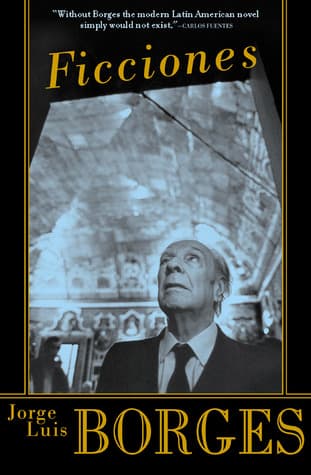
Jorge Luis Borges (1944)
Genre
Fantasy / Philosophy
Reading Time
180 min
Key Themes
See below
Sign in to track this book
Explore Borges's intricate mind, where reality breaks into endless libraries, philosophical puzzles, and dreams that reshape existence.
The narrator, Jorge Luis Borges, and Adolfo Bioy Casares find an error in an encyclopedia: a reference to a country called Uqbar. Further research reveals a sophisticated, secretly created fictional world called Tlön. This world was made by a clandestine group of intellectuals and philanthropists, the 'Orbis Tertius.' Tlön has an idealistic metaphysics where objects are mental constructs and nouns are forbidden. Over time, Tlön's influence begins to appear in the real world. Objects from Tlön, like the 'hrönir' (replicas), show up, and Tlön's precise, coherent philosophy starts to replace earthly sciences and languages. The story ends with the narrator seeing the world become Tlön, as humanity willingly adopts its elaborate, self-centered systems.
The narrator praises Pierre Menard, a fictional 20th-century French writer. Menard's most important work, according to the narrator, is not his symbolist poetry but his invisible masterpiece: the recreation of a few chapters of Miguel de Cervantes's Don Quixote. He did this not by copying, but by trying to think like Cervantes and write it again. The narrator argues that Menard's text, identical word-for-word to Cervantes's, is far richer and more complex because of its out-of-time context and Menard's deliberate effort. For example, Menard's 17th-century prose is seen as old-fashioned, while Cervantes's was current. The story shows that authorship and meaning are not fixed in the text itself but are shaped by its historical and intellectual setting.
A silent, grey magician arrives at the ruins of an ancient circular temple. His only goal is to dream a man into being, perfect in every detail, and then to place him into reality. He tries this difficult task, dreaming of a heart, then organs, then a skeleton, and finally a complete being. After several failures, he succeeds in creating a perfect man, whom he sends to another temple to perform rituals. The magician fears that his creation will discover his true, dreamt origin. However, one day, the magician walks into a burning temple and realizes, with both relief and terror, that he too is a dream, dreamt by someone else.
The narrator describes the history and changes of the Lottery in Babylon. At first, it was a simple gambling game. But over time, to increase participation and fairness, the Company (the organization running the lottery) introduced negative outcomes, such as fines. Eventually, the Lottery became mandatory and its reach grew to include all parts of life: job promotions, punishments, even death sentences. Its operations became completely secret, managed by an anonymous 'Company' whose existence is debated. The Lottery dictates every person's fate, making life a constant gamble where chance and destiny are the same. The story suggests a world where an individual's will is completely taken over by an arbitrary, yet absolute, system.
The narrator describes a universe made of an infinite Library, an endless space of hexagonal rooms filled with books. These books contain every possible combination of letters, punctuation marks, and spaces, meaning they hold all knowledge, all lies, all histories, and all nonsense. The librarians, the 'men of the Library,' spend their lives looking for meaningful books, especially 'the Crimson Hexagon' or a catalog of the Library. This vastness leads to despair, as the chance of finding a coherent book is tiny. Some librarians destroy books, others commit suicide. The Library is a metaphor for the universe, and its inhabitants struggle with the overwhelming, chaotic nature of information and existence.
Dr. Yu Tsun, a Chinese professor and German spy during World War I, is being pursued by Captain Richard Madden. Yu Tsun realizes he must deliver a crucial message: the location of a British artillery park at Albert. He decides the only way to do this is to murder a specific person, Stephen Albert, whose name is the same as the target city. This way, the message will be communicated through an act reported in the newspapers. He travels to Albert's house, a sinologist who, by chance, has been studying an unfinished novel by Yu Tsun's ancestor, Ts'ui Pên. Albert reveals that Ts'ui Pên's novel, 'The Garden of Forking Paths,' is not a chaotic manuscript but a complex work exploring all possible futures at once, a metaphor for a diverging universe. Yu Tsun then tragically murders Albert to complete his mission, knowing Albert has understood his ancestor's genius.
The narrator recounts his meetings with Ireneo Funes, a young Uruguayan man. After falling from a horse, Funes becomes paralyzed but gains an extraordinary, perfect memory. He remembers every detail, every leaf on every tree, every moment of every day. This perfect memory, however, is a curse. Funes cannot forget anything, making it impossible for him to generalize, abstract, or think conceptually. He is overwhelmed by the sheer amount of his perceptions; for him, a dog seen at 3:14 PM is a different being from a dog seen at 3:15 PM. His mind is a vast, chaotic encyclopedia, making him unable to truly think or communicate, and he dies young, suffocated by his own memories.
Detective Erik Lönnrot, a rationalist who enjoys logical puzzles, investigates a series of three murders that seem to be mystical. They happen on the 3rd of December, January, and February, at the three points of an equilateral triangle. The first victim is Rabbi Loew, the second, Daniel Azevedo, and the third, a mysterious character at a tavern. Lönnrot concludes that the fourth murder will happen on March 3rd, completing a rhombus. He follows his own intellectual plan to the desolate villa of Triste-le-Roy. There, he confronts Red Scharlach, a notorious gangster and his old enemy. Scharlach reveals that he planned the entire series of murders, carefully placing clues to lead Lönnrot to this specific location for a personal revenge killing. Lönnrot, realizing his own rationality has been used against him, accepts his fate.
Jaromir Hladík, a Jewish playwright in Prague, is arrested by the Nazis in 1943 and condemned to death by firing squad. His biggest regret is leaving his unfinished play, 'The Enemies,' incomplete. On the night before his execution, Hladík prays to God for a year's delay to finish his work. The next morning, as the firing squad raises their rifles, time stops for Hladík. He experiences an entire year in his mind, carefully completing and perfecting his play, down to the last comma. When he finishes, the bullet from the firing squad simultaneously pierces his chest, and he dies. His prayer is answered in a miraculous, subjective way, allowing him to achieve artistic fulfillment despite his coming death.
Juan Dahlmann, a secretary in a municipal library and a descendant of German immigrants and Argentine gauchos, gets a blood infection after hitting his head on a window frame. During his recovery, he dreams of going to his family's ranch in the South. When he is released, he starts the train journey, which seems to become more surreal. He meets strange people and feels a growing sense of foreboding and romantic destiny. At a remote restaurant, he is provoked into a knife fight by a group of toughs. Despite his lack of experience, he accepts a knife offered by an old gaucho, ready to face his death honorably. The story ends ambiguously, leaving the reader to wonder if Dahlmann's journey and confrontation are real, or just a dying man's idealized fantasy of a heroic end.
The Protagonist/Observer
Remains largely a consistent, analytical observer, but occasionally experiences profound shifts in perception as reality itself unravels around him.
The Central Figure
Menard's 'arc' is largely intellectual, demonstrating a radical redefinition of authorship rather than personal growth.
The Protagonist
Begins as a creator, fears discovery, and culminates in the terrifying realization of his own created nature.
The Protagonist/Antagonist
From a man facing capture, he transforms into a calculated murderer, driven by duty and a strange moment of intellectual communion.
The Central Figure
Transforms from an ordinary boy into a static, isolated repository of infinite memories, unable to engage with the world conceptually.
The Protagonist
Begins as a confident, deductive reasoner, only to realize he has been a pawn in someone else's meticulously crafted game, leading to his demise.
The Protagonist
Faces imminent death, finds a miraculous subjective year to complete his life's work, achieving artistic transcendence in his final moments.
The Protagonist
From a sickly, intellectual urbanite, he journeys towards a romanticized, potentially illusory, heroic death, embracing a fatalistic destiny.
Borges constantly blurs the lines between what is real and what is imagined, constructed, or dreamt. In 'Tlön, Uqbar, Orbis Tertius,' a fictional world created by intellectuals gradually invades and replaces reality, suggesting that our understanding of the world is largely a construct. 'The Circular Ruins' presents a magician who dreams a man into existence, only to discover he himself is a dream, questioning the ultimate source of creation. This theme challenges the reader's perception, suggesting that reality is fluid and often less substantial than we believe, easily manipulated by ideas, language, or collective belief.
“Two men, in the early morning, on a vast plain, have looked at the earth, and named the trees and the stones and the grass.”
The labyrinth is a metaphor for the universe, knowledge, and the human mind. 'The Library of Babel' shows a universe as an infinite library containing all possible books, an overwhelming and ultimately meaningless labyrinth of information. 'The Garden of Forking Paths' presents a novel that is itself a labyrinth of time, where all possible futures coexist. In 'Death and the Compass,' Detective Lönnrot's logical deductions lead him through a labyrinth of false clues arranged by his enemy. This theme highlights humanity's struggle to find order and meaning within an overwhelmingly complex and often chaotic existence, where paths diverge endlessly and true solutions are hard to find.
“The universe (which others call the Library) is composed of an indefinite, perhaps infinite, number of hexagonal galleries.”
Borges often questions common ideas about authorship, the originality of texts, and the subjective nature of interpretation. 'Pierre Menard, Author of the Quixote' famously argues that a word-for-word identical text can be an original work depending on its context and author's intention. 'An Examination of the Work of Herbert Quain' explores the idea of unwritten or deliberately misleading works. This theme suggests that texts are not static entities with fixed meanings, but rather dynamic spaces where meaning is created through the interaction of author, reader, and historical context. It explores how every act of reading is an act of re-creation, and how the identity of the author can be fluid or even irrelevant.
“To compose the Quixote at the beginning of the seventeenth century was a reasonable, necessary, perhaps even unavoidable undertaking; at the beginning of the twentieth, it is almost impossible.”
Borges often manipulates and redefines time, showing it not as a straight line but as a complex, changeable, or even cyclical entity. In 'The Garden of Forking Paths,' Ts'ui Pên's novel embodies a concept of time where all possible futures exist at once, creating a 'garden of forking paths.' 'The Secret Miracle' gives a condemned man a full year within a single frozen moment, illustrating the subjective and relative nature of time. This theme explores the idea that human perception and consciousness can distort or expand temporal experience, and that linear time might be an illusion, replaced by eternal recurrence or branching possibilities. It challenges the common understanding of past, present, and future.
“The Garden of Forking Paths is an enormous riddle, or parable, whose subject is time.”
The stories often explore the fluid and constructed nature of individual identity, suggesting that the self is not fixed but rather a product of memory, perception, or outside forces. 'Funes the Memorious' portrays a man whose overwhelming memory prevents him from forming a coherent, generalizing self, trapping him in an endless stream of isolated perceptions. In 'The Circular Ruins,' the magician's identity as a creator is shattered by the realization that he himself is a dreamed being. This theme questions the autonomy and uniqueness of the individual, suggesting that identity can be an illusion, a role played, or even a recursive dream within a dream, challenging the idea of a stable 'I'.
“He knew that he was a monster. The fact that he was created by a dream, that he himself was a dream, was something that he was never able to forget.”
Stories that self-referentially comment on their own fictionality or the act of storytelling.
Borges frequently employs metafiction, blurring the lines between author, narrator, and reader. Many stories are presented as reviews of imaginary books ('Pierre Menard, Author of the Quixote'), scholarly essays on non-existent subjects ('Tlön, Uqbar, Orbis Tertius'), or literary analyses of fictional authors ('An Examination of the Work of Herbert Quain'). This device forces the reader to confront the constructed nature of the narrative, highlighting the artifice of storytelling and inviting reflection on the processes of reading, writing, and interpretation. It transforms the stories into intellectual games, where the medium is as much the message as the content.
Presenting fictional realities or concepts through the guise of academic or encyclopedic articles.
Several stories, most notably 'Tlön, Uqbar, Orbis Tertius' and 'The Library of Babel,' adopt the format of an academic treatise, encyclopedia entry, or scholarly footnote. This device lends an air of authority and verisimilitude to the most fantastical propositions, making the absurd seem rigorously logical and documented. It allows Borges to introduce complex philosophical and metaphysical ideas within a seemingly objective framework, inviting the reader to engage with the concepts on an intellectual level, while simultaneously critiquing the limitations and biases inherent in such authoritative forms of knowledge dissemination.
A recurring structural and thematic motif representing complexity, confusion, and the search for meaning.
The labyrinth is a central motif, appearing literally and metaphorically. It signifies intricate systems, intellectual puzzles, and the bewildering nature of reality or knowledge. In 'The Library of Babel,' the universe is an infinite, labyrinthine library. In 'The Garden of Forking Paths,' a novel is a temporal labyrinth. In 'Death and the Compass,' the detective is led through a physical and intellectual maze. This device emphasizes themes of infinite possibility, the futility of human endeavor in the face of overwhelming complexity, and the idea that all paths, even those chosen, may lead to the same pre-determined or inescapable conclusion, or simply to more confusion.
Reflections, repetitions, and doppelgängers that question identity and originality.
The concept of the double or mirror image is explored in various forms. 'Pierre Menard, Author of the Quixote' features a text that is a perfect double of another, yet entirely new. 'The Circular Ruins' culminates in the protagonist realizing he is a dream, a reflection of his own creation. This device highlights Borges's fascination with identity, originality, and the idea that reality might be an endless series of reflections or repetitions. It suggests that what appears unique might be a copy, and what appears to be a copy might, in a different context, be profoundly original, unsettling notions of authenticity and selfhood.
“I say that a book which does not contain its counter-book is considered incomplete.”
— From 'The Garden of Forking Paths', discussing a novel's structure.
“Reality is not always probable or even plausible.”
— A general observation that permeates many stories.
“The universe (which others call the Library) is composed of an indefinite, perhaps infinite, number of hexagonal galleries...”
— Opening line of 'The Library of Babel', describing its central metaphor.
“To write a book is nothing but a laborious way of arranging words.”
— From 'Pierre Menard, Author of the Quixote', concerning the act of authorship.
“Every man is the editor of his own memory.”
— A philosophical statement that resonates with themes of subjective reality.
“The world, unfortunately, is real; I, unfortunately, am Borges.”
— From 'Borges and I', reflecting on identity and reality.
“A book is more than a verbal structure or series of verbal structures; it is the dialogue it establishes with its reader and the intonation it imposes upon his voice and the changing and durable images it leaves in his memory.”
— From 'A Note on (toward) Bernard Shaw', discussing the nature of a book.
“Time forks perpetually toward innumerable futures.”
— From 'The Garden of Forking Paths', explaining the concept of a labyrinthine novel.
“The fact is that we do not know what the universe is.”
— A recurring theme, often presented as a starting point for imaginative exploration.
“Perhaps universal history is the history of a few metaphors.”
— From 'The Homeric Versions', suggesting the fundamental patterns in human thought.
“To fall in love is to create a religion that has a fallible god.”
— A poignant observation on human relationships and idealization.
“Mirrors and fatherhood are abominable because they multiply and disseminate that universe.”
— From 'Tlon, Uqbar, Orbis Tertius', expressing a fear of infinite replication.
“The certitude that everything has been written is enough to paralyze us.”
— From 'The Library of Babel', describing the despair of infinite knowledge.
“The original is unfaithful to the translation.”
— A witty paradox from 'Pierre Menard, Author of the Quixote', playing with concepts of originality.
Ready to see how well you understood this book? Take our interactive quiz with 10 questions.
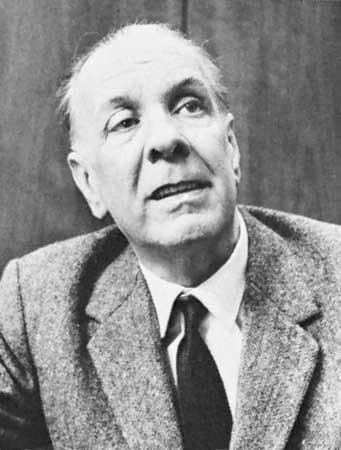
Jorge Francisco Isidoro Luis Borges Acevedo was an Argentine short-story writer, essayist, poet and translator, as well as a key figure in Spanish-language and international literature. His best-known books, Ficciones (Fictions) and El Aleph, published in the 1940s, are collections of short stories exploring themes of dreams, labyrinths, chance, infinity, archives, mirrors, fictional writers and mythology. Borges's works have contributed to philosophical literature and the fantasy genre, and have had a major influence on the magic realist movement in 20th century Latin American literature.







