“The past is never dead. It's not even past.”
— A classic Faulkner quote, used to emphasize the enduring impact of history on the present.

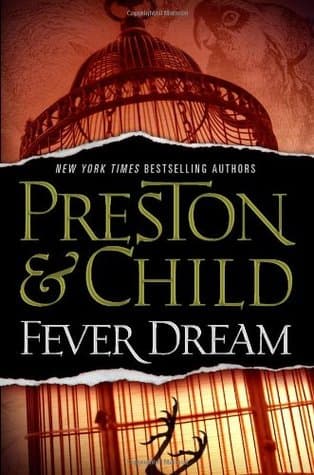
Douglas Preston (2010)
Genre
Thriller / Mystery
Reading Time
540 min
Key Themes
See below
Sign in to track this book
A Special Agent's decade-old grief for his supposedly deceased wife shatters when he unearths her murder, spiraling him into a treacherous quest to expose her killer and confront the shocking truth of the woman he never truly knew.
Special Agent Aloysius Pendergast still grieves his wife, Helen, who reportedly died from a lion attack during a safari in Africa twelve years ago. He receives a call from his estranged brother, Diogenes, who claims Helen was shot. Pendergast dismisses this as manipulation until he receives a package containing a rusted, deformed bullet. Forensic analysis confirms it is a .458 Winchester Magnum, a powerful hunting rifle round, and that it passed through human bone. This revelation shatters Pendergast's understanding of Helen's death, starting his quest for the truth behind her murder.
Pendergast, with his ward Constance Greene, travels to Tanzania, Africa, to retrace Helen's last steps. He visits her death site, a remote hunting camp at the foot of Mount Kilimanjaro. He interviews the surviving safari party members: Gerard LaCompte, a big-game hunter and guide, and Dr. Julius Frock, a wealthy collector. LaCompte recounts the official story of the lion attack, but Pendergast's observations lead him to doubt the narrative. He examines the surroundings, finding discrepancies that suggest a staged scene rather than a genuine lion kill.
Pendergast's investigation uncovers a web of lies. He discovers the official police report of Helen's death was quickly concluded, and key evidence, like the lion carcass, was never thoroughly examined. He presses LaCompte and Frock for more details, but their accounts are vague and contradictory. Pendergast also learns Helen had a secret bank account and had been acting strangely before her death, including a significant withdrawal shortly before the safari. These findings confirm Pendergast's belief that Helen's death was murder, not an accident.
Back in the United States, Pendergast's investigation takes an unexpected turn when he finds a connection between Helen and an ancient cult known as the 'Cult of the Serpent.' This cult, operating in the remote swamps of Louisiana, is rumored to practice dark rituals and possess vast, hidden wealth. Pendergast learns Helen had been researching this cult extensively, even making secret visits to the bayou. This discovery suggests Helen's involvement with something more sinister than a simple hunting trip and raises questions about her true motivations.
Through research and secret meetings, Pendergast uncovers Helen's shocking secret life. He discovers she was not just a philanthropist and art historian but also a skilled and ruthless operative, possibly working for a clandestine organization or pursuing her own agenda. Her involvement with the Cult of the Serpent was as an active participant, infiltrating their ranks. This revelation disturbs Pendergast, forcing him to accept that the woman he married was a stranger, leading a double life filled with danger and deception. He grapples with the implications of her hidden identity.
Following Helen's trail, Pendergast infiltrates the compound of the Cult of the Serpent deep within the Louisiana bayou. He observes their rituals, which involve venomous snakes and hypnotic chanting. He learns the cult is led by a charismatic and dangerous figure named Proctor, who holds great power over his followers. Pendergast discovers Helen was trying to expose the cult's illegal activities and retrieve a valuable artifact, a diamond known as the 'Serpent's Eye,' which the cult believes holds mystical powers. Her mission was to prevent the cult from using its influence for destructive purposes.
Pendergast confronts Proctor, the cult leader, within the Serpent's Lair. Proctor, initially evasive, eventually reveals the truth about Helen's death. He confesses Helen had successfully infiltrated the cult and was close to exposing their operations and retrieving the Serpent's Eye. During the safari, a pre-arranged rendezvous point, Helen was attempting to smuggle the diamond out of the country. Proctor, realizing her betrayal, orchestrated her murder, making it appear as a lion attack to cover his tracks and retrieve the diamond. LaCompte and Frock were complicit, through fear or money, in maintaining the deception.
Pendergast recovers the Serpent's Eye, a magnificent diamond, from Proctor's possession. However, his actions trigger a violent confrontation with the cult members, who are devoted to Proctor and the diamond. Pendergast, with the unexpected help of Constance Greene, who proves to be resourceful, manages to escape the compound amidst explosions and gunfire. The recovery of the diamond confirms Helen's mission and provides a tangible link to her secret life, further solidifying the tragic reality of her sacrifice.
After a harrowing escape, Pendergast ensures authorities are alerted to the Cult of the Serpent's illegal activities. Proctor and his inner circle are apprehended, and the cult's operations are dismantled. The Serpent's Eye is secured, preventing its misuse. While Pendergast achieves justice for Helen's murder, the emotional toll of uncovering her secret life and the circumstances of her death weighs heavily on him. He must reconcile the image of the woman he loved with the dangerous operative she truly was, forever changing his perception of their relationship.
Pendergast returns to his life, changed by the revelations about Helen. He understands that Helen's actions, though secretive, were driven by a desire to do good and prevent harm. He finds a sense of closure, but also a lingering melancholy for the woman he thought he knew. The experience strengthens his bond with Constance Greene, who proved to be a loyal ally. While justice is served, the impact of Helen's deception and sacrifice leaves Pendergast with a renewed sense of purpose, but also a deeper understanding of human nature and the hidden lives people lead.
The Protagonist
Pendergast evolves from a grieving widower to a man forced to confront the harsh reality of his wife's secret life, ultimately finding a complex form of closure and a deeper understanding of human nature.
The Central Figure/Deceased
Though deceased, Helen's character arc is revealed through Pendergast's discoveries, transforming from a cherished memory into a complex, heroic, and ultimately tragic figure.
The Supporting
Constance develops from a seemingly passive observer to an active and capable participant in Pendergast's investigations, revealing hidden depths of courage and skill.
The Antagonist/Catalyst
Diogenes remains largely static in his malevolence, but his actions inadvertently trigger Pendergast's profound personal journey.
The Antagonist
Proctor's arc is one of exposure and downfall as Pendergast systematically uncovers his crimes and brings his empire to ruin.
The Supporting/Complicit
LaCompte moves from being a misleading witness to a reluctant confessor, revealing the depth of the conspiracy.
The Supporting/Complicit
Frock's character remains largely static, serving as a minor obstacle and further evidence of the widespread deception.
This theme explores how individuals, relationships, and organizations can present a facade that hides a darker or more complex reality. Pendergast's understanding of his wife, Helen, shatters when he discovers her secret life as a clandestine operative, contradicting her public persona as a philanthropic art historian. The Cult of the Serpent also embodies this, appearing as a spiritual organization but engaging in illicit activities and murder. The pristine African safari, initially presented as an accident, is revealed to be a staged murder. This theme forces Pendergast to question what he sees and believes.
““The woman I thought I knew was a phantom, a beautifully constructed lie.””
The novel explores the impact of grief and how memories can be unreliable when confronted with new truths. Pendergast has spent twelve years mourning Helen, holding onto an idealized memory of her. The discovery of her murder and revelations about her double life force him to re-evaluate every aspect of their relationship. This painful process of dismantling and reconstructing memory is central to his character arc. The truth, though harsh, ultimately offers a complex form of closure, but it also changes his perception of his past.
““To lose someone once is tragedy. To discover they were never truly lost, but stolen, and that the person you mourned was a stranger… that is a different kind of hell.””
While Pendergast seeks justice for Helen's murder, personal revenge drives his relentless pursuit. The initial act of uncovering the bullet ignites a need for retribution. However, as layers of Helen's life are revealed, Pendergast's motivations evolve beyond simple revenge. He aims to dismantle the dangerous Cult of the Serpent and expose the truth, honoring Helen's own mission. The novel explores the line between these two concepts and how personal vendettas can align with a greater sense of moral justice, but also the emotional cost.
““Revenge is not sweet: It is essential.””
The novel explores the influence of secret societies, specifically the Cult of the Serpent. This theme highlights how such groups operate outside conventional law and morality, wielding power through secrecy, manipulation, and violence. The cult's ancient origins, rituals, and hidden wealth create an atmosphere of dread. Helen's infiltration of this world shows the bravery and peril involved in exposing these networks, and Pendergast's confrontation with them reveals the difficulty of bringing such organizations to justice.
““Some secrets are so old, so deeply buried, they become the very earth beneath our feet.””
A legendary diamond that drives the cult's actions and Helen's mission.
The Serpent's Eye is a legendary, ancient diamond that serves as the central MacGuffin. It is an object of immense value and mystical significance to the Cult of the Serpent, who believe it holds special powers. Helen Pendergast's secret mission was to recover this diamond from the cult, preventing them from using its influence for nefarious purposes. The diamond's existence and its recovery by Pendergast provide a tangible goal for much of the plot, creating urgency and a direct connection to Helen's final actions, even though its specific 'powers' are less important than its role as a coveted object.
Pendergast's initial understanding of Helen and her death is deeply flawed.
While Pendergast himself is a reliable investigator, the narrative relies on the 'unreliability' of his past understanding and memories concerning Helen and her death. For twelve years, Pendergast believed a specific, tragic narrative about his wife's demise. The entire premise of the book is the systematic dismantling of this false narrative, forcing Pendergast to confront the fact that his memories and beliefs about Helen were built on a foundation of lies. This device creates suspense and empathy for Pendergast, as the reader experiences his shock and disillusionment alongside him, making the revelations more impactful.
The initial explanation for Helen's death is a carefully constructed deception.
The 'lion attack' is the primary red herring in the story. It is the official explanation for Helen Pendergast's death, meticulously constructed by Proctor and his accomplices to conceal the truth of her murder. For twelve years, this explanation is accepted by Pendergast and the authorities. The discovery of the bullet shatters this illusion, revealing the elaborate deception. This device effectively misleads both the characters and the reader, creating a sense of surprise and betrayal when the true nature of her death is uncovered, highlighting the cunning of the antagonists and the depth of the conspiracy.
Pendergast's manipulative brother provides the crucial first clue.
Diogenes Pendergast, Aloysius's infamous and malevolent brother, acts as a mysterious benefactor or catalyst. Despite his antagonistic nature and a history of tormenting Pendergast, he is the one who delivers the initial, crucial piece of information – the bullet – that ignites the entire investigation into Helen's murder. His motivations for doing so remain ambiguous and unsettling, adding a layer of psychological complexity. This device serves to kickstart the plot in an unexpected way, leveraging a character who is typically an adversary to propel the protagonist into a deeply personal quest, blurring the lines of alliance and enmity.
“The past is never dead. It's not even past.”
— A classic Faulkner quote, used to emphasize the enduring impact of history on the present.
“There are some things you can't outrun, no matter how fast you go.”
— Reflecting on the inescapable nature of certain truths or consequences.
“Sometimes the most dangerous thing is the one you can't see.”
— Highlighting the insidious nature of hidden threats or unknown enemies.
“Every secret has a shelf life.”
— Implying that all hidden information will eventually come to light.
“Fear has a way of making you see things that aren't there, and not see things that are.”
— Describing the distorting effect of fear on perception.
“The truth is a stubborn thing. It doesn't like to stay buried.”
— Emphasizing the persistent nature of truth, even when efforts are made to conceal it.
“In the desert, everything is stripped bare. You see what you're really made of.”
— Referencing the harsh, revealing environment of the desert and its impact on character.
“Some wounds never heal, they just scar over.”
— Speaking to the lasting impact of traumatic experiences.
“The line between sanity and madness is thinner than you think.”
— Exploring the fragility of the human mind under extreme pressure.
“Trust is a luxury few can afford.”
— Suggesting a world where betrayal is common and genuine trust is rare.
“There's a reason they call it a 'fever dream.' It's hard to tell what's real and what's not.”
— Directly referencing the book's title and its theme of blurred reality.
“History doesn't repeat itself, but it often rhymes.”
— A Mark Twain quote, used to illustrate recurring patterns in events.
“The greatest trick the devil ever pulled was convincing the world he didn't exist.”
— A famous quote, implying a hidden, powerful evil at play.
“Sometimes, the only way out is through.”
— A mantra for confronting difficult situations head-on.
Ready to see how well you understood this book? Take our interactive quiz with 10 questions.

Douglas Preston is a prolific author known for his suspenseful thrillers, often co-authored with Lincoln Child. Their collaborative works, including the popular Pendergast series featuring novels like 'Relic' and 'Blue Labyrinth,' have achieved international bestseller status. Preston also co-authored the non-fiction bestseller 'The Monster of Florence,' showcasing his versatility in both fictional and true crime narratives.







