“Being a dog wasn't just about chasing balls and getting belly rubs. It was about being part of something bigger.”
— Fenway's early reflections on his purpose as a dog within his family.

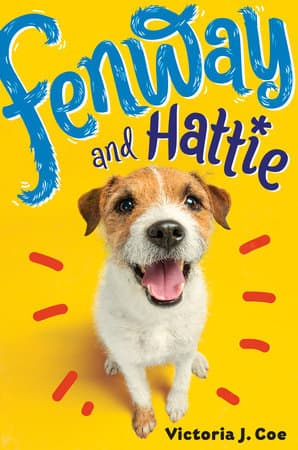
Victoria J. Coe (2016)
Genre
Fantasy / Children's
Reading Time
90 min
Key Themes
See below
Sign in to track this book
A spirited Jack Russell terrier named Fenway navigates the bewildering new world of the suburbs, convinced that the arrival of a 'new short human friend' and a game called baseball are conspiring to steal his beloved Hattie away.
Fenway, a very excitable Jack Russell terrier, lives a happy, predictable life in the city with his humans: Food Lady, Fetch Man, and his beloved short human, Hattie. His days involve walks, meals, and playing with Hattie. One day, the humans start packing boxes, and Fenway senses a big change. They move to a new house in the suburbs, which Fenway initially finds alarming. The new house has strange smells, a confusing layout, and a particularly slippery 'Wicked Floor' in the Eating Room. Outside, there is a large 'Dog Park' (the backyard) and a fence separating him from other dogs, but also 'Evil Squirrels' in the trees. Fenway wants to keep his routine and his bond with Hattie despite these changes.
Fenway tries to get used to his new home, but Hattie, his best friend, seems different. She is spending less time playing 'Chase' and 'Tug' with him. Instead, she is often with a new short human, Angel, whom Fenway views with suspicion. Hattie and Angel spend hours in the 'Dog Park' hitting a red ball with a 'thwack' sound, a game Fenway does not understand. He tries to join, thinking it is a new version of 'Fetch,' but Hattie gets frustrated. This new activity, which Fenway eventually identifies as 'baseball,' takes up Hattie's attention, leaving Fenway feeling neglected and confused about his place in her life.
Fenway watches Hattie and Angel practice baseball in the backyard. He sees Hattie swing and miss the ball, or hit it poorly, and hears her express frustration. From Fenway's perspective, Hattie is making 'mistakes' and failing to 'catch' the ball properly. He believes he needs to help her succeed. When Hattie hits a ball, Fenway enthusiastically chases it, retrieves it, and brings it back to her, expecting praise. Instead, Hattie gets upset, yelling 'No, Fenway!' and 'Bad dog!'. These reactions only confuse Fenway more, as he believes he is helping, yet Hattie's behavior suggests otherwise. He struggles to understand the humans' rules for this new game.
Feeling confused by Hattie's changing behavior, Fenway talks to his new neighbors in the adjacent 'Dog Park' (another backyard). He communicates with them through the fence: a large golden retriever named Cooper, a small terrier mix named Daisy, and a grumpy bulldog named Brutus. He describes Hattie's new friend, Angel, and the game of 'baseball.' Cooper, the oldest, suggests that Hattie might be 'outgrowing' Fenway. This idea terrifies Fenway. He interprets 'outgrowing' literally, imagining Hattie physically growing too large for him, or leaving him behind. He refuses to accept this, determined to prove that Hattie still needs him.
The 'Wicked Floor' in the Eating Room, a smooth, slippery surface, has been a problem for Fenway since the move. He usually avoids it, preferring to slide on the rug. However, seeing Hattie spending more time on the other side of this room, often with Angel, Fenway decides he must conquer the floor to reach her. He believes if he can successfully navigate the 'Wicked Floor,' he can somehow prove his worth and closeness to Hattie. He makes several funny attempts, sliding, skidding, and crashing, which amuses the humans. Despite his clumsy efforts, he remains determined to cross it, viewing it as a test of his resolve and a way to lessen the distance he feels between himself and Hattie.
Convinced that Hattie's 'mistakes' in baseball mean she needs his help, Fenway tries harder. During one practice session with Angel, Hattie hits a pop-up that lands near Fenway. He proudly retrieves it, expecting a reward, but Hattie again gets upset. Later, he watches Hattie try to catch a ball and miss. He thinks her disappointment means she needs his assistance. He tries to 'herd' the ball towards her, or catch it himself, always with good intentions, but always making Hattie frustrated and shouting 'No, Fenway!' He cannot understand why his helpfulness is met with such negative reactions, increasing his fear that Hattie is indeed slipping away from him.
The day of Hattie's first baseball game arrives, with more human activity and excitement. Fenway, sensing something important is happening, looks forward to going with Hattie. However, the humans leave without him, locking him inside the house. Fenway feels immense distress and separation anxiety. He paces, whines, and watches from the window, feeling abandoned and confused. He wants to be with Hattie, believing his presence is important for her success. The house feels empty and quiet without her, and Fenway struggles to understand why he has been excluded from such a significant event in Hattie's life, increasing his feelings of being 'outgrown.'
Driven by his overwhelming need to be with Hattie and 'help' her, Fenway finds an open gate and escapes. He follows the scent of his family to the local park where Hattie's baseball game is happening. He runs onto the field just as Hattie is about to score a run, having hit the ball well. In his excitement, Fenway runs directly to the ball, picks it up, and brings it back to Hattie, believing he has successfully assisted her. The game stops, and the humans, including Hattie, are a mixture of exasperated and amused. Fenway is happy to be reunited with Hattie, completely unaware of the chaos he has caused or the importance of the moment he interrupted.
After the game disruption, Fetch Man takes Fenway home. Later, Hattie comes to Fenway, and instead of being angry, she sits with him and explains 'baseball' simply. She shows him how to hit and run and explains that he cannot be on the field. She makes him understand that retrieving the ball during the game is not 'helping.' More importantly, she reassures him that even though she is playing baseball and has new friends, he is still her best friend and companion. Fenway finally starts to understand that his role in Hattie's life is not about playing baseball with her, but about being her loyal and loving dog, a role he values.
With Hattie's clear explanation and reassurance, Fenway's worries about being 'outgrown' begin to fade. He still watches Hattie play baseball, but now he understands the rules and does not try to intervene. He continues to play 'Chase' and 'Tug' with Hattie, and his days are filled with the familiar joys of being her dog. He even becomes more comfortable with the 'Wicked Floor,' sometimes sliding across it with new confidence. Fenway learns to appreciate the new 'Dog Park' (the backyard) and the presence of his canine neighbors. He realizes that while things have changed, his bond with Hattie remains strong and his place in her heart is secure, allowing him to fully embrace his new suburban life.
The Protagonist
Fenway learns to accept change and understand that Hattie's new interests don't diminish her love for him, finding peace in his role as her companion.
The Supporting
Hattie learns to balance her new interests and friendships with her enduring love and responsibility towards Fenway, effectively communicating with him.
The Supporting
Remains a consistent, loving presence for Fenway, helping him adjust to the new environment.
The Supporting
Provides a consistent male presence and playmate for Fenway, sometimes acting as disciplinarian.
The Supporting
Serves as a catalyst for Hattie's new interests, indirectly creating Fenway's central conflict.
The Supporting
Acts as a mentor figure, offering Fenway canine wisdom and perspective.
The Supporting
Contributes to Fenway's sense of canine community and offers a relatable peer perspective.
The Supporting
Provides a contrasting, often grumpy, viewpoint within Fenway's canine social circle.
The main theme is Fenway's struggle to adapt to major changes in his life: moving to a new house, a new environment, and Hattie's changing interests. Fenway's anxieties and misunderstandings come directly from his inability to understand or control these changes. The novel explores the difficulties of adjusting to new routines and the emotional impact of big life transitions, even from a dog's perspective. Ultimately, Fenway learns to accept change and find new ways to be content.
“My world was changing. And not in a good way.”
Fenway's deep, steady loyalty to Hattie is the emotional center of the story. His every action comes from his desire to be with her and help her, even when his efforts are misguided. The theme explores the unique bond between a child and their pet, showing the pet's devotion and the child's gradual understanding of that bond. Fenway's fear of being 'outgrown' shows how important this friendship is to his identity and happiness.
“Hattie was my short human. My best friend. My everything.”
Much of the humor and conflict comes from the communication gap between Fenway and his humans. Fenway interprets human language and actions literally, leading to funny misunderstandings about baseball, 'mistakes,' and the idea of 'outgrowing.' The novel shows how humans often fail to communicate clearly with their pets, and how pets, in turn, struggle to understand human intentions. Hattie's clear explanation to Fenway is a turning point, showing the power of good communication.
“Humans were confusing. They said one thing, but they meant another.”
Fenway's journey is also about self-discovery, as he deals with his identity when Hattie's needs change. He first defines his worth by his ability to 'help' Hattie with everything, including baseball. His fear of being 'outgrown' is a fear of losing his purpose and belonging within the family. By the end, he learns that his identity as Hattie's beloved, loyal dog is enough, and that his value does not depend on shared activities but on their lasting bond.
“I was Fenway. Hattie's dog. And that was enough.”
The story is told entirely from Fenway's perspective, providing a unique and often humorous viewpoint.
The entire novel is narrated through the eyes and internal monologue of Fenway, the Jack Russell terrier. This device allows readers to experience the world as a dog does, filtered through his senses, instincts, and limited understanding of human customs. It creates both humor (e.g., 'Food Lady,' 'Fetch Man,' 'Wicked Floor,' 'Evil Squirrels,' 'Dog Park' for backyard) and emotional depth, as Fenway's anxieties and unconditional love are vividly conveyed. This perspective is crucial for highlighting the communication gap and Fenway's journey of understanding.
Giving human-like thoughts and emotions to Fenway, while maintaining canine behaviors.
While Fenway behaves very much like a dog, the author imbues him with complex human-like thoughts, anxieties, and emotional responses (fear of being 'outgrown,' confusion, determination, love). This anthropomorphism makes Fenway a relatable and sympathetic character, allowing readers to connect with his struggles. However, the book carefully balances this by grounding his actions in realistic canine instincts and behaviors, such as chasing balls, sniffing, and reacting to sounds, creating a believable blend of dog and character.
Fenway's literal understanding of human phrases and activities drives much of the plot's conflict and humor.
A key comedic and plot-driving device is Fenway's consistent misinterpretation of human language and actions. He takes phrases like 'Hattie is outgrowing you' literally, fears the 'Wicked Floor,' and believes Hattie's 'baseball mistakes' require his intervention. This device highlights the communication barrier between species and generates humorous situations as Fenway tries to make sense of a world he doesn't fully grasp. It also underscores his earnest desire to please and help, even when his efforts go awry.
A recurring setting that serves as both a literal space and a symbol of Fenway's changing world.
The backyard of the new house is consistently referred to by Fenway as the 'Dog Park.' This setting is where much of the action takes place: Hattie's baseball practice, Fenway's interactions with the 'Evil Squirrels,' and his conversations with the neighbor dogs through the fence. It's a place of both frustration and eventual comfort for Fenway. Symbolically, it represents his new, confined world, initially a source of anxiety, but later a place where he learns to find contentment and community, reflecting his adaptation to the suburbs.
“Being a dog wasn't just about chasing balls and getting belly rubs. It was about being part of something bigger.”
— Fenway's early reflections on his purpose as a dog within his family.
“A good dog always knows when his human needs him, even if they don't know it themselves.”
— Fenway observing Hattie's sadness and feeling a strong instinct to comfort her.
“Sometimes the best adventures are the ones you don't even plan for.”
— Fenway reflecting on an unexpected turn of events during his day.
“The world was full of amazing smells, each one a story waiting to be sniffed out.”
— Fenway's sensory experience of the world, highlighting his dog perspective.
“Being brave didn't mean you weren't scared. It meant you did what you had to do even when you were.”
— Fenway's internal monologue when facing a challenging situation or a new environment.
“Humans were strange creatures. They had so many rules, and sometimes they didn't even make sense.”
— Fenway's humorous observation of human behavior and customs from a dog's point of view.
“A wagging tail could say more than a thousand words.”
— Fenway's understanding of canine communication and expression.
“Home wasn't just a place. It was the feeling of being safe and loved.”
— Fenway's deepest understanding of what 'home' truly means to him.
“Even the smallest bark could make a big difference if it was the right bark at the right time.”
— Fenway realizing the impact of his actions, however small they seem.
“Sometimes, all you needed was a good run and a wide-open space to clear your head.”
— Fenway's simple pleasure in physical activity and freedom.
“The best way to figure things out was to just keep trying, one sniff at a time.”
— Fenway's persistent approach to solving problems or understanding new situations.
“Every day was a new chance for a new adventure, if you just knew where to look.”
— Fenway's optimistic outlook and his constant search for excitement.
“Being a good friend meant being there, no matter what.”
— Fenway's core belief about his role in Hattie's life and their bond.
Ready to see how well you understood this book? Take our interactive quiz with 10 questions.







