“I'm not a girl. I'm not a boy. I'm just me.”
— Felix reflects on their gender identity and the pressure to fit into binary categories.

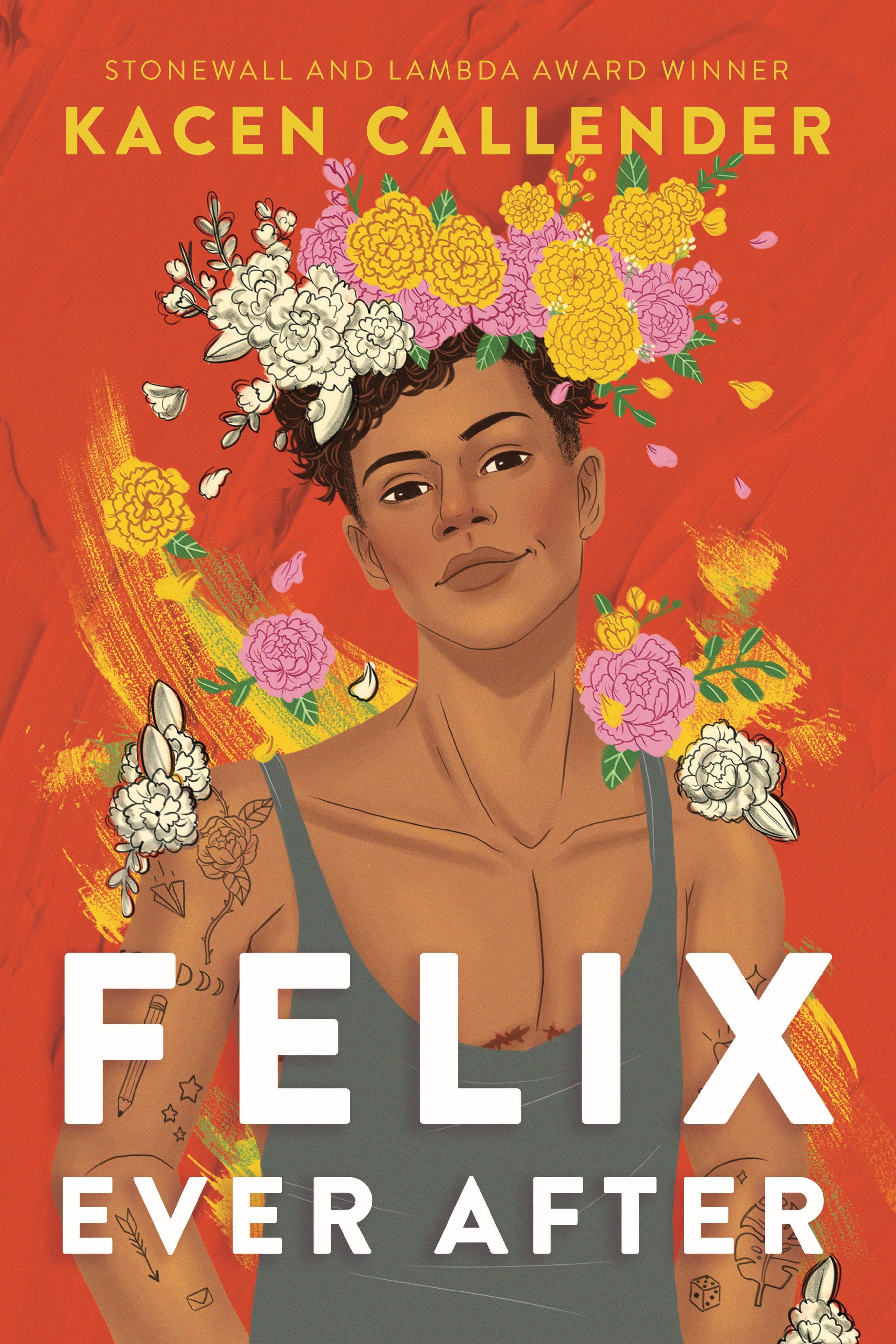
Kacen Callender (2020)
Genre
Young Adult / Romance
Reading Time
360 min
Key Themes
See below
Sign in to track this book
Felix Love, a Black, queer, and transgender teen, deals with a catfish scheme and a new love, finding that self-love is most important.
Felix Love, a Black, queer, and transgender seventeen-year-old, struggles with his art and his desire for romantic love, which he feels is out of reach. He attends St. Catherine's School, where he is one of few Black students and the only openly trans student. His summer begins with an anonymous account posting his deadname and old photos on a gallery wall, along with transphobic messages. Hurt, Felix tells his best friend, Ezra, and decides to find the person responsible. He creates an anonymous Instagram account, 'anon_stc,' to catfish a main suspect, Declan, who has a history of transphobic comments. Felix hopes to expose him.
Felix's catfish plan starts as he messages Declan, pretending to be an art student. However, another anonymous user, 'anon_stc_2,' messages 'anon_stc,' offering support about the transphobic incident. Felix finds himself in a real conversation with 'anon_stc_2,' sharing personal thoughts about his art and identity. He starts to develop feelings for this anonymous person, which complicates his revenge plan. At the same time, Felix's friendship with Ezra is strained by Ezra's easy social life and Felix's feelings for his ex-boyfriend, Peter, who is now dating Ezra.
As Felix talks more online, he begins to suspect 'anon_stc_2' might be Declan, because they share interests and talk similarly. Declan is still his main suspect for the transphobic attack. Felix also continues to pursue Peter, trying to restart their old romance, which only creates more tension with Ezra. Through his talks with 'anon_stc_2,' Felix explores his gender identity more, realizing 'transgender' might not fully describe him and that he might be genderfluid or non-binary. This online connection gives him a safe place to question parts of himself he hadn't thought about before.
At a party, Felix unexpectedly kisses Declan. This physical moment confuses Felix, as he finds himself attracted to Declan, despite his suspicions and the catfish scheme. The kiss makes him question his first thoughts about Declan and deepens his feelings for 'anon_stc_2.' He continues to tell 'anon_stc_2' about his feelings for Peter and the mysterious person he kissed, unknowingly talking about Declan with Declan himself. The lines between his online identity, his real feelings, and his revenge plan become unclear.
The truth comes out when Felix and Declan meet. Declan confesses that he is 'anon_stc_2.' This surprises Felix, who is dealing with the emotional connection they had online and his belief that Declan was the person behind the transphobic attack. Declan explains he was trying to be supportive online and regrets his past insensitive comments. He clarifies he did not post Felix's deadname. This makes Felix rethink his assumptions and see Declan's character as more complex than he first thought.
With Declan cleared of the transphobic attack, Felix and Ezra look at other suspects. Through clues and conversations, Felix discovers the truth: his best friend, Ezra, posted his deadname and old photos. Ezra confesses he was jealous of Felix's talent and attention, feeling overshadowed. He also reveals his insecurity about his own identity and his family's expectations. This betrayal devastates Felix, leading to a painful talk and a big problem in their friendship, leaving Felix feeling alone and confused.
After Ezra's confession, Felix is upset. He struggles to understand how his supportive friend could do such a hurtful thing. He isolates himself, feeling betrayed and questioning his ability to trust. He talks to his father, who offers comfort and understanding, reminding Felix of his worth and the importance of self-love. This difficult time makes Felix face his own vulnerabilities and the complexities of relationships, realizing that even close friends can make mistakes and cause pain.
After some time and space, Felix and Ezra slowly begin to fix their friendship. Ezra expresses true regret and takes responsibility for his actions. Felix, though still hurt, sees Ezra's pain and willingness to change. They have honest talks about their past and their own struggles. This period also makes Felix rethink his art goals, moving away from trying to meet others' expectations and instead focusing on creating art that reflects his own experiences and identity. He also explores his gender identity more, moving towards identifying as genderfluid.
Felix fully embraces his genderfluid identity, finding strength in defining himself. He tells his father and friends, who support him. His relationship with Declan grows deeper as they move past the early deceptions and build a foundation of honesty and respect. Felix realizes that the love he sought was not just romantic, but also self-acceptance. The book ends with Felix and Declan in a loving relationship, and Felix feeling confident and secure in his identity, ready to pursue his art and future with new clarity and self-worth.
The Protagonist
Felix evolves from a young man insecure about his identity and desperate for external validation to a confident, self-accepting individual who embraces his genderfluidity and finds true love.
The Supporting/Antagonist
Ezra moves from a seemingly perfect friend hiding deep insecurities to a person who confronts his flaws, takes responsibility for his actions, and seeks genuine reconciliation.
The Supporting/Love Interest
Declan transforms from a misjudged character with a problematic past into a supportive, loving partner for Felix, demonstrating growth and empathy.
The Supporting
Peter remains a relatively static character, serving as a catalyst for Felix's emotional journey rather than undergoing significant personal change.
The Supporting
Felix's Dad remains a consistent source of support and wisdom, his character arc is less about personal change and more about his unwavering presence in Felix's life.
The Supporting
Marisol's arc is minor, primarily serving as part of Felix's social environment.
The Supporting
Leah's arc is minor, primarily serving as part of Felix's social environment.
The novel shows Felix's self-discovery, especially about his gender identity. He first identifies as a trans boy but feels that label doesn't quite fit. He eventually realizes and accepts his genderfluid identity. This internal struggle is like his outer search for love and acceptance. Understanding oneself is important for real connection. The transphobic attack makes Felix confront how others see him, but it also pushes him to understand his own truth, apart from outside opinions or labels. His art also helps him explore and express his changing identity.
“Maybe 'transgender boy' just wasn't enough. Maybe I was something else entirely. Maybe I was just Felix.”
Felix wants to experience romantic love and wonders why it seems to avoid him. He fears that being 'one marginalization too many' (Black, queer, transgender) makes him unlovable. This theme appears in his unrequited crush on Peter, his complex feelings for Declan, and his desire for a deep connection. The book redefines love for Felix, showing that real love starts with self-acceptance. Belonging comes from finding those who appreciate his true self, rather than trying to fit others' expectations. His journey shows the human need for connection and acceptance.
“I just wanted to be loved. To be chosen. To feel like I was enough for someone.”
A main plot point is the betrayal Felix feels when he learns his best friend, Ezra, was behind the transphobic attack. This shatters Felix's trust and makes him face the painful fact that even close friends can cause deep hurt. The novel explores dealing with such a betrayal, the anger and pain it causes, and the long, hard road to understanding and possible forgiveness. It also looks at why betrayal happens, showing Ezra's own insecurities and jealousy, which adds layers to the idea of harm and making amends.
“The person I trusted most in the world. The person who was supposed to have my back. It was him.”
Felix is an artist, and his art helps him express himself and process emotions throughout the novel. At first, he struggles to make authentic art, often trying to create pieces he thinks others expect. The transphobic incident and his self-discovery directly affect his art, pushing him to create work that shows his true feelings and evolving identity. His art becomes a form of therapy, a way to deal with trauma, explore his genderfluidity, and celebrate who he is. This shows the strong link between creativity and personal growth.
“My art wasn't just about what I saw anymore. It was about what I felt. Who I was.”
A revenge plot that leads to unexpected emotional intimacy and revelations.
Felix creates an anonymous Instagram account ('anon_stc') to catfish Declan, his prime suspect for the transphobic attack. This device not only drives the initial plot of revenge but also introduces 'anon_stc_2', a second anonymous user who engages Felix in deep, confessional conversations. The anonymity allows Felix to explore his vulnerabilities and gender identity without immediate judgment, paradoxically fostering a genuine emotional connection that complicates his revenge. It highlights the dual nature of online interactions – the potential for deception and the capacity for profound intimacy and self-discovery.
A symbol of Felix's past and a catalyst for his trauma and growth.
The public posting of Felix's deadname and pre-transition photos is the inciting incident of the novel. This act represents a profound violation of Felix's privacy and identity, triggering his feelings of humiliation and fear. It symbolizes the threat of having one's past define or invalidate their present identity. However, this traumatic event also becomes a catalyst for Felix's deeper self-exploration, leading him to reclaim his narrative and solidify his understanding of who he truly is, ultimately strengthening his resolve to live authentically.
Felix's artistic struggles mirror his personal journey of identity and authenticity.
Felix's struggles with his art—trying to create 'meaningful' pieces, feeling pressure to conform, and doubting his own vision—serve as a powerful metaphor for his personal journey of identity. His inability to finish a portfolio that feels authentic reflects his internal confusion about who he is and who he wants to be. As he comes to terms with his genderfluidity and finds self-acceptance, his art transforms, becoming a genuine expression of his inner world. The completion of his portfolio, filled with authentic self-portraits, symbolizes his successful integration of identity and self-love.
A romantic entanglement that complicates Felix's emotional landscape.
The novel features a quasi-love triangle involving Felix, Peter, and Declan (and, indirectly, Ezra). Felix still harbors feelings for his ex-boyfriend Peter, who is dating his best friend Ezra. Simultaneously, Felix develops a deep emotional connection with 'anon_stc_2' (who is Declan), and a physical attraction to Declan in person. This romantic entanglement creates emotional tension, jealousy, and confusion for Felix, forcing him to confront his true desires and distinguish between past attachments and genuine new connections. It ultimately helps him clarify what he truly seeks in a relationship and in himself.
“I'm not a girl. I'm not a boy. I'm just me.”
— Felix reflects on their gender identity and the pressure to fit into binary categories.
“Love isn't about finding someone who completes you. It's about finding someone who accepts you completely.”
— Felix discusses relationships with a friend, realizing the importance of acceptance over perfection.
“Sometimes the hardest person to forgive is yourself.”
— Felix grapples with past mistakes and self-blame during a moment of introspection.
“I don't want to be loved in spite of who I am. I want to be loved because of who I am.”
— Felix expresses their desire for unconditional love and validation of their identity.
“Art is how I make sense of the world when nothing else makes sense.”
— Felix talks about their passion for art as a coping mechanism and form of expression.
“Being trans isn't a phase. It's who I am.”
— Felix asserts their identity to someone who questions or misunderstands it.
“Hurt people hurt people, but that doesn't make it okay.”
— Reflecting on conflicts and bullying, Felix acknowledges pain but holds accountability.
“I'm allowed to take up space. I'm allowed to exist.”
— Felix affirms their right to be seen and heard in a world that often marginalizes them.
“Friendship isn't about never fighting. It's about fighting for each other.”
— Felix learns about the resilience and importance of true friendship through ups and downs.
“My name is Felix Love, and I deserve to be loved.”
— A powerful declaration of self-worth and the right to love, tying into the book's title.
“Sometimes you have to create the family you need.”
— Felix finds support in chosen family when biological family relationships are strained.
“Fear is just a feeling. It doesn't have to control you.”
— Felix confronts anxieties about identity, love, and the future, encouraging bravery.
“I'm not broken. I'm just different, and different is beautiful.”
— Felix rejects societal notions of being flawed due to their identity, embracing uniqueness.
“Love should be a safe place, not a battlefield.”
— Felix reflects on past toxic relationships and envisions healthier love.
Ready to see how well you understood this book? Take our interactive quiz with 10 questions.
Biography coming soon.