“I can't believe how much trouble I get into just by being myself.”
— Celia reflecting on her misadventures.

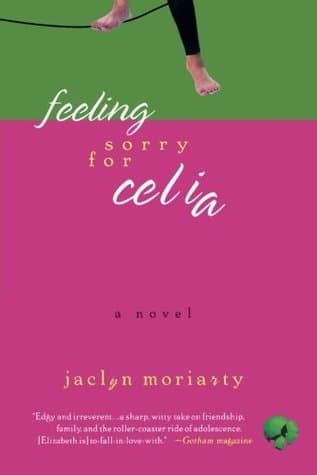
Jaclyn Moriarty (2001)
Genre
Young Adult / Romance
Reading Time
360 min
Key Themes
See below
Sign in to track this book
Through notes, letters, and bizarre messages, a witty teenager navigates friendship, family, and first crushes, all while a mysterious pen pal learns her deepest secrets.
Elizabeth Clarry begins the novel by writing a letter to a 'Complete and Utter Stranger' for an English assignment. Her teacher hopes this exercise will revive 'the Joy of the Envelope.' Through these letters, she introduces her life: her mother communicates almost exclusively through notes on the fridge, often about neighborhood events or chores. Her best friend, Celia, often disappears. Elizabeth also mentions her crush on a boy named Patrick and her anxieties about school and social dynamics, all while trying to figure out her anonymous pen pal's identity.
Celia's disappearances escalate when she vanishes for a long time without explanation, worrying Elizabeth. Elizabeth's letters to her pen pal detail her concern for Celia and her frustration with Celia's mother's indifference. At the same time, a new boy, Patrick, arrives at school and immediately catches Elizabeth's attention. She describes him as attractive and finds herself increasingly thinking about him, detailing her attempts to interact and her anxieties about how she appears to him. This new romantic interest distracts her from her worries about Celia.
Elizabeth's letters to her 'Complete and Utter Stranger' become more personal. She shares details about her English class, her struggles with algebra, and her observations about her peers. A significant event is the school dance, which Elizabeth anticipates with excitement and dread, hoping for an interaction with Patrick. The dance, however, is awkward and disappointing, not meeting her romantic expectations. She also begins to suspect her pen pal's identity, narrowing it down to a few classmates, adding mystery to her daily life.
Celia eventually reappears, but her return is not the reunion Elizabeth hoped for. Celia has befriended a new girl, Emily, and seems distant and changed. This shift in Celia's behavior and Emily's introduction makes Elizabeth feel excluded and hurt, straining their long friendship. Amidst this, Elizabeth unexpectedly connects with Christina, a girl she previously knew. Their shared experiences and observations, often about Celia's new dynamic, form a new and supportive friendship, offering Elizabeth comfort and a fresh perspective.
Elizabeth decides to train for a marathon, a personal challenge that provides focus amidst her personal changes. Her training becomes a recurring subject in her letters, showing her determination. Adding to her complex life, Elizabeth's estranged father unexpectedly reappears, sending her letters and trying to reconnect. This sudden re-entry creates emotional confusion and stress for Elizabeth, as she deals with feelings of abandonment and the awkwardness of re-establishing a relationship with a parent she barely knows, while her mother largely ignores the situation.
After much speculation, Elizabeth discovers her 'Complete and Utter Stranger' is Christina, her new friend. This revelation strengthens their bond. Meanwhile, Elizabeth's interactions with Patrick become more frequent and meaningful. They share conversations, study together, and attend events, leading to romantic tension. Elizabeth documents her escalating feelings for Patrick, detailing her hopes for their relationship to progress beyond friendship, culminating in a significant moment between them.
Celia experiences a personal crisis, though the exact details are initially vague, hinting at family issues and emotional distress. Despite their recent estrangement and Elizabeth's hurt feelings, Elizabeth shows deep loyalty and concern for Celia. She reaches out, offers comfort, and tries to understand what Celia is going through. This difficult period allows Elizabeth to show her true character, proving that her friendship with Celia, though strained, remains a fundamental part of her life. Here, Elizabeth prioritizes Celia's well-being over her own hurt.
The romantic tension between Elizabeth and Patrick culminates in a kiss. This moment is a source of joy and excitement for Elizabeth, marking a milestone in her personal life. Her letters excitedly detail the experience and her hopes for their future together. However, she also begins to deal with the realities of a romantic relationship, including the uncertainties and vulnerabilities that come with it. She reflects on what it means to be in a relationship, the expectations, and the potential for heartbreak, while still enjoying their new connection.
As Celia slowly recovers from her crisis, Elizabeth and Celia begin to mend their fractured friendship. They have honest conversations, acknowledging the distance that grew between them and expressing their feelings. Elizabeth also continues to process her father's reappearance. She struggles with forgiveness and understanding his reasons for being absent, often confiding her conflicted emotions to her pen pal (Christina). Her mother's detached communication style further complicates Elizabeth's emotional life, forcing her to navigate these complex family dynamics on her own, or with friends.
Elizabeth successfully runs and completes the marathon. This achievement is a symbol of her endurance, determination, and personal growth. Her letters describe the physical challenge and the satisfaction of crossing the finish line, reflecting her journey from an uncertain teenager to a more confident and resilient young woman. The marathon is a metaphor for overcoming personal obstacles and pushing past perceived limitations, showing her newfound strength and self-reliance, not just physically but emotionally.
Towards the end, Elizabeth reflects on her friendships and romantic relationship. She acknowledges that while her bond with Celia has changed, it still holds a significant place in her heart, and they find a new balance. Her friendship with Christina has become a deep and supportive connection. Her relationship with Patrick is still new but promising. Elizabeth’s letters convey acceptance regarding the fluidity of relationships during adolescence, recognizing that people grow and change, and friendships adapt or sometimes fade, but new ones also start.
Throughout the narrative, Elizabeth's letter writing is her main way of processing experiences and emotions. By articulating her thoughts, fears, and joys to various recipients, she develops a stronger sense of self and a clearer understanding of her place in the world. Her final letters show a mature, reflective voice, showing how she has navigated adolescence, family dynamics, and shifting friendships and romance. She has not only found her voice but also learned to trust it, becoming a more self-aware and confident individual.
The Protagonist
Elizabeth transforms from an anxious, somewhat passive observer to a more self-assured and resilient young woman who embraces change and finds her voice.
The Supporting
Celia undergoes a period of personal crisis and estrangement, eventually beginning to mend her relationships and reveal more of her vulnerabilities.
The Supporting
Christina evolves from an anonymous pen pal and acquaintance into Elizabeth's trusted best friend, providing stability and insight.
The Supporting
Patrick moves from being a distant crush to Elizabeth's first boyfriend, initiating her into the world of romantic relationships.
The Supporting
Her character remains largely static in terms of direct interaction, but her unique communication style subtly shapes Elizabeth's independent problem-solving.
The Supporting
He transitions from a phantom figure to an active, albeit challenging, presence, prompting Elizabeth to confront her feelings about abandonment and forgiveness.
The Supporting
His role is primarily as a catalyst, initiating the central plot device without significant personal development.
The Mentioned
Emily's role is primarily to catalyze the conflict in Elizabeth and Celia's friendship, without undergoing personal development.
The novel explores the complexities of teenage friendships. Elizabeth's relationship with Celia, her best friend, is central, showing the pain of feeling replaced when Celia makes new friends and distances herself. However, it also highlights the loyalty and forgiveness true friendship entails, as Elizabeth supports Celia during a crisis despite their estrangement. The theme also appears in Elizabeth's new, supportive friendship with Christina, showing that as one friendship shifts, new, meaningful connections can form.
“It's like when you're little and you have a best friend, and then suddenly you don't. It's not that you hate each other, it's just... different.”
Elizabeth's self-discovery is linked to her writing. The epistolary format allows her to process her thoughts, emotions, and experiences in real-time, articulating her fears, hopes, and observations. Through her letters to her 'Complete and Utter Stranger' (Christina), her father, and various organizations, Elizabeth develops a stronger voice and a clearer understanding of who she is. Putting her feelings into words helps her define her identity and navigate adolescence, showing how writing can be a tool for introspection and growth.
“I think I'm learning more about myself by writing these letters than I ever would just thinking about things.”
Family dynamics are a theme, particularly the unconventional communication between Elizabeth and her mother, who uses only fridge notes. This shows a blend of affection and emotional distance. Her estranged father's sudden reappearance introduces themes of abandonment, forgiveness, and the difficulty of reconnecting with a long-absent parent. These family challenges force Elizabeth to mature, often navigating complex emotions without direct parental guidance, leading to greater independence and resilience.
“My mother doesn't talk, she notes. And sometimes, you just want a conversation.”
The novel portrays the experience of first love through Elizabeth's crush on Patrick. Her letters are filled with accounts of her observations, hopes, and anxieties about him, from worrying about her appearance to analyzing every interaction. This theme captures the intensity of teenage romance, the butterflies, the anticipation of a first kiss, and the vulnerability that comes with opening oneself up to another person. It highlights the emotional rollercoaster of these new relationships and their impact on a teenager's self-perception.
“I think my heart actually stopped for a second when he looked at me. This is ridiculous.”
Elizabeth shows resilience throughout the novel, facing challenges: the strain in her friendship with Celia, her estranged father's reappearance, and the anxieties of first love. Her decision to train for and run a marathon is a metaphor for her journey of perseverance. Despite moments of doubt and emotional distress, Elizabeth pushes through, both physically and emotionally, achieving her goals and becoming a stronger, more capable individual. This theme emphasizes inner strength during formative years.
“Some days I just want to give up. But then I think about the marathon, and I know I can't.”
The entire novel is told through letters, emails, postcards, and notes.
The novel's complete reliance on an epistolary format is its most defining structural device. This allows readers direct access to Elizabeth's unfiltered thoughts, feelings, and observations, creating an intimate and authentic portrayal of her teenage experience. The varying forms of communication—from formal letters to quirky notes and messages from fictional organizations—add humor and reflect the fragmented, multi-faceted nature of modern communication. It also cleverly builds suspense around the identity of Elizabeth's pen pal and the unfolding events, as readers only know what Elizabeth chooses to write or what she receives.
A school project requiring students to correspond with an unknown recipient.
This assignment, given by Mr. Penhaligon, serves as the primary catalyst for Elizabeth's narrative. It provides a structured reason for her extensive self-expression and allows her to confide deeply personal thoughts to an anonymous recipient. This anonymity initially frees Elizabeth to be more candid than she might be face-to-face. The gradual revelation of the pen pal's identity (Christina) later transforms the device into a means of strengthening a new friendship and adding a layer of surprise and connection to the plot, highlighting the unexpected bonds that can form.
Elizabeth's mother's sole method of communication.
The fridge notes left by Elizabeth's mother are a humorous and revealing plot device. They offer insights into her mother's quirky personality, the mundane yet sometimes bizarre occurrences in their neighborhood, and her detached parenting style. These notes serve as a contrast to Elizabeth's more introspective and emotional letters, highlighting the generational and personality differences within the family. While providing comic relief, they also subtly underscore Elizabeth's emotional independence, as she largely processes her deeper issues without direct conversational input from her mother.
Letters from imaginary associations like 'The Cold Hard Truth Association'.
Throughout the book, Elizabeth receives or refers to letters from various satirical, fictional organizations (e.g., 'The Cold Hard Truth Association,' 'The Institute for the Betterment of Teenagers'). These missives serve as a comedic device, often mocking or exaggerating teenage anxieties and societal expectations. They provide a meta-commentary on the pressures of adolescence and the often-absurd advice teenagers receive. This device adds a layer of whimsical humor and surrealism to Elizabeth's world, further illustrating her unique perspective and the often-overwhelming nature of growing up.
“I can't believe how much trouble I get into just by being myself.”
— Celia reflecting on her misadventures.
“I think the whole point of being a teenager is to make really bad decisions and then write about them in your diary.”
— Celia's humorous take on adolescent life.
“Sometimes I think the only way to get through life is to pretend you know what you're doing, even when you haven't got a clue.”
— Celia's internal monologue about navigating uncertainty.
“Love is like a really complicated algebra problem, and I'm terrible at math.”
— Celia expressing her confusion about romance.
“Why is it that the people who say they love you are always the ones who make you cry?”
— Celia questioning the nature of love and hurt.
“Being popular is like being a really good juggler. You have to keep all the balls in the air, and if one drops, everyone notices.”
— Celia's observation about the pressures of popularity.
“I'm starting to think that the best way to get over someone is to get under someone else. Or maybe just eat a lot of chocolate.”
— Celia's post-breakup coping mechanisms.
“It's amazing how much drama you can fit into one small suburb.”
— Celia commenting on the everyday occurrences in her neighborhood.
“I wish life came with a rewind button, especially for the embarrassing bits.”
— Celia's desire to undo awkward moments.
“You know you're in trouble when your best friend knows more about your love life than you do.”
— Celia realizing her friends are more aware of her romantic entanglements.
“Maybe growing up is just realizing that everyone else is just as confused as you are.”
— Celia's realization about the shared experience of adolescence.
“There's something about writing things down that makes them feel more real, even the things you wish weren't.”
— Celia reflecting on the power of journaling and correspondence.
“I'm not sure what's worse: having a crush on someone who doesn't like you back, or having a crush on someone you shouldn't.”
— Celia pondering the complexities of unrequited or forbidden love.
Ready to see how well you understood this book? Take our interactive quiz with 10 questions.