“The past is never dead. It’s not even past.”
— A recurring theme in the novel, reflecting how historical events and personal traumas reverberate through generations.

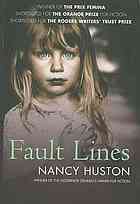
Nancy Huston (2008)
Genre
Historical Fiction
Reading Time
6-8 hours
Key Themes
See below
Sign in to track this book
From present-day California to World War II Germany, a child's birthmark reveals generations of family secrets, showing how love, music, and faith endure against evil.
The novel opens with Sol, a six-year-old boy in California, whose intelligence and insights often disturb his parents, Randall and Kristina. Sol has a unique birthmark, shared by his father, grandmother, and great-grandmother, which Kristina sees as a sign of destiny. Sol often questions the world, making observations that hint at a deeper, perhaps inherited, understanding of human nature and suffering. He is drawn to stories and music, showing unusual maturity. His interactions with his parents show strains in their relationship, made worse by Sol's challenging personality and Kristina's anxious mothering. Sol's early life mixes typical childhood with an undercurrent of unspoken family history.
Randall, a musician and academic, takes a job in Munich, leading the family to move to Germany. This move greatly affects Sol, who, despite his language skills, becomes withdrawn and makes disturbing statements. He starts speaking strange, old German, often referencing historical events and figures a six-year-old should not know. Kristina worries more about Sol's mental state, while Randall tries to balance his career with his family's growing unease. The new environment in Munich, with its complex history, seems to awaken something in Sol, causing him to channel voices and memories that are not his own, hinting at a deep, inherited trauma.
The perspective shifts to Sadie, Sol's grandmother, living in Toronto in the 1980s. Sadie is a Holocaust survivor who carries the weight of her past. She is a musician, like Randall, and her life is marked by deep sadness and a strong desire to protect her son from the horrors she experienced. Her war memories are fragmented but vivid, influencing her every action. She struggles with her relationship with Randall, often feeling misunderstood and isolated by her trauma. Sadie's story shows her efforts to build a new life after the war, marry Jim, and raise Randall, while battling the shadows of her lost family and the atrocities she saw. Her birthmark, like Sol's, is a constant reminder of her lineage.
Back in Munich, Kristina's anxiety grows as Sol's visions and statements become more frequent and disturbing. He speaks of 'the fire,' 'the camps,' and 'the trains' with an unsettling familiarity, seemingly channeling past generations' experiences. Kristina, though initially dismissive, starts to believe Sol is connected to the family's hidden history. Randall, though concerned, tries to find rational explanations for Sol's behavior, often clashing with Kristina over how to handle their son. Tension between them rises as Sol's connection to the past becomes undeniable, forcing them to consider inherited trauma and decades-old secrets. Sol's visions are not just words; they are vivid, emotional descriptions that deeply affect his parents.
The story moves to the life of Ernst, Sadie's mother, during her childhood in Germany in the 1930s. Ernst is a gifted and sensitive child, growing up in a cultured, intellectual family. Her world is full of music, literature, and family warmth. However, hints of rising Nazi influence begin to enter their lives, slowly eroding their security. Ernst also has the distinctive birthmark, linking her to the lineage. Her story captures a child's innocence on the edge of unimaginable historical upheaval, showing how the political climate slowly tightened its grip on ordinary lives. Her perspective is important for understanding the first stages of the family's journey into tragedy.
Sadie's memories from the war become more explicit and devastating. She recalls the persecution of Jewish people in Germany, the forced separation from her parents, Ernst and Georg, and her internment in concentration camps. Her narrative details the starvation, brutality, and dehumanization she endured. She describes losing her family, the constant struggle to survive, and the trauma that shaped her life. This section highlights the deep wounds from the war, explaining Sadie's lifelong sorrow and her efforts to shield Randall from similar pain. Her survival is a miracle, but one scarred by lasting memories.
Overwhelmed by Sol's disturbing visions and statements, Kristina searches for her family's history. She researches Randall's lineage, looking into old records and fragmented stories. Her investigation leads her to discover buried secrets and uncomfortable truths about Sadie's past and her family's fate during the war. Kristina's journey is emotionally difficult as she confronts the reality of the Holocaust and its lasting impact. She pieces together the family tree, connecting Sol's insights to his ancestors' traumatic experiences. This research becomes a step in solving the mystery of Sol's behavior and the inherited trauma.
Kristina's research reveals Georg's fate, Sadie's father. Georg, a musician and intellectual, faced impossible choices during the Nazi regime. While he tried to protect his family, circumstances forced him into a desperate situation. Kristina learns that Georg, to save Ernst and Sadie, made a terrible sacrifice or collaborated in some way. The specifics of his actions are morally ambiguous and tragic, showing the ethical dilemmas people faced during extreme times. This revelation is a moment, explaining a part of the family's trauma and the unspoken burdens Sadie carried.
As Kristina uncovers more about Georg, Sol's channeling becomes more focused and explicit. He no longer just speaks of general wartime horrors; he embodies Georg, speaking in his voice, expressing his anxieties, his love for Ernst and Sadie, and his guilt. Sol's artistic talents, especially his musicality, match Georg's, further cementing the connection. This direct channeling disturbs Randall and Kristina, but it also provides a window into the past, letting them witness the trauma through their son. Sol's body becomes a vessel for Georg's unresolved emotions and the weight of his past actions, making the inherited trauma tangible.
With the full truth of Georg's actions and Sadie's suffering revealed, the family in Munich confronts their traumatic past. Kristina and Randall, though shattered, begin to understand Sol's behavior and the pervasive sadness that has affected their lives. The revelations are painful, but they also bring clarity and a path toward healing. The birthmark, once a mysterious emblem, now symbolizes the connection across generations, a physical sign of shared history and inherited memory. The family must now live with this knowledge, acknowledge their ancestors' experiences, and build a future free from the silent burden of the past.
After the revelations, the family begins a difficult but necessary process of healing and acceptance. Sol's channeling slowly stops as the unspoken truths are brought to light and acknowledged. Randall, through his music, expresses the grief and love that spans generations. Kristina, having pieced together their history, feels understanding and empathy for her in-laws. The novel ends with the family, though marked by their past, finding renewed connection and resilience. They learn that while trauma can be inherited, so can love, resilience, and art's power to overcome suffering. The birthmark, once a symbol of a haunting past, becomes a symbol of enduring lineage and family strength.
The Protagonist
Sol begins as a mysterious child whose unsettling behavior is a symptom of inherited trauma; he eventually becomes a conduit for healing as the family confronts its past.
The Protagonist/Narrator
Kristina evolves from an anxious mother to a courageous truth-seeker, ultimately facilitating the family's healing by uncovering their history.
The Supporting
Randall moves from skepticism to reluctant acceptance of the family's inherited trauma, finding solace and understanding through his music.
The Protagonist (past timeline)
Sadie survives unimaginable trauma and builds a new life, but remains haunted by her past until her story is finally understood and acknowledged by her descendants.
The Protagonist (past timeline)
Ernst lives a vibrant artistic life that is tragically cut short by the historical events of the Holocaust, becoming a symbol of lost innocence and potential.
The Protagonist (past timeline)
Georg, a loving family man, is forced to make morally compromising decisions to save his family, leaving a legacy of guilt that echoes through generations until finally acknowledged.
The Supporting
Jim remains a steady, supportive presence in Sadie's life, helping her find a measure of peace after her wartime trauma.
The novel explores how the trauma of historical events, especially the Holocaust, can pass through generations, not just through stories but almost genetically or spiritually. Sol's ability to channel his ancestors' memories and emotions, particularly Georg, shows this theme. The birthmark acts as a physical sign of this inherited legacy, linking characters across time. The silence around Sadie's past, meant to protect Randall, contributes to the unresolved trauma that surfaces in Sol.
““It's as if he's absorbing the past, not just hearing about it. It’s in his blood, Kristina, it’s in all our blood.””
Music is a motif throughout the novel, acting as comfort and a way for memory and emotion. Georg, Ernst, Sadie, and Randall are all musicians, and Sol shows innate musicality. Music lets characters express what words cannot, bridging generations and cultures. Randall's playing, for instance, often carries an unspoken sadness that resonates with his mother's past, while Sol's artistic expressions become a way for ancestral voices to be heard, even when disturbing. Music connects the family's identity and shared history.
““Music was the only language that could hold it all, the joy and the horror, the beauty and the unspeakable.””
The novel examines the guilt carried by individuals who survived or made impossible choices during extreme circumstances, particularly Georg's actions during the Holocaust. His desperate attempts to save his family lead to morally ambiguous decisions that haunt his memory and are channeled through Sol. The theme explores how such guilt can transcend lifetimes, affecting future generations. It raises questions about right and wrong when facing threats and the lasting burden of sacrifices.
““Some choices, she realized, were not choices at all, but rather the desperate flailing of a soul caught in a trap.””
Kristina's search to uncover her family's hidden history is central to this theme. Driven by Sol's unsettling behavior, she embarks on a journey of discovery that forces her to confront painful truths about the Holocaust and its impact on her husband's family. Her search is not just for facts but for understanding, empathy, and a way to heal generational wounds. The narrative structure, moving backward in time, mirrors this investigative process, slowly revealing layers of truth that lead to a full understanding of the family's 'fault lines.'
““She knew, with a certainty that chilled her to the bone, that the past wasn’t merely behind them; it was living, breathing, and speaking through her son.””
A distinctive physical mark passed down through four generations, symbolizing inherited traits and trauma.
The birthmark, present on Sol, Randall, Sadie, and Ernst, serves as a powerful symbol of inherited lineage and, more significantly, inherited trauma. It is a physical manifestation of the 'fault lines' within the family, a visible link across generations that hints at a deeper, unspoken connection to the past. The birthmark is initially a source of curiosity and then a key identifier in connecting the fragmented narratives, suggesting that certain aspects of identity and experience are literally 'marked' upon a family's genetic or spiritual inheritance. It visually reinforces the theme of inherited memory.
The story unfolds through the viewpoints of different characters across various time periods, moving backward in time.
The novel employs a non-linear narrative structure, shifting between the perspectives of Sol (in the present), Sadie (in the 1980s), and Ernst and Georg (in pre-WWII Germany). This allows the reader to gradually piece together the family's history, mirroring Kristina's own investigation. By starting with the present and moving backward, the author creates a sense of unfolding mystery and reveals the roots of the current-day trauma. This structure emphasizes how the past continually informs and shapes the present, and how understanding requires delving into historical context.
The six-year-old protagonist's uncanny ability to articulate and embody the experiences of his ancestors.
Sol's unique ability to channel the voices, memories, and emotions of his great-grandparents, particularly Georg, is a central plot device. It serves as the primary catalyst for Kristina's investigation and the family's confrontation with their past. This channeling is not merely a metaphor; it is presented as a tangible, if unsettling, phenomenon. It allows the buried trauma to manifest directly in the present, forcing the characters and the reader to acknowledge the profound and lasting impact of historical events on subsequent generations. It makes the abstract concept of inherited trauma concrete and deeply personal.
Music serves as a recurring motif and a means of communication and emotional expression across generations.
Music is not just a hobby for many characters; it's a language, a form of memory, and a release. From Georg's and Ernst's love of classical music to Sadie's and Randall's musical talents, and Sol's innate response to melodies, music transcends words. It allows for the expression of profound grief, love, and unspoken history. In a family marked by trauma and silence, music provides a shared emotional space where the echoes of the past can be heard and processed, often conveying feelings that are too painful or complex for verbal articulation. It's a thread of continuity and resilience.
“The past is never dead. It’s not even past.”
— A recurring theme in the novel, reflecting how historical events and personal traumas reverberate through generations.
“Children are like sponges, they soak up everything. And then they leak.”
— Describing the impressionability of young minds and their eventual, often unconscious, expression of absorbed experiences.
“Every family has its fault lines, its hidden cracks that can split open at any moment.”
— The central metaphor of the novel, explaining the inherent vulnerabilities within family structures.
“Silence can be a form of violence, a way of erasing what happened.”
— Reflecting on the destructive power of unspoken truths and suppressed memories within families.
“We are all products of our time and our place, but also of the times and places that came before us.”
— Highlighting the complex interplay of personal identity, historical context, and ancestral influence.
“Love isn't always enough to heal the old wounds, but it's a start.”
— Exploring the limits and potential of love in addressing deep-seated family pain.
“Sometimes the greatest acts of courage are simply to keep living, to keep breathing, despite everything.”
— A reflection on resilience in the face of overwhelming personal and historical adversity.
“The stories we tell ourselves about our past are often more important than the past itself.”
— Examining the subjective nature of memory and narrative in shaping personal understanding.
“Loss is not a single event, but a continuous process of remembering and re-remembering.”
— Describing the ongoing nature of grief and the way it evolves over time.
“The weight of history isn't just in the big events, but in the small, everyday ways it shapes us.”
— Emphasizing the subtle, pervasive influence of historical context on individual lives.
“To understand a person, you must understand their parents, and their parents' parents.”
— Underlining the generational aspect of identity and inherited traits.
“There are wounds that never truly close, only scar over, waiting for the right pressure to break open again.”
— Further elaborating on the enduring nature of trauma and its potential for re-emergence.
“Hope is a fragile thing, easily crushed, but essential for survival.”
— A poignant observation on the delicate balance between despair and the necessity of hope.
“We carry our ancestors not just in our genes, but in our gestures, our fears, our unspoken desires.”
— Illustrating the deep, often unconscious, ways in which ancestral legacies manifest.
Ready to see how well you understood this book? Take our interactive quiz with 10 questions.

Biography coming soon.







