“He just felt like that, like he was a part of the dirt and the trees and the river, and he was going to be there forever.”
— Gene as a young boy, feeling connected to his rural Mississippi home.

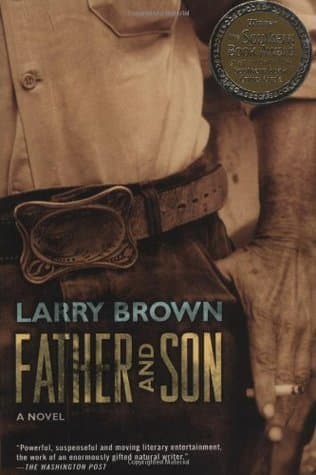
Genre
Literary Fiction / Thriller / Historical Fiction
Reading Time
9 hr 40 min
Key Themes
See below
Sign in to track this book
In the sweltering 1968 American South, a recently paroled killer's return unleashes violence and long-buried family secrets, forcing an upright sheriff to confront the evil threatening to consume their community.
Glen Davis is released from Parchman Penitentiary after serving time for a previous crime, a stabbing that resulted in a man losing an eye. He hitches a ride with a Black family and is dropped off near his home in Mississippi. His mother, Mary Davis, is wary and fearful of his return, knowing his violent tendencies. His half-brother, Danny Ray, a young boy, is initially curious but quickly becomes terrified by Glen's menacing presence. Glen immediately asserts his dominance and instability, demanding money and showing no remorse for his past actions or any desire to change, setting a tense and dangerous tone for his re-entry into the community.
Within hours of his return, Glen Davis commits his first acts of violence. He goes to the local store owned by Mr. T.J. and demands money. When Mr. T.J. resists, Glen brutally murders him. Shortly after, a young Black man named Sonny, who often helps out at the store, enters and witnesses the aftermath. Glen, without hesitation, murders Sonny as well to eliminate any witnesses. These acts immediately shatter the fragile peace of the community and set Sheriff Bobby Blanchard on a path of investigation and pursuit, igniting a reign of terror that will consume the small town.
Sheriff Bobby Blanchard, a respected and moral lawman, is called to the scene of the double murder at Mr. T.J.'s store. He and his deputies, including Deputy Joe, find the bodies and begin processing the crime scene. Immediate suspicion falls on Glen Davis due to his violent history and recent release from prison. Sheriff Blanchard knows Glen personally. The weight of the crime, coupled with the knowledge of Glen's capabilities, deeply affects him. He understands the profound impact these murders will have on the close-knit community and the families involved, particularly the Black community from which Sonny hailed.
As news of the murders spreads, fear permeates the rural community. Sheriff Blanchard organizes a widespread search for Glen Davis, involving deputies and concerned citizens. Glen, however, proves elusive, using his knowledge of the local woods and terrain to evade capture. The search becomes a race against time, as the sheriff and his men understand that Glen is a danger to anyone he encounters. The tension is palpable, with residents locking their doors and looking over their shoulders, knowing that a dangerous killer is loose among them.
Mary Davis, Glen's mother, is consumed by fear and guilt. She knows the depths of Glen's depravity and the dark history that has plagued their family. Danny Ray, Glen's young half-brother, is traumatized by Glen's presence and the violence he brings. He tries to hide and avoid Glen, but Glen's psychological and physical abuse extends to him. The family home becomes a prison, a place of constant dread and helplessness, as Mary struggles to protect Danny Ray while grappling with her own complicity and the bond to her violent son.
Sheriff Bobby Blanchard's connection to the Davis family runs deeper than just law enforcement. He grew up in the same area and knew Glen's father, who was also a violent and troubled man. This history weighs heavily on Bobby, as he sees a pattern of generational violence and despair within the family. He is not just a lawman pursuing a criminal; he is a man deeply invested in the moral fabric of his community, struggling to understand how such evil can persist and how to prevent it from consuming more lives. His sense of duty is intertwined with empathy for the victims and the broken family.
The search for Glen Davis eventually leads Sheriff Bobby Blanchard and his men back to the Davis family home. A tense standoff ensues, with Glen barricaded inside. Mary Davis and Danny Ray are caught in the middle, their lives in danger. Sheriff Blanchard attempts to negotiate, hoping to apprehend Glen without further bloodshed, but Glen's irrationality and violent nature make a peaceful resolution seem impossible. The house becomes a focal point of the community's fear and the culmination of the hunt for the killer.
The confrontation at the Davis home escalates into a brutal and tragic climax. Glen, refusing to surrender, engages in a shootout with Sheriff Blanchard and his deputies. The violence is intense and chaotic, with shots exchanged and lives irrevocably altered. In the ensuing chaos, further tragedy strikes, as the long-simmering tensions and Glen's rage reach their devastating peak. The events highlight the destructive power of evil and the sacrifices made by those who stand against it, leaving deep scars on the survivors and the community.
In the wake of the violent confrontation, the community is left to pick up the pieces. Sheriff Bobby Blanchard, though successful in stopping Glen's rampage, is deeply affected by the loss of life and the evil he witnessed. The events force the residents to confront the dark undercurrents that have always existed in their seemingly peaceful rural setting. The novel explores the long-term psychological and emotional toll on the survivors, particularly Mary Davis and Danny Ray, as they attempt to reconcile with their family's tragic legacy and find a way forward amidst grief and trauma.
The story concludes not with easy answers, but with a somber reflection on the burden of history and the cyclical nature of violence. Sheriff Bobby Blanchard continues his work, but is forever changed by his encounter with Glen Davis and the realization of how deeply evil can embed itself within a family and a community. The events serve as a reminder that some wounds never fully heal and that the past, with its secrets and transgressions, continues to shape the present and future. The fragile ties of the community are tested, and though they endure, they bear the marks of the tragedy.
The Antagonist
Glen's arc is one of unyielding descent into greater depravity, culminating in his violent end, with no redemption or change.
The Protagonist
Bobby endures profound trauma and loss, solidifying his commitment to justice while bearing the heavy emotional scars of his duty.
The Supporting
Mary endures unimaginable terror and loss, emerging as a survivor, albeit deeply scarred, after confronting her family's dark legacy.
The Supporting
Danny Ray's innocence is brutally shattered, forcing him to witness unspeakable acts, but he ultimately survives, carrying the heavy burden of his experiences.
The Mentioned
Mr. T.J.'s arc is tragically cut short, serving as a catalyst for the main plot.
The Mentioned
Sonny's arc is tragically cut short, serving as a catalyst for the main plot.
The Supporting
Deputy Joe remains a steadfast and loyal support to Sheriff Blanchard, witnessing the trauma of the events.
The Mentioned
His past actions continue to shape the present, even after his death, influencing Glen's character and the family's fate.
The novel explores the origins and manifestations of evil, particularly through the character of Glen Davis. It suggests that evil can be both inherited (from Glen's father) and self-perpetuating, festering in a man's heart until it consumes his soul. Glen's actions are often gratuitous and without clear motive beyond a desire to inflict pain and assert dominance, highlighting a chilling lack of empathy. The community's struggle to comprehend Glen's depravity underscores how disruptive and alien pure evil can be to a moral society. For example, his casual murders of Mr. T.J. and Sonny are depicted with stark, brutal efficiency, demonstrating his inherent cruelty.
“Some men are born to trouble, and some men choose it. Glen, he was both.”
A central theme is how violence and trauma are passed down through generations. Glen's psychopathy is explicitly linked to his father's own brutal nature and abusive behavior, which deeply affected Mary Davis. The cycle of violence is not only physical but also psychological, instilling fear and helplessness in those who experience it. Danny Ray, Glen's half-brother, represents the next generation at risk, highlighting the difficult challenge of breaking free from such a destructive legacy. The novel suggests that the sins of the father can indeed be visited upon the son, creating a seemingly inescapable pattern of suffering and depravity.
“The past ain't never really gone. It just waits for its turn.”
The narrative is a stark portrayal of the conflict between good and evil, personified by Sheriff Bobby Blanchard and Glen Davis. Bobby represents morality, justice, and the desire to protect his community, while Glen embodies destructive malevolence. The novel shows the personal toll this struggle takes on those who fight against evil, as Bobby is deeply scarred by the violence he confronts. It's a battle not just for physical safety but for the soul of the community, where even victory comes at a profound cost.
“A man’s got to stand for something, or he’ll fall for anything.”
The quiet, rural community in Mississippi is initially depicted as tight-knit but is quickly shattered by Glen's return. His acts of violence expose the fragility of social order and the vulnerability of seemingly peaceful lives. The fear and suspicion that permeate the town demonstrate how easily trust can erode and how quickly a community can be plunged into chaos. Sheriff Blanchard's efforts are not just about catching a criminal, but about restoring a sense of safety and rebuilding the broken ties within the community, highlighting the constant effort required to maintain civility against destructive forces.
“This town, it ain't never gonna be the same.”
Hints and clues about future violence and character fates.
Larry Brown masterfully uses foreshadowing to build tension and a sense of impending doom. Glen's initial interactions, his cold demeanor, and his mother's immediate fear upon his return all hint at the violence to come. Descriptions of the oppressive heat and the stagnant atmosphere of the rural South also subtly foreshadow the eruption of destructive forces. This device keeps the reader on edge, anticipating the inevitable and brutal acts that Glen will commit, making the narrative intensely suspenseful.
Shifting focus between the antagonist's actions and the protagonist's pursuit.
While not strictly alternating chapters, the narrative frequently shifts its focus between Glen's terrifying actions and movements, and Sheriff Bobby Blanchard's determined investigation and pursuit. This allows the reader to experience both the raw, unhinged violence from Glen's perspective (or close to it) and the moral struggle and strategic efforts of Bobby. This dual perspective intensifies the cat-and-mouse dynamic and provides a comprehensive view of the unfolding tragedy from both sides of the conflict.
The landscape and setting represent deeper themes of stagnation and hidden darkness.
The oppressive heat, dense woods, and isolated nature of the rural Mississippi setting in 1968 serve as more than just a backdrop. They symbolize the stifling conditions, the deeply ingrained historical issues, and the hidden darkness that can fester beneath a seemingly quiet surface. The slow pace of life and the close-knit community are contrasted with the sudden, brutal violence, highlighting how such environments can both nurture and conceal profound evil, making it particularly shocking when it erupts.
The violent confrontation as the peak of the narrative, followed by a somber aftermath.
The novel builds steadily towards a singular, intense climax—the confrontation at the Davis family home. This peak of violence is the culmination of all the preceding tension and acts of terror. Following this explosive event, the narrative shifts into a resolution phase that isn't about happy endings but about the profound and lasting impact of the violence. This structure emphasizes that some wounds never fully heal, and the aftermath is as significant as the conflict itself, highlighting the enduring scars on the characters and the community.
“He just felt like that, like he was a part of the dirt and the trees and the river, and he was going to be there forever.”
— Gene as a young boy, feeling connected to his rural Mississippi home.
“A man's got to do what a man's got to do, and sometimes it ain't pretty.”
— Gene reflecting on difficult choices and the harsh realities of life.
“The past ain't never really gone. It just waits for you to catch up to it.”
— Gene grappling with the consequences of his earlier actions.
“Some men are born to trouble, and some men make their own.”
— A general observation on the nature of fate versus personal responsibility.
“He knew what it was to be hungry, and he knew what it was to be afraid, and those two things could make a man do just about anything.”
— Gene's understanding of primal motivations driving human behavior.
“The world was a hard place, and you had to be harder to survive in it.”
— Gene's hardened worldview shaped by his experiences.
“Love was a complicated thing, full of pain and joy, and sometimes you couldn't tell which was which.”
— Gene reflecting on his relationships, particularly with his family.
“Every man carries his own hell inside him, and sometimes it breaks loose.”
— An insight into the internal struggles and inner demons faced by characters.
“He just wanted to be free, free from all the things that had tied him down his whole life.”
— Gene's yearning for liberation from his past and circumstances.
“There were some things you just couldn't outrun, no matter how fast you ran.”
— Gene's realization about the inescapable nature of certain problems or past events.
“The silence in the woods was a different kind of silence, a living silence.”
— Gene experiencing the unique atmosphere of the natural world.
“He'd made his bed, and now he had to lie in it, even if it was a bed of thorns.”
— Gene accepting the harsh consequences of his choices.
“A man learns more from his mistakes than he ever does from his successes.”
— A reflection on the value of failure and learning through experience.
“The river kept on flowing, just like time, carrying everything with it.”
— A metaphorical observation on the passage of time and its relentless nature.
Ready to see how well you understood this book? Take our interactive quiz with 10 questions.

Biography coming soon.







