BookBrief
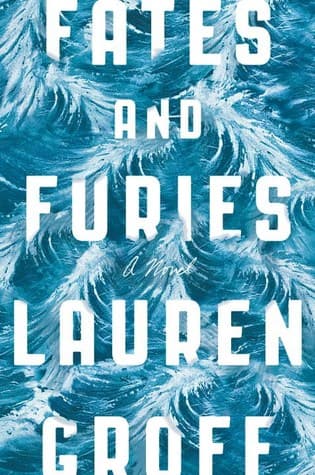
Fates and Furies cover
Archivist's Choice

Fates and Furies

Lauren Groff (2015)

Genre

Literary Fiction / Romance

Reading Time

8-10 hours

Key Themes

See below

Track Your Reading

Sign in to track this book

A dazzling portrait of a marriage, "Fates and Furies" dissects the two radically different sides of a seemingly perfect union, revealing the volatile truths and carefully guarded secrets that bind a couple over two decades.

Synopsis

Lotto and Mathilde are a golden couple, seemingly destined for a life of artistic and romantic triumph. Their marriage, viewed from the outside, is an enviable story of passion and success. The first half of the novel, 'Fates,' is from Lotto's perspective. We see his journey from a privileged but troubled youth to a celebrated playwright, often attributing his good fortune and creative breakthroughs to Mathilde's unwavering support. He adores her, convinced she is the pure, beautiful anchor of his life. Their early marriage is a whirlwind of intense love and artistic ambition, culminating in Lotto's rise to fame. However, the second half, 'Furies,' shatters this image by revealing Mathilde's hidden life. We discover her traumatic childhood, her calculated efforts to escape her past, and her deliberate manipulation of Lotto's career and public image. Mathilde is not merely a supportive wife; she is the architect of his success, making ruthless decisions and engaging in secret affairs to protect their carefully constructed life. The truth behind key moments, including the death of Lotto's childhood friend Chollie, is unveiled, revealing Mathilde's deep involvement. The novel ends with Lotto's death and Mathilde's continued existence, showing her enduring power and the secrets that underpinned their legendary marriage, proving that their bond was built not on shared truths, but on carefully guarded deceptions.
Reading time
8-10 hours
Difficulty
Medium
Pacing
Moderate
Mood
Introspective, Complex, Unsettling, Literary
✓ Read this if...
You enjoy deep dives into the complexities of marriage, unreliable narrators, and exquisite prose.
✗ Skip this if...
You prefer straightforward narratives or find morally ambiguous characters frustrating.

Plot Summary

The Proposal and Early Marriage

Lotto and Mathilde meet at Vassar College. Lotto, a charismatic and privileged aspiring actor, is instantly smitten with the enigmatic Mathilde, who comes from a more modest background and is an orphan. After only two weeks, Lotto proposes, and Mathilde accepts. Their friends are shocked by the speed and intensity of their union. Lotto's wealthy, disapproving mother, Antoinette, offers Mathilde money to leave Lotto, which Mathilde refuses, solidifying her commitment. They move to New York City, where Lotto attempts an acting career while Mathilde works various odd jobs to support them, often struggling financially in their tiny apartment.

Lotto's Theatrical Beginnings

Lotto struggles as an actor, facing constant rejections. Mathilde, ever supportive, encourages him despite their financial precarity. During a period of unemployment and despair, Lotto begins to write plays. His first play, 'The Minotaur,' draws heavily from his own life and a traumatic childhood event—the drowning of his childhood friend, Chollie, during a beach party. This play garners critical attention and marks the beginning of his successful career as a playwright, bringing them out of poverty and into the spotlight. Mathilde becomes his muse and his first, most important reader.

Rise to Fame and Public Image

Lotto's plays achieve widespread critical and commercial success, making him a celebrated figure in the theatrical world. His works are known for their raw emotion and exploration of myth and personal tragedy. Mathilde is always by his side, a beautiful, elegant, and seemingly perfect wife, embodying grace and support. Their marriage becomes a public spectacle, an idealized union of two people deeply in love, fueling Lotto's creative output. The public and their friends view them as a golden couple, their relationship seemingly unblemished and inspirational, despite underlying complexities and private struggles.

Antoinette's Influence and Lotto's Past

Antoinette, Lotto's mother, is a formidable and often critical presence in their lives. She never fully accepts Mathilde and frequently makes subtly disparaging remarks. Lotto's traumatic childhood incident, the drowning of Chollie, continues to be a central theme in his plays and his personal psyche. He carries immense guilt and believes he was responsible for Chollie's death, a belief reinforced by his mother's subtle manipulations. This event shapes much of his artistic vision and his understanding of fate and tragedy, constantly revisiting it in his creative works and private thoughts.

The 'Fates' Section Begins: Mathilde's Perspective

The novel abruptly shifts perspective, moving from 'Fates' (Lotto's story) to 'Furies' (Mathilde's story), revealing that much of what was presented about Mathilde was a carefully constructed facade. Her past is far more complex and darker than Lotto or anyone else knows. She is not a simple orphan; she orchestrated her own disappearance from a difficult childhood. This section begins to unravel the carefully curated image of their perfect marriage, hinting at Mathilde's deep influence on Lotto's life and career, often in ways he never perceived or understood.

Mathilde's Troubled Childhood and Escape

Mathilde's childhood was marked by poverty and abuse. Her mother was neglectful, and she experienced sexual abuse from her uncle. To escape this unbearable life, Mathilde meticulously plans her own disappearance, faking her death and creating a new identity as an orphan. She works tirelessly to educate herself and secure a scholarship to Vassar, determined to escape her past and build a new, respectable life. This reveals her incredible resilience, intelligence, and capacity for strategic planning, traits that Lotto, in his romanticized view, often overlooked or misinterpreted.

The Architect of Lotto's Success

Mathilde's role in Lotto's success is far more active and manipulative than previously understood. She subtly steers his career, giving him ideas for plays, editing his drafts, and even orchestrating key introductions. For instance, she deliberately introduces him to a director who becomes instrumental in staging his first successful play. She also carefully manages his public image and protects him from his own self-destructive tendencies. Her actions are not always out of selfless devotion but also a calculated effort to secure their shared future and maintain the life she has built.

The Truth About Chollie's Death

The most shocking revelation is Mathilde's direct involvement in Chollie's death. She was present on the beach that day and, seeing the opportunity to remove a potential rival for Lotto's affections and to solidify his dependence on her, she actively prevented Chollie from being saved. She then manipulated Lotto's mother, Antoinette, into believing Lotto was responsible, thereby ensuring Antoinette would always feel guilt and be more lenient with Lotto. This single act forms the dark foundation of Lotto's greatest artistic inspiration and his enduring guilt, a secret Mathilde has kept for decades.

Mathilde's Affairs and Hidden Desires

Despite the outward appearance of marital fidelity, Mathilde has several affairs throughout their marriage, including a long-standing one with a mutual friend, a journalist named Leo. These relationships are not born of a lack of love for Lotto, but rather a complex mix of her own unfulfilled artistic ambitions, a desire for control, and a need for intellectual and physical stimulation that Lotto, in his self-absorption, often fails to provide. Her affairs are carefully concealed, demonstrating her mastery of deception and her ability to maintain separate, compartmentalized lives.

Lotto's Death and Mathilde's Aftermath

Lotto dies suddenly from a heart attack, leaving Mathilde a widow. His death is a profound shock, even for Mathilde, who had meticulously planned their future. In the aftermath, Mathilde inherits his estate and the responsibility of preserving his artistic legacy. She continues to live with the weight of her secrets, particularly the truth about Chollie's death, which Lotto never discovered. The novel concludes with Mathilde reflecting on their complex marriage, the intertwined nature of their fates, and the enduring power of her own will and the choices she made to secure her life and Lotto's success.

Principal Figures

Lotto (Lottario Sforza)

The Protagonist

Lotto evolves from a struggling actor to a celebrated playwright, becoming more successful and outwardly confident, yet remains emotionally dependent on Mathilde and haunted by a past he misunderstands.

Mathilde

The Protagonist/Antagonist

Mathilde transforms from a desperate survivor into a powerful, hidden force, ultimately securing her position and legacy, but remaining burdened by her profound secrets.

Antoinette Sforza

The Supporting

Antoinette remains largely static in her critical nature and guilt, her influence primarily serving to highlight Lotto's background and Mathilde's challenges.

Chollie

The Mentioned

As a character, Chollie has no arc; his death is the catalyst for much of the story's development.

Leo

The Supporting

Leo's arc is less about personal change and more about his consistent role as Mathilde's confidante and lover, providing a window into her hidden life.

Rachel

The Supporting

Rachel's arc is minor, serving primarily to illustrate Lotto's past and moments of marital dissatisfaction.

Celeste

The Supporting

Celeste's arc is limited, primarily functioning as a living link to Mathilde's hidden past.

Themes & Insights

Truth vs. Illusion

The novel explores the chasm between perceived reality and hidden truths, particularly within marriage. Lotto's 'Fates' section presents an idealized, if somewhat tragic, love story where Mathilde is the perfect muse. The 'Furies' section shatters this illusion, revealing Mathilde's calculated manipulations, her dark past, and the true extent of her influence on Lotto's life and art. The public image of their 'golden couple' is a carefully constructed facade, showing how easily narratives can be controlled and how deeply secrets can be buried within the most intimate relationships.

“Every story has two sides. Every relationship has two perspectives. And sometimes, it turns out, the key to a great marriage is not its truths but its secrets.”

Narrator

Fate vs. Free Will

Lotto believes in the power of fate and the idea that his life, particularly his art, is dictated by an almost cosmic design, largely influenced by Chollie's death. His plays often reflect this fatalistic view. However, Mathilde's section reveals that much of what Lotto perceives as fate is, in fact, the result of her deliberate and calculated choices. Her actions, from faking her own death to orchestrating Chollie's demise and manipulating Lotto's career, demonstrate an extreme exercise of free will, challenging Lotto's worldview and suggesting that even destiny can be engineered.

“There was a man. And he had a wife. And they were, in the way of these things, very much in love.”

Narrator (opening line of 'Fates')

The Nature of Art and Inspiration

The novel looks at the complex origins of artistic creation. Lotto's plays are deeply personal, rooted in his trauma and his idealized love for Mathilde, whom he sees as his muse. However, Mathilde's perspective reveals that she is not merely a passive inspiration but an active, often unacknowledged, co-creator. She provides ideas, edits his work, and even orchestrates the events that become his most artistic material, such as Chollie's death. This raises questions about authorship, the exploitation of life for art, and whether true genius can exist in a vacuum or is always a product of collaboration, known or unknown.

“He was a playwright, and his life was his material.”

Narrator

Power and Control in Relationships

Beneath the veneer of a passionate and equal partnership, the novel exposes a complex dynamic of power and control. Lotto, with his charm and privilege, appears to be the dominant figure, yet Mathilde wields immense, hidden power. She controls the narrative of their lives, manipulates events, and steers Lotto's career, all while maintaining the appearance of a supportive wife. This theme explores how power can be exerted subtly, through secrets and influence, rather than overtly, and how the perception of control can be vastly different from the reality within an intimate relationship.

“She was the architect of their lives, and he, the unwitting builder.”

Narrator (referring to Mathilde)

Identity and Reinvention

Mathilde's entire life is an example of self-reinvention. Born into a harsh reality, she meticulously crafts a new identity for herself, faking her own death and erasing her past to become the sophisticated, enigmatic woman Lotto falls in love with. This theme explores the fluidity of identity, the sacrifices made to escape one's origins, and the constant effort required to maintain a fabricated self. Her journey highlights the idea that identity is not fixed but can be a performance, a carefully constructed narrative designed to achieve a desired life.

“She had been born twice, once into the world, once into herself.”

Narrator (referring to Mathilde)

Plot Devices & Literary Techniques

Dual Narrative Structure

The story is divided into two distinct parts: 'Fates' (Lotto's perspective) and 'Furies' (Mathilde's perspective).

This is the central plot device of the novel. The first half, 'Fates,' presents Lotto's seemingly straightforward, if dramatic, life story, with Mathilde as his idealized wife and muse. The second half, 'Furies,' completely subverts and recontextualizes the first, revealing Mathilde's hidden motives, manipulations, and dark secrets. This structure creates suspense, forces the reader to re-evaluate everything, and profoundly explores the subjective nature of truth and memory within a relationship.

Dramatic Irony

The reader is privy to information that characters within the story are not, particularly Lotto.

Dramatic irony is prevalent throughout the 'Furies' section. The reader learns about Mathilde's past, her affairs, and her direct involvement in Chollie's death—knowledge that Lotto never acquires. This creates a constant tension and a sense of tragedy, as Lotto continues to operate under a false understanding of his life and marriage, while the reader sees the hidden strings being pulled. It emphasizes the theme of truth versus illusion and the profound secrets that can exist even in the closest relationships.

Allusions to Mythology and Classical Tragedy

The novel frequently references Greek myths and classical dramatic structures.

Lotto's plays often draw from Greek mythology ('The Minotaur') and his life is framed through the lens of fate and tragic heroes. The very titles 'Fates' and 'Furies' refer to mythological figures who control destiny and exact vengeance. These allusions elevate the personal story to a more universal, epic scale, suggesting that the characters' lives are playing out ancient archetypes. They also provide a thematic framework for understanding the characters' motivations and the forces, both internal and external, that shape their destinies.

Foreshadowing

Subtle hints and ambiguous statements in the first half hint at the darker truths revealed later.

While 'Fates' is largely from Lotto's perspective, there are subtle moments and descriptions that, upon a second reading or in light of 'Furies,' take on new meaning. Mathilde's enigmatic nature, her occasional coldness, her intense focus, and the narrator's sometimes detached descriptions of her actions all serve as foreshadowing. These hints create a sense of unease and curiosity, preparing the reader for the eventual unveiling of her complex and often morally ambiguous character, making the revelations in the second half more impactful.

Critical analysis

Notable Quotes

Every story has a two-sided coin, every actor a reverse. Every punch has a counterpunch, every shade a inverse. A story must have a flip side, a reverse. A story must have a narrator and a listener. That is the nature of a story.

An early reflection on the duality of narratives, foreshadowing the book's structure.

What did it mean, to love? To be loved? The question was a room with a hundred doors, and each one led to a different room, and each one was locked.

Lotto's internal struggle to define love, reflecting his often superficial understanding.

He was a man who lived to be looked at, and she was a woman who lived to look.

A concise description of the fundamental dynamic between Lotto and Mathilde.

The worst thing you can do to an artist is to tell them that you understand them.

Lotto's perspective on artistic integrity and the desire for complex understanding.

She had always known that her life was a story, but she had not known that she was not the author.

Mathilde's dawning realization about the forces shaping her life, especially her husband's perspective.

Marriage was a kind of a game, a very serious game, where the rules were never quite clear, and the stakes were everything.

Mathilde's cynical yet pragmatic view of marriage.

He had always been a great believer in the power of the narrative, the story you told yourself about yourself.

Lotto's self-fashioning through his own life story, often embellished.

There was a darkness in her that was not evil, but simply a lack of light.

A subtle description of Mathilde's enigmatic and often unreadable nature.

People were always trying to make sense of things, to fit them into a narrative, even if it was the wrong one.

A reflection on humanity's innate desire for order and meaning, even when it's forced.

The past was not a story to be told, but a wound to be healed.

Mathilde's perspective on her traumatic past, contrasting with Lotto's narrative approach.

She knew that to be loved was to be seen, truly seen, and that was a terrifying thing.

Mathilde's fear of true intimacy and vulnerability, stemming from her hidden past.

Every marriage, every life, was a series of small, almost imperceptible negotiations.

A pragmatic view of the constant adjustments and compromises within a long-term relationship.

He knew her, in his way, as a kind of beautiful, unknowable object, a star.

Lotto's romanticized, yet ultimately superficial, understanding of Mathilde.

The greatest trick the devil ever pulled was convincing the world he didn't exist. The greatest trick a woman ever pulled was convincing the world she was a muse.

Mathilde's internal thought, revealing her awareness of her own manipulation and influence.

Quiz

Test Your Knowledge

Ready to see how well you understood this book? Take our interactive quiz with 10 questions.

10
Questions
~5
Minutes
?
Best Score

Key Questions (FAQ)

'Fates and Furies' explores the two distinct perspectives within a single marriage, first through the husband, Lotto, and then through the wife, Mathilde. It delves into the idea that a relationship's strength might stem from its secrets rather than its shared truths, revealing the complex, often hidden, realities beneath a seemingly perfect union.

About the author