“It was a time of summer, a time of boys and girls, a time of firsts and lasts.”
— Narrator reflecting on the end of summer and childhood.

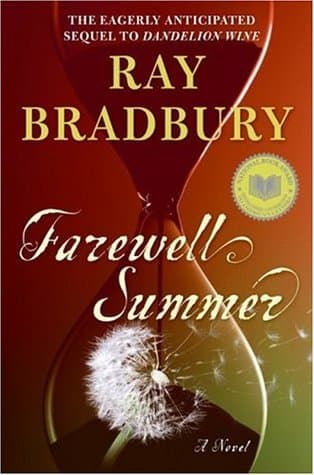
Ray Bradbury (2006)
Genre
Fantasy / Science Fiction / Young Adult
Reading Time
210 min
Key Themes
See below
Sign in to track this book
In a town where summer stubbornly clings to October, a fantastical civil war ignites between the young and the old, as thirteen-year-old Douglas Spaulding leads his peers in a desperate, magical fight against the inevitable march of time and the encroaching mysteries of adulthood.
The novel starts in Green Town, Illinois, with thirteen-year-old Douglas Spaulding leading his friends in a prank against the town's elderly. From the library roof, Douglas fires a cap-pistol, 'hitting' an old man, Mr. Quartermain. This prank starts a deeper conflict. Mr. Calvin C. Quartermain, an important elder, sees this as a challenge to the old ways and the authority of the aged. He gathers the other elders, seeing Douglas's actions as a declaration of war, setting the stage for a summer that will not end and a battle over time itself.
Angry about Douglas's prank, Mr. Quartermain calls a meeting of Green Town's elders. He explains his belief that the children, especially Douglas, are trying to stop time and challenge the natural order. Quartermain sees the children's energy and wish for endless summer as a threat to the elders' wisdom and experience. He plans a way to show the elders' power again, using mental tactics and subtle moves rather than direct fighting. Their goal is to make the children feel the weight of time, to understand that growing up is certain, and to let go of their hold on childhood.
After the elders declare war, Douglas Spaulding and his group, including his younger brother Tom and friend John Huff, go to their secret spots to make plans. Douglas, known for being observant and thoughtful, starts to see the elders' actions not just as revenge, but as a desperate try to hold onto their own fading youth and control the town's idea of time. He tells his friends to watch the elders closely, to learn their weaknesses and methods. This time is for watching and waiting, as the boys try to figure out the elders' mental tactics, getting ready for their own moves in this fight between generations.
The library, a symbol of knowledge, becomes a main battleground. The elders, led by Quartermain, use their power to limit the boys' access or make them uncomfortable, trying to push them out of their favorite summer places. Douglas and his friends, in turn, use their own mental tactics, often doing small acts of defiance and minor provocations that target the elders' routines and feelings. The conflict is less about physical fights and more about a battle of wills, where each side tries to break the other's spirit, with the library as a central point of argument for control over the town's public spaces and, metaphorically, its memory.
Mr. Quartermain, a skilled planner, sees his conflict with Douglas as a big chess game. He believes he can outsmart the boy through cleverness and experience. He uses subtle methods, like changing town events or spreading rumors, to cause disagreements among the children or make them doubt their leader. Quartermain is sure that Douglas's young energy is no match for his old wisdom. He tries to guess Douglas's moves and set traps, believing that by controlling information and how events are seen, he can force the boys to give up and accept the certain passage of time.
As the 'war' continues, Douglas Spaulding, at first wanting to keep summer going, starts to understand the elders' reasons more deeply. He sees their worries, their physical weaknesses, and their fear of death and being forgotten. This growing awareness is not just in his mind; it is an emotional change for Douglas. He begins to see the elders not just as enemies, but as people dealing with the constant flow of time, much like he is trying to hold onto his youth. This understanding makes his resolve more complex, making him question the simple good-and-bad nature of their conflict and suggesting the shared human experience of time.
During the generational conflict, Douglas has a personal turning point: his first kiss. This unexpected event with a girl shows him the complexities of adolescence and early manhood. It is a moment that goes beyond the 'war' with the elders, pulling him into a different future, one with new feelings, desires, and duties. The kiss shows the strong pull of growing up, a force more powerful than any cap-pistol or elder's command. It marks a big internal change for Douglas, suggesting that his fight to keep childhood summer is pointless against life's natural progress.
As the 'war' reaches a standstill, some of the elders, especially Mr. Quartermain, begin to have their own insights. They start to remember their own youthful rebellions and the energy of their past. They realize that their battle against the children is not really about control, but about their own fear of becoming irrelevant and wanting to get back their lost youth. Quartermain, in particular, sees himself in Douglas. This realization leads to them becoming less firm and slowly giving in, understanding that time cannot be stopped, and that the cycle of youth and age is a natural, good progression.
Through his experiences, from the 'war' with the elders to his first kiss, Douglas Spaulding finally starts to accept the natural flow of time. He understands that summer, like childhood, cannot last forever, and that there is beauty in the autumn of life, just as there is in its spring. He learns that growth, change, and the passage of time are not enemies to fight, but parts of the human experience. This acceptance marks his true growth, as he moves from wanting to stop time to understanding and embracing its cycle, ready to step into the mysteries of manhood.
The generational 'war' in Green Town does not end with a big win for either side, but rather with an unspoken agreement and shared understanding. Douglas and the elders, especially Mr. Quartermain, quietly realize they are more alike than different. Both generations are dealing with the passage of time, just from different viewpoints. The elders remember their youth, and Douglas sees his future. The conflict ends not by giving up, but through empathy and recognizing the universal human experience of living within time's constant movement. The summer, though long, eventually gives way to autumn, showing that natural order is restored.
The Protagonist
Douglas evolves from a boy determined to stop time into a young man who understands and accepts its natural flow, embracing the complexities of growing up.
The Antagonist
Quartermain initially fights to impose his will and the inevitability of age, but ultimately gains empathy and a shared understanding with Douglas, recognizing the cyclical nature of life.
The Supporting
Tom remains largely consistent, serving as a foil and loyal companion to Douglas's more complex internal journey.
The Supporting
John's arc primarily involves experiencing the conflict alongside Douglas, reinforcing the themes of childhood and friendship without a significant personal transformation.
The Supporting
They collectively move from a defensive, authoritative stance to a more understanding and empathetic perspective on youth and the cycle of life.
The Mentioned
Her brief appearance serves as a transformative moment for Douglas, marking the beginning of his journey into manhood.
The main theme is the unstoppable passage of time and the human struggle to accept it. Douglas and his friends fight to keep the summer of childhood going, resisting the duties and changes that come with age. The elders, led by Mr. Quartermain, are dealing with their own death and the fear of being forgotten. The 'war' itself is a fight against time, with Douglas learning that holding onto the past does not work, and that growth and change are part of life. This is clear in Douglas's eventual acceptance of his first kiss and the understanding that summer must eventually become autumn.
“Time must ultimately be the victor, with valuable revelations for those on both sides of the conflicts.”
The novel explores the conflict and eventual agreement between different generations. The children, representing youth and energy, clash with the elders, who show wisdom, experience, and the worries of aging. At first, both sides see each other as enemies, misunderstanding what the other wants. Douglas sees the elders as trying to steal his summer, while Quartermain sees the children as challenging order. But through their 'war,' they slowly come to understand each other, realizing that their struggles are two sides of the same issue—the human experience of time. This is shown as Quartermain remembers his own youth, and Douglas feels empathy for the elders' fears.
“It is the age-old conflict: the young against the elderly, for control of the clock that ticks their lives ever forward.”
This theme is key to Douglas Spaulding's personal journey. The 'war' against the elders helps him grow up. His initial wish to stop time and keep childhood innocence slowly changes to an acceptance of the complexities and new experiences of adolescence. The moment of his first kiss shows this change, marking the strong pull of manhood and the surrender to new feelings. Douglas learns that growing up is not a loss but a natural process, full of its own mysteries and wonders, and that real wisdom is in embracing, not fighting, the future.
“And life waits in ambush to assail Doug Spaulding with its powerful mysteries—the irresistible ascent of manhood, the sweet surrender to a first kiss—”
The book is full of memory and longing, especially for the summers of childhood. Both the children and the elders are dealing with their relationship to the past. The children want to extend their current, lively time, which will become their future memory, while the elders are bothered by their own fading memories of youth and the fear of being forgotten. The setting of Green Town often feels like a memory, a timeless place where the past stays. This theme shows how people deal with time passing by either holding onto or letting go of their past experiences, shaping how they see the present.
“In a summer that refuses to end, in the deceiving warmth of earliest October, civil war has come to Green Town, Illinois.”
A symbolic act that ignites the generational conflict.
The initial cap-pistol shot fired by Douglas at Mr. Quartermain serves as the inciting incident and a powerful symbol. It's not a violent act, but a playful, yet defiant, challenge. This 'shot' metaphorically 'fells' an old man, symbolizing the youth's attempt to halt or diminish the power of the aged. It represents the children's audacious declaration of war against the elders and their determination to resist the forces that push them towards adulthood and the end of summer. Its symbolic nature immediately establishes the conflict as more psychological and thematic than physical.
A metaphorical setting that reflects the children's desire to halt time.
The concept of a 'summer that refuses to end' is a crucial metaphorical device. While the narrative acknowledges the actual calendar (earliest October), the persistent warmth and light symbolize the children's psychological state and their fierce resistance to the passage of time. It creates an atmosphere where the battle against aging feels tangible and immediate. This extended summer is a projection of Douglas's desire to cling to childhood, making the eventual, inevitable shift to autumn all the more poignant and significant as a symbol of acceptance and growth.
A symbolic battleground representing knowledge, history, and control.
The library serves as a key symbolic location in the conflict. As a repository of stories, history, and knowledge, it represents the wisdom and established order often associated with the elders. By 'besieging' or controlling access to the library, both sides are fighting for control over the narrative of the town and, by extension, the flow of time and understanding. For the elders, it's a place of quiet authority; for the children, it's a place they both value for adventure stories and resent for its association with adult rules and learning, making it a focal point for their psychological warfare.
A direct symbol of time and the object of the generational struggle.
Mentioned explicitly in the book's description, 'the clock that ticks their lives ever forward' is a direct and potent symbol of time itself. The conflict is framed as a battle for 'control of the clock,' meaning control over the pace of life, the natural progression from youth to old age, and the ultimate fate of individuals. It underscores the central theme of time's inevitability and the human struggle against it. The clock is an ever-present, silent antagonist, whose victory is assured regardless of the outcome of the human conflict.
“It was a time of summer, a time of boys and girls, a time of firsts and lasts.”
— Narrator reflecting on the end of summer and childhood.
“The wind was a thing that knew names and whispered secrets.”
— Douglas observing the natural world around him.
“Every new thing was an old thing, waiting to be born again.”
— Douglas contemplating the cyclical nature of life and change.
“Age was a trick, a costume, a mask.”
— Douglas thinking about the appearance versus reality of aging.
“He felt the future coming like a train far off, a whistle in the deep night.”
— Douglas sensing the approach of significant life changes.
“There was a sound of summer dying, a last sigh of green.”
— The palpable feeling of summer ending.
“The world was a great clock, ticking off seconds, minutes, hours, and years.”
— Douglas's awareness of time passing.
“To be young was to be always running, always chasing the next bright thing.”
— Reflecting on the energy and drive of youth.
“He wanted to bottle summer, to keep it forever in a jar.”
— Douglas's desire to preserve the fleeting moments of summer.
“Fear was a cold hand reaching, always reaching, for the heart.”
— Douglas confronting his anxieties and fears.
“The town was a memory machine, always running, always playing back.”
— The idea of the town as a repository of shared memories.
“Every person was a library, full of stories, waiting to be read.”
— Douglas's view of individuals and their life experiences.
“The greatest magic was simply living, simply being, simply breathing.”
— Douglas's realization about the inherent wonder of life itself.
“He felt like a leaf on the wind, not knowing where he would land.”
— Douglas's sense of uncertainty about his future.
Ready to see how well you understood this book? Take our interactive quiz with 10 questions.
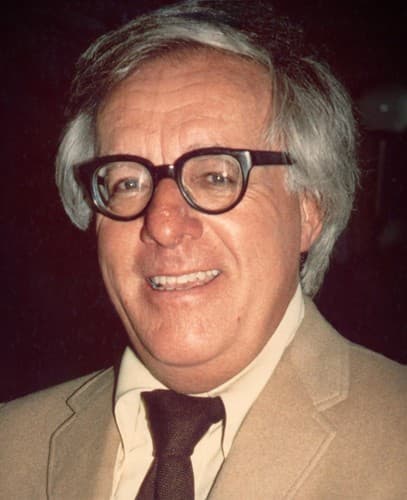
Ray Douglas Bradbury was an American author and screenwriter. One of the most celebrated 20th-century American writers, he worked in a variety of modes, including fantasy, science fiction, horror, mystery, and realistic fiction.







