BookBrief
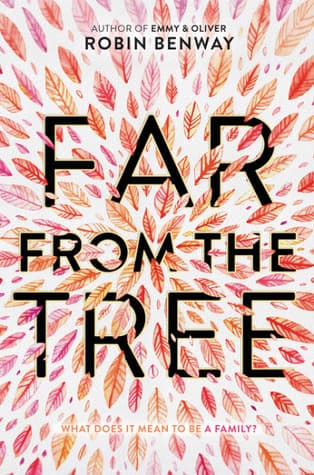
Far from the Tree cover
Archivist's Choice

Far from the Tree

Robin Benway (2017)

Genre

Young Adult

Reading Time

450 min

Key Themes

See below

Track Your Reading

Sign in to track this book

Three siblings, separated by adoption, meet and must confront their pasts. They redefine what family means as they navigate belonging, identity, and their secrets.

Synopsis

Grace, a seventeen-year-old who recently placed her baby for adoption, looks for her biological family. She finds she has two siblings: Maya, a younger sister struggling with her identity in her adoptive family, and Joaquin, an older brother who has spent seventeen years in foster care and does not want new connections. The three siblings, each dealing with their own family histories and problems, are brought together by their shared biological mother. They navigate awkward first meetings, emotional family problems, and painful past revelations. Joaquin is reluctant, Maya is skeptical, and Grace struggles with placing her baby. Despite this, they slowly form a bond. Through shared experiences, support, and understanding, they realize that family is not just about blood, but about the connections they choose to make. They create a new, unconventional family unit.
Reading time
450 min
Difficulty
Medium
Pacing
Moderate
Mood
Heartwarming, Emotional, Hopeful, Reflective
✓ Read this if...
You enjoy emotionally resonant stories about family, identity, and the complexities of adoption, with multiple perspectives.
✗ Skip this if...
You prefer fast-paced thrillers or stories without significant emotional depth and character introspection.

Plot Summary

Grace's Difficult Decision and Quest for Family

Seventeen-year-old Grace, an only child adopted at birth, places her newborn daughter, Peach, for adoption. Struggling with the emotional aftermath and feeling disconnected from her adoptive parents, she wonders about her biological family. Her adoptive mother, an English professor, supports her curiosity and helps her find information about her birth mother, Claire. Grace discovers she has two biological siblings: an older brother, Joaquin, and a younger sister, Maya. Wanting to understand herself and her origins, Grace decides to reach out to them. This starts a series of events that will bring the three siblings together for the first time.

Maya's Unexpected Revelation and Identity Crisis

Fifteen-year-old Maya, the outspoken middle child in her adoptive family, feels like an outsider among her cheerful, red-headed parents and older sister, Lauren. She is a brunette and constantly questions her place. Her world changes when she gets a letter from Grace, saying they are biological sisters. Maya is hesitant and overwhelmed at first, but she is also interested in finding someone who looks like her or shares her traits. This news increases her existing feelings of not belonging and causes problems within her adoptive family, as she deals with this new connection and what it means for her identity.

Joaquin's Reluctance and Haunted Past

Seventeen-year-old Joaquin has spent his entire life in the foster care system, moving between many homes. He is independent, guarded, and distrusts new relationships. He learned to protect himself from goodbyes. He lives with his current foster parents, Mark and Linda, and his younger foster brother, Didi, whom he loves and protects. When Grace's letter arrives, Joaquin immediately resists meeting his biological sisters. He sees it as an intrusion and a source of pain. He prefers to keep his past buried and focus on his future with Didi, whom he hopes to officially adopt one day.

The First Meeting and Awkward Beginnings

Despite Joaquin's reluctance, Grace and Maya arrange to meet him. The first encounter is awkward and tense. Grace, wanting connection, tries to bridge the gap, while Maya, though curious, is her usual sarcastic self. Joaquin stays mostly silent, his guarded nature making it hard for his sisters to connect with him. He views their enthusiasm with suspicion, unable to fully accept the idea of a family he never knew. This first meeting shows their different upbringings and personalities, setting the stage for their challenging journey to form a bond.

Grace's Struggle with Loss and New Motherhood

After meeting her siblings, Grace continues to deal with the emotional void from placing Peach for adoption. She feels regret and loneliness, even as she tries to connect with Maya and Joaquin. She visits her daughter and Peach's adoptive parents, feeling a mix of joy and heartache. Her developing relationships with Maya and Joaquin give her a new focus, but also bring their own problems. Grace is in a unique position, simultaneously a new birth mother, a searching adopted child, and a hopeful older sister, trying to put together her own identity while forming new bonds.

Maya's Family Troubles and Search for Belonging

Maya's relationship with her adoptive sister, Lauren, becomes strained as Lauren deals with her own feelings of inadequacy and jealousy. Maya's adoptive parents, especially her mother, struggle to accept Maya's growing connection with Grace and Joaquin, fearing she will distance herself from them. This tension at home pushes Maya further towards her biological siblings. She looks for a place where she truly belongs and feels understood. She finds camaraderie with Grace and, surprisingly, a developing protective feeling towards Joaquin, despite his reserved nature.

Joaquin's Past Unveiled and Didi's Importance

As Grace and Maya keep trying to connect, Joaquin slowly opens up, showing parts of his difficult past in the foster care system. He shares stories of neglect, instability, and the constant fear of being separated from those he cares about. The most important person in his life is his younger foster brother, Didi, whom Joaquin loves and protects. Joaquin's goal is to legally adopt Didi, and he works hard to save money and prove himself responsible. His fear of losing Didi is a strong motivator and a barrier to fully accepting his biological sisters.

A Shared Past and a Visit to Claire

The siblings decide to learn more about their birth mother, Claire. They discover she had mental health issues and addiction, which meant she could not care for them. This discovery brings understanding, but also sadness and a sense of shared trauma. They learn that Claire is now in a different place in her life, having improved. Grace, Maya, and Joaquin eventually decide to meet Claire. This is a poignant encounter that gives them some closure and a more complete picture of their origins, though it does not instantly erase years of unanswered questions.

Challenges and Growing Pains

As the siblings spend more time together, their individual struggles become part of their growing relationship. Grace continues to process her adoption decision and her feelings for Peach. Maya confronts her adoptive sister, Lauren, and her parents about her need for acceptance and understanding. Joaquin faces a setback in his efforts to adopt Didi, bringing his deepest fears to the surface. Through these trials, they begin to rely on each other, offering support and understanding they could not find elsewhere. Their bond, though still fragile, starts to become stronger as they realize they are not alone.

Forging a New Family

Despite the problems and past hurts, Grace, Maya, and Joaquin choose to embrace their new sibling relationship. They learn to navigate their differences, support each other's journeys, and recognize the unique family they have created. Grace finds peace regarding Peach and her own identity. Maya finds her voice and a place where she belongs. Joaquin, while still guarded, allows himself to trust and accept love from his sisters, finding a broader support system beyond Didi. They commit to being a part of each other's lives, understanding that family is about choice, love, and connection.

Principal Figures

Grace

The Protagonist

Grace evolves from a girl overwhelmed by loss and seeking answers to a young woman who finds peace in her choices and embraces a new, unconventional family.

Maya

The Protagonist

Maya transforms from a cynical outsider to a more secure individual who finds her voice and a true sense of belonging within her biological family, while also appreciating her adoptive one.

Joaquin

The Protagonist

Joaquin evolves from a solitary, distrustful individual haunted by his past to someone who cautiously opens himself up to new family connections, learning to trust and accept love beyond Didi.

Claire

The Supporting

Claire's arc is largely in the past, but in the present, she offers her children closure and a chance at understanding, demonstrating personal growth and regret.

Didi

The Supporting

Didi's presence serves as a catalyst for Joaquin's growth, representing the family Joaquin is fighting to create.

Lauren

The Supporting

Lauren learns to acknowledge her insecurities and eventually begins to understand Maya's need for her biological family, leading to a tentative reconciliation.

Grace's Adoptive Parents

The Supporting

They offer unwavering support to Grace, demonstrating that love and family extend beyond biology.

Maya's Adoptive Parents

The Supporting

They learn to accept Maya's need for her biological family, broadening their understanding of what family means.

Mark and Linda

The Supporting

They offer Joaquin a period of stability and support, helping him to heal and grow.

Themes & Insights

Identity and Self-Discovery

The novel explores how adoption shapes identity. Grace, Maya, and Joaquin each deal with who they are, as adopted individuals and as biological siblings. Grace seeks to understand herself through her origins after placing her own child for adoption. Maya, feeling like an outsider in her adoptive family, looks for a reflection of herself in her biological siblings. Joaquin, having grown up in foster care, struggles with a fragmented identity, finding stability only in his bond with Didi. Their journey to find each other is a journey to understand themselves.

Maybe this was what it felt like to be a puzzle piece that finally fit.

Narrator about Maya

The Meaning of Family

The book questions traditional definitions of family, showing it as something made through love, choice, and shared experience, not just biology. Grace, Maya, and Joaquin navigate their complex relationships with both their adoptive and biological families. Joaquin's devotion to his foster brother, Didi, shows that family bonds can be as strong, if not stronger, than biological ones. The siblings ultimately choose to form their own 'found family,' showing that family is a changing concept.

Family was a word that meant a million different things to a million different people.

Narrator

Loss, Grief, and Healing

Each character experiences loss and grief. Grace grieves the baby she placed for adoption. Maya grieves the feeling of not truly belonging in her adoptive family. Joaquin carries the trauma and loss of many foster placements and separations. The novel shows the different forms of grief associated with adoption, foster care, and family separation. It shows how the siblings begin to heal by connecting with each other and sharing their experiences, finding comfort in their shared understanding.

Sometimes you just needed to know that someone else understood.

Narrator

Belonging and Acceptance

A main theme is the human need to belong and be accepted. Maya's constant struggle to fit in with her adoptive family, Grace's longing for connection after placing Peach, and Joaquin's deep fear of abandonment all come from this need. Their journey together is one of finding a place where they are truly seen and understood. It ends with accepting each other's flaws and histories, and creating a space where they all belong.

What if, for the first time in her life, she actually looked like someone?

Narrator about Maya

Plot Devices & Literary Techniques

Multiple Perspectives (Alternating POVs)

The story is told through the rotating viewpoints of Grace, Maya, and Joaquin.

The novel is structured with alternating chapters, each narrated by one of the three biological siblings: Grace, Maya, and Joaquin. This device allows the reader deep insight into their individual thoughts, feelings, and unique experiences of adoption and foster care. It effectively highlights their distinct personalities, their different coping mechanisms, and their contrasting perspectives on finding their biological family. This approach builds empathy for each character and provides a comprehensive, nuanced understanding of their complex journey to connection.

Letters and Digital Communication

Initial contact and ongoing communication between the siblings are facilitated by letters, emails, and texts.

Letters from Grace initiate the siblings' contact, serving as a tangible link to their shared past and future. Subsequent emails and text messages become crucial for coordinating meetings and sharing personal details, especially for Joaquin who is initially reluctant to meet in person. This device not only drives the plot forward by enabling their initial connection but also symbolizes the gradual opening up and building of trust between them, moving from formal letters to more informal, frequent digital exchanges as their bond strengthens.

Flashbacks and Character Backstories

Brief glimpses into the characters' pasts reveal their formative experiences.

While not traditional flashbacks, the narrative frequently delves into the characters' personal histories and memories, particularly Joaquin's traumatic experiences in the foster care system and Grace's memories surrounding Peach's birth and adoption. These detailed backstories are woven into their present-day narratives, providing crucial context for their current behaviors, fears, and motivations. This device helps the reader understand why each character reacts the way they do to the prospect of a new family, enriching their emotional depth and making their journeys more impactful.

The 'Birth Family' Search

The overarching plot mechanism driving the siblings' initial interaction.

The act of searching for and finding biological family members is a primary plot device. It serves as the catalyst for the entire narrative, bringing Grace, Maya, and Joaquin together. This search provides a clear goal for Grace and Maya, while presenting a significant challenge and source of conflict for Joaquin. It allows for the exploration of themes surrounding identity, belonging, and the complexities of adopted and biological relationships, forming the structural backbone around which the individual character arcs and their collective story unfold.

Critical analysis

Notable Quotes

Families are messy. Immortal families are eternally messy. Sometimes the best we can do is to remind each other that we're related for better or for worse...and try to keep the maiming and killing to a minimum.

Maya reflecting on the complexities of family dynamics, particularly in her supernatural context.

It's a lot harder to be angry at someone when you understand why they did what they did.

Grace contemplating her biological mother's decisions after learning more about her past.

You don't get to choose your family, but you can choose to love them anyway.

Joaquin realizing the difference between biological connection and emotional bonds.

Sometimes the people who are supposed to love you the most are the ones who hurt you the deepest.

Joaquin discussing his experiences in the foster care system with Grace and Maya.

Being different doesn't mean you're broken. It just means you're different.

Maya comforting Grace about feeling out of place in her adoptive family.

The truth doesn't always set you free. Sometimes it just gives you a heavier burden to carry.

Grace after learning the difficult circumstances of her biological mother's life.

Family isn't about blood. It's about who shows up when you need them.

Joaquin reflecting on the support he receives from his foster family and new siblings.

You can't change where you come from, but you can change where you're going.

Maya encouraging Joaquin to look toward his future rather than being defined by his past.

Sometimes the hardest person to forgive is yourself.

Grace struggling with guilt over her biological mother's situation.

Love isn't something you earn. It's something you're given, whether you deserve it or not.

Joaquin learning to accept love from his foster parents despite his insecurities.

We're all just trying to find where we belong in this world.

Maya summarizing the shared journey of the three siblings discovering each other.

The past doesn't have to define you unless you let it.

Grace deciding to move forward with her life after learning about her origins.

Sometimes family is the people you choose, not the ones you're born with.

All three siblings acknowledging the importance of their chosen relationships.

You can't help who you love. You just love them.

Joaquin discussing his complicated feelings about his biological parents.

Quiz

Test Your Knowledge

Ready to see how well you understood this book? Take our interactive quiz with 10 questions.

10
Questions
~5
Minutes
?
Best Score

Key Questions (FAQ)

The novel follows three biological siblings—Grace, Maya, and Joaquin—who were separated at birth through adoption and foster care. After Grace places her own baby for adoption, she seeks out her biological family, leading to their reunion and exploration of identity, family, and belonging.

About the author