“It is difficult for a woman to be a heroine in anything but a love-story.”
— Narrator's observation on societal expectations for women.

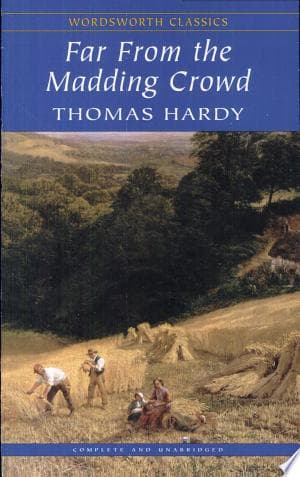
Thomas Hardy (1993)
Genre
Historical Fiction / Romance
Reading Time
950 min
Key Themes
See below
Sign in to track this book
Bathsheba Everdene, a spirited woman in Victorian Wessex, navigates love and independence among stoic shepherds and dashing sergeants.
Gabriel Oak, a hardworking young shepherd, tries to establish his own farm. He meets Bathsheba Everdene, a beautiful and spirited young woman new to Weatherbury. He is immediately drawn to her independent nature. After seeing her handle a horse and observing her unconventional behavior, Gabriel proposes marriage. Bathsheba, valuing her independence, rejects him, saying she does not want to be anyone's property. Soon after, an accident destroys Gabriel's flock, leaving him ruined and forcing him to find new work.
After her aunt's death, Bathsheba Everdene inherits Weatherbury Farm, a large property. She arrives to manage it herself, a rare act for a woman at that time. Gabriel Oak, now a penniless wanderer, arrives in Weatherbury seeking work. He sees a dangerous fire threatening Bathsheba's haystacks. Without hesitation, he takes charge, expertly directing the farmhands to put out the blaze. Impressed by his skill and bravery, and unaware of his past proposal, Bathsheba hires him as her new bailiff, recognizing his agricultural knowledge and steady character. She keeps a professional distance from him.
Bathsheba, in a moment of youthful boredom, sends a valentine to her wealthy neighbor, Farmer William Boldwood, a reserved man who has been a bachelor for a long time. The card, meant as a joke, says only 'Marry Me.' Boldwood, unused to such attention, misinterprets the gesture. He becomes intensely infatuated with Bathsheba, his quiet life consumed by thoughts of her. He pursues her with relentless devotion, proposing marriage multiple times. Bathsheba, realizing the seriousness of her prank, feels guilt and unease, struggling to manage his fervent affections and community pressure.
While visiting Bath, Bathsheba meets Sergeant Francis Troy, a handsome, charming cavalryman. Troy, with his captivating looks and confident manner, quickly catches Bathsheba's attention. He shows his sword-fighting skill, dazzling her with a display that leaves her charmed. Despite Gabriel Oak's warnings about Troy's character, Bathsheba is swept away by his romantic declarations. Troy offers an exciting contrast to Gabriel's reliability and Boldwood's steady devotion. Bathsheba, drawn to the thrill he offers, falls deeply in love with him, ignoring the warning signs and advice from those who care for her.
Against the advice of her friends and Gabriel's silent disapproval, Bathsheba elopes with Sergeant Troy, marrying him in Bath without telling her neighbors or farmhands. Upon their return to Weatherbury, Troy quickly establishes himself as the farm's master, but his true character soon appears. He is irresponsible, gambling away Bathsheba's money, neglecting farm duties, and showing little respect for her or her property. Bathsheba's initial infatuation quickly turns to disillusionment as she realizes she has married a man who cares more for pleasure than for her or their future. Her happiness is replaced by regret and a growing sense of entrapment.
Troy's past catches up to him and Bathsheba when Fanny Robin, a young woman from the village who was once a servant on Bathsheba's farm, reappears. Fanny is pregnant and poor, abandoned by Troy. It is revealed that Troy had promised to marry Fanny, but a misunderstanding about their meeting place led him to leave her at the altar. Fanny eventually goes to the Casterbridge workhouse, where she dies in childbirth. Her body, along with her deceased infant, is sent back to Weatherbury for burial. The coffin arrives at Bathsheba's farm, and a curious farmhand opens it, revealing Fanny and her baby, exposing Troy's devastating secret to Bathsheba and the community.
Fanny Robin's death and her child, along with Troy's callous reaction, shatter Bathsheba's world. After a confrontation with Bathsheba, Troy disappears, presumed drowned after his clothes are found by the sea. Believing herself a widow, Bathsheba enters a period of deep mourning. Farmer Boldwood, who never gave up hope, sees an opportunity to renew his suit. He presses Bathsheba for a promise of marriage, his obsession growing. Bathsheba, exhausted and vulnerable, eventually gives him a conditional promise, agreeing to marry him in six years if Troy does not return. This decision comes from weary resignation, not love.
Years pass, and the community prepares for the Christmas party at Farmer Boldwood's house, where he plans to celebrate his upcoming marriage to Bathsheba. Unknown to them, Troy, who did not drown but lived under an assumed name as a traveling showman, returns to Weatherbury. He sneaks into Boldwood's party, intending to reclaim Bathsheba. He confronts her, demanding money and asserting his marital rights. In a fit of jealous rage, Boldwood, witnessing Troy's cruel treatment of Bathsheba, shoots Troy dead with a fowling-piece he had received as a gift. The festive atmosphere instantly becomes one of horror.
Following Troy's murder, Farmer Boldwood is arrested. Despite his remorse and the mitigating circumstances of his extreme mental anguish, he is initially sentenced to death. However, due to his good character and evidence of temporary insanity, his sentence is changed to penal servitude for life, removing him from Bathsheba's life. Bathsheba, deeply traumatized by the events and the deaths of both Troy and Boldwood, withdraws into grief and solitude. She dedicates herself to managing her farm, finding solace in hard work and avoiding social interaction, reflecting on her past choices and their devastating consequences.
Throughout Bathsheba's challenges, Gabriel Oak remains her loyal bailiff, offering unwavering support, wise counsel, and quiet devotion without pressing his own suit. He consistently puts her welfare and the farm's prosperity before his own feelings. After years of Bathsheba's solitude, Gabriel decides to leave Weatherbury, believing his presence might make her uncomfortable. This decision finally makes Bathsheba realize the depth of her feelings for him and the immense value of his steady character. She confronts him, confessing her affection and respect. Gabriel proposes once more, and this time, Bathsheba, having matured and learned from her experiences, accepts, recognizing that true love means lasting loyalty and genuine partnership.
Bathsheba Everdene and Gabriel Oak marry quietly, without fanfare. Their union shows enduring love, loyalty, and wisdom gained through hardship. Bathsheba, no longer the impulsive girl, has grown into a mature woman who values substance over superficial charm. Gabriel, ever patient and principled, finally achieves his long-held desire. Their marriage is based on mutual respect, understanding, and a shared commitment to their life and farm. The novel ends with a sense of peaceful contentment for the couple, marking Bathsheba's journey from naive independence to a fulfilling partnership with the man who truly understood and supported her.
The Protagonist
Bathsheba evolves from a capricious, independent girl into a mature, humbled woman who learns the value of steadfast love and loyalty through profound personal loss and hardship.
The Protagonist/Love Interest
Gabriel remains consistently good and true throughout the novel, his arc demonstrating the triumph of patient, enduring love and virtue.
The Antagonist/Love Interest
Troy's character remains static, consistently demonstrating his selfish and irresponsible nature, leading to his eventual demise.
The Antagonist/Love Interest
Boldwood's arc is tragic, transforming from a stoic bachelor into a man consumed by an uncontrollable, obsessive love that ultimately destroys him.
The Supporting/Catalyst
Fanny's arc is a downward spiral from hopeful love to abandonment, destitution, and death, serving as a cautionary tale.
The Supporting
Liddy remains a consistently loyal and supportive figure for Bathsheba throughout her trials.
The Supporting
Jan Coggan's character remains consistent, embodying the steadfast nature of the rural community.
The Supporting
Joseph Poorgrass remains a static character, serving as a humorous and moralistic voice among the farmhands.
The novel explores various kinds of love: Gabriel's selfless devotion, Boldwood's obsessive passion, and Troy's superficial charm. Bathsheba, initially valuing independence, learns that true love and a fulfilling marriage are built on respect, loyalty, and partnership, not fleeting infatuation. Her journey shows the error of choosing based on outward appearances and the lasting value of inner character. This is clearest in her regret over her hasty marriage to Troy and her eventual recognition of Gabriel's worth.
“''It is difficult for a woman to be a heroine in a love affair, when she is the hero of her own story.''”
Bathsheba begins the novel fiercely independent, determined to run her own farm and live life on her own terms, rejecting Gabriel's initial proposal to maintain her freedom. However, her experiences with Troy and Boldwood show the limits and loneliness of extreme independence, especially for a woman in her society. The novel suggests that true fulfillment comes not from absolute solitude but from balanced interdependence, where individuality is respected within a loving partnership. Her marriage to Gabriel symbolizes her embrace of a mature, shared life.
“''She was of the stuff of which great matrons are made. She was not a woman who could be content to be a mere wife.''”
Hardy's Wessex novels often highlight how random events and coincidences shape human lives. Gabriel's loss of his flock, Bathsheba's accidental valentine, Fanny Robin's mistaken church, and Troy's unexpected return are all important moments not entirely within the characters' control. These events often lead to tragic outcomes, showing how fragile human plans are and how powerful external forces can be. The story suggests that while characters make choices, they are also affected by a series of unfortunate, almost fated, occurrences.
“''The great difference between the man and the woman was, that she had a heart, and he had none.''”
The Wessex landscape is more than a setting; it is an active force, influencing characters' lives and providing a sense of rootedness. The rhythms of the farming year drive much of the plot, from sheep-shearing to harvest. The novel also explores social class differences within the rural community, from farm owner Bathsheba, to skilled bailiff Gabriel, and the farmhands. While social mobility is limited, characters' worth often comes from their character and competence rather than strict birthright, as seen in Gabriel's rise.
“''The only love which is not a delusion is the love of a good woman for a good man, and a good man for a good woman.''”
Bathsheba's initial impulsiveness and vanity drive the plot's tragic turns. Her sending the valentine to Boldwood out of boredom and a desire for attention starts his destructive obsession. Her hasty marriage to Troy, driven by infatuation and disregard for warnings, leads to unhappiness and murder. The novel is a cautionary tale about acting without forethought or considering the long-term effects of one's actions, especially when dealing with others' emotions. Her growth involves learning to temper these traits.
“''It is the most miserable thing to be a woman, and to have a heart that can be pierced, and have no shield.''”
A seemingly innocent prank that ignites a devastating chain of events.
Bathsheba's decision to send a valentine to Farmer Boldwood, inscribed with 'Marry Me,' is a pivotal plot device. Intended as a casual joke, it dramatically shifts the narrative by igniting Boldwood's intense, obsessive love. This single, impulsive act sets in motion a chain of events that leads to his tragic downfall and profoundly impacts Bathsheba's life, demonstrating how small, thoughtless actions can have monumental and unforeseen consequences. It serves as a catalyst for much of the subsequent romantic entanglement and tragedy.
The unwavering loyalty and presence of Gabriel Oak as a constant counterpoint to chaos.
Gabriel Oak's consistent character and unwavering presence serve as a crucial plot device. He is the moral compass and stable anchor amidst Bathsheba's tumultuous romantic life. His steadfastness highlights the impulsiveness of Bathsheba, the volatility of Troy, and the obsessive nature of Boldwood. His continued employment on the farm provides a constant, reliable presence, allowing him to witness events, offer quiet support, and ultimately be there for Bathsheba when she is ready to recognize true love. His unchanging nature allows Bathsheba's development to be clearly observed against a fixed point.
A grim revelation that exposes Troy's past and shatters Bathsheba's illusions.
The arrival and accidental opening of Fanny Robin's coffin, revealing her and her deceased infant, is a powerful and shocking plot device. It serves as the ultimate exposure of Sergeant Troy's deceit and callousness, directly confronting Bathsheba with the devastating truth of his past betrayal. This moment shatters Bathsheba's remaining illusions about her husband and acts as a major turning point, initiating her period of deep despair and Troy's subsequent disappearance. It is a stark, visceral moment of truth that propels the narrative towards its tragic climax.
A display of superficial charm that seduces Bathsheba.
Sergeant Troy's dazzling sword exercise, where he expertly wields his weapon around Bathsheba without touching her, is a symbolic plot device. It represents his superficial charm, his ability to captivate and thrill, and his dangerous allure. This display mesmerizes Bathsheba, drawing her into his orbit and blinding her to his deeper flaws. It symbolizes the excitement and danger he offers, directly contrasting with the steady, grounded nature of Gabriel. This moment is crucial in explaining Bathsheba's initial infatuation and her subsequent poor judgment in marrying him.
“It is difficult for a woman to be a heroine in anything but a love-story.”
— Narrator's observation on societal expectations for women.
“The great difference between the two young men was that an emotional pleasure to Boldwood was a sensual pleasure to Troy.”
— Narrator contrasting the nature of Boldwood's and Troy's affections.
“She was at the brightest period of a woman's life, for her beauty and energy were both in full flower.”
— Description of Bathsheba's prime years.
“He had been held to her by a slight thread which was more attenuated than any cobweb. She had snapped it.”
— Gabriel Oak's feelings after Bathsheba rejects his first proposal.
“A man's body is a citadel, and must be held as such.”
— Sergeant Troy's philosophy on self-control, though ironic given his actions.
“When a strong emotion accompanies a every-day act, the act itself is made extraordinary.”
— Narrator's reflection on the impact of emotion on ordinary events.
“The only way to look at a woman is to look at her as if she were a flower, and then to leave her alone.”
— Gabriel Oak's somewhat resigned perspective on women after his initial heartbreak.
“It is not the pain for the present that is most unbearable, but the pain for the future.”
— Boldwood's internal struggle after being strung along by Bathsheba.
“To be loved to madness—such was her great desire.”
— Bathsheba's longing for intense, passionate love.
“But a blaze may be a good thing, a useful thing, and yet, on the whole, a destructive thing.”
— Metaphorical description of Sergeant Troy's charismatic but ultimately harmful nature.
“He was a man of reserved character, and his feelings, if he had any, were kept in his own breast.”
— Description of Farmer Boldwood's stoic and repressed nature.
“It was nearly three o'clock. The day was at its meridian, and Bathsheba's emotions were at theirs.”
— Bathsheba's heightened emotional state during a significant moment.
“He had been her lover in the old days, and he was her protector now.”
— Describing Gabriel Oak's enduring role in Bathsheba's life.
“The most prosaic matter was touched with an ideal light by her presence.”
— The effect of Bathsheba's presence on those around her, particularly Gabriel.
Ready to see how well you understood this book? Take our interactive quiz with 10 questions.
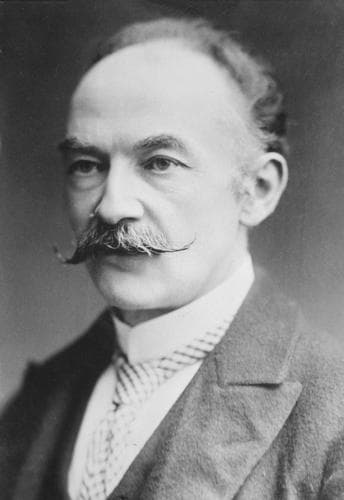
Thomas Hardy was an English novelist and poet. A Victorian realist in the tradition of George Eliot, he was influenced both in his novels and in his poetry by Romanticism, including the poetry of William Wordsworth. He was highly critical of much in Victorian society, especially on the declining status of rural people in Britain, such as those from his native South West England.







