“Life's a game, you play it with the cards you're dealt. And sometimes, you get a joker.”
— Nariman Vakeel reflecting on his life and circumstances.

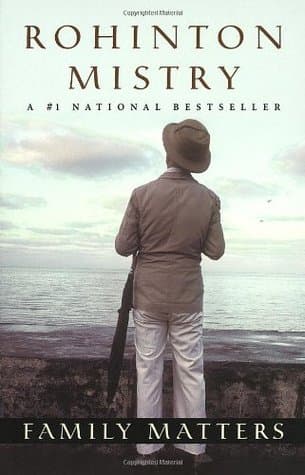
Rohinton Mistry (2001)
Genre
Literary Fiction
Reading Time
1250 min
Key Themes
See below
Sign in to track this book
When a frail patriarch's broken ankle forces him into his devoted daughter's cramped home, the hidden weaknesses in a Bombay family's compassion, integrity, and faith are exposed.
Seventy-nine-year-old Nariman Vakeel, a retired English professor living in Chateau Felicity with his stepchildren Coomy and Jal, falls severely, breaking his ankle and making him more dependent. Already battling advanced Parkinson's disease, his physical needs become extensive, requiring constant care. Coomy, his stepdaughter, resents her stepfather and his increasing weakness. She sees his care as an imposition, disrupting her orderly life and her desire for privacy and independence. Jal, her brother, is more passive but equally unwilling to take on the main caregiving role. Their large apartment, Chateau Felicity, offers little comfort for Nariman, who feels increasingly isolated and unwanted by his stepchildren, who see him as a burden.
Unable and unwilling to provide the continuous care Nariman now needs, Coomy and Jal decide he must move. Coomy, with Jal's unspoken agreement, manipulates the situation, claiming Nariman's condition is too demanding for them. They suggest Nariman move in with his biological daughter, Roxana, and her family. Roxana's family—her husband Yezad, and their two sons, Jehangir and Murad—live in a much smaller, two-bedroom apartment in a less wealthy part of Bombay. This decision, driven by Coomy's selfishness and resentment, is presented to Roxana as a temporary measure, but it quickly becomes clear it is meant to be permanent, putting great strain on Roxana and Yezad's already limited money and space.
Nariman's move to Roxana's small apartment in the Parsi colony of Khushro Villa greatly changes the family's life. The already cramped space becomes more crowded, with Nariman using the living room, which also serves as the boys' study and play area. Roxana, a devoted daughter, takes on the full burden of his care, including feeding, bathing, and changing him, often with little help from Yezad, who struggles with his own worries. The financial strain is immediate; Nariman's medical expenses and special dietary needs use up their small savings. The children, Jehangir and Murad, must adapt to their ailing grandfather's constant presence, losing their privacy and play space, and seeing their parents' daily struggles.
Yezad, Roxana's husband, finds the financial and emotional burden of caring for Nariman increasingly difficult. His job at the Victoria Book Depot provides a modest income, barely enough to support his family, let alone Nariman's added expenses. He becomes irritable and withdrawn, often snapping at Roxana and the children. His resentment comes not only from current difficulties but also from his past; he lost his parents early and was raised by his aunt, leaving him with a deep fear of dependency and a desire for financial security. He begins to feel trapped, his dreams of a better life for his sons slipping away, fueling his bitterness towards Coomy and Jal for abandoning their father.
During his clear moments, Nariman often returns to his youth, reliving the great sadness of his life: his forbidden love for Lucy, a Christian woman. He tells Roxana, and sometimes the boys, the story of their passionate romance and his family's strong opposition. His parents, strict Parsis, saw a marriage outside their community as unacceptable and scandalous. They treated Lucy cruelly and blackmailed Nariman emotionally, threatening to disown him and ruin his father's business. Nariman eventually gave in to family pressure, ending his relationship with Lucy and marrying a Parsi woman chosen for him, a decision that haunted him and left him with deep regret and a sense of lost happiness.
Despite having moved Nariman's care to Roxana, Coomy continues to control his money. She demands a large part of Nariman's pension, claiming it is for his share of the apartment's maintenance in Chateau Felicity, even though he no longer lives there. Her demands cause constant stress for Roxana and Yezad, who already struggle financially. Coomy's actions show her deep selfishness and lack of empathy, further making her an antagonist. She remains unconcerned with Nariman's well-being or the great burden she has placed on her younger sister, focusing only on what she believes she is owed.
Jehangir and Murad, Roxana and Yezad's sons, must grow up quickly as they see the daily realities of their grandfather's illness and the strain it puts on their parents. Jehangir, the elder, tries to understand the complexities of family duty and the bitterness he sees in his father. Murad, the younger, is more sensitive and often confused by the changes in their home. They observe the arguments between their parents, the financial worries, and their beloved grandfather's physical decline. The boys' innocence slowly fades as they are exposed to the harsh realities of illness, poverty, and family disagreement, forcing them to confront difficult truths about human nature and the sacrifices life demands.
Yezad often sees an old, toothless beggar woman near his workplace, a symbol of the widespread poverty and suffering in Bombay. One day, she asks him for money, and he first refuses, consumed by his own financial worries. However, a pang of guilt and compassion prompts him to give her a small amount. This brief interaction deeply affects Yezad, forcing him to face his own struggles and the large differences in wealth. The beggar woman becomes a recurring reminder of life's fragility and the constant threat of poverty, further fueling his worries about providing for his family and the moral compromises he might have to make.
As months pass, Nariman's Parkinson's disease worsens. His physical and mental abilities decline further, and he experiences more frequent periods of confusion and withdrawal. Roxana continues to provide unwavering care, often sacrificing her own sleep and well-being. Despite the great burden, she finds comfort in her duty and the quiet moments she shares with her father. Eventually, Nariman's body gives in to the illness. He dies peacefully in his sleep, surrounded by Roxana, Yezad, and the boys. His death, while painful, brings a sense of release and quiet grief to the family, especially Roxana, who mourns her father's loss and the end of her dedicated caregiving.
Following Nariman's death, the family experiences a mix of grief and relief. Roxana is heartbroken but also physically and emotionally exhausted. Yezad, while saddened, also feels the financial burden lift, though he carries the guilt of his past resentments. Coomy and Jal attend the funeral, keeping their distant and somewhat hypocritical manner. The tensions between the siblings remain largely unresolved, showing the lasting impact of their different approaches to family responsibility. Despite the hardships, caring for Nariman has brought Roxana and Yezad closer in some ways, and the boys have gained a deeper understanding of compassion and sacrifice, suggesting a future where they might handle their own family matters with more grace.
The Protagonist
Nariman's physical arc is one of decline and increasing dependency, while his emotional arc involves a bittersweet reconciliation with his past through his memories and his daughter's care.
The Protagonist
Roxana's arc shows her enduring strength and sacrifice in the face of overwhelming odds, solidifying her role as the family's emotional anchor.
The Protagonist
Yezad's arc moves from initial resentment and anxiety to a deeper understanding of compassion and sacrifice, tempered by the harsh realities of life.
The Antagonist
Coomy's arc remains largely static, as she resists any personal growth or change, remaining self-serving and unsympathetic throughout the narrative.
The Supporting
Jal's arc is minimal, as he largely remains a passive observer, unable to break free from Coomy's influence or his own timidity.
The Supporting
Jehangir's arc involves a loss of innocence and a growing understanding of the complexities of family, love, and sacrifice.
The Supporting
Murad's arc shows a gradual, albeit less conscious, adaptation to the family's changed circumstances and the presence of illness.
The Mentioned
Lucy's arc is static, existing only in Nariman's past, but her memory profoundly shapes Nariman's character and the novel's themes.
The novel explores the conflict between family duty and individual desires. Roxana embodies selfless duty, sacrificing her comfort and money for her father, Nariman. In contrast, Coomy and Jal represent self-interest, abandoning Nariman to preserve their own lives and finances. Yezad struggles with this, torn between his love for his family and his resentment of the financial burden. This theme is central to the plot, as Nariman's illness forces these choices, showing the characters' true natures and the social expectations placed on family members in times of crisis. The clear difference between Roxana's unwavering care and Coomy's cruel indifference highlights the moral range of family responsibility.
“Family matters, but not always in the way one expects. Sometimes, it matters most when it becomes a burden.”
The past greatly influences the present lives of the characters. Nariman's lifelong regret over his forbidden love for Lucy, and his forced marriage, is a constant presence. These past decisions shaped his character and his relationships, particularly his deep bond with Roxana and the distance from his stepchildren. Yezad's own orphaned past fuels his worries about providing for his family, affecting his reactions to Nariman's illness. The historical context of Parsi traditions and social expectations also plays a role, showing how cultural norms from previous generations continue to affect individual lives and family structures in contemporary Bombay.
“A man's past is like a shadow, always following him, sometimes long and sometimes short, but always there.”
The novel shows various forms of love and the sacrifices they demand. Roxana's love for her father is unconditional, seen in her tireless caregiving despite great personal cost. This love is a form of sacrifice, as she gives up her comfort, privacy, and financial stability. Yezad's love for his family drives him to work tirelessly, even as he struggles with the resentment of the added burden. Nariman's love for Lucy, though unfulfilled, shaped his entire life and represents a different kind of sacrifice—the sacrifice of personal happiness for family duty. The children, Jehangir and Murad, also learn about love and sacrifice as they adapt to their grandfather's presence and their parents' struggles, showing how love often requires giving up something for another's well-being.
“Love, true love, is not just a feeling, it is a choice, a daily sacrifice.”
Nariman's Parkinson's disease and broken ankle are central to the story, forcing the family to face the realities of aging and chronic illness. The novel details the physical and emotional challenges of caring for an elderly, dependent parent, from personal hygiene to financial strain. It explores how illness can take away a person's dignity, as Nariman becomes increasingly vulnerable and reliant on others. However, through Roxana's compassionate care, the novel also highlights efforts to preserve dignity even in decline. The differing attitudes of Coomy (disgust and neglect) and Roxana (love and respect) show how society and family members respond to the weaknesses of old age.
“To watch the body betray the mind, piece by piece, is a cruel and lengthy torture.”
The novel is set deeply within the Parsi community in Bombay. It explores the traditions, social expectations, and internal dynamics of this small, close-knit group, especially regarding marriage, family honor, and financial standing. The clash between traditional values (like Nariman's family's opposition to his marriage to Lucy) and the pressures of modern life in a busy, often corrupt, city like Bombay is clear. The setting itself, from the decaying grandeur of Chateau Felicity to the crowded lanes of Khushro Villa, reflects the changing landscape of Bombay and the Parsi community's place within it. The narrative offers a close look at Parsi life, its customs, quirks, and challenges in a rapidly modernizing India.
“In Bombay, even the air was thick with stories, some whispered, some shouted, all intertwined with the city's ceaseless rhythm.”
Nariman's recollections of his past, particularly his lost love, interweave with the present narrative.
Nariman's lucid moments are often filled with vivid flashbacks to his youth, detailing his forbidden love for Lucy. These memories serve multiple functions: they provide crucial backstory, revealing the origins of Nariman's lifelong regret and shaping his character. They also offer a poignant contrast between his vibrant past and his diminished present, adding depth to his suffering. For Roxana, these stories provide a deeper understanding of her father, fostering empathy and strengthening their bond. For the reader, they enrich the emotional landscape, highlighting themes of sacrifice, lost love, and the enduring impact of past choices on present lives.
The contrasting living spaces reflect the characters' values and social standing.
Chateau Felicity, Coomy and Jal's spacious, well-appointed apartment, is ironically named, as it offers little 'felicity' for Nariman, symbolizing their emotional coldness and superficial comfort. It represents the pursuit of material wealth and the detachment from familial duty. In stark contrast, Roxana's small, crowded apartment in Khushro Villa, though physically constrained, becomes a place of genuine love, care, and sacrifice. It symbolizes the warmth of true family bonds, even amidst hardship. The shift between these two homes physically manifests the novel's central conflict between self-interest and selfless love, highlighting that true happiness is not found in material possessions but in human connection and compassion.
A recurring minor character who serves as a symbol of poverty and moral reflection.
The old, toothless beggar woman whom Yezad frequently encounters near his workplace functions as a powerful symbol. She represents the pervasive poverty and hardship in Bombay, a constant reminder of the fragility of life and the ever-present threat of destitution. For Yezad, she becomes a moral touchstone, forcing him to confront his own financial anxieties and the ethical dilemmas of wealth disparity. His interactions with her, however brief, prompt introspection and a flicker of compassion, highlighting his internal struggle between self-preservation and empathy. She serves as a microcosm of the larger societal issues that subtly influence the family's struggles.
The ambiguous title reflects the dual nature of family as both a source of love and a burden.
The title, 'Family Matters,' is a deliberate double entendre. On one hand, it refers to the importance and significance of family – that 'family matters' in life. On the other hand, it denotes the 'matters' or issues and problems that arise within a family, particularly the conflicts and burdens. This ambiguity perfectly encapsulates the novel's central themes: the profound love and devotion within families, but also the resentments, sacrifices, and painful obligations. It suggests that while family is fundamental, it is also a complex and often challenging institution, full of both joy and sorrow, connection and discord, making the reader ponder what truly 'matters' when it comes to family.
“Life's a game, you play it with the cards you're dealt. And sometimes, you get a joker.”
— Nariman Vakeel reflecting on his life and circumstances.
“The past is a foreign country; they do things differently there.”
— General reflection, though often implicitly felt by characters looking back on their youth or earlier times.
“When you're old, you become a child again, but without the innocence.”
— Roxana struggling with her father's demanding care.
“Money doesn't buy happiness, but it certainly makes misery more bearable.”
— One of the characters contemplating financial struggles.
“Love is a strange thing. It can make you do the most foolish things, and the most selfless.”
— Yezad thinking about his relationship with Roxana and his children.
“Hope is a good breakfast, but it is a bad supper.”
— A character experiencing disillusionment after earlier optimism.
“Family is not just blood. It's the people who stand by you when no one else does.”
— Highlighting the support system that emerges beyond immediate family.
“The greatest tragedy in life is not death, but what dies inside us while we live.”
— A character lamenting lost dreams and vitality.
“Truth is like a surgeon's scalpel. It can heal, but it can also cut deep.”
— Exploring the painful revelations and consequences of honesty.
“Old age is not for sissies.”
— Nariman Vakeel's personal struggle with the physical and mental decline of aging.
“Sometimes, the only way to move forward is to let go of the past, even if it hurts.”
— Characters grappling with past grievances and the need for forgiveness.
“Silence can be more eloquent than words, and often, more revealing.”
— Observing unspoken tensions and emotions within the family.
“Duty is a powerful master, especially when it's wrapped in love.”
— Roxana's sense of obligation towards her father, driven by affection.
“The world keeps turning, no matter how much your own world crumbles.”
— A character reflecting on the indifference of the outside world to personal suffering.
Ready to see how well you understood this book? Take our interactive quiz with 10 questions.







