“I'm nobody! Who are you? Are you nobody, too?”
— From the poem 'Nobody'

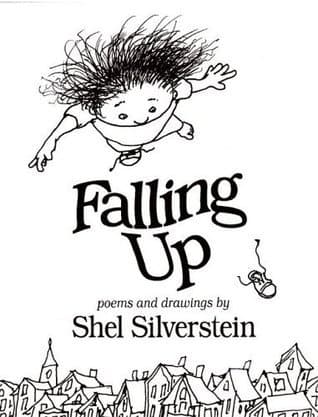
Shel Silverstein (1996)
Genre
Children's / Young Adult
Reading Time
120 min
Key Themes
See below
Sign in to track this book
Shel Silverstein's collection brings a world where eyebrows steam from screams, eels accompany girls, and a nose garden waits, all with his playful poetry and quirky drawings.
A boy named Billy is raised by a wolf-spider nanny. She teaches him to spin webs, catch flies, and live in a shoebox. He develops a taste for bugs and gets used to a spider-like life, often scaring away human visitors with his eight eyes and hairy legs. This unusual upbringing shapes his entire view of the world and his daily habits, making him an outsider to typical human society. His nanny, though strange, cares for him and gives him unique skills, though not ones usually valued in the human world. The poem highlights the humor and strangeness of his situation, making the reader think about such a childhood.
Backward Bill does everything in reverse, from eating dessert first to saying goodbye before hello. This creates a series of funny and illogical events throughout his day. He walks backward, thinks backward, and even tries to put his clothes on backward, leading to constant confusion for himself and others. The poem details several instances of his reversed actions, such as trying to un-eat his dinner and trying to un-walk to school. His backward nature is amusing, showing the absurdity of living life completely inverted.
A child named Sue gets a 'little hoarse' for her birthday, expecting a grand horse. To her disappointment, the horse is literally hoarse, unable to neigh or make any sound other than a quiet whisper. Sue tries various ways to make the horse speak, from giving it cough syrup to whispering secrets in its ear, but nothing works. The humor comes from the literal meaning of 'hoarse' and the child's persistent, yet useless, efforts to get her silent horse to make noise. The poem playfully explores the disappointment and funny misunderstandings that come from such a literal interpretation.
Headphone Harold is always lost in his own world, with headphones on his ears, completely unaware of what is around him. He misses conversations, warnings, and even important events like a parade or a falling tree. The poem describes various times when Harold's lack of attention leads to funny or possibly dangerous situations, all because he can only hear his music. His family tries to get his attention, but their efforts are always useless. Harold's character comments on how constant music can make someone isolated, showing a funny picture of someone completely disconnected from the real world.
A person frantically searches for a vital piece of paper, tearing apart their house and asking everyone in sight. They look under beds, in drawers, behind curtains, and even blame the dog for eating it. The search becomes more desperate and absurd as the paper remains hidden, causing great frustration and chaos. The poem details the growing panic and the increasingly strange places the person looks for the document. The humor is in the relatable experience of misplacing something important and the exaggerated lengths one might go to find it, only for it to often be in plain sight.
A character, after eating too much food, becomes so full that they start to float off the ground, turning into a 'Human Balloon.' They drift higher and higher, unable to come back down, to their dismay and the amusement of others. The poem describes their ascent, their attempts to grab onto things, and their eventual disappearance into the sky. This fantastical scenario exaggerates the feeling of being overstuffed and turns it into a literal, airborne problem. The humor comes from the absurdity of the situation and the character's helplessness as they float away.
A customer visits a 'Strange Restaurant' where the menu features very unusual and often disgusting dishes, such as 'Mud Pie' and 'Worm Stew.' The waiter describes these concoctions with great excitement, while the customer becomes more nauseated and confused. The poem lists several of these bizarre food items, highlighting the gross-out humor and the sheer oddity of the place. The customer's reaction, from hesitant curiosity to outright disgust, provides the funny part, as they try to understand why anyone would eat such food, finally deciding to leave without ordering.
A girl named Peggy literally eats her words after she speaks them, making her conversations short and confusing. Whatever she says, she immediately consumes, leading to a very quiet and isolated life. The poem describes her attempts to communicate, which are always cut short as her words disappear into her mouth. This literal meaning of the idiom 'eating your words' creates a funny and somewhat sad picture of a character unable to fully express herself. Her unique habit makes social interaction incredibly difficult, showing how important spoken language is.
A boy named Timmy is afraid of almost everything: shadows, the wind, his own reflection, and even his teddy bear. His life is taken over by irrational fears, making even simple tasks terrifying. The poem lists many things that scare Timmy, from the everyday to the absurd, highlighting how overwhelming his anxiety is. His parents try to comfort him, but his fears are deep-seated. The humor comes from exaggerating his phobias, showing a character whose world is constantly filled with perceived threats, making every moment a challenge.
The 'Nose Garden' is a whimsical and surreal place where noses of all shapes and sizes grow on trees, ready to be picked. People come to the garden to find the perfect nose for themselves or to replace a lost one. The poem describes the various types of noses available, from long and pointy to short and stubby, and how they are harvested. This imaginative idea plays on the common wish for physical perfection or change, offering a funny and slightly bizarre solution. The garden is a place of wonder and absurdity, where a basic human feature is treated like a crop.
The Mentioned
Millie's arc is not developed; she serves as a static, introductory example of the book's style.
The Protagonist
Billy remains consistent in his spider-like existence, showing no desire or ability to integrate into human society.
The Protagonist
Bill remains committed to his backward lifestyle, never changing his ways.
The Protagonist
Sue learns to accept her unique, silent horse, though her initial disappointment is clear.
The Protagonist
Harold remains blissfully unaware, never altering his headphone-wearing habits.
The Protagonist
Peggy's habit remains unchanged, emphasizing the permanent nature of her unique condition.
The Protagonist
Timmy's fears remain constant, showing no signs of diminishing.
The Mentioned
Allison's arc is not developed; she is a static, illustrative character.
Many poems in 'Falling Up' get their humor and meaning from taking common phrases, words, or ideas literally. This appears in characters like Backward Bill, who lives his life in reverse, or the child who gets a 'little hoarse' for her birthday. It also appears with Peggy, who literally 'eats her words.' This literalism creates a whimsical and often nonsensical world where the ordinary becomes strange and funny. It makes readers think beyond usual meanings and enjoy the silliness that can come from strict interpretations, showing the playful nature of language itself.
“And when he went to bed, you see, / He'd take his pajamas off of him / And put them on the clothes-tree.”
The book explores the imaginative and sometimes strange world of children, where fantastical things feel normal. Characters like the boy raised by a wolf-spider nanny or the 'Human Balloon' show this theme. The poems often put children in unusual situations, highlighting their unique views and their ability to adapt to strange circumstances. It celebrates the wide imagination of youth, where a 'Nose Garden' can exist, and everyday fears are exaggerated to funny levels, as with Timmy. This theme invites adults to remember a child's sense of wonder and challenges them to see the world differently.
“I'm a Human Balloon, / I'm lighter than air, / I'm floating away, / I'm going somewhere.”
Several poems touch on isolation, often caused by unique traits or situations, and the struggle to connect. Headphone Harold, completely unaware of his surroundings, shows isolation through his self-made sound barriers. Peggy, who eats her words, struggles to communicate, leading to social isolation. Even the boy raised by a wolf-spider is isolated by his unusual upbringing. Conversely, the poems also hint at the human desire for connection, even if it's just a child trying to make their 'hoarse' speak. This theme explores how individual quirks can both define and separate characters from the larger world.
“Headphone Harold never heard / A single spoken, single word. / He never heard the doorbell ring, / He never heard the robin sing.”
A main part of the book's humor and storytelling is the use of exaggeration. Events and character traits are consistently amplified to absurd levels, creating memorable and funny images. Screamin' Millie McDeevit's screams cause physical damage, while the 'Human Balloon' literally floats away after overeating. Timmy's fears are so many and irrational they become funny. This literary device lets Silverstein push the limits of reality, turning ordinary situations into fantastical ones, making the poems engaging and entertaining. It highlights how language can stretch and bend reality for comedic effect.
“Millie McDeevit screamed a scream / So loud it made her eyebrows steam. / She screamed so loud / Her jawbone broke, / Her tongue caught fire, / Her nostrils smoked...”
Giving human characteristics or behaviors to animals or inanimate objects.
While not always direct, anthropomorphism is subtly used to blur the lines between human and non-human, or to personify abstract concepts. The wolf-spider nanny, while not fully humanized, takes on the human role of a caregiver and teacher, shaping a child's life. The 'Little Hoarse,' though a horse, embodies the human-like ailment of being 'hoarse.' This device adds to the whimsical and often surreal atmosphere of the poems, making the world of 'Falling Up' feel both familiar and fantastically strange, encouraging readers to see the world from different perspectives.
The humorous use of words that have multiple meanings or sound similar.
Silverstein frequently employs puns and wordplay as a primary source of humor and thematic exploration. The most prominent example is 'The Little Hoarse,' which plays on the homophone 'horse' and 'hoarse.' This device is central to the theme of the 'Absurdity of Literal Interpretation,' as it often creates the initial premise for a poem. The wordplay encourages readers to engage with language on a deeper, more playful level, appreciating the cleverness and unexpected twists that arise from linguistic ambiguity. It is a hallmark of Silverstein's accessible yet sophisticated style.
Comedy involving exaggerated physical activity which may include violence, chases, or practical jokes.
Many poems in 'Falling Up' feature elements of slapstick humor, relying on exaggerated physical mishaps and absurd situations for comedic effect. Characters like Backward Bill constantly trip over themselves or create confusion through their reversed actions. The 'Human Balloon' floating away is a fantastical form of slapstick, as is Screamin' Millie's physically destructive scream. This device creates immediate, visual humor that appeals to a wide audience, particularly children, and contributes to the lighthearted and playful tone of the book, making the poems memorable and entertaining through their sheer absurdity.
The incorporation of magical or supernatural elements into the story.
The entire book is permeated with fantasy elements, where the impossible becomes commonplace. From noses growing in a 'Nose Garden' to people literally floating away as 'Human Balloons,' the poems consistently introduce magical or surreal concepts without explanation. This device allows for boundless creativity and challenges the reader's perception of reality. It is fundamental to creating the whimsical and imaginative world of 'Falling Up,' where the rules of the real world are suspended, and anything can happen, fostering a sense of wonder and delightful absurdity in every poem.
“I'm nobody! Who are you? Are you nobody, too?”
— From the poem 'Nobody'
“If you are a dreamer, come in, If you are a dreamer, a wisher, a liar, A hope-er, a pray-er, a magic bean buyer...”
— Opening lines of 'Invitation'
“There is a place where the sidewalk ends And before the street begins, And there the grass grows soft and white, And there the sun burns crimson bright...”
— Opening of 'Where the Sidewalk Ends'
“I will not play at tug o' war. I'd rather play at hug o' war, Where everyone hugs Instead of tugs...”
— From the poem 'Hug O' War'
“Said the little boy, 'Sometimes I drop my spoon.' Said the old man, 'I do that too.' The little boy whispered, 'I wet my pants.' 'I do that too,' laughed the old man.”
— From 'The Little Boy and the Old Man'
“What if I fall? Oh, but my darling, What if you fly?”
— From the poem 'What If'
“I gave my love a cherry That had no stone. I gave my love a chicken That had no bone...”
— From the poem 'I Gave My Love a Cherry'
“I'm having a party -- will you come? It's for children and grown-ups and everyone. I'll be there, and you'll be there, and we'll all be there.”
— From 'The Party'
“And all the stuff that's not-quite-right, Like a half-chewed gum or a burned-out light, And all the thoughts that drift and roam, Are the things I keep inside my home.”
— From 'Inside My Home'
“Why is it that when you're little They tell you to be quiet? And when you're big They tell you to speak up?”
— From 'Quiet and Loud'
“There are no happy endings. Endings are the saddest part. So just give me a happy middle And a very happy start.”
— From 'Happy Endings'
“If you have to dry the dishes (Such an awful, tiresome chore) And you accidentally drop one And it breaks upon the floor...”
— From 'Dropped a Dish'
“I'd rather be a tree Than a tree-climber. I'd rather be the wind Than a kite-flier.”
— From 'Tree or Wind'
“The price of gold is going up. The price of love is going down. The price of truth is going out. The price of lies is all around.”
— From 'Prices'
Ready to see how well you understood this book? Take our interactive quiz with 10 questions.
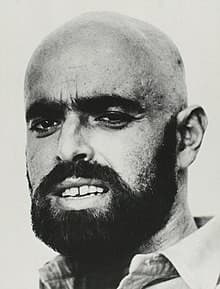
Biography coming soon.
Dan Gemeinhart
4.5
Kate O'Hearn
4.4

Jeanne Birdsall
4.4

Jen Wang
4.4
Wendelin Van Draanen
4.3

John Marsden
4.3

Chris Van Allsburg
4.3
Jennifer A. Nielsen
4.2